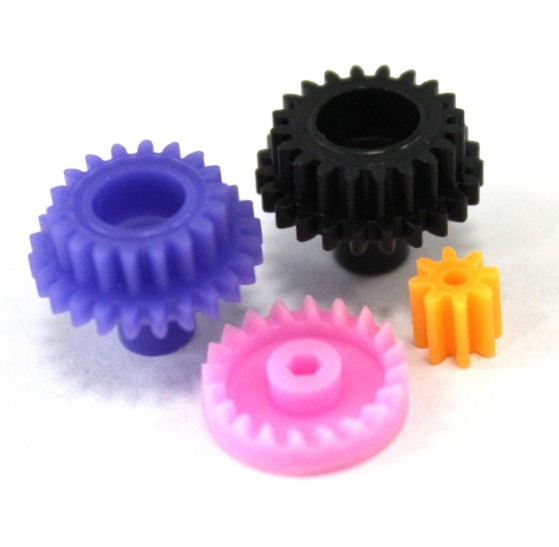
Micro gears are tiny mechanical components with enormous impact. They sit inside life-saving medical devices, precision instruments, and aerospace systems. Smaller than a grain of rice in some cases, these miniature gears transmit motion and torque in spaces where traditional gears cannot fit.
This guide explores micro gears—what they are, how they are made, where they are used, and how to select them. Whether you are designing medical devices, consumer electronics, or precision instruments, understanding micro gears helps you build better products.
What Are Micro Gears?
Defining the Tiny Components
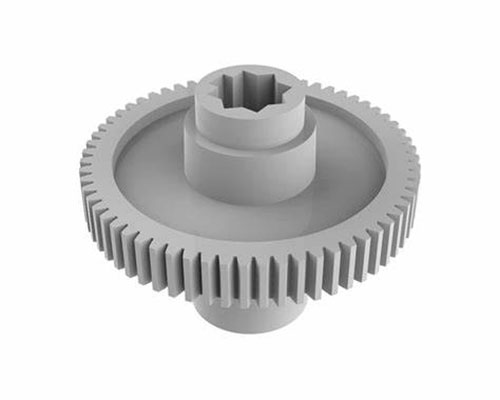
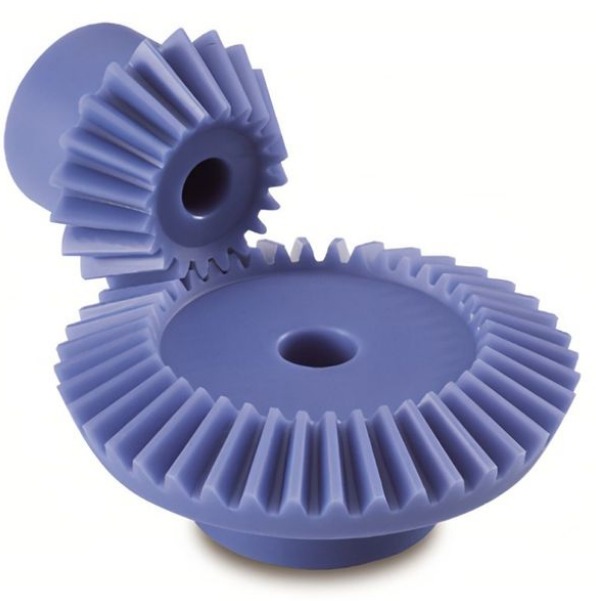
Micro gears are miniature versions of traditional gears, designed for operation in tight spaces. They typically have:
- Module: 0.05 to 1.0 (a metric for gear sizing)
- Diameter: Fractions of a millimeter to a few centimeters
- Tooth count: Often dozens of teeth on a part barely visible to the naked eye
In micro-electromechanical systems (MEMS), gears can have diameters as small as 0.1 mm—smaller than a grain of sand. Despite their size, they perform the same functions as larger gears: changing rotation direction, adjusting speed, and multiplying torque.
Why Size Matters
Small size enables:
- Miniaturization: Devices can shrink without losing mechanical functionality
- Integration: Gears fit into complex assemblies where space is precious
- Precision: Smaller components often allow finer motion control
How Are Micro Gears Manufactured?
Injection Molding: Volume Production
Injection molding is the preferred method for large-scale micro gear production.
Process:
- Plastic pellets melt in a heated barrel
- Molten plastic injects into a precision mold cavity
- Plastic cools and solidifies
- The mold opens, and gears eject
Advantages:
- High volume: Cycle times of seconds enable hundreds of thousands of parts per month
- Cost-effective: Low per-unit cost at scale
- Good precision: Tolerances typically ±0.05 mm, sufficient for many applications
Applications: Consumer electronics, automotive components, mass-produced medical devices
A manufacturer producing micro gears for earbud charging cases uses injection molding to produce 50,000 gears per day. The process maintains consistent quality across millions of parts.
3D Printing: Complex Geometries
Additive manufacturing enables micro gears that traditional methods cannot produce.
Process:
- Digital 3D model is sliced into thin layers
- Material (photosensitive resin or powder) is deposited or cured layer by layer
- The gear builds up from the bottom
Advantages:
- Design freedom: Internal cavities, complex tooth profiles, non-standard shapes
- No tooling: No mold costs—economical for small batches
- Rapid iteration: Design changes require only software updates
Limitations:
- Slower: Not economical for high volumes
- Surface finish: May require post-processing
- Material properties: Can differ from molded parts
A university research project used 3D printing to create micro gears with custom tooth profiles for a micro-robotic system. The unique design optimized power transmission in a way impossible with traditional manufacturing.
Machining: Ultimate Precision
Machining is the method of choice when precision cannot be compromised.
Process:
- Micro-milling or micro-lathing removes material from a solid block
- Specialized machine tools achieve micron-level accuracy
Advantages:
- Highest precision: Tolerances as low as ±0.001 mm
- Material flexibility: Works with metals and engineering plastics
- No tooling: Suitable for prototypes and small batches
Limitations:
- Slow: Minutes to hours per gear
- Costly: Skilled operators, specialized equipment
Applications: Aerospace, high-end medical devices, research instrumentation
Micro gears for a miniature satellite’s attitude control system are machined to ±0.002 mm tolerances. The precision ensures reliable operation in space where repair is impossible.
Manufacturing Method Comparison
| Method | Precision | Volume | Cost Structure | Best For |
|---|---|---|---|---|
| Injection molding | ±0.05 mm | High (10,000+) | High mold cost, low per-unit | Mass production |
| 3D printing | ±0.02–0.10 mm | Low to medium | No mold cost, higher per-unit | Complex geometries, small batches |
| Machining | ±0.001–0.005 mm | Very low | High per-unit, no tooling | Ultimate precision, prototypes |
Where Are Micro Gears Used?
Precision Instruments
Mechanical watches: A high-end mechanical watch contains dozens of micro gears. The escapement gear controls energy release with precise regularity—typically 3–8 oscillations per second. This accuracy keeps time error to a few seconds per day.
Microscopes: Fine-focus adjustment knobs connect to micro gear trains. Research-grade microscopes achieve focus adjustments as precise as 0.001 mm. This allows scientists to observe cellular structures and organelles with clarity.
Optical equipment: Camera lenses use micro gears for autofocus and zoom. The gears must position lens elements within microns to capture sharp images.
Medical Devices
Cardiac pacemakers: Micro gears control miniature motors that deliver electrical impulses to the heart. The gears ensure pulses at correct intervals—60–100 per minute for normal heart rhythm. Precision here is literally life-saving.
Insulin pumps: Millions of diabetes patients depend on insulin pumps. Micro gears control the plunger that dispenses insulin. Modern pumps deliver increments as small as 0.05 units—a level of precision that maintains stable blood sugar. Faulty gears could cause hypoglycemia or hyperglycemia, with serious health consequences.
Surgical robots: Micro gears in robotic surgical instruments enable precise manipulation. Surgeons perform delicate procedures through small incisions, with gears translating hand movements into instrument motion.
Aerospace Industry
Satellite attitude control: Micro gears adjust satellite orientation with angular accuracy up to 0.01 degrees. This precision ensures antennas point correctly and sensors collect accurate data.
Aircraft fuel metering: Micro gears control valves that regulate fuel flow to jet engines. Precise metering optimizes performance, reduces consumption, and ensures safe operation. Errors could cause inefficiencies or engine failure.
Environmental demands: Aerospace micro gears must withstand high temperature, high vibration, and low pressure. Materials and design must maintain performance under extreme conditions.
Consumer Electronics
Smartphone cameras: Autofocus mechanisms use micro gears smaller than a pinhead. They position lens elements within microns for sharp photos.
Drones: Micro gears in gimbal systems stabilize cameras during flight. They must be lightweight yet precise.
Earbuds: Charging cases use micro gears for hinge mechanisms and lid operations. Users expect smooth action in premium products.
How Do You Select the Right Micro Gear?
Material Selection
| Material | Key Properties | Best Applications |
|---|---|---|
| POM (Acetal) | High stiffness, low friction, good wear resistance | Consumer electronics, general precision |
| Nylon | Self-lubricating, good strength | Medical devices, moderate loads |
| ABS | Impact resistant, cost-effective | Low-load consumer products |
| PEEK | High-temperature stability, excellent strength | Aerospace, high-temperature environments |
| Stainless steel | Highest strength, wear resistance | Extreme loads, ultimate precision |
Consider Operating Conditions
Load: Higher loads require stronger materials. For loads above 0.1 N/mm of tooth width, consider PEEK or metal. For lower loads, POM or nylon suffice.
Temperature: Standard plastics operate to 80–100°C. Above 100°C, PEEK or ceramics become necessary.
Environment: Corrosive or wet environments favor plastics over metals. Medical applications require biocompatible materials.
Precision requirements: ±0.05 mm tolerances suit many applications. For ±0.005 mm or tighter, specify machining over molding.
Lifespan Expectations
Under normal conditions (room temperature, moderate load, proper lubrication):
| Material | Expected Cycles |
|---|---|
| POM | 10,000–50,000 |
| Nylon | 8,000–30,000 |
| PEEK | 50,000–200,000 |
| Stainless steel | 100,000+ |
Load increases reduce lifespan. At 50% higher load, lifespan may drop by half. High temperatures (80°C) can reduce POM lifespan to 30–50% of room-temperature values.
How Does Yigu Technology Approach Micro Gears?
At Yigu Technology, we manufacture micro gears across injection molding, 3D printing, and precision machining. Our approach combines material expertise with application-specific engineering.
Precision: We achieve tolerances down to ±0.005 mm for critical applications. Advanced inspection equipment verifies every critical dimension.
Material innovation: We continuously explore new materials. For a medical device requiring biocompatibility and strength, we specified PEEK gears that passed sterilization testing where other materials failed.
Customization: We work from initial concept to final production. For a satellite component requiring extreme precision, we machined micro gears to ±0.002 mm tolerances. The gears passed thermal vacuum testing with no degradation.
Quality: Each gear undergoes inspection—dimensional, visual, and functional as required. We maintain traceability from material to finished part.
Conclusion
Micro gears enable the miniaturization that defines modern technology. They fit inside pacemakers that regulate hearts, cameras that capture sharp images, and satellites that orbit Earth. Their manufacture requires precision—whether through high-volume injection molding, flexible 3D printing, or ultra-precise machining.
Selecting the right micro gear means matching material to application, considering load and environment, and specifying appropriate precision. When chosen correctly, micro gears deliver reliable performance in spaces where traditional components cannot go.
Frequently Asked Questions
What is the lifespan of miniature plastic gears?
Under normal conditions (room temperature, moderate load of 0.03 N/mm tooth width, proper lubrication), POM gears typically last 10,000–50,000 cycles. Load increases reduce lifespan—50% higher load may cut lifespan in half. High temperatures (80°C) can reduce lifespan to 30–50% of room-temperature values. Proper material selection and operating conditions extend life.
How do I choose the right material for micro gears?
Consider application requirements. For consumer electronics, POM offers stiffness and low friction. For medical devices, nylon provides self-lubrication and biocompatibility. For high-temperature aerospace, PEEK maintains properties to 250°C. For extreme loads or ultimate precision, stainless steel is appropriate. Match material to operating environment and performance needs.
Can micro gears be customized for specific needs?
Yes. Customization includes dimensions, tooth profiles, materials, and surface finishes. Design specifications are converted to 3D models, then manufactured using appropriate methods—injection molding for volume, machining for precision, or 3D printing for complex geometries. Quality inspection verifies conformance to specifications.
What is the smallest possible micro gear?
Micro gears in MEMS applications can have diameters as small as 0.1 mm—smaller than a grain of sand. These are typically produced through specialized processes like LIGA or advanced microfabrication. For plastic injection molding, practical minimums are around 0.5–1.0 mm diameter depending on geometry.
How does manufacturing method affect micro gear quality?
Injection molding offers consistency and cost-effectiveness for volume but has tooling costs and precision limits (±0.05 mm). Machining offers highest precision (±0.001 mm) but is slower and more expensive. 3D printing enables complex geometries but may have surface finish limitations. Choose based on volume, precision requirements, and geometry complexity.
Contact Yigu Technology for Custom Manufacturing
Need micro gears for your application? At Yigu Technology, we manufacture miniature plastic gears across medical, aerospace, electronics, and industrial applications. From material selection to precision manufacturing, we deliver gears that meet your specifications.
Contact us today to discuss your micro gear requirements.