Introduction
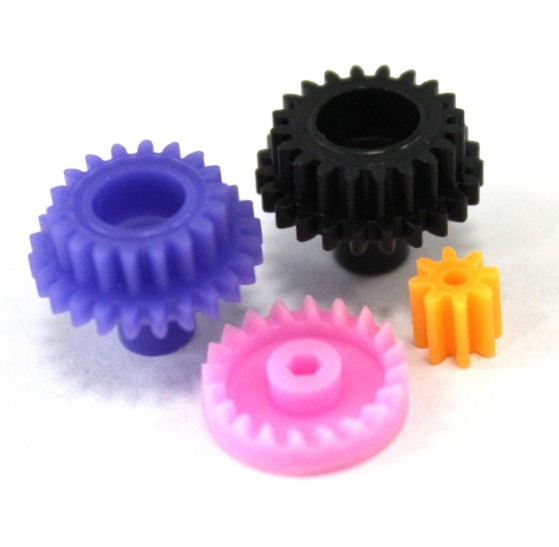
For decades, metal gears have been the undisputed backbone of heavy machinery. But a quiet revolution is underway. Large plastic gears are stepping into roles once reserved exclusively for steel and brass, challenging long-held assumptions about durability and strength. If you're an engineer, procurement specialist, or product designer evaluating whether these components can handle your demanding applications, this guide offers more than surface-level answers. Drawing from real manufacturing experience and recent industry data, we’ll explore exactly where large plastic gears excel, where they still face limitations, and how to make the right choice for your specific needs.
What Makes a Gear “Large” in Plastic?
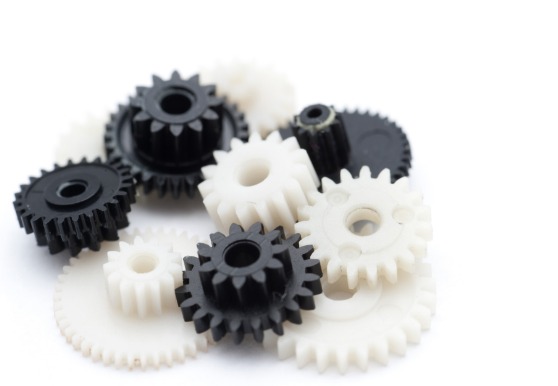
Size matters, especially when materials change. In the world of plastic gearing, “large” typically refers to gears with a diameter exceeding 150 millimeters (about 6 inches) , though some specialty applications require gears up to one meter or more. What distinguishes these components isn’t just scale—it’s the engineering complexity required to maintain precision, structural integrity, and consistent performance across a much larger surface area.
The Material Foundation
Not all plastics are created equal for large-format gearing. The choice of material dictates almost every performance characteristic:
| Material | Key Property | Best Suited For | Real-World Example |
|---|---|---|---|
| Acetal (POM) | Excellent dimensional stability, low friction | Precision motion systems | Medical imaging equipment requiring quiet, accurate positioning |
| Nylon (PA) | High strength, impact resistance, self-lubricating | Heavy-load applications | Automotive seat adjusters experiencing repeated high stress |
| Polypropylene (PP) | Superior chemical resistance, cost-effective | Corrosive environments | Water treatment plant valve actuators exposed to chemicals |
| PEEK | High-temperature resistance (up to 260°C) | Extreme operating conditions | Aerospace actuators facing wide temperature swings |
The density difference alone is striking: nylon weighs approximately 1.15 g/cm³ compared to steel’s 7.85 g/cm³ —meaning a plastic gear can be up to 85% lighter than its metal equivalent while maintaining comparable strength for many applications.
Why Are Industries Rapidly Adopting Large Plastic Gears?
The shift isn’t happening by accident. Across automotive, aerospace, renewable energy, and industrial automation, decision-makers are discovering that large plastic gears solve problems metal gears simply can’t.
The Weight Reduction Advantage
In automotive manufacturing, every kilogram saved contributes to fuel efficiency or electric vehicle range. A major European automaker recently replaced steel timing gears with nylon-based plastic gears in their engine auxiliary systems, reducing total vehicle weight by over 12 kilograms per unit. Across a production run of 200,000 vehicles, that translates to 2.4 million kilograms of weight reduction —and corresponding fuel savings over the vehicle’s lifetime.
Noise and Vibration Control
Metal gears operating at moderate speeds (around 1,000 RPM) typically generate 70–80 decibels. The same application with properly designed plastic gears registers 50–60 decibels —a reduction comparable to moving from a busy city street to a quiet office environment. This difference is transformative for:
- Consumer appliances: Dishwashers and washing machines that don’t announce their operation
- Medical equipment: MRI machines and surgical robots requiring near-silent operation
- Office automation: High-speed printers where noise directly impacts user experience
Corrosion Resistance That Metals Can’t Match
Consider a wastewater treatment facility where metal gears in valve actuators typically require replacement every 18–24 months due to corrosive gas exposure. When the same facility switched to polypropylene large plastic gears, the replacement interval extended beyond five years —representing a 60% reduction in maintenance costs and virtually eliminating unplanned downtime.
What Performance Trade-Offs Should You Consider?
Honest evaluation means acknowledging limitations. Large plastic gears aren’t universal replacements—they’re strategic alternatives that excel when properly matched to application requirements.
Temperature Limitations
While advanced materials like PEEK handle temperatures up to 260°C, most engineering plastics begin losing mechanical properties above 100–120°C. The critical distinction is continuous operating temperature versus peak exposure. A gear experiencing brief temperature spikes may perform well, while sustained high temperatures accelerate creep and dimensional change.
Load Capacity vs. Metal
For equivalent size, steel gears generally offer 3–5 times higher load capacity than plastic counterparts. However, this comparison often misses the point—plastic gears can be redesigned with wider faces or modified geometries to distribute loads effectively while still delivering net weight and cost advantages.
Moisture Absorption Concerns
Nylon absorbs moisture from the environment, which can cause dimensional changes of 1–2% in humid conditions. This matters for high-precision applications. Acetal (POM) offers superior stability in variable humidity, which is why it’s preferred for precision instruments.
How Are Large Plastic Gears Manufactured Differently?
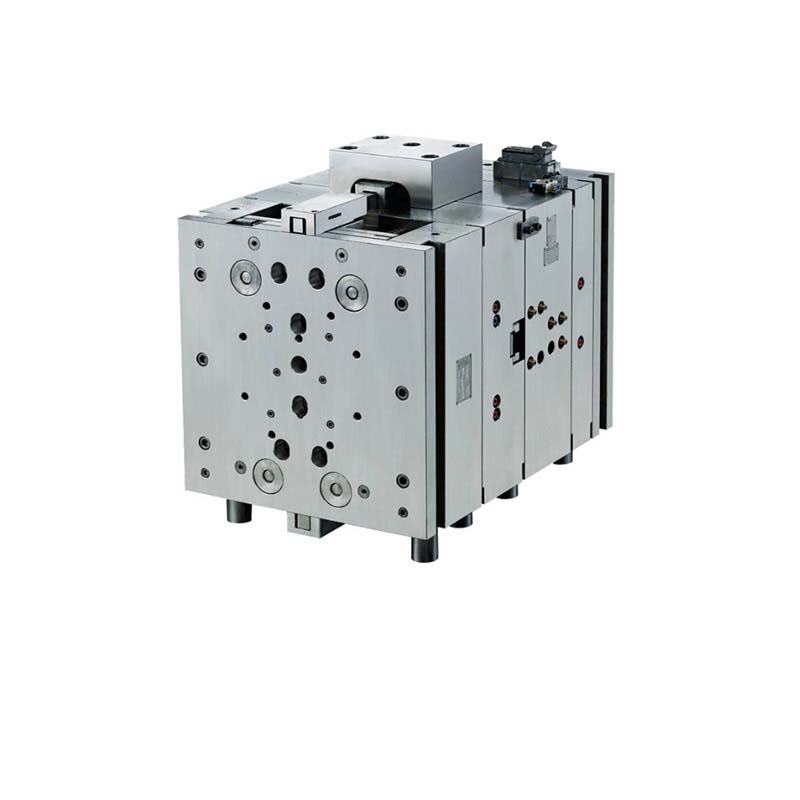
The manufacturing process determines final performance. Unlike metal gears that are cut from solid blanks, large plastic gears typically use injection molding or injection compression molding for sizes beyond conventional molding capabilities.
The Customization Imperative
At Yigu Technology, we’ve processed over 500 custom large plastic gear orders across the past five years. The pattern is clear: off-the-shelf solutions rarely satisfy demanding applications. Customization addresses:
- Dimensional precision: Tolerances as tight as ±0.05mm for critical applications
- Material optimization: Selecting the exact polymer and filler combination for your environment
- Integration features: Molded-in hubs, mounting points, or sensor interfaces that reduce assembly complexity
One case study illustrates the value: A robotics company required a 380mm diameter gear combining the dimensional stability of acetal with impact resistance approaching nylon. By developing a proprietary POM/nylon blend, we delivered a solution that exceeded both requirements while reducing unit cost by 23% compared to their previous metal-based assembly.
When Should You Choose Large Plastic Gears Over Metal?
The decision framework below distills experience from successful implementations across industries:
| Application Characteristic | Plastic Gear Recommended | Metal Gear Recommended |
|---|---|---|
| Operating temperature consistently above 150°C | ❌ | ✅ |
| Weight reduction critical | ✅ | ❌ |
| Corrosive or chemical exposure | ✅ | ❌ (without specialized coatings) |
| Extreme shock loading | ⚠️ (with reinforced materials) | ✅ |
| Low-noise operation required | ✅ | ❌ |
| High-volume production (10,000+ units) | ✅ (lower per-unit cost) | ⚠️ |
| Precision positioning under variable humidity | ✅ (with acetal) | ✅ |
Real-World Success Pattern
A packaging equipment manufacturer faced recurring failures with stainless steel gears in their food-grade machinery. Despite stainless construction, microscopic corrosion in high-moisture environments caused premature wear. Switching to FDA-compliant nylon large plastic gears eliminated corrosion entirely, extended component life from 14 months to over 48 months, and removed the need for external lubrication—eliminating a potential contamination risk.
What Does the Future Hold for Large Plastic Gears?
Industry projections indicate the global plastic gear market will grow at a CAGR of 7.2% through 2030, with large-format applications outpacing this average. Several converging trends drive this growth:
- Electric vehicle platforms: Weight reduction directly extends battery range
- Renewable energy expansion: Wind turbine yaw drives increasingly specify corrosion-resistant plastic components
- Industrial automation: Collaborative robots (cobots) require lightweight, quiet drivetrain components
- Sustainability pressures: Many engineering plastics now incorporate recycled content while maintaining performance
Material science continues advancing. Carbon fiber-reinforced composites, advanced lubricant-infused polymers, and hybrid metal-polymer designs are pushing the boundaries of what’s possible. These innovations address historical limitations around heat dissipation and load capacity, opening new applications annually.
Conclusion
Large plastic gears are not universal replacements for metal, but they represent a mature, reliable technology that delivers compelling advantages where weight, noise, corrosion resistance, and cost efficiency matter. The key to success lies in honest application assessment—understanding where plastics’ strengths align with your requirements and where alternative solutions remain appropriate.
For engineers and procurement professionals, the path forward involves partnering with manufacturers who understand both material science and application requirements. The question isn’t whether plastic gears can replace metal, but rather: In which specific applications will they deliver superior total value?
FAQ
What is the typical lifespan of a large plastic gear in industrial use?
With proper material selection and application matching, large plastic gears commonly achieve 5–10 years of service life. In a food processing application with self-lubricating nylon gears operating under moderate loads, documented lifespans exceed 8 years with minimal wear. Lifespan depends critically on operating temperature, load consistency, and environmental factors.
Can large plastic gears handle intermittent shock loads?
Yes, when engineered with reinforced materials. Glass-filled nylon or carbon fiber-reinforced PEEK can absorb impact forces effectively. A material handling equipment manufacturer successfully replaced cast iron gears with 30% glass-filled nylon gears in conveyor drives experiencing frequent start-stop cycles, achieving comparable durability with 65% weight reduction.
Are large plastic gears more expensive than metal equivalents?
For low-volume production (under 500 units), metal gears often have lower tooling costs. For volumes exceeding 1,000 units, injection-molded plastic gears typically achieve 20–40% lower per-unit cost than machined metal equivalents. The breakeven point varies with size complexity, but the cost advantage grows substantially with volume.
How do you ensure dimensional accuracy in very large plastic gears?
Precision begins with mold design using high-accuracy CAD/CAM systems with tolerances below 0.01mm. During molding, closed-loop process control maintains consistent temperature, pressure, and cooling rates. For gears above 500mm diameter, injection compression molding reduces internal stress and warpage. Post-molding, coordinate measuring machine (CMM) verification ensures every critical dimension meets specifications.
What industries are adopting large plastic gears most rapidly?
Automotive leads in total volume, followed by medical equipment, industrial automation, and renewable energy. The fastest growth currently occurs in EV charging infrastructure (where outdoor exposure demands corrosion resistance) and agricultural equipment (where weight reduction improves fuel efficiency and reduces soil compaction).
Contact Yigu Technology for Custom Manufacturing
Selecting the right large plastic gear solution requires balancing material properties, manufacturing precision, and application demands. At Yigu Technology, we combine over 15 years of custom plastic component manufacturing experience with advanced material science expertise to deliver gears engineered for your specific operating conditions.
Whether you need high-precision acetal gears for medical devices, corrosion-resistant polypropylene components for chemical environments, or high-load nylon gears for automotive applications, our engineering team works alongside you from material selection through production optimization.
Ready to discuss your project requirements? Contact our technical sales team with your specifications, and we’ll provide material recommendations, design-for-manufacturing feedback, and competitive quoting within 24–48 hours.