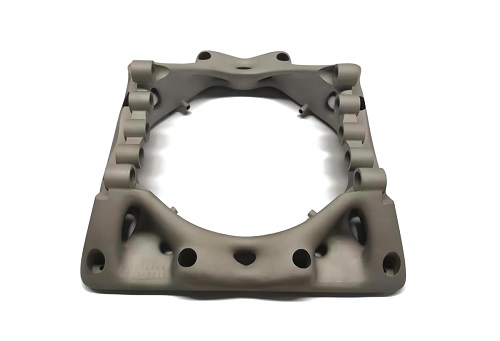
Discover how 3D printing revolutionaries are transforming manufacturing with faster production, lower costs, and design freedom. Real cases from aerospace to healthcare.
Introduction
Manufacturing is undergoing its biggest transformation since the assembly line. 3D printing—once a prototyping novelty—now challenges century-old production methods. Companies that embrace it aren't just improving efficiency; they're rethinking what's possible.
The numbers tell the story: since 2020, 3D-printed end-use parts have surged by 45%. Manufacturers report 30% faster time-to-market and 50% reduced material waste (Source: 3D Printing Industry Association, 2024). These aren't incremental gains—they're fundamental advantages.
3D revolutionaries—innovative companies leveraging additive manufacturing—are reshaping industries. From GE Aviation printing fuel nozzles 25% lighter, to BMW cutting carbon footprints with recycled nylon, the evidence is clear: this technology delivers.
In this guide, we'll explore the technologies driving change, how different industries apply them, and what it means for manufacturing companies ready to join the revolution.
What Core Technologies Are Transforming Manufacturing?
Direct Metal Laser Sintering (DMLS): Precision for Critical Parts
Direct Metal Laser Sintering (DMLS) represents the high end of metal 3D printing. A laser melts metal powder particles together layer by layer, creating dense, high-strength components with precision down to ±50 microns.
Why it matters: DMLS produces parts with properties matching or exceeding cast metals. For industries where failure isn't an option—aerospace, medical implants, defense—this matters enormously.
Materials: Stainless steel, titanium (Ti6Al4V), Inconel, cobalt-chrome. These aren't cheap, but for critical applications, the value justifies the cost.
Real impact: General Electric uses DMLS to produce fuel nozzles for LEAP jet engines. The original design required 20 separate parts brazed together. The DMLS version prints as one piece, weighs 25% less, and lasts five times longer. Performance improved by 15% (GE Aviation, 2023). That's not incremental improvement—that's revolutionary.
Fused Deposition Modeling (FDM): Accessible Innovation
Fused Deposition Modeling (FDM) melts thermoplastic filament and deposits it layer by layer. It's the most accessible 3D printing technology, with machines ranging from desktop hobbyist units to industrial giants printing parts over a meter long.
Why it matters: FDM democratizes manufacturing. A startup can iterate designs in-house for pennies instead of waiting weeks for outsourced prototypes. Production lines print custom jigs and fixtures overnight instead of ordering machined tools.
Materials: PLA, ABS, nylon, PETG, carbon-fiber composites, even PEEK for high-temperature applications.
Real impact: Tesla uses FDM to print ABS models for component validation, reducing development time by 70% (Tesla, 2022). A small automotive startup we work with prints prototype intake manifolds in days, testing multiple designs before committing to tooling. The speed advantage compounds with every iteration.
Binder Jetting: Speed at Scale
Binder Jetting takes a different approach: a print head deposits binder onto a bed of powder, bonding particles together. The "green" part then undergoes sintering in a furnace to achieve full density.
Why it matters: Binder jetting is fast—much faster than laser-based methods for many geometries. It scales well, making it suitable for production volumes that other additive processes can't match economically.
Materials: Sand, metal powders (stainless steel, Inconel), ceramics.
Real impact: Volkswagen uses binder jetting for sand casting cores with complex internal geometries. These cores improve engine component performance and fuel efficiency (Volkswagen Group, 2022). Raytheon employs binder jetting for radar components, cutting lead times from 12 weeks to 5 days while meeting MIL-STD-810 environmental standards.
Technology Comparison: Which One Fits Your Needs?
| Technology | Best For | Material Options | Precision | Speed |
|---|---|---|---|---|
| DMLS | Critical metal parts (implants, turbines) | Titanium, Inconel, stainless | ±50μm | Moderate |
| FDM | Prototypes, tooling, large parts | Plastics, composites | ±200-500μm | Moderate |
| Binder Jetting | Production volumes, complex castings | Metal powders, sand | ±100-300μm | Fast |
| SLS | Functional plastic parts | Nylon, TPU | ±200μm | Moderate |
What Technical Advantages Does 3D Printing Offer?
Design Freedom: Complexity at No Extra Cost
Traditional manufacturing imposes geometric restrictions. Undercuts need special tooling. Internal channels require drilling or EDM. Lattice structures? Often impossible.
3D printing removes these constraints. You can design:
- Internal cooling channels following complex curves
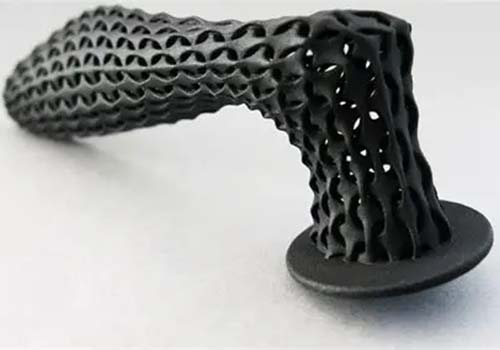
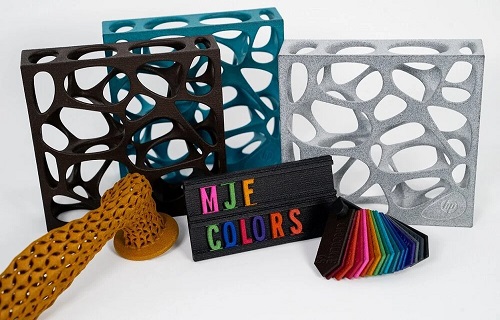
- Lattice structures that reduce weight while maintaining strength
- Consolidated assemblies replacing multi-part constructions
- Organic shapes optimized for fluid flow or stress distribution
Quantified: 3D printing allows 90% fewer geometric restrictions compared to traditional methods (2024 comparative study). Airbus demonstrated this with 3D-printed lattice-structured brackets that reduced weight by 40% without sacrificing strength (Airbus, 2023).
Material Efficiency: Less Waste, Lower Cost
Subtractive manufacturing starts with a block and cuts away what you don't need. For complex parts, waste can exceed 50%. Additive manufacturing adds material only where needed.
The numbers:
- CNC machining: 50% material utilization typical
- 3D printing: 95% material utilization achievable
For expensive materials—titanium, Inconel, PEEK—this efficiency transforms economics. A dental implant manufacturer using 3D printing saves thousands annually by eliminating scrap.
Tooling Elimination: No Upfront Investment
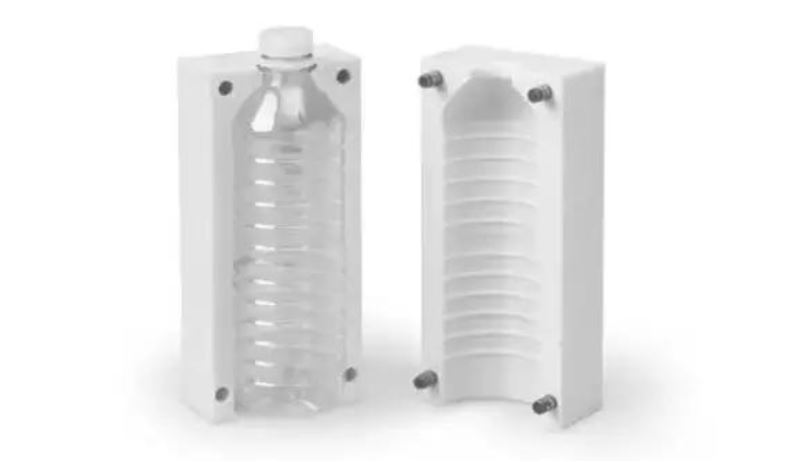
Injection molding requires molds costing $10,000-50,000 per part. Design changes? New mold. Low volumes? Still pay for tooling.
3D printing eliminates this entirely. Production starts from a digital file—no tooling, no minimum quantities, no upfront risk.
A jewelry maker producing limited-edition rings switched from casting to 3D printing. Traditional approach: $8,000 mold, 6-week lead time, risk of unsold inventory. New approach: print on demand, zero tooling cost, sell first then produce. Production expenses dropped 60%.
Speed: From Weeks to Days
Time-to-market advantages compound across the product lifecycle:
| Stage | Traditional | 3D-Powered | Advantage |
|---|---|---|---|
| Prototyping | 4-8 weeks | 24-72 hours | 80% faster |
| Tooling | 6-12 weeks | None | Eliminated |
| First articles | 8-16 weeks | 1-2 weeks | 85% faster |
| Production ramp | Months | Weeks | 70% faster |
Protolabs, a leading service bureau, delivers prototypes within 24 hours for urgent projects. This speed lets companies iterate faster, fail cheaper, and launch sooner.
How Are Industries Applying These Advantages?
Aerospace and Defense: Lightweighting and Rapid Repair
Aerospace faces two constant pressures: weight reduction and supply chain resilience. 3D printing addresses both.
Airbus prints titanium wing brackets using Selective Laser Melting (SLM). Compared to conventionally machined brackets:
- 40% weight reduction
- Equivalent strength
- On-demand production for replacements
For an A320 fleet, that weight savings translates to 5,000 gallons of fuel saved annually and 50 tons of CO2 reduction (Airbus, 2023).
Obsolete parts represent another victory. When an A300 needed a rare wing-flap component, traditional sourcing would take 12 weeks. Airbus printed it in 8 weeks—still longer than ideal, but 30% faster than waiting for traditional supply chains.
Raytheon demonstrates defense applications. Using binder jetting for radar components, they cut lead times from 12 weeks to 5 days while maintaining MIL-STD-810 environmental standards. In defense, where equipment downtime has national security implications, this speed matters.
Automotive: From Prototypes to Production
Automotive manufacturers use 3D printing across the product lifecycle—from concept models to end-use parts.
Tesla prints ABS prototypes for component validation using FDM. Result: 70% faster validation time. When you're iterating on battery designs or door handles, that speed compounds. Tesla brings new models to market 20% faster than competitors (Tesla, 2022).
BMW focuses on sustainability. Using Selective Laser Sintering (SLS) with recycled nylon for interior parts, they've cut carbon footprint by 25% compared to injection-molded alternatives. The printed parts use 30% less energy in production and generate 40% less waste (BMW, 2023).
Formula 1 teams rely heavily on 3D printing for:
- Gearbox components with optimized weight distribution
- Hydraulic manifolds consolidating multiple parts
- Exhaust systems with complex geometry for better flow
- Wind tunnel models testing aerodynamic concepts
Healthcare: Customization at Scale
Healthcare represents 3D printing's most personal application—solutions tailored to individual anatomy.
Stryker produces patient-specific knee implants using SLM. Traditional implants come in standard sizes; Stryker's implants match each patient's bone structure exactly. The trabecular (bone-like) surface structure improves bone integration by 35% (Stryker, 2023).
Clinical results: In a study of 100 patients, those receiving 3D-printed knee implants reported 20% less pain and 15% faster recovery compared to standard implants. Better outcomes, lower long-term costs.
Pfizer explores 3D-printed drug delivery systems. Imagine a single pill that releases multiple medications at different rates—insulin steadily throughout the day, blood pressure medication in the morning, cholesterol medication at night. 3D printing enables these complex profiles, improving patient compliance and outcomes.
Industrial Manufacturing: Jigs, Fixtures, and Tooling
Beyond end products, 3D printing transforms how factories operate.
Toyota Australia prints assembly line jigs using FDM with ASA material. Compared to CNC-machined alternatives:
- 50% lower tool development costs
- 20% faster assembly speed
- On-demand replacement when worn
General Electric Aviation maintains digital inventories of over 3,000 parts. Instead of warehousing physical spares, they store files and print on demand. Warehouse space requirements dropped 40% ; inventory holding costs fell 35%.
What Business Impact Do These Changes Deliver?
Cost-Per-Part Transformation
Traditional manufacturing economics favor high volumes. Tooling costs amortize over thousands of parts. Low volumes mean high per-part costs.
3D printing flattens this curve:
| Production Volume | Traditional Cost/Part | 3D-Printed Cost/Part | Advantage |
|---|---|---|---|
| 1-10 units | $500-2,000 | $50-200 | 90% lower |
| 100 units | $100-400 | $40-150 | 60% lower |
| 1,000 units | $20-80 | $30-120 | Break-even |
| 10,000+ units | $5-20 | $20-80 | Traditional wins |
For small-batch production, 3D printing wins decisively. A McKinsey study found cost reductions of 70% for complex metal parts in low volumes, primarily from eliminated tooling and reduced waste.
Turnaround Time Compression
Time is the invisible cost in manufacturing. Every week in development delays revenue. Every day of machine downtime loses money. Every slow design cycle misses market opportunities.
3D printing compresses timelines across the board:
- Prototypes: 4-8 weeks → 24-72 hours
- Tooling: 6-12 weeks → eliminated
- Replacement parts: weeks → days
- Design iterations: monthly → weekly
A consumer electronics company used to plan 3-month development cycles for new products. With 3D printing, they now launch products in 6 weeks—twice as fast as competitors using traditional methods.
Supply Chain Resilience
COVID-19 exposed the fragility of global supply chains. 3D printing offers an alternative: digital inventory, local production, on-demand manufacturing.
Key metrics from a 2024 survey:
- 78% of SMEs using 3D printing source 60% of components locally
- 30% average reduction in shipping costs
- Weeks to days lead time compression for urgent parts
Digital inventory means no physical stock, no obsolescence risk, no warehouse costs. When a part is needed, you print it—anywhere in the world with a printer and the file.
What Does the Future Hold?
Integration with AI and Automation
Artificial Intelligence will accelerate 3D printing's impact:
- Design optimization: AI generates part geometries balancing strength, weight, and printability
- Process control: AI monitors prints, detects defects, adjusts parameters in real time
- Predictive maintenance: AI predicts when printers need service, minimizing downtime
- Supply chain optimization: AI determines optimal production locations based on demand
Advanced Materials
Material science expands possibilities:
- High-temperature polymers for engine applications
- Metal-matrix composites combining strength with conductivity
- Bioprinted tissues for medical applications
- Self-healing materials that repair damage autonomously
- Recycled and bio-based materials for sustainability
Larger Scales
Large-format printing grows:
- Construction-scale printers building homes
- Ship propellers printed in single pieces
- Wind turbine blades with optimized internal structures
- Furniture printed to order, eliminating inventory
Distributed Manufacturing
Production moves closer to consumption:
- Local print shops producing replacement parts on demand
- Retail locations printing custom products while you wait
- Humanitarian applications printing essential supplies in remote areas
- Military forward bases printing repair parts without supply lines
Yigu Technology's Perspective
At Yigu Technology, we've watched 3D printing evolve from prototyping tool to production platform. We've printed:
- Aerospace brackets 40% lighter than machined alternatives
- Medical implants matching patient anatomy perfectly
- Automotive prototypes validated in days instead of weeks
- Production parts for clients who couldn't justify tooling costs
Our observation: 3D printing succeeds when it solves real problems—not when it's used because it's cool. The best applications:
- Exploit design freedom impossible with traditional methods
- Leverage speed to compress development cycles
- Eliminate tooling costs for low volumes
- Enable customization that standard processes can't match
A recent client needed custom assembly fixtures for a new product line. Traditional approach: machine aluminum fixtures, $2,000 each, 3-week lead time. 3D printing approach: print nylon fixtures overnight, $80 each. They saved $40,000 and launched 6 weeks sooner.
That's the 3D printing revolution in practice: not technology for its own sake, but better business outcomes through smarter manufacturing.
Frequently Asked Questions
What is the most cost-effective 3D printing technology for small-scale manufacturing?
FDM (Fused Deposition Modeling) typically offers the lowest entry cost and material expenses. For startups and small-batch production, FDM provides excellent value. For higher-strength parts, SLS (Selective Laser Sintering) offers better mechanical properties at moderate cost premiums.
Can 3D-printed parts match the strength of traditionally manufactured parts?
Yes, when using appropriate technologies. DMLS metal parts achieve properties matching or exceeding cast materials. SLS nylon parts approach injection-molded strength. The key is selecting the right technology and material for your application.
How does 3D printing contribute to environmental sustainability?
Three main ways: material efficiency (95% utilization vs. 50% for machining), local production (reduced shipping emissions), and recycled materials (many processes use recycled polymers and metals). Some manufacturers report 25-40% carbon footprint reductions.
What industries benefit most from 3D printing?
Aerospace (weight reduction), medical (customization), automotive (rapid prototyping), and industrial (tooling and fixtures) lead adoption. But applications span nearly every sector—from consumer goods to construction.
How do I get started with 3D printing for my business?
Start with a specific application, not the technology itself. Identify a problem: slow prototyping, high tooling costs, impossible geometries, or customization needs. Then explore which 3D printing technology solves it. Consider service bureaus initially—you learn without equipment investment.
Contact Yigu Technology for Custom Manufacturing
Ready to explore how 3D printing can transform your manufacturing? At Yigu Technology, we combine technical expertise with production capabilities across all major additive processes.
We help clients:
- Select optimal technologies for specific applications
- Design for printability and performance
- Transition smoothly from prototype to production
- Reduce costs and accelerate timelines
Contact our team today with your project requirements. Whether you need prototypes for validation, bridge production while tooling builds, or full-scale manufacturing, we'll provide expert guidance and reliable production.
Let's build the future together—layer by layer.