Introduction
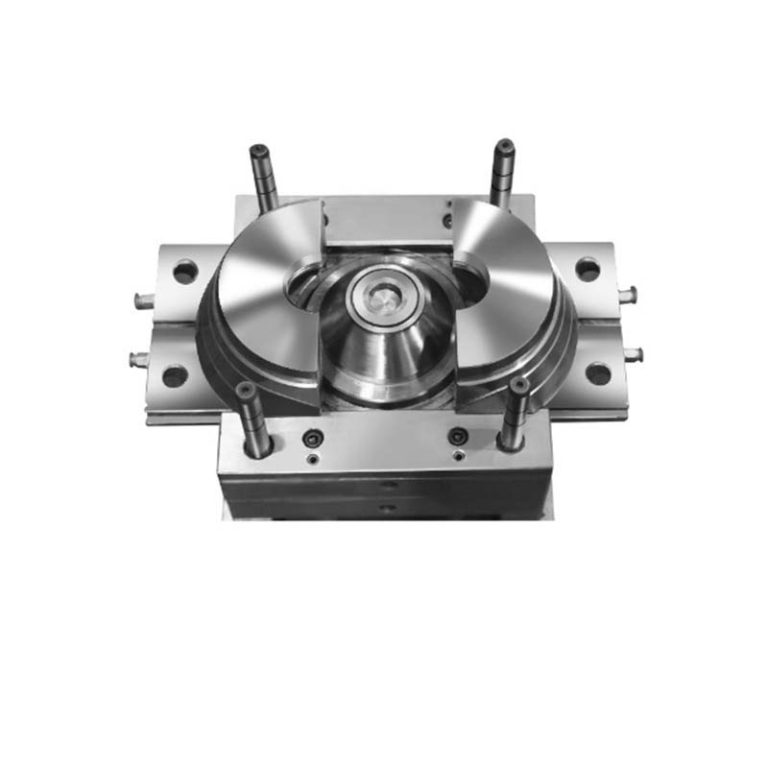
Injection molding is the backbone of plastic manufacturing. It produces complex parts with precision and speed. But behind every successful molded part is the mold itself. The choice of mold material affects cycle times, part quality, production costs, and equipment life.
Aluminum molds have emerged as an ideal option for many applications. Their unique combination of properties—thermal conductivity, light weight, machinability, and cost-effectiveness—offers advantages that steel molds cannot match.
The thermal conductivity of aluminum alloys used in mold making ranges from 150 to 200 W/(m·K) , while tool steels typically reach only 30 to 50 W/(m·K) . This single property transforms the injection molding process.
This guide explores why aluminum molds excel in injection molding and when they are the right choice for your project.
How Does Thermal Conductivity Improve Molding?
Faster Cooling Cycles
Aluminum’s high thermal conductivity transfers heat away from the plastic rapidly. A steel mold might require 30 seconds cooling per cycle for small components. An aluminum mold can reduce that to 10 to 15 seconds .
This directly increases production output. More parts per hour. Lower cost per part. For a factory running multiple machines, the cumulative effect is substantial.
Consistent Product Quality
Fast cooling is only half the benefit. Uniform cooling is the other half.
When plastic cools evenly, it solidifies uniformly. Internal stresses are minimized. Defects are reduced.
| Defect | Cause | Aluminum Mold Advantage |
|---|---|---|
| Warping | Uneven cooling causing differential shrinkage | Heat dissipates evenly across cavity |
| Sink marks | Slow cooling in thick sections | Rapid, uniform cooling prevents uneven shrinkage |
For precision parts—gears, housings, medical components—consistent cooling ensures uniform mechanical properties and dimensional accuracy.
Why Does Light Weight Matter?
Reduced Setup Time
Aluminum’s density is about one-third that of steel. A 300 kg steel mold becomes a 100 kg aluminum mold of the same dimensions.
This difference transforms mold handling:
- Fewer workers required for setup
- Faster installation on injection molding machines
- Reduced setup time from 2 hours to 30–60 minutes
In a factory with multiple daily mold changes, time savings accumulate quickly. More production runs. Less downtime.
Lower Equipment Wear
Heavy steel molds stress injection molding machine components:
- Tie bars
- Hydraulic cylinders
- Mold-mounting plates
Continuous stress causes fatigue, elongation, and wear. Tie bars may need replacement every 2 years with steel molds. With aluminum molds, replacement intervals extend to 3 to 4 years .
A study on injection molding machine maintenance showed that using aluminum molds reduced annual maintenance costs on mold-handling components by 30% to 40% .
How Does High Machinability Benefit Manufacturing?
Complex Geometries with Ease
Aluminum is highly malleable and machines easily. Complex mold geometries—curved surfaces, thin walls, internal features—are achievable with precision.
For smartphone case molds, details like logos, camera cut-outs, and speaker grilles must be exact. CNC machining of aluminum achieves these with high accuracy.
Other materials—cast iron, certain tool steels—are more difficult to machine. Their brittleness and lower machinability risk cracking or chipping during complex machining.
Quick Turnaround for Prototyping
In product development, speed matters. Aluminum molds can be fabricated much faster than steel molds.
| Material | Machining Time | Prototyping Speed |
|---|---|---|
| Aluminum | Fast (low hardness, high cutting speeds) | Days to hours |
| Steel | Slow (high hardness, slower cutting speeds) | Weeks |
A medical device company needing to test design iterations can complete multiple prototype cycles in the time it takes to machine a single steel mold. Faster iteration means faster time-to-market.
Is Aluminum Cost-Effective?
Initial Investment
Aluminum raw material costs are lower than high-quality tool steels.
| Material | Typical Cost per Pound |
|---|---|
| Aluminum alloy | $2 – $3 |
| Tool steel | $5 – $10+ |
Machining costs are also lower. Aluminum’s machinability means less machining time and fewer cutting tools. For small to medium businesses with limited budgets, the lower initial investment is a major advantage.
Long-Term Savings
Increased output: Faster cooling cycles increase production. If daily output increases from 1,000 to 1,500 units, per-unit cost drops. Profit margins improve.
Reduced equipment wear: Lower stress on injection molding machines extends component life. Replacement costs and downtime decrease.
Easier repairs and modifications: Aluminum molds can be repaired and modified more easily. Design changes or minor damage are addressed quickly. Steel molds require more time and advanced techniques for modification.
The table below summarizes cost considerations:
| Cost Factor | Aluminum Mold | Steel Mold |
|---|---|---|
| Initial investment | Lower | Higher |
| Cooling time | 10–15 seconds | 30 seconds |
| Production output | Higher per hour | Lower per hour |
| Equipment wear | Lower | Higher |
| Repair/modification | Easier, faster | More difficult, slower |
| Lifespan (high volume) | Shorter | Longer |
What Are the Limitations?
Aluminum molds are not suitable for every application.
Very High-Volume Production
For runs of hundreds of thousands or millions of parts, steel molds may be more durable. Aluminum’s lower hardness means more wear over extremely long runs. For volumes in the tens of thousands, aluminum is often ideal.
High-Temperature Plastics
Plastics with very high processing temperatures—PEEK, for example—can cause rapid wear and degradation of aluminum molds. High temperatures may soften aluminum over time.
Chemically Reactive Plastics
Some plastics have chemical components that corrode aluminum. Compatibility must be verified before committing to aluminum tooling.
When Should You Choose Aluminum Molds?
| Scenario | Aluminum Mold Recommendation |
|---|---|
| Prototyping | Excellent—fast turnaround, lower cost |
| Small to medium production runs | Ideal (tens of thousands of parts) |
| Complex geometries | Excellent machinability |
| Frequent mold changes | Light weight reduces setup time |
| High-volume production (millions of parts) | Consider steel for longer lifespan |
| High-temperature plastics | Verify compatibility; steel may be better |
| Chemically reactive plastics | Test compatibility |
What Does a Real-World Example Look Like?
A consumer electronics company needed to produce 50,000 smartphone cases for a new model launch. The case design included intricate details—a precise camera cut-out, thin walls, and a textured back panel.
Aluminum molds were selected for their machinability and cooling speed. The mold was CNC machined in 10 days. Cooling time per cycle was 12 seconds—compared to an estimated 28 seconds with steel.
Production ran for 30 days. Scrap rate was under 2%. The molds showed minimal wear. The company met the launch deadline. Tooling cost was 40% lower than the steel alternative.
Conclusion
Aluminum molds offer distinct advantages for injection molding:
- High thermal conductivity (150–200 W/(m·K)) : Faster cooling cycles (10–15 seconds vs. 30 seconds for steel), consistent part quality, reduced warping and sink marks
- Light weight (1/3 the density of steel) : Reduced setup time (30–60 minutes vs. 2 hours), lower equipment wear, 30–40% reduction in maintenance costs
- High machinability: Complex geometries achievable, rapid prototyping (days vs. weeks)
- Cost-effectiveness: Lower initial investment ($2–3/lb vs. $5–10+/lb), increased output, easier repairs
Limitations exist—very high-volume runs, high-temperature plastics, and chemically reactive materials may require steel molds. But for prototyping, small to medium production, and complex geometries, aluminum molds are often the ideal choice.
FAQ
Are aluminum molds suitable for high-volume production?
Aluminum molds can be suitable for high-volume production up to tens of thousands of parts. Their fast cooling cycles increase production rates. However, for runs of hundreds of thousands or millions of parts, steel molds may be more durable due to higher hardness. Consider part design, production schedule, and budget when deciding.
How does the cost of aluminum molds compare to steel molds?
Initial cost is lower—raw material ($2–3/lb vs. $5–10+/lb) and machining costs are less. For small to medium production, aluminum is more cost-effective. For very high-volume production (500,000+ parts), steel’s longer lifespan may make it more cost-effective overall despite higher initial investment.
Can aluminum molds be used for all types of plastics?
Aluminum molds work well with most common plastics—PE, PP, ABS—which have relatively low processing temperatures. High-temperature plastics like PEEK (processing above 300°C) can cause rapid wear and degradation. Chemically reactive plastics may corrode aluminum. Verify material compatibility before selecting aluminum molds.
How long do aluminum molds last compared to steel molds?
Lifespan depends on production volume, plastic material, and processing conditions. Aluminum molds typically last for tens of thousands to 100,000+ cycles . Steel molds can last for hundreds of thousands to millions of cycles . For prototyping and small to medium production, aluminum lifespan is sufficient. For very high-volume production, steel’s longer lifespan justifies higher initial cost.
What maintenance do aluminum molds require?
Aluminum molds require regular cleaning and inspection. Their lower hardness means they can scratch more easily than steel molds. However, repairs and modifications are easier and faster. Storage in dry conditions prevents corrosion. With proper care, aluminum molds maintain precision throughout their service life.
Contact Yigu Technology for Custom Manufacturing
At Yigu Technology , we specialize in aluminum molds for injection molding. Our CNC machining capabilities create complex geometries with high precision. We work with a wide range of plastics—from commodity resins to engineering materials.
We help you select the right mold material for your production volume, part complexity, and budget. From prototypes to medium-volume production, aluminum molds deliver fast cycles, consistent quality, and cost-effectiveness.
Contact Yigu Technology today to discuss your injection molding project.