Introduction
Manufacturing has always been about trade-offs. Speed versus cost. Complexity versus feasibility. Customization versus economies of scale. But what if you could have all of them at once? 3D printed moulds are making this possible. By combining additive manufacturing with traditional moulding processes, this technology lets you create complex shapes quickly, change designs without scrapping expensive tooling, and produce parts that were impossible just a few years ago. This article explores how 3D printed moulds work, where they excel, and whether they make sense for your projects.
What Exactly Are 3D Printed Moulds?
Definition and Basic Concept
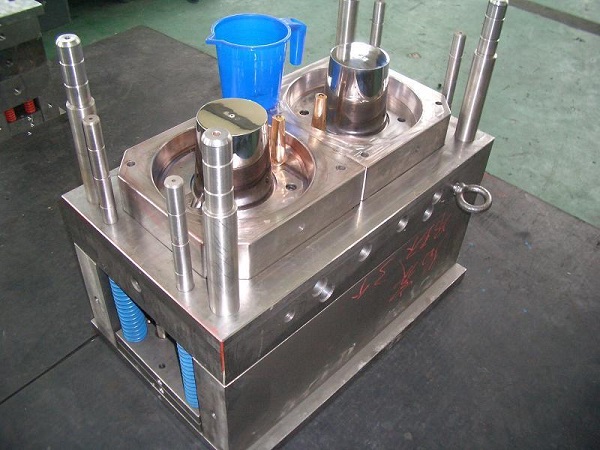
3D printed moulds are tools created through additive manufacturing that shape materials like plastic, metal, or composites into finished parts. Instead of machining a mould from solid metal—which takes weeks and costs thousands—you print it directly from a digital file.
Think of it as the difference between carving a statue from marble and building it with clay layer by layer. Both produce a final form, but one allows changes along the way while the other commits you from the start.
The moulds themselves can be printed in polymers for low-temperature applications or in metals for production runs. They work with existing moulding processes like injection moulding, blow moulding, and compression moulding. The only difference is how the mould was made.
How It Compares to Traditional Mould Making
| Factor | Traditional Moulds | 3D Printed Moulds |
|---|---|---|
| Lead Time | Weeks to months | Days to weeks |
| Cost | $5,000–$100,000+ | $100–$10,000 |
| Design Changes | Expensive, slow | Quick, inexpensive |
| Complexity | Limited by machining | Almost unlimited |
| Surface Finish | Excellent | Good, may need finishing |
| Lifespan | Millions of cycles | Hundreds to thousands |
| Best For | High-volume production | Prototypes, short runs, complex parts |
How Do 3D Printed Moulds Actually Work?
The Process Step by Step
Step 1: Design the Mould
Engineers create a 3D CAD model of the part to be moulded. Then they design the mould around it—accounting for parting lines, ejection pins, cooling channels, and material flow. With 3D printing, they can include features impossible to machine, like conformal cooling channels that follow the part's shape.
Step 2: Choose the Printing Method
Select the right technology for your needs:
- Polymer printing (SLA, SLS, FDM) for prototype moulds or short runs
- Metal printing (SLM, DED) for production moulds
- Binder jetting for complex geometries followed by sintering
Step 3: Print the Mould
The printer builds the mould layer by layer. Polymer moulds may take hours to days. Metal moulds take longer but still far less than traditional machining.
Step 4: Post-Process
Remove supports. Sand or polish surfaces if needed. Apply coatings for release or durability. Metal moulds may require heat treatment.
Step 5: Use in Production
Install the mould in your moulding machine. Inject material. Demould the part. Repeat until the mould wears out or design changes.
Conformal Cooling: The Hidden Advantage
Traditional moulds have straight cooling channels drilled in straight lines. Heat transfers unevenly. Parts cool slowly. Cycle times stretch.
3D printed moulds can include conformal cooling channels that snake along the part's surface, following its exact contours. Cooling happens faster and more evenly. Cycle times drop. Part quality improves.
Real-world example: A German automotive supplier printed injection moulds with conformal cooling for a complex plastic part. Cycle time dropped from 60 seconds to 30 seconds—a 50% reduction. Annual production increased by 40,000 parts without buying new machines.
Where Are 3D Printed Moulds Making an Impact?
Automotive Industry Applications
Time equals money in automotive manufacturing. Every day saved in development means earlier revenue. Every second cut from cycle time means more parts per shift.
Engine components: A leading manufacturer needed cylinder block moulds with complex internal geometries for improved cooling. Traditional machining would take 10 days per mould. 3D printing delivered in 6 days—a 40% time reduction. The printed moulds incorporated cooling channels that improved engine performance by 15% .
Prototyping: When designing new interior trim pieces, automotive companies cycle through multiple iterations. Each design change with traditional moulds costs thousands and takes weeks. With 3D printed moulds, changes happen overnight. One major automaker reported cutting prototype mould costs by 70% while reducing development time by months.
Aerospace Applications
Aerospace demands parts that are lightweight, precise, and reliable. 3D printed moulds help achieve all three.
Complex geometries: Turbine blades require intricate internal cooling passages. Traditional moulds struggle with these shapes. 3D printed moulds handle them easily.
Weight reduction: Moulds with lattice structures—internal frameworks that provide strength with less material—reduce weight while maintaining integrity. A major aerospace company used 3D printed moulds for wing components, achieving a 20% weight reduction in final parts. Less weight means better fuel efficiency and longer flight ranges.
Precision: Aerospace tolerances are unforgiving. High-end industrial printers achieve ±0.05mm accuracy, meeting even critical aerospace requirements.
Consumer Goods Applications
The consumer market moves fast. Trends appear and disappear in months. Companies that adapt quickly win.
Toy manufacturing: A small toy startup used 3D printed moulds to produce customizable action figures. Time from concept to production dropped from 6 months to 2 months. They launched three product lines in the time competitors developed one.
Electronics cases: Smartphone and tablet cases need frequent design updates for new models and trends. A well-known electronics brand used 3D printed moulds to introduce 3 new design variations per quarter—triple their previous rate. Market share grew as they responded faster to consumer preferences.
Medical Device Applications
Medical devices often require customization for individual patients. Traditional moulds make this impractical. 3D printed moulds change the equation.
Custom implants: Each patient's anatomy differs. With 3D printed moulds, manufacturers create custom moulds for patient-specific implants at reasonable cost.
Surgical guides: Single-use surgical guides printed from biocompatible materials ensure perfect fit for each procedure. No inventory. No storage. Print on demand.
Real-world example: A dental lab needed to produce custom aligners for orthodontic patients. Traditional thermoforming moulds required machining each patient's model—time-consuming and expensive. They switched to 3D printed moulds, reducing production time per patient from days to hours while improving accuracy.
What Are the Advantages of 3D Printed Moulds?
Speed to Market
Traditional mould making is a bottleneck. Design, programming, machining, polishing, testing—each step adds time. Rush jobs cost even more.
With 3D printing, the bottleneck disappears. Design completes, file sends, printing starts. No toolpath programming. No machine setup. No waiting for toolmakers.
Time comparison:
- Simple mould, traditional: 4–6 weeks
- Simple mould, 3D printed: 3–5 days
- Complex mould, traditional: 12–16 weeks
- Complex mould, 3D printed: 1–3 weeks
Design Freedom
Machining imposes constraints. Cutters need access. Internal features require special techniques. Sharp corners stress tools.
3D printing removes these constraints. Want curved cooling channels that follow the part contour? Printed. Need lattice structures for weight reduction? Printed. Desire complex parting lines that split the mould in new ways? Printed.
This freedom extends to part design as well. Products previously impossible to mould become feasible. Designers stop asking "Can we make this?" and start asking "What should we make?"
Cost-Effective Short Runs
Tooling amortization kills short-run economics. A $50,000 mould spread over 100,000 parts adds $0.50 per part—acceptable. Spread over 1,000 parts adds $50 per part—prohibitive.
3D printed moulds cost a fraction of traditional tooling. A $2,000 mould spread over 1,000 parts adds $2 per part. Short runs become economically viable. Limited editions, market tests, and custom products all become practical.
Rapid Iteration
Product development is iterative. Design, test, learn, repeat. Each cycle with traditional moulds costs time and money. Designers hesitate to make changes. Compromises accumulate.
With 3D printed moulds, iteration costs little. Found a flaw? Modify the CAD file and print a new mould tomorrow. Test five variations instead of one. Learn faster. Design better.
Complex Geometries
Some parts simply cannot be moulded with conventional tooling. Deep undercuts, intricate internal features, variable wall thicknesses—traditional moulds struggle or fail.
3D printed moulds handle these challenges naturally. The same additive process that builds the mould can build any geometry. If you can design it, you can print it.
What Are the Limitations?
Mould Lifespan
Traditional steel moulds last for millions of cycles. They withstand high pressures, temperatures, and wear. 3D printed moulds—especially polymer ones—wear out faster.
Typical lifespans:
- Polymer moulds: 100–1,000 cycles
- Sintered metal moulds: 1,000–10,000 cycles
- Fully dense metal moulds: 10,000–100,000 cycles
For short runs, this is fine. For high-volume production, traditional moulds still win.
Surface Finish
As-printed surfaces rarely match machined finishes. Layer lines may transfer to moulded parts. Post-processing—sanding, polishing, coating—adds time and cost.
For many applications, the finish is acceptable. For cosmetic parts requiring mirror surfaces, traditional moulds or extensive post-processing remain necessary.
Material Limitations
Not all moulding materials work with printed moulds. High-temperature plastics may degrade polymer moulds. Abrasive fillers may wear surfaces quickly. Chemical interactions may occur.
Metal 3D printed moulds handle a wider range but cost more and take longer to print. Material selection requires careful matching to the moulding process.
Size Constraints
Most 3D printers have build volume limits. Large moulds may exceed these limits, requiring split designs or alternative approaches. Industrial-scale printers exist but cost millions.
For very large parts, traditional mould making may be the only practical option.
How Do You Choose Between 3D Printed and Traditional Moulds?
Decision Framework
Ask these questions to guide your choice:
1. How many parts do you need?
- < 1,000: 3D printed moulds almost always make sense
- 1,000–10,000: Evaluate based on complexity and material
- > 10,000: Traditional moulds likely more economical
2. How complex is the geometry?
- Simple shapes: Either method works
- Complex internal features: 3D printing excels
- Conformal cooling needed: 3D printing required
3. How fast do you need it?
- Weeks available: Consider traditional
- Days available: 3D printing required
4. Will the design change?
- Likely to change: 3D printing wins
- Frozen design: Either works
5. What surface finish do you need?
- Cosmetic, mirror finish: Traditional or extensive post-processing
- Functional, as-moulded: 3D printing works
Hybrid Approaches
Sometimes the best solution combines both methods. Print the complex core with conformal cooling. Machine the simple cavity from standard steel. Assemble them into a hybrid mould that leverages each technology's strengths.
This approach extends mould life where needed while capturing 3D printing's advantages where they matter most.
How Does Yigu Technology Use 3D Printed Moulds?
As a non-standard plastic and metal products custom supplier, Yigu Technology treats 3D printed moulds as a strategic tool in our manufacturing arsenal. We don't advocate them for every project—but when they fit, the results speak for themselves.
Our Experience in Action
A medical device client needed 500 custom parts with complex internal channels. Traditional tooling would cost $30,000 and take 10 weeks—prohibitive for the project budget. We printed aluminium moulds with conformal cooling for $4,000 in 2 weeks. The client received parts on schedule, validated their design, and later ordered production tooling for larger volumes.
A consumer goods startup wanted to test three design variations of a new product. Each required a different mould. Traditional approach: $45,000 and 12 weeks. Our approach: Print all three moulds simultaneously for $6,000 in 1 week. The startup tested with real customers, selected the winning design, and launched with confidence.
Matching Process to Need
Our engineers evaluate each project against multiple factors:
- Volume: How many parts over what timeline?
- Complexity: Does geometry justify 3D printing?
- Material: What will be moulded, and at what temperature?
- Timeline: When do you need parts?
- Budget: What can the project support?
If 3D printed moulds fit, we recommend them. If traditional tooling serves better, we say so. This honesty builds trust and ensures clients get the right solution.
Material and Process Expertise
We maintain capabilities across multiple 3D printing technologies:
- Polymer printing for prototype moulds and short runs
- Metal printing for production moulds requiring durability
- Binder jetting for complex geometries followed by sintering
This range lets us match technology to application precisely.
What Does the Future Hold for 3D Printed Moulds?
Material Advancements
New materials appear constantly. Higher temperature polymers. More durable metal alloys. Composite powders combining properties. Each advancement expands the application range for printed moulds.
Expect to see:
- Polymers lasting 10,000+ cycles
- Metals approaching traditional tool steel durability
- Ceramics for extreme temperature applications
Process Improvements
Print speeds increase yearly. Resolution improves. Costs decline. These trends make printed moulds viable for more applications.
Hybrid machines that combine printing and machining in one platform will become common. Print near-net shape, then machine critical surfaces—all in one setup.
Design Software Evolution
Software that automatically optimizes moulds for printing will reduce design time. Generative design tools will propose optimal cooling channel layouts. Simulation will predict mould performance before printing.
The design-to-part pipeline will shorten further, making rapid iteration even faster.
Industry Adoption
As success stories accumulate, adoption accelerates. Companies that start with prototype moulds will expand to production runs. Industries traditionally conservative about new technology will embrace printed moulds for competitive advantage.
Conclusion
3D printed moulds represent a fundamental shift in how we think about tooling. They offer speed, flexibility, and design freedom that traditional methods cannot match. For short runs, complex geometries, and rapid iteration, they are already the best choice.
But they are not a universal replacement. Traditional moulds still dominate high-volume production where millions of parts justify the tooling investment. The future lies in hybrid approaches—using each technology where it serves best.
Understanding when and how to use 3D printed moulds gives you a competitive edge. Faster development. Lower costs for short runs. Designs previously impossible. These advantages matter whether you are a startup launching your first product or an established manufacturer seeking to innovate.
The question is no longer whether 3D printed moulds work. It is how you will use them.
Frequently Asked Questions
Q1: What materials can be used for 3D printed moulds?
A wide range: polymers like ABS, PLA, and nylon for low-temperature applications; metals including aluminium, stainless steel, and tool steels for production runs; ceramics for high-temperature or chemically resistant applications. Composite materials combine properties of multiple substances.
Q2: Are 3D printed moulds suitable for large-scale production?
For mid-scale production (thousands to tens of thousands of parts), yes. For millions of parts, traditional steel moulds remain more economical due to longer lifespan. However, hybrid approaches—printed cores with traditional cavities—extend applicability.
Q3: How accurate are 3D printed moulds?
Typical accuracy ranges from ±0.1–0.2 mm for general-purpose printers. High-end industrial systems achieve ±0.01–0.05 mm. Accuracy depends on technology, printer quality, and post-processing.
Q4: How long do 3D printed moulds last?
Polymer moulds: 100–1,000 cycles. Sintered metal: 1,000–10,000 cycles. Fully dense metal: 10,000–100,000 cycles. Compare to traditional steel moulds: millions of cycles.
Q5: Can 3D printed moulds be repaired?
Sometimes. Polymer moulds are cheap enough to replace. Metal moulds may accept welded repairs or selective reprinting of damaged areas. Depends on damage extent and mould value.
Q6: What is conformal cooling, and why does it matter?
Conformal cooling channels follow the part's shape rather than drilling straight lines. They cool parts faster and more evenly, reducing cycle times and improving quality. Only 3D printing can create true conformal cooling.
Q7: How much do 3D printed moulds cost?
Costs vary wildly by size, material, and complexity. Simple polymer moulds: $100–$1,000. Complex metal moulds: $5,000–$20,000. Traditional equivalents: 2–10 times higher for comparable complexity.
Contact Yigu Technology for Custom Manufacturing
Ready to explore 3D printed moulds for your project? At Yigu Technology, we combine moulding expertise with additive manufacturing innovation. Our team helps you evaluate whether printed moulds fit your application, select the right materials, and deliver quality parts on schedule.
Visit our website to see our capabilities. Contact us today for a free consultation and quote. Let's shape the future of manufacturing together.