Introduction
3D printing moves fast. What seemed cutting-edge last year is already old news. New machines print faster than ever. New materials handle heat and stress like never before. New applications pop up in healthcare, construction, and automotive industries almost monthly.
If you're trying to keep up, it can feel overwhelming. But understanding these changes matters—whether you're a hobbyist looking for your next printer or a business owner exploring manufacturing options.
I've spent years in this industry at Yigu technology, watching trends come and go. Some are hype. Others are genuine game-changers. This guide cuts through the noise and focuses on what's actually happening right now in 3D printing—the technologies, materials, and applications that are reshaping how we make things.
How Much Faster Is 3D Printing Getting?
Consumer Printers: Speed That Changes Everything
Remember when 3D printing meant waiting days for a simple part? Those days are ending.
Take the Bambu Lab X1, a consumer FDM printer that's shaking up the market. It prints at speeds up to 500 mm/s with acceleration of 20,000 mm/s². To understand how dramatic that is, traditional FDM printers typically ran at 70-80 mm/s. We're talking about a 6-7 times speed increase in just a few years.
What does this mean practically? A part that used to take 10 hours now finishes in under 2. For small businesses and creators, that's the difference between prototyping one idea per week and iterating through five.
I watched a friend run his print farm with older machines—24-hour prints meant one cycle per day. After switching to faster printers, he now runs three cycles daily. His output tripled without adding floor space or hiring help.
Industrial Speed: Breaking Physics Limits
Industrial 3D printing is seeing even more dramatic gains. Continuous Liquid Interface Production (CLIP) already sped up resin printing by eliminating layer-by-layer curing. Now injection CLIP (iCLIP) takes that further—5-10 times faster than the original CLIP method.
This isn't incremental improvement. It's rethinking the entire process. Instead of pulling parts slowly from a resin vat, iCLIP injects resin during printing, allowing continuous production. Parts that took hours now emerge in minutes.
For manufacturers, this changes the economics completely. When printing takes hours, it's for prototypes and specialty items. When printing takes minutes, production runs become viable.
What About Print Quality and Detail?
Resolution That Reveals Everything
Speed matters little if quality suffers. Fortunately, resolution keeps improving alongside speed.
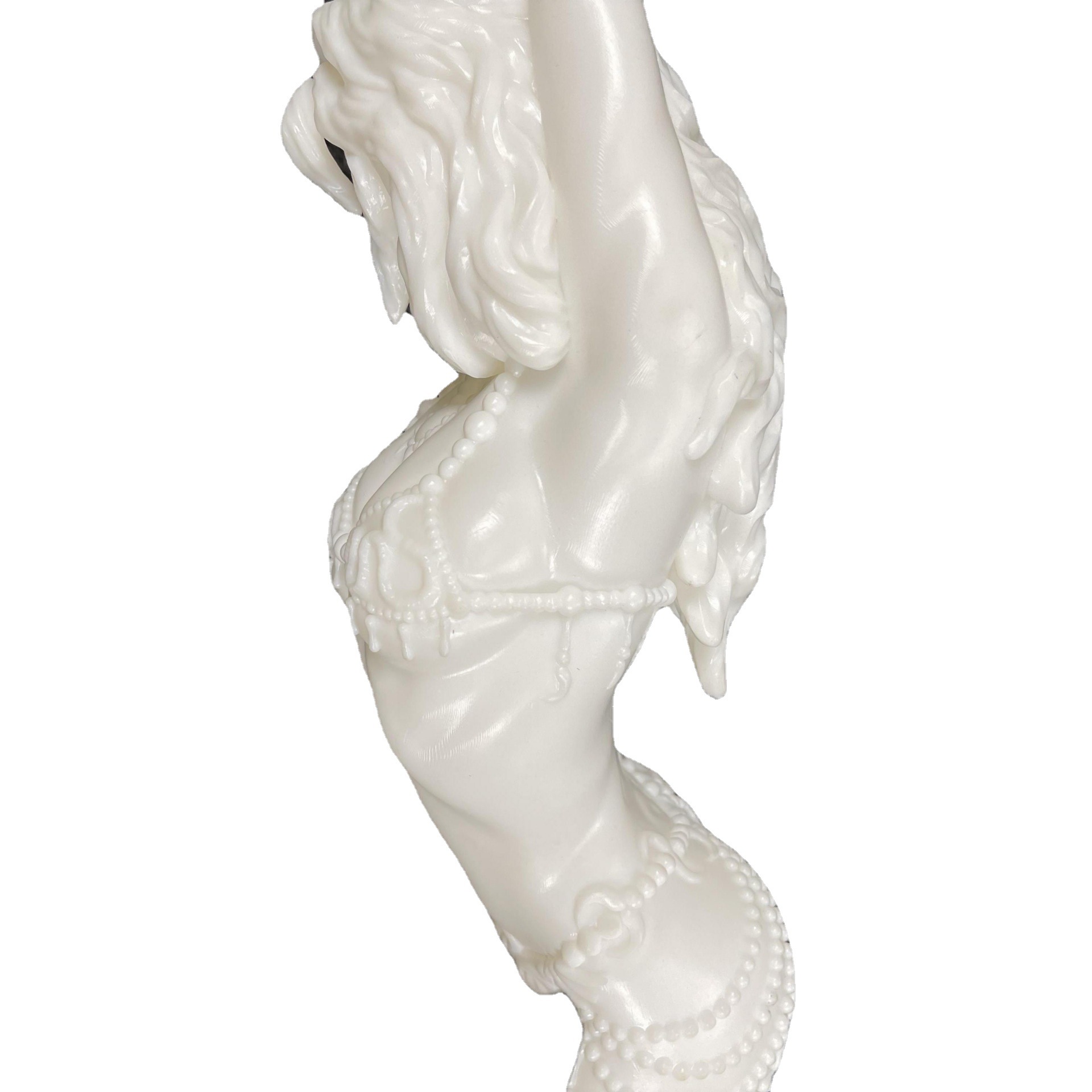
SLA printers like the Formlabs Form 3+ now achieve exceptional detail. Layer heights below 0.05 mm mean surfaces smooth enough for jewelry patterns and dental applications. The difference shows in the finished part—visible layer lines disappear, fine features stay crisp, and post-processing time drops.
Compare a figurine printed on a low-resolution machine versus a high-resolution one:
- Low resolution: Facial features blur, edges look stepped, textures turn into vague patterns
- High resolution: Eyes have shape, hair shows individual strands, clothing textures read clearly
For industries like jewelry making, this isn't cosmetic—it's financial. A ring master with crisp details casts perfectly. A blurry master produces flawed jewelry that customers reject.
XY Precision Matters Too
Resolution isn't just about layer height. XY-plane minimum feature size determines how small details can be. Modern printers push this down to 0.025 mm or less.
That means printing text small enough to need magnification, or creating interlocking mechanisms too tiny for traditional machining. Micro 3D printing is emerging as its own field, serving electronics, medical devices, and precision engineering.
Can You Print with Multiple Materials at Once?
The Rise of Multi-Material Printing
Single-material printing dominated for years. Print one thing, one way. But real-world objects rarely use just one material. A screwdriver has a hard tip and a soft grip. A shoe has rigid sole and flexible upper. Multi-material 3D printing finally lets us replicate this.
Advanced printers now combine:
- Rigid plastics with flexible elastomers
- Conductive materials with insulators
- Support materials that dissolve away
- Colors within a single print
Medical Applications
In healthcare, multi-material printing creates prosthetics that actually work. Imagine a hand with:
- Rigid plastic for structural bones
- Flexible material for joints
- Soft silicone for skin-contact comfort
All printed in one process. No assembly. No adhesives. The parts move naturally because the materials transition smoothly.
A prosthetics lab I visited now prints custom hands for children. Growing kids need frequent replacements. Traditional manufacturing took weeks and cost thousands. Multi-material printing delivers in days for hundreds. Kids get devices that fit now, not devices sized for when they grow into them.
Automotive and Consumer Goods
Car manufacturers use multi-material printing for interior parts. A single component might have:
- Hard ABS for the base structure
- Soft-touch material on surfaces people touch
- Flexible gasket areas for vibration isolation
One part replaces three assemblies. Weight drops. Assembly time vanishes. Quality improves because there's nothing to come loose.
What New Plastics Are Available?
High-Performance Polymers: PEEK and Beyond
PEEK (Polyether Ether Ketone) represents a major leap for 3D printing plastics. It handles temperatures up to 300°C, resists harsh chemicals, and maintains mechanical strength where other plastics fail.
Aerospace uses PEEK for parts near engines. Automotive applies it under hoods where heat builds. Medical devices benefit from its sterilizability and biocompatibility.
But PEEK isn't easy to print. It requires high nozzle temperatures (350-400°C), enclosed chambers, and careful cooling. The reward is parts that survive where nothing else does.
Super-Strong Plastics
New formulations push plastic strength to new levels. Some recently developed materials show 50% higher tensile strength than standard options. That means:
- Thinner walls for the same strength
- Lighter parts without sacrificing durability
- Replacement of metal in non-critical applications
Industrial equipment manufacturers now print replacement parts in these super-strong plastics. A broken lever on a production line gets printed overnight instead of ordered with 6-week lead time.
What Metals Can You 3D Print Now?
Titanium Alloys: The Aerospace Standard
Titanium alloys like Ti-6Al-4V dominate metal 3D printing for good reason. They offer:
- Exceptional strength-to-weight ratio
- Excellent corrosion resistance
- High-temperature capability
- Biocompatibility for medical use
Aerospace manufacturers print brackets, engine components, and structural parts. Weight savings of 30-50% compared to machined parts aren't unusual. Every kilogram saved on a plane saves thousands in fuel over its lifetime.
Medical applications grow even faster. About 70% of custom orthopedic implants now use 3D-printed titanium. Hip replacements match patient anatomy exactly. Spinal cages promote bone growth through designed porosity. Surgical guides position cuts precisely.
Stainless Steel 316L: Workhorse Material
316L stainless steel brings corrosion resistance and strength to 3D printing. It's especially valuable in:
- Medical instruments that need repeated sterilization
- Food processing equipment exposed to acids and cleaners
- Marine components facing saltwater
Unlike traditional machining, 3D printing creates internal channels impossible to drill. Cooling passages follow part contours. Fluid paths optimize for flow. Weight reduces without compromising strength.
What About Materials for Medical Use?
Bio-Compatible Polymers
PLA gets attention for being biodegradable, but medical applications need more. Specialized bio-compatible polymers now serve:
- Surgical guides that contact tissue briefly
- Implants that remain in the body
- Drug delivery devices that dissolve over time
These materials undergo rigorous testing for cytotoxicity, sensitization, and irritation. They're not hobbyist filaments—they're medical-grade with documentation to prove it.
Tissue Scaffolds and Regeneration
The frontier of medical 3D printing involves living tissue. Bio-compatible scaffolds printed in lattice structures provide frameworks for cells to grow. Over time, the scaffold degrades and natural tissue replaces it.
Bone repair leads this application. A patient with missing bone gets a custom scaffold printed to match the defect exactly. Surgeons implant it, and the body builds new bone through the structure. Months later, the scaffold vanishes and natural bone remains.
Dental applications follow similar principles. Jawbone preservation after extraction, ridge augmentation for implants, and periodontal regeneration all benefit from 3D-printed scaffolds.
How Is Healthcare Using 3D Printing?
Prosthetics: From Thousands to Dozens
Cost reduction in prosthetics might be 3D printing's most human impact. Traditional prosthetic hands cost thousands. 3D-printed versions cost dozens.
The E-nable project exemplifies this. Since 2013, volunteers worldwide have printed and donated hundreds of prosthetics. Children outgrow traditional prosthetics quickly—parents face thousands in replacement costs yearly. Printed versions let kids have devices that fit now, with replacements as they grow.
A Chinese creator named "Owen来造" printed a prosthetic for a fan's father. Cost dropped from thousands of yuan to dozens. The new device fit better and worked more naturally than the expensive original.
Organ Models for Surgery Planning
Surgeons now practice on 3D-printed organ models before touching patients. Using CT or MRI data, they print exact replicas of a patient's heart, liver, or kidney.
Benefits are real:
- Shorter surgery times
- Fewer complications
- Better outcomes
- Less time under anesthesia
Complex pediatric heart surgeries especially benefit. A surgeon who's held a model of the defect before opening the chest operates with confidence instead of exploration.
Custom Drug Delivery
Triastek, a 3D printing company, collaborates with pharmaceutical giant Eli Lilly on printed medications. Their Melt Extrusion Deposition (MED) technology creates tablets with precise release profiles.
Instead of uniform pills that release all at once, printed drugs can:
- Release in pulses at specific times
- Deliver different drugs from one tablet
- Target specific intestinal areas for absorption
This improves bioavailability—more drug reaches where it's needed—and reduces side effects from concentration spikes.
What's Happening in Construction 3D Printing?
Speed That Redefines Building
Construction 3D printing compresses timelines dramatically. A 500-square-foot house prints in about 24 hours. The same structure traditionally takes months.
Mighty Buildings completed the world's first 3D-printed net-zero energy home in Southern California during 2022. The development includes 20 homes across 40 printed units, each 1,171 square feet with two bedrooms and two bathrooms.
The speed comes from continuous extrusion and robotic placement. While traditional construction involves dozens of trades working sequentially, printing happens in one continuous operation.
Material Efficiency and Waste Reduction
Traditional construction wastes enormous material. Wood framing generates cutoffs. Concrete forms get thrown away. Over-ordering pads estimates.
3D printing changes this:
- Concrete use drops by about half through topological optimization
- Material deposits only where structure needs it
- No formwork means no formwork waste
- Exact quantities eliminate over-ordering
For a single home, this saves tons of material. Scaled to communities, the environmental impact grows substantial.
Design Freedom
Curves cost nothing in 3D printing. In traditional construction, curves mean custom formwork, skilled labor, and premium pricing. Printed buildings curve as easily as they go straight.
Architects design:
- Organic shapes that follow site conditions
- Integrated benches and planters
- Textured walls that need no finishing
- Optimized structural ribs that use less material
Buildings become site-specific rather than catalog-derived.
How Is Automotive Manufacturing Changing?
Cost Reduction for Small Batches
Traditional manufacturing hates small batches. Molds cost tens of thousands. Setup takes weeks. Per-part pricing only makes sense at volume.
3D printing flips this. No molds. No setup. Print one part for the same per-unit cost as print one hundred.
For custom and low-volume applications:
- Classic car restoration parts
- Limited edition components
- Racing modifications
- Prototype validation
A vintage car owner needing a rare bracket no longer searches junkyards or pays for custom machining. Someone scans an original, prints a replica, and drives again.
Performance Optimization
Complex shapes improve performance. Engine components with optimized internal channels flow better. Lightweight structures with lattice cores reduce weight without sacrificing strength. Integrated assemblies eliminate joints and failure points.
Stratasys F900, an industrial FDM printer, produces:
- Components for test vehicles
- Fixtures and jigs for assembly lines
- Factory molds for composite layup
- Functional prototypes for validation
Materials match applications:
- ABS for lightweight parts with smooth surfaces
- ASA for weather-resistant exterior components
- Nylon for wear-resistant fasteners and connectors
Weight Reduction for Efficiency
Every kilogram saved in a vehicle improves efficiency. Electric vehicles especially benefit—lighter cars go farther on the same battery.
3D-printed structural parts achieve weight savings through:
- Topology optimization that removes unneeded material
- Lattice structures that maintain strength with less mass
- Part consolidation that eliminates heavy fasteners
- Material placement exactly where loads require
The result is vehicles that perform better and consume less energy.
Yigu Technology's Viewpoint
At Yigu technology, we've watched 3D printing evolve from prototyping curiosity to production reality. The latest developments matter to us—and to our clients—in practical ways.
Faster printing means quicker turnaround on custom parts. When a client needs a component urgently, speed saves their project. Multi-material capability lets us create assemblies that used to require multiple suppliers and assembly steps. New materials give us options for strength, heat resistance, and specialized properties.
But technology alone isn't the answer. Matching capabilities to applications—that's where experience matters. We've seen clients request metal printing when plastic would work cheaper and faster. We've guided others away from materials that wouldn't survive their use case.
Custom manufacturing means understanding both what's possible and what's practical. The latest developments expand what's possible. Our job is making them practical for real projects.
Conclusion
3D printing keeps advancing on every front. Printers run faster while maintaining quality. Multi-material capabilities create integrated assemblies impossible before. New plastics handle heat and stress like never before. Metal options expand with titanium and stainless steel formulations. Medical applications save money and improve lives. Construction printing builds homes in days. Automotive manufacturing optimizes performance and reduces weight.
For anyone using 3D printing—hobbyist, designer, engineer, business owner—these developments matter. They open possibilities. They solve problems. They change what's worth trying.
The pace won't slow. Next year will bring more speed, more materials, more applications. Staying informed means staying capable. And in a field moving this fast, capability is everything.
FAQ
How fast are the latest 3D printers compared to older models?
Consumer FDM printers now reach 500 mm/s—about 6-7 times faster than traditional models running 70-80 mm/s. Industrial processes like iCLIP achieve 5-10 times speed improvements over previous methods. A part taking 10 hours on older machines might finish in under 2 hours on current equipment.
What multi-material printing options exist today?
Advanced printers combine rigid plastics with flexible materials, conductive with insulating, and multiple colors in single prints. Medical applications print prosthetics with hard structural parts and soft comfort layers together. Automotive components combine rigid bases with soft-touch surfaces. Support materials dissolve away, leaving complex geometries behind.
Which new plastics matter most for engineering applications?
PEEK stands out for high-temperature use—handling 300°C continuous operation. Super-strong formulations show 50% higher tensile strength than standard plastics, enabling metal replacement in non-critical applications. Each serves applications where standard materials would fail.
What metals can you 3D print now?
Titanium alloys like Ti-6Al-4V lead aerospace and medical applications with exceptional strength-to-weight ratios. Stainless steel 316L serves medical, food processing, and marine applications with excellent corrosion resistance. Both achieve properties comparable to traditionally manufactured metals.
How is 3D printing changing medical treatment?
Prosthetics cost drops from thousands to dozens. Surgeons practice on patient-specific organ models before operating. Custom implants match anatomy exactly. Drug delivery systems release medication precisely where and when needed. Tissue scaffolds guide regeneration of bone and other tissues. Each application improves outcomes while often reducing costs.
Can 3D printing really build houses?
Yes. A 500-square-foot house prints in about 24 hours. Completed developments exist with multiple homes. Benefits include dramatic time reduction, about 50% less concrete use through optimization, minimal waste, and design freedom impossible with traditional methods. While not yet replacing all construction, the technology advances rapidly.
Contact Yigu Technology for Custom Manufacturing
Interested in applying these 3D printing developments to your projects? Yigu technology specializes in custom manufacturing with plastics and metals. We stay current with the latest technologies so you don't have to.
Whether you need:
- Fast prototypes using high-speed printing
- Multi-material parts with combined properties
- High-performance plastics like PEEK for demanding applications
- Titanium or stainless steel components
- Medical devices with bio-compatible materials
We're ready to help. Contact us to discuss your requirements. Tell us what you're making. We'll recommend the best approach from today's possibilities.