Introduction
Walk through any modern manufacturing facility, and you'll likely see something that wasn't there five years ago—MJF 3D printing systems quietly producing parts that would have taken weeks using traditional methods. Multi-Jet Fusion, developed by HP, has rapidly become one of the most talked-about technologies in additive manufacturing. But here's the question that actually matters: is it really revolutionizing the industry, or is it just another incremental improvement?
Having worked with various 3D printing technologies at Yigu technology and watched MJF transform how our clients approach production, I can tell you—this is different. The combination of speed, quality, and consistency that MJF delivers is changing what's possible in manufacturing. Let me walk you through exactly how this technology works, why it matters, and what it means for industries from aerospace to healthcare.
What Exactly Is MJF 3D Printing and How Does It Work?
The Technology Behind the Name
Multi-Jet Fusion (MJF) was developed by HP as a response to limitations they saw in existing 3D printing technologies. Unlike methods that use lasers to sinter powder one point at a time, MJF takes a fundamentally different approach.
Here's how it works in simple terms:
A thin layer of nylon powder spreads across a build platform. An inkjet printhead—similar to what's in your office printer but far more sophisticated—passes over the powder and deposits two different agents. The fusing agent goes where the powder should become solid. The detailing agent goes around the edges, ensuring sharp boundaries and smooth surfaces.
Then, infrared heating elements pass over the entire bed. The areas with fusing agent absorb heat and fuse together. The areas without it remain powder. Lower the platform, spread another layer of powder, and repeat.
The genius of this approach is parallel processing. While a laser in SLS printing must trace every point of every layer one after another, MJF treats entire layers at once. This fundamental difference drives the technology's remarkable speed.
Key Components That Make It Work
Understanding the components helps explain why MJF delivers such consistent results:
| Component | Function | Why It Matters |
|---|---|---|
| Powder Bed | Holds and distributes nylon powder | Even powder distribution prevents defects |
| Inkjet Printhead Array | Applies fusing and detailing agents | Multiple nozzles work in parallel for speed |
| Spreading Mechanism | Levels each new powder layer | Consistent layer thickness ensures accuracy |
| Infrared Heating Lamps | Fuses the powder where agents applied | Precise temperature control prevents warping |
| Cooling System | Manages part temperature after fusing | Controlled cooling maintains material properties |
How Does MJF Compare to Other 3D Printing Technologies?
Head-to-Head Comparison
If you're trying to decide which technology fits your needs, this comparison matters. Based on our experience at Yigu technology testing parts across multiple platforms, here's how MJF stacks up:
| Factor | MJF | SLS (Selective Laser Sintering) | FDM (Fused Deposition Modeling) |
|---|---|---|---|
| Speed | Fastest—up to 10x faster than SLS | Moderate—laser traces each point | Slow—nozzle traces each line |
| Surface Finish | Excellent—smooth, consistent | Good—slightly grainy | Poor—visible layer lines |
| Detail Resolution | High—sharp edges, fine features | High—but slower to achieve | Limited—nozzle size restricts detail |
| Mechanical Strength | Excellent—consistent, isotropic | Very good—slightly variable | Good—but anisotropic (weaker between layers) |
| Part Consistency | Outstanding—same properties throughout | Good—can vary with laser path | Variable—depends on calibration |
| Material Options | Limited to nylon-based materials | Broader—nylon, TPU, composites | Widest—hundreds of filaments |
| Post-Processing Needed | Minimal—supports removal, light finishing | Moderate—media blasting typical | Significant—support removal, sanding |
Where MJF Wins
The comparison reveals MJF's sweet spot. It dominates when you need:
- Functional prototypes that behave like production parts
- End-use parts with consistent mechanical properties
- Complex geometries with internal features
- Multiple parts in a single build (high packing density)
- Fast turnaround without sacrificing quality
Where Other Technologies Still Make Sense
MJF isn't the answer for everything. FDM remains the right choice for large parts, low-cost prototyping, and applications requiring engineering materials like PEEK or Ultem. SLS offers broader material options for nylon-based applications. SLA still wins for ultra-smooth surface finish and transparency.
Why Is Speed Such a Game-Changer?
The Economics of Faster Production
When HP claims MJF is up to 10 times faster than other 3D printing methods, what does that actually mean for your business?
Consider a typical production run of 100 complex parts. With SLS, printing might take 3-4 days. With MJF, the same parts could be ready in 8-10 hours. That difference transforms what's possible:
- Same-day prototyping becomes realistic
- Design iterations happen faster
- Production runs complete in shifts instead of weeks
- Emergency parts can be printed overnight
At Yigu technology, we've seen clients compress development cycles from months to weeks simply by switching to MJF for prototyping. The speed isn't just convenient—it's competitive advantage.
The Packing Advantage
MJF's speed comes partially from its ability to densely pack parts in the build volume. Because there's no need to leave space for laser paths or worry about thermal distortion in the same way as other technologies, you can fill the build chamber efficiently. More parts per build means lower cost per part and faster overall throughput.
What Makes MJF Parts So Strong?
Material Science at Work
The strength of MJF printed parts comes from the combination of material and process. Nylon powders specifically engineered for MJF produce parts with exceptional mechanical properties:
- Tensile strength approaching injection-molded nylon
- Consistent properties in all directions (isotropic behavior)
- Good elongation before failure—parts bend rather than snap
- Excellent layer adhesion—no weak points between layers
This consistency matters enormously for functional applications. When you're designing a part that will bear load, you need to know how it will perform. With MJF, the predictability rivals traditional manufacturing.
Real-World Performance
We've tested MJF parts in demanding applications—automotive under-hood components, aerospace brackets, medical devices. The results consistently impress. Parts that would have required machining from solid material perform identically when printed, at a fraction of the weight and cost.
How Is MJF Being Used Across Industries?
Aerospace: Lightweighting Without Compromise
The aerospace industry has embraced MJF for its ability to produce lightweight, strong components with complex geometries. Traditional manufacturing often forces designers to choose between weight and strength. MJF removes that trade-off.
Brackets and clips that once required multiple machined and assembled parts now print as single components. Internal lattice structures reduce weight while maintaining strength. Customized tooling for specific aircraft configurations becomes practical at low volumes.
The results? Faster aircraft development, better fuel efficiency, and supply chains that respond quickly to changing needs.
Automotive: Faster Development, Better Parts
Automotive manufacturers use MJF throughout the development process and increasingly for production. The technology shines for:
- Functional prototypes that undergo real-world testing
- Production parts for low-volume vehicles
- Custom tooling for assembly lines
- Spare parts for legacy vehicles
One automotive client we work with reduced prototype lead time from 4 weeks to 3 days after switching to MJF. That speed lets them test more design iterations and launch better vehicles faster.
Medical: Customization at Scale
Healthcare applications demonstrate MJF's ability to combine customization with consistency. Every patient is different, but every device must meet strict standards. MJF delivers both.
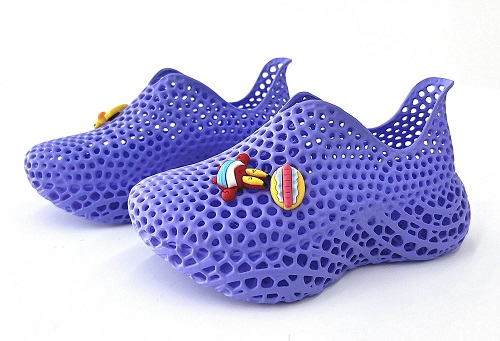
Custom surgical guides printed for individual patients improve outcomes and reduce operating time. Prosthetic sockets tailored to exact anatomy provide better comfort and function. Orthotic devices with complex lattice structures offer support where needed while remaining lightweight.
The biocompatibility of MJF nylon materials means these devices can safely contact skin or even be used in surgical settings after appropriate sterilization.
Consumer Products: From Concept to Reality
Consumer goods companies love MJF for its ability to bridge the gap between prototyping and production. A design that works in prototyping can scale directly to low-volume production without rethinking the manufacturing process.
We've seen clients produce everything from custom eyewear to high-end audio components using MJF. The surface finish is good enough for many consumer applications without extensive post-processing, and the material properties satisfy demanding users.
What Are the Limitations You Should Know?
Material Constraints Are Real
Let's be honest about the biggest limitation: MJF is currently limited to nylon-based materials. While HP and their partners continue developing new formulations, you can't print metals, high-temperature plastics, or flexible materials with standard MJF systems.
For many applications, nylon is perfect. It's strong, durable, chemical resistant, and available in various formulations. But if your application requires metal properties or extreme temperature resistance, MJF isn't the answer—yet.
The Investment Question
MJF systems cost more than many other 3D printers. An industrial MJF system runs significantly higher than a professional FDM or SLA machine. For companies just exploring additive manufacturing, this investment can be hard to justify.
However, the calculation changes when you consider service providers. You don't need to buy an MJF printer to use MJF. Professional services like Yigu technology offer MJF printing on a per-part basis, giving you access to the technology without the capital investment.
Post-Processing Isn't Zero
While MJF parts come out of the printer with good surface finish, they're not done. Support removal is minimal—the unsintered powder supports overhangs—but parts still need:
- Powder removal through media blasting
- Surface finishing for cosmetic applications
- Dyeing if color is required (MJF prints in gray or black by default)
- Infiltration for certain applications requiring enhanced properties
These steps add time and cost, though less than with most competing technologies.
What Does the Future Hold for MJF?
Expanding Material Options
The most exciting development on the horizon is new materials. HP and their partners continue developing:
- Elastomeric materials for flexible applications
- High-temperature nylons for more demanding environments
- Composite materials with enhanced properties
- Recycled materials for sustainable manufacturing
Each new material expands the addressable applications for MJF, moving it further into production territory.
Faster, Bigger, Better
Printer technology continues improving. Larger build volumes enable bigger parts or more parts per run. Faster print speeds further compress timelines. Better agent formulations improve detail and surface finish.
Production at Scale
The ultimate promise of MJF is bridge to production—the ability to start with prototypes, move to pilot runs, and scale to volume production without changing technology. Companies already do this for applications up to tens of thousands of parts per year. As costs decrease and speeds increase, that volume will grow.
Conclusion
So, is MJF 3D printing revolutionizing the industry? Based on what we've seen at Yigu technology, the answer is yes—but in specific, meaningful ways rather than as a universal replacement.
MJF excels where speed, strength, and consistency matter most. It's transforming how companies prototype, how they produce low-to-medium volumes, and how they think about manufacturing complexity. The technology has found its place alongside other methods, not replacing them but expanding what's possible.
For functional prototypes that actually perform like production parts, MJF is often the best choice. For end-use parts in applications ranging from automotive to medical, it's increasingly the first choice. For geometries that defeat traditional manufacturing, it's sometimes the only choice.
The technology will continue improving—faster printers, better materials, lower costs. But even today, MJF delivers capabilities that simply didn't exist a decade ago. That's not incremental improvement. That's revolution.
Frequently Asked Questions
What is Multi-Jet Fusion (MJF) 3D printing?
Multi-Jet Fusion is an advanced 3D printing technology developed by HP. It builds parts layer by layer using an inkjet array to deposit fusing and detailing agents onto a bed of nylon powder. Infrared heat then fuses the treated areas into solid material. The process combines speed, precision, and consistent mechanical properties, making it ideal for functional prototypes and end-use production parts.
How fast is MJF compared to other 3D printing methods?
MJF is significantly faster than most alternatives—typically 5-10 times faster than SLS and even faster compared to FDM for complex parts. This speed comes from processing entire layers simultaneously rather than tracing each point individually. For a typical batch of parts, what might take days with other technologies can complete in hours with MJF.
What materials can be used in MJF printing?
Currently, MJF primarily uses nylon-based materials, including PA12 (nylon 12), PA11 (bio-based nylon), and various reinforced formulations. These materials offer excellent mechanical properties, chemical resistance, and durability. HP and partners continue developing new materials, including elastomers and high-temperature nylons, expanding the range of applications.
Is MJF suitable for end-use production parts?
Absolutely—this is one of MJF's greatest strengths. The consistent mechanical properties, excellent surface finish, and design freedom make it ideal for production runs from dozens to thousands of parts. Many companies now use MJF for bridge production while tooling is completed, and increasingly for full-rate production of suitable components.
How does the cost of MJF compare to other technologies?
For suitable applications, MJF often delivers the lowest cost per part among industrial 3D printing technologies. The speed and packing density mean more parts per build, spreading the cost across more units. For volumes from prototypes through low-to-medium production, MJF frequently beats both other additive methods and traditional manufacturing when tooling costs are considered.
What post-processing does MJF require?
MJF parts require minimal post-processing compared to many alternatives. Parts need media blasting to remove excess powder from surfaces and internal channels. For cosmetic applications, light sanding or tumbling can improve surface finish. Parts can be dyed in various colors, though the base material is typically gray or black. Some applications benefit from infiltration to enhance specific properties.
Contact Yigu Technology for Custom Manufacturing
At Yigu technology, we've helped hundreds of clients harness the power of MJF 3D printing for prototypes, production parts, and everything in between. Our team combines deep technical expertise with practical manufacturing experience to deliver results that meet your exact requirements.
We offer full-service MJF printing with a range of nylon materials, quality inspection, and post-processing options. Whether you need a single prototype or thousands of production parts, we'll help you determine whether MJF makes sense for your application—and deliver exceptional results if it does.
Contact us today to discuss your project. Tell us about your application, your volume requirements, and your performance goals. We'll provide honest guidance and, if MJF is the right choice, parts that exceed your expectations.