Introduction
For over a century, bakelite electrical products have been a cornerstone of electrical systems worldwide. From household switches to industrial insulators, this phenolic material has proven its reliability generation after generation. But today’s market offers more options than ever—silicone rubber, FR-4 composites, advanced thermoplastics. So the question isn’t whether bakelite works; it’s whether it’s the right fit for your specific application. This guide helps you evaluate bakelite electrical products against your actual requirements, balancing performance, cost, and long-term value.
What Makes Bakelite Suitable for Electrical Applications?
Bakelite is a thermosetting phenolic resin formed by polymerizing phenol and formaldehyde. Its three-dimensional cross-linked molecular structure gives it properties uniquely suited to electrical applications.
Key Electrical Properties
| Property | Typical Value | Why It Matters |
|---|---|---|
| Insulation resistance | 10¹²–10¹⁴ Ω·cm | Prevents current leakage, ensures safety |
| Dielectric strength | 10–30 kV/mm | Withstands high voltages without breakdown |
| Dielectric constant | 4–5 | Stable across frequency ranges |
Supporting Physical Properties
| Property | Typical Value | Why It Matters |
|---|---|---|
| Heat resistance | 150–200°C continuous | Maintains properties where heat is generated |
| Hardness (Shore D) | 85–90 | Withstands mechanical stress in assemblies |
| Density | 1.3–1.4 g/cm³ | Substantial, durable feel |
These properties aren’t just numbers on a datasheet. They translate to real-world performance: a bakelite switch housing that protects users from shock for decades, an insulator that maintains its integrity through temperature cycles, a connector body that survives repeated use without degrading.
Where Are Bakelite Electrical Products Used Today?
Switches and Connectors
Bakelite remains common in both residential and industrial switching equipment.
Household Switches
Standard wall switches often use bakelite for the housing and internal insulating components. The material’s high insulation resistance prevents current leakage to the user—a critical safety requirement. Its hardness withstands the mechanical forces of repeated switching over years of use.
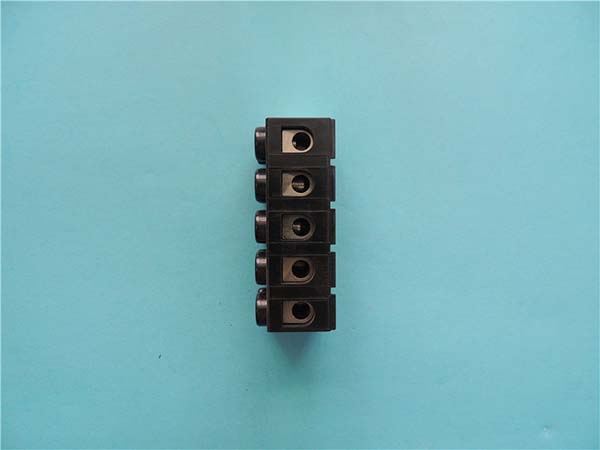
Industrial Connectors
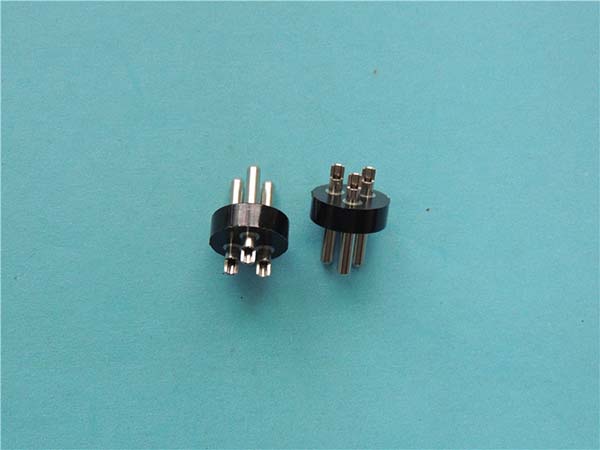
In industrial environments, connectors face harsh conditions: vibration, temperature swings, and repeated connection cycles. Bakelite’s mechanical strength and dimensional stability make it suitable for these demanding applications. Industry data shows that approximately 30% of high-quality industrial switches and connectors continue to use bakelite components.
Circuit Boards
Bakelite-based circuit boards were the standard in early electronics. Today, they occupy a narrower but still relevant niche.
| Application | Why Bakelite Works |
|---|---|
| Low-cost consumer electronics | Cost-effective alternative to FR-4 |
| Specialized industrial controls | Heat resistance dissipates component heat |
| Vintage equipment restoration | Authentic material for period-correct repairs |
For high-power or high-frequency applications, modern FR-4 boards offer superior performance. But for applications where cost matters and requirements are moderate, bakelite circuit boards remain a viable option.
Electrical Insulators
In power transmission and distribution, bakelite insulators perform critical safety functions.
Support Insulators
Bakelite supports and isolates electrical conductors, preventing current from reaching unintended paths. In outdoor installations, its resistance to weathering and chemical exposure ensures long-term reliability.
Bushing Insulators
Transformer bushings and similar components use bakelite to provide electrical isolation where conductors pass through grounded enclosures. The material’s dielectric strength ensures safe operation even under voltage stress.
What Are the Advantages of Bakelite Electrical Products?
Cost-Effectiveness
Bakelite remains relatively inexpensive compared to high-performance alternatives. Phenol and formaldehyde—the raw materials—are widely available and cost-effective. This cost advantage matters in:
- Consumer electronics where price sensitivity is high
- High-volume industrial components where per-unit savings accumulate
- Applications where advanced properties aren’t required
Ease of Manufacturing
Compression molding and injection molding processes allow complex shapes to be produced with high precision. Manufacturers can achieve:
- Consistent quality across large production runs
- Complex geometries without secondary operations
- Relatively short cycle times compared to some alternatives
Proven Electrical Insulation
Bakelite’s electrical properties have been validated through over a century of use. Engineers and specifiers can rely on:
- Well-documented performance characteristics
- Decades of field experience across applications
- Established quality standards and testing methods
What Are the Limitations?
Brittleness
Bakelite’s hardness comes with a trade-off: it is brittle. Under impact or excessive mechanical stress, it cracks rather than deforming.
A manufacturer producing portable testing equipment learned this lesson when bakelite connector housings failed during field use. The equipment was dropped occasionally—not frequently, but enough to cause a 15% failure rate over two years. Switching to a more impact-resistant material eliminated the issue.
Lower Thermal Conductivity
Compared to some modern materials, bakelite has relatively low thermal conductivity (0.15–0.3 W/(m·K) ). This limits its use in high-power applications where heat dissipation is critical.
Environmental Concerns
As a thermoset, bakelite cannot be recycled through conventional plastic recycling streams. Disposal contributes to environmental waste—a growing concern in an era of increasing sustainability requirements.
How Does Bakelite Compare to Alternatives?
Comparison with FR-4 Circuit Boards
| Property | Bakelite | FR-4 |
|---|---|---|
| Electrical insulation | Good | Excellent |
| Dielectric constant | 4–5 | 4.2–4.8 |
| Thermal conductivity | 0.15–0.3 W/(m·K) | 0.2–0.5 W/(m·K) |
| Mechanical strength | Good, but brittle | Higher, better toughness |
| Cost | Lower | Higher |
When to choose FR-4: High-power applications, high-frequency circuits, applications requiring better toughness.
When to choose bakelite: Low-cost applications, vintage equipment restoration, where moderate performance suffices.
Comparison with Silicone Rubber Insulators
| Property | Bakelite | Silicone Rubber |
|---|---|---|
| Heat resistance | 150–200°C | 250–300°C |
| Flexibility | Brittle | Highly flexible |
| Electrical insulation | Excellent | Excellent |
| UV/ozone resistance | Good | Better |
| Outdoor durability | Good | Excellent |
When to choose silicone rubber: High-temperature applications, flexible installations, outdoor environments with UV exposure.
When to choose bakelite: Rigid mounting requirements, lower temperature environments, where dimensional stability matters.
Comparison with Modern Engineering Plastics
| Property | Bakelite | Nylon | PEEK |
|---|---|---|---|
| Heat resistance | Excellent (150–200°C) | Moderate (80–100°C) | Excellent (250°C+) |
| Impact resistance | Poor | Good | Excellent |
| Cost | Low | Moderate | Very high |
| Recyclability | No | Yes | Limited |
When to choose modern plastics: Applications requiring impact resistance, recyclability, or color options.
When to choose bakelite: Applications where heat resistance and low cost outweigh other considerations.
How Do You Choose the Right Bakelite Electrical Product?
Assess Your Application Requirements
Start with a clear understanding of your operating conditions:
| Factor | Bakelite Works When | Consider Alternatives When |
|---|---|---|
| Operating temperature | 150–200°C | Below 100°C or above 200°C |
| Mechanical stress | Moderate, compressive | Impact, shock, vibration |
| Electrical requirements | Standard insulation | High-frequency, ultra-high voltage |
| Environment | Indoor, controlled | Extreme outdoor, UV exposure |
| Cost sensitivity | High | Lower priority than performance |
| Sustainability | Not primary concern | Recyclability required |
Evaluate Product Quality
Not all bakelite products are equal. Look for:
- Reputable manufacturers: Companies with established quality systems
- Certifications: ISO 9001 or industry-specific standards
- Visual inspection: No cracks, voids, or surface irregularities
- Test data: Available insulation resistance and dielectric strength measurements
Request samples before committing to large orders. Test them under conditions that match your actual application.
Consider Total Cost of Ownership
Initial purchase price is only part of the equation:
| Cost Factor | What to Consider |
|---|---|
| Initial cost | Material and manufacturing |
| Installation | Ease of assembly, mounting requirements |
| Maintenance | Expected service life, replacement frequency |
| Downtime | Cost of failures in your application |
| Disposal | Environmental compliance costs |
A component that costs 20% less but fails twice as often has a higher total cost over time. Calculate lifecycle costs, not just upfront price.
What Does Yigu Technology Recommend?
Bakelite electrical products remain a sound choice for applications where:
- Cost is a primary driver: High-volume components where per-unit savings matter
- Heat resistance is required: Applications near heat sources
- Electrical insulation is critical: Switchgear, connectors, insulators
- Mechanical stress is moderate: Static installations, controlled environments
We recommend exploring alternatives when:
- Impact resistance matters: Portable equipment, harsh environments
- High power dissipation is needed: Applications generating significant heat
- UV exposure is continuous: Unprotected outdoor installations
- Sustainability is a priority: Where recyclability is required
Conclusion
Bakelite electrical products have earned their reputation through decades of reliable service. Their combination of cost-effectiveness, excellent electrical insulation, and heat resistance makes them suitable for many applications today. But they are not universal solutions. Brittleness, limited thermal conductivity, and environmental concerns mean they aren’t right for every project.
The key is honest assessment: match material properties to application requirements. When bakelite’s strengths align with your needs, it delivers proven performance at competitive cost. When its limitations conflict with requirements, modern alternatives offer better solutions. By understanding both, you make informed choices that balance performance, cost, and long-term reliability.
FAQ
Are bakelite electrical products still manufactured?
Yes. Bakelite remains in active production for electrical applications worldwide. Manufacturers continue to produce switch housings, connectors, insulators, and other components where the material’s properties align with requirements.
Are bakelite electrical products safe for household use?
Yes, when properly manufactured and certified. Bakelite’s high insulation resistance and dielectric strength make it suitable for household switches, outlets, and other electrical components. Always use products from reputable manufacturers with appropriate safety certifications.
How long do bakelite electrical products last?
Under normal operating conditions, bakelite electrical products have excellent longevity—often decades. Many bakelite components from the 1950s and 1960s remain functional today. However, exposure to impact, extreme temperatures, or harsh chemicals can reduce service life.
Can bakelite electrical products be used outdoors?
With proper formulation, yes. Standard bakelite may degrade under prolonged UV exposure. UV-stabilized grades are available for outdoor applications. For installations with continuous sunlight exposure, verify that the specific product is rated for outdoor use.
How do I dispose of bakelite electrical products at end of life?
Bakelite is not recyclable through conventional plastic recycling. Disposal typically involves industrial waste management. Some specialized facilities can process thermoset materials for energy recovery. Check local regulations for proper disposal requirements for electrical components.
Contact Yigu Technology for Custom Manufacturing
At Yigu Technology, we combine material expertise with manufacturing capability to deliver electrical components that meet your specific requirements. Whether bakelite is the right choice for your application or you need guidance on alternatives, our engineering team provides practical, application-focused support.
We offer:
- Custom-molded bakelite electrical components
- Material selection guidance with property comparisons
- Quality verification and certification
- Technical support from design through production
Ready to discuss your electrical component requirements? Contact us with your application details—voltage, temperature, environment, and performance needs—and we’ll provide material recommendations and competitive quotes within 24–48 hours.