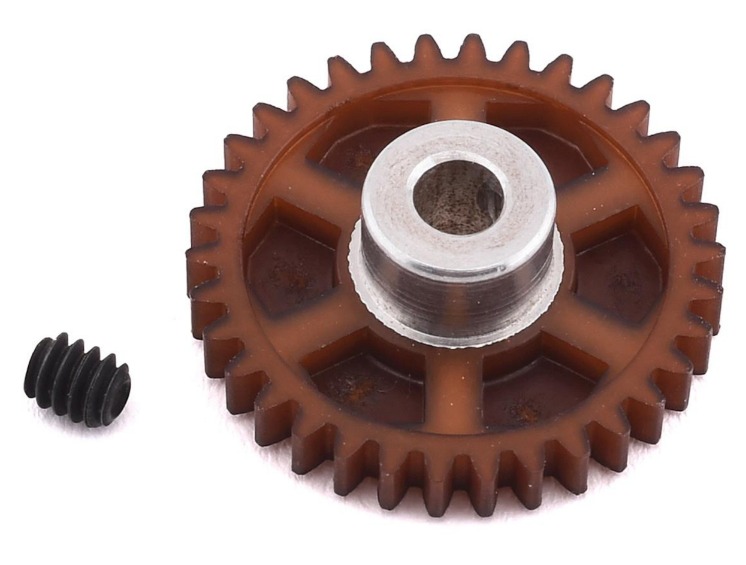
Plastic gears have quietly transformed mechanical design. Lightweight, corrosion-resistant, and cost-effective, they now appear in everything from smartphone cameras to surgical robots. And at the center of this transformation is China—the world’s largest producer and an increasingly powerful innovator in plastic gear technology.
This guide explores China’s role in plastic gear innovation. You will learn about material breakthroughs, manufacturing advances, and how these developments are reshaping industries worldwide. Whether you source gears or design products that use them, understanding these trends helps you make better decisions.
Why Are Plastic Gears So Important?
The Rise of Plastic Over Metal
Plastic gears offer advantages that metal cannot match:
- Lightweight: Up to 80% lighter than steel gears
- Corrosion-resistant: No rust, even in wet or chemical environments
- Quiet operation: Plastic dampens vibration where metal transmits it
- Self-lubricating: Many plastics run without external lubrication
- Cost-effective: Lower material and processing costs at scale
These properties make plastic gears ideal for:
- Electronics: Smartphone camera mechanisms, printer paper feeds, drone motors
- Automotive: Power windows, seat adjusters, electric vehicle components
- Medical devices: Insulin pumps, surgical robots, diagnostic equipment
- Consumer products: Electric toothbrushes, toys, household appliances
The Scale of China’s Role
China is the world’s largest producer of plastic gears, manufacturing a significant share of global supply. But production volume is only part of the story. Chinese manufacturers have moved from low-cost production to leading innovation in materials, precision, and manufacturing processes.
What Material Innovations Are Coming from China?
High-Performance Polymer Blends
Chinese researchers and manufacturers have developed advanced polymer blends that push the limits of what plastic gears can do.
Strength improvements: New blends combining nylon’s strength with polypropylene’s chemical resistance show 30% higher tensile strength compared to traditional nylon-based gears. This allows plastic gears to handle higher torque without failing.
Wear resistance: Advanced blends reduce wear rates by up to 40% in laboratory testing. Longer gear life means fewer replacements—critical in automotive and industrial applications where access for maintenance is difficult.
| Property | Traditional Nylon | New Chinese Blends |
|---|---|---|
| Tensile strength | 75–85 MPa | 98–110 MPa |
| Wear rate (relative) | 1.0 | 0.6 |
| Chemical resistance | Moderate | Improved |
One automotive supplier switched to Chinese-developed polymer blends for power window gears. The new gears lasted 50% longer in cycling tests while maintaining the same weight and cost.
Nanocomposites for Enhanced Properties
Nanocomposites—materials with nanoparticles dispersed in a polymer matrix—represent a significant advance. Chinese manufacturers have pioneered their application in plastic gears.
Nanoclay reinforcement: Adding nanoclay particles to polymer matrices increases modulus by up to 50%. Gears become stiffer and resist deformation under load. This allows plastic gears to replace metal in applications previously considered too demanding.
Carbon nanotube reinforcement: Carbon nanotubes increase heat deflection temperature by 20°C. Gears that previously softened at 120°C now maintain stability to 140°C—opening new applications in automotive engines and industrial machinery.
A manufacturer of industrial fans used carbon nanotube-reinforced plastic gears in a high-temperature environment where previous plastic gears failed. The new gears have run continuously for 18 months without replacement.
How Are Manufacturing Processes Evolving?
Precision Injection Molding Advances
Injection molding is the primary method for producing plastic gears. Chinese manufacturers have made significant improvements in precision.
Mold design: Advanced CAD and CAE software now optimize mold structures before steel is cut. This prevents flow issues, reduces defects, and ensures consistent fill.
Process control: Advanced sensors and automated control systems maintain injection pressure, temperature, and speed within tight tolerances. The result is dramatically improved dimensional accuracy:
| Year | Typical Dimensional Tolerance |
|---|---|
| 2010 | ±0.10 mm |
| 2023 | ±0.02 mm |
This fivefold improvement in precision means gears mesh more smoothly, operate more quietly, and last longer. For high-speed applications, the difference is critical.
Additive Manufacturing Applications
3D printing is increasingly used for plastic gear production in China—not just for prototyping but for production.
Complex geometries: Additive manufacturing enables gear designs impossible with traditional methods:
- Internal cooling channels
- Variable tooth profiles
- Lattice structures for weight reduction
- Integrated features that would require assembly
Rapid prototyping: A Chinese company used 3D printing to produce custom gears for a robotics project. Traditional manufacturing would have taken weeks and required expensive tooling. 3D printing delivered functional gears in three days at a fraction of the cost.
Small-batch production: For quantities under 1,000 units, 3D printing eliminates the cost of injection molds. Design changes require only software updates—no tooling modifications.
One medical device company uses 3D-printed plastic gears for custom surgical tools. Each tool is patient-specific, and volumes are low. Additive manufacturing makes this economically viable.
How Is Quality Ensured?
Advanced Inspection Systems
Chinese manufacturers have invested heavily in quality inspection:
- 3D scanners: Measure complete gear geometry in seconds, comparing against CAD models
- Gear measuring centers: Dedicated machines that check tooth profile, lead, and pitch with micron accuracy
- In-line inspection: Automated cameras and sensors check every part during production
Certification and Standards
Leading Chinese plastic gear manufacturers hold international certifications:
- ISO 9001: Quality management systems
- IATF 16949: Automotive quality management (stricter than ISO 9001)
- ISO 13485: Medical device manufacturing
Compliance with international standards ensures that gears meet global market requirements.
Case Study: Quality Improvement
A European automotive company sourced plastic gears from multiple suppliers, including a Chinese manufacturer. Initial concerns about quality led to a detailed audit. The Chinese facility had:
- Documented processes for every operation
- In-line inspection at every production stage
- Traceability from raw material to finished gear
- Defect rates below 0.5%
The Chinese supplier became the preferred source, delivering quality equal to European manufacturers at competitive pricing.
What Market Impact Is China Having?
Cost-Effectiveness
Chinese plastic gears typically cost 20–50% less than comparable products from other regions. This price advantage comes from:
- Large-scale production that spreads fixed costs
- Integrated supply chains (raw materials, molds, manufacturing under one roof)
- Efficient manufacturing processes
- Competitive labor costs for skilled positions
Customization Capability
Chinese manufacturers excel at customization. They can quickly adjust:
- Material formulations for specific properties
- Tooth profiles for unique applications
- Dimensions to match existing assemblies
- Surface finishes for specific requirements
A robotics company needed gears with a non-standard tooth profile for a specialized joint. Their Chinese supplier designed and produced the gears in two weeks—half the time quoted by alternative sources.
Global Supply Chain Integration
Chinese plastic gear manufacturers now supply:
- European automotive OEMs
- American medical device companies
- Japanese consumer electronics brands
- Global industrial equipment manufacturers
This integration means that innovations developed in China reach markets worldwide.
How Does Yigu Technology Fit into This Landscape?
As a non-standard plastic and metal products custom supplier, Yigu Technology has embraced China’s plastic gear innovations. Our approach combines advanced materials, precision manufacturing, and responsive service.
Material innovation: We work with high-performance polymer blends and nanocomposites. For a client requiring gears for high-temperature industrial equipment, we specified carbon nanotube-reinforced material that increased operating temperature by 25°C.
Precision manufacturing: Our injection molding processes maintain dimensional tolerances to ±0.02 mm. This ensures smooth meshing and reliable operation.
Customization: We design and produce custom gears for unique applications. Recent projects include:
- Medical device gears requiring biocompatible materials
- Automotive gears with enhanced wear resistance
- Robotics gears with complex tooth profiles
Quality: Our ISO 9001-certified processes include in-line inspection and full traceability.
What Does the Future Hold?
Emerging Trends
Sustainability: Manufacturers are developing recyclable and bio-based plastic gear materials. China’s large-scale production facilities are well-positioned to adopt these materials as demand grows.
Smart manufacturing: Industry 4.0 technologies—sensors, data analytics, artificial intelligence—are being integrated into plastic gear production. Predictive maintenance, real-time quality control, and automated optimization will further improve quality and efficiency.
New applications: As materials and processes improve, plastic gears will enter applications previously reserved for metal:
- Higher-torque automotive transmissions
- Aerospace components
- Heavy industrial machinery
Challenges Ahead
Quality consistency: As production scales, maintaining consistent quality across millions of gears requires continuous investment in process control.
Intellectual property: Protecting proprietary formulations and designs becomes more complex as innovation accelerates.
Trade dynamics: Global trade policies affect supply chains. Diversified sourcing strategies are emerging.
Conclusion
China has transformed from a low-cost producer to an innovation leader in plastic gears. Material advances—polymer blends with 30% higher strength and nanocomposites with enhanced properties—push performance boundaries. Manufacturing innovations—precision injection molding with ±0.02 mm tolerances and additive manufacturing for complex geometries—enable new design possibilities.
For industries that use plastic gears, China’s innovations mean:
- Higher performance materials
- Greater design flexibility
- Faster prototyping and production
- Competitive pricing
- Reliable quality
The result is that plastic gears are replacing metal in more applications, enabling lighter, quieter, and more cost-effective products across industries. As materials and processes continue to advance, plastic gears will play an even larger role in mechanical design—with Chinese innovation at the center.
Frequently Asked Questions
What are the main advantages of Chinese-made plastic gears?
Chinese plastic gears offer advanced material properties—polymer blends with 30% higher tensile strength and 40% better wear resistance than traditional nylon. They are cost-effective (20–50% lower than some alternatives), highly customizable, and produced with precision tolerances down to ±0.02 mm. Many Chinese manufacturers hold international quality certifications.
How does China ensure quality in plastic gear manufacturing?
Chinese manufacturers use precision injection molding with advanced process controls, maintaining tight tolerances through automated systems. In-line inspection catches defects early. Advanced inspection equipment—3D scanners and gear measuring centers—verifies dimensions and tooth profiles. Many facilities hold ISO 9001, IATF 16949, or ISO 13485 certifications.
What industries use Chinese-innovated plastic gears?
Automotive (power windows, seat adjusters, EV components), electronics (smartphone cameras, printers, drones), medical devices (insulin pumps, surgical robots), consumer products (toothbrushes, toys), and industrial equipment (fans, conveyors, packaging machinery). The range continues to expand as materials improve.
Can Chinese plastic gears replace metal gears?
In many applications, yes. New polymer blends and nanocomposites offer strength approaching metal while providing plastic’s advantages—light weight, corrosion resistance, quiet operation. For high-torque, high-impact, or extreme-temperature applications, metal remains necessary. But the range where plastic works continues to expand.
How does 3D printing affect plastic gear production in China?
3D printing enables complex geometries impossible with traditional methods—internal cooling channels, variable tooth profiles, integrated features. It allows rapid prototyping (days instead of weeks) and cost-effective small-batch production without expensive molds. Chinese manufacturers increasingly use additive manufacturing alongside traditional processes.
Contact Yigu Technology for Custom Manufacturing
Need plastic gears engineered for your application? At Yigu Technology, we combine China’s material innovations with precision manufacturing to deliver gears that perform. From standard designs to custom formulations, we help you get the right solution.
Contact us today to discuss your plastic gear requirements.