Introduction
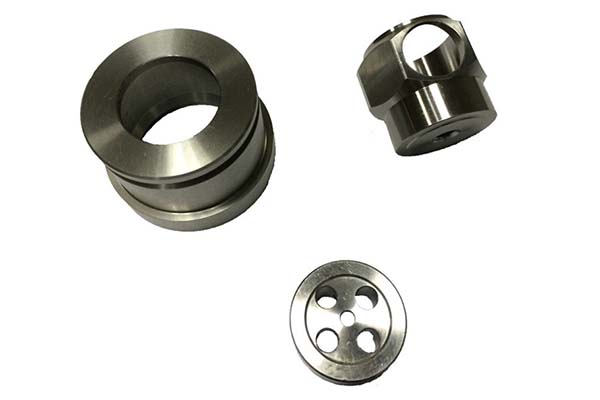
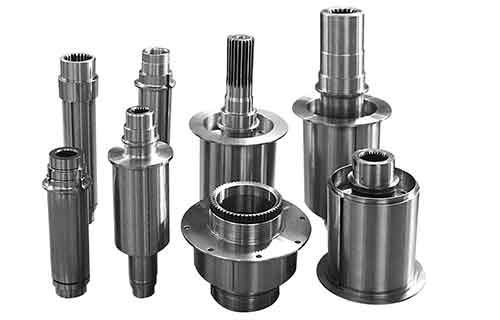
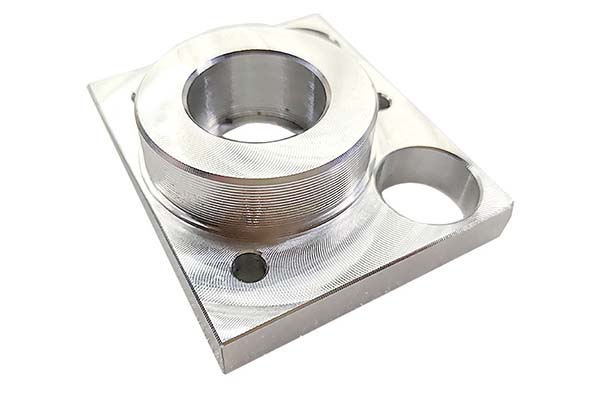
A machining part factory for precision engineering is a specialized manufacturing facility. It focuses on producing high-tolerance components with extreme accuracy—often in the micrometer range. These factories play a crucial role in industries like aerospace, medical, electronics, and automotive. In aerospace, turbine blades require tolerances as low as ±0.001 inches. In medical, hip implants need surface finishes below 0.8 μm and dimensional accuracy within ±0.05 mm. This guide explores what makes a precision machining part factory essential: advanced equipment, skilled workforce, rigorous quality control, and real-world applications across industries.
What Equipment Defines a Precision Machining Factory?
A precision machining part factory is equipped with advanced machinery that enables high-accuracy production.
High-Precision CNC Machines
| Machine Type | Capabilities | Typical Accuracy |
|---|---|---|
| 5-axis machining centers | Move tool and workpiece in five directions simultaneously; reduces setups | Positioning accuracy ±0.001 mm |
| CNC lathes | Turning operations for cylindrical parts | Diameter tolerance ±0.0005 inches on small shafts |
| High-speed milling machines | Spindle speeds up to 40,000 RPM; fast material removal | High precision on both soft materials and hard alloys |
5-axis machining is particularly valuable. It creates complex shapes with fewer setups—reducing alignment errors and enhancing efficiency.
Supporting Equipment
| Equipment | Purpose |
|---|---|
| Coordinate Measuring Machines (CMMs) | Dimensional inspection; measurement uncertainty <0.001 mm |
| Surface roughness testers | Measure surface texture; critical for hydraulic systems, implants |
| Optical comparators | Profile and contour inspection |
Who Are the Skilled Professionals Behind the Parts?
Behind every precision-machined part is a skilled workforce. Machinists in these factories combine technical knowledge with hands-on expertise.
Essential Skills
| Skill Area | What It Involves |
|---|---|
| Mechanical drawing interpretation | Read complex blueprints with tolerances specified to the micrometer |
| Programming | G-code and M-code proficiency; control tool movement, spindle speed, feed rate |
| Material knowledge | Understand properties of stainless steel, titanium, high-strength plastics |
| Problem-solving | Adjust cutting parameters to prevent overheating; ensure high-quality finish |
Example: Titanium has low thermal conductivity, causing heat buildup during machining. A skilled machinist adjusts cutting parameters to prevent overheating and maintain quality.
How Is Quality Control Maintained?
Quality control is the lifeblood of a precision machining part factory. Multiple inspection methods ensure parts meet specifications.
Inspection Tools and Methods
| Method | Purpose | Typical Capability |
|---|---|---|
| CMM (Coordinate Measuring Machine) | Dimensional accuracy verification | Measurement uncertainty <0.001 mm |
| Surface roughness tester | Surface texture measurement | Ra values as low as 0.1 μm for high-precision parts |
| Visual inspection | Detect cracks, scratches, porosity | Magnifying glasses or microscopes for minute flaws |
| In-process inspection | Checks after major operations | Catches deviations early |
| Final inspection | Comprehensive verification before shipping | Ensures all specifications met |
Quality Standards
| Standard | Scope |
|---|---|
| ISO 9001 | Quality management system |
| AS9100 | Aerospace quality management |
| ISO 13485 | Medical device quality management |
Certified factories follow documented processes and are regularly audited.
What Are Real-World Applications?
Precision machining part factories serve critical applications across industries.
Aerospace Applications
| Component | Requirements | Impact |
|---|---|---|
| Turbine blades | Surface finish 0.2–0.4 μm; tolerance ±0.005 mm | Improves engine efficiency, durability, reliability |
| Compressor disks | High-precision machining of high-strength alloys | Ensures proper fit; critical for engine performance |
| Wing spars | Tight tolerances for structural components | Vital for aircraft structural integrity |
A deviation in turbine blade dimensions can reduce fuel efficiency or create safety hazards. Precision machining prevents these risks.
Medical Applications
| Component | Requirements | Impact |
|---|---|---|
| Surgical instruments | Cutting edges tolerance <±0.01 mm; smooth surfaces | Enables precise procedures; reduces tissue damage |
| Hip implants | Surface roughness <0.8 μm; dimensional accuracy ±0.05 mm | Promotes bone ingrowth; ensures proper fit; long-term functionality |
| Dental implants | Biocompatible; precise fit | Improved patient outcomes |
Precision-machined implants have significantly improved quality of life for millions with joint diseases or injuries.
How Does a Precision Factory Differ from General Machining?
| Aspect | General Machining Factory | Precision Engineering Factory |
|---|---|---|
| Equipment | Basic lathes, mills, drills; accuracy ±0.1–0.5 mm | High-end CNC machines; accuracy ±0.001 mm |
| Process complexity | Straightforward programming; simple sequences | Multi-axis machining; intricate tool paths |
| Tolerances | ±0.1–1 mm | ±0.001–0.05 mm (micrometer range) |
| Applications | Basic automotive components, general-use parts | Aerospace, medical, high-end electronics |
What Is Yigu Technology’s Perspective?
As a custom supplier of non-standard plastic and metal products, Yigu Technology plays a significant role in precision engineering. We understand that every industry has unique requirements—a one-size-fits-all approach does not work.
For plastic parts: We use advanced injection molding techniques with high-performance plastics like PEEK (polyether ether ketone), known for excellent heat resistance and mechanical properties. We achieve tight tolerances within ±0.05 mm for aerospace interiors and medical device components.
For metal products: We are proficient in machining titanium alloys and other challenging materials. Titanium’s high strength and low thermal conductivity require expertise. Our skilled workers, equipped with state-of-the-art CNC machines, produce complex metal parts with surface finishes as smooth as 0.4 μm —essential for friction and corrosion resistance in automotive and marine industries.
We bridge the gap between standard manufacturing and the specialized needs of precision engineering clients—providing customized solutions that meet exact specifications.
Conclusion
A machining part factory for precision engineering is defined by its advanced equipment, skilled workforce, and rigorous quality control. 5-axis CNC machines achieve positioning accuracy of ±0.001 mm. Skilled machinists interpret micrometer-level blueprints, program complex tool paths, and manage material-specific challenges. Quality control using CMMs and surface roughness testers ensures parts meet the tightest tolerances—±0.005 mm for aerospace turbine blades, ±0.05 mm for medical implants. These factories serve critical applications across aerospace, medical, automotive, and electronics industries. For businesses demanding high-tolerance components, partnering with a precision machining part factory is not just an option—it is a necessity.
FAQs
What are the main differences between a general machining factory and a precision engineering machining part factory?
General machining factories use basic equipment (lathes, mills) with accuracies of ±0.1–0.5 mm. Precision factories use high-end CNC machines (5-axis, high-speed) with accuracies of ±0.001 mm. Precision factories produce parts with tolerances in the micrometer range for aerospace, medical, and high-end electronics applications.
How does a machining part factory ensure the precision of its products?
Precision is ensured through regular equipment maintenance (calibration, inspection of linear guides), skilled personnel (continuous training on new techniques and materials), and strict quality inspection (in-process checks, final CMM verification). Any deviation is identified and corrected.
Can a machining part factory handle small-batch production for precision engineering?
Yes. Advanced material planning software reduces waste by optimizing layouts. Flexible manufacturing processes with modular fixtures allow rapid change-overs between jobs. Skilled machinists troubleshoot and adjust in real time, maintaining precision even for limited production runs.
Contact Yigu Technology for Custom Manufacturing
At Yigu Technology, we combine precision engineering expertise with advanced CNC machining capabilities. Our facility features 3-axis, 4-axis, and 5-axis CNC machines, CMM inspection, and surface roughness testing to ensure every part meets your specifications. We work with a wide range of materials—from aluminum and stainless steel to titanium, PEEK, and other high-performance plastics. Our quality systems include ISO 9001, and we provide DFM feedback to optimize your designs for manufacturability. Whether you need prototypes or production runs, we deliver precision components for aerospace, medical, automotive, and industrial applications.
Ready to partner with a precision machining part factory? Contact Yigu Technology today for a free consultation and quote. Let us help you turn your designs into precision-engineered reality.