Introduction
You have a design. You need functional parts—not just 3D printed models—to test, validate, and launch. But traditional steel molds cost $20,000–$100,000 and take 12–20 weeks. What if you could get production-quality parts in 2–5 weeks at a fraction of the cost? This is the promise of China rapid tooling. It uses softer materials like aluminum or pre-hardened steel to create injection molds quickly, enabling low-volume production, market testing, and bridge manufacturing without the investment and wait of hardened steel tooling. At Yigu Technology, we specialize in rapid tooling solutions that help manufacturers accelerate development and reduce risk. This article explains how China rapid tooling works, why it is cost-effective, and how to navigate the process successfully.
What Is Rapid Tooling?
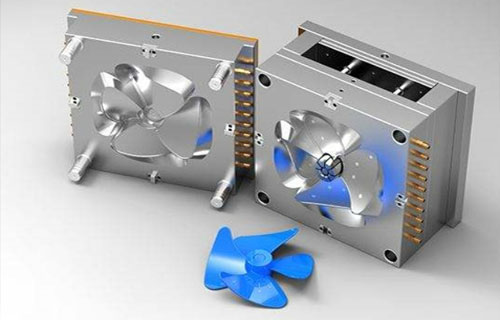
Rapid tooling is the process of creating injection molds quickly using materials like aluminum or pre-hardened steel, bypassing the long lead times and high costs of traditional hardened steel tooling.
| Aspect | Traditional Tooling | Rapid Tooling |
|---|---|---|
| Mold materials | Hardened steel (H13, P20, S7) | Aluminum (7075-T6), pre-hardened steel (NAK80, P20) |
| Lead time | 12–20 weeks | 2–5 weeks |
| Tooling cost | $20,000–$100,000+ | $1,000–$10,000 |
| Mold life | 500,000–1,000,000+ shots | 1,000–50,000 shots |
| Best for | High-volume production | Prototyping, pilot runs, bridge tooling |
The trade-off is clear: rapid tooling delivers speed and lower upfront cost in exchange for shorter mold life. For low to medium volumes (1,000–50,000 parts), it is often the ideal solution.
Why Choose China for Rapid Tooling Services?
China has become the global hub for rapid tooling due to a powerful combination of factors.
Cost Competitiveness
Lower operational and labor costs translate to dramatically lower tooling prices—often 60–80% less than Western counterparts—without necessarily sacrificing quality.
| Region | Typical Aluminum Mold Cost |
|---|---|
| North America/Europe | $5,000–$15,000 |
| China | $1,000–$5,000 |
Unparalleled Speed and Scale
China’s vast manufacturing ecosystem enables fast turnarounds. Deeply integrated supply chains for mold bases, materials, and machining mean that a factory can source everything locally—no waiting for imported components.
Technical Expertise and Specialization
Many Chinese manufacturers have refined rapid tooling into a core competency, with over a decade of experience optimizing processes for speed, cost, and reliability.
Material and Process Flexibility
Suppliers offer a wide range of rapid tooling materials (aluminum, pre-hardened steel, hybrid inserts) and are familiar with processing most commercial thermoplastics, including engineering resins.
What Is the Rapid Tooling Process Workflow?
A streamlined, digital-forward process is key to achieving rapid results.
Step 1: Design for Manufacturability (DFM) Analysis
The supplier’s engineers review your 3D CAD model (STEP/IGES format) to identify potential molding issues:
- Undercuts that require slides or lifters
- Wall thickness variations that may cause sink marks or warpage
- Draft angles insufficient for ejection
- Gate locations affecting part quality
This collaborative step is critical. A good DFM report saves you from costly mold revisions later.
Step 2: Quotation and Agreement
Based on DFM, you receive a detailed quote outlining:
- Tooling cost (NRE—non-recurring engineering)
- Part cost (per unit)
- Lead time (tool fabrication + sampling + production)
Step 3: Mold Design and CNC Machining
Simplified, single-cavity mold designs are created. Cavity and core blocks are machined directly from aluminum or pre-hardened steel billet using high-speed CNC mills. Where possible, slower EDM processes are avoided to save time.
Step 4: Mold Assembly and First Shot Trial
Components are fitted into a standard mold base, and the mold is tested on an injection press. T1 (first trial) samples are produced.
Step 5: Sample Approval and Minor Revisions
Samples are shipped to you for evaluation. Most reputable suppliers include one round of minor revisions (gate adjustment, venting, polishing) in the tooling cost.
Step 6: Production and Delivery
Upon your approval, the production run begins, and finished parts are shipped.
What Materials Are Available?
The choice of mold material is the primary decision, balancing cost, lead time, durability, and final part material.
| Mold Material | Properties | Best For | Mold Life (shots) |
|---|---|---|---|
| Aluminum (7075-T6) | Fast machining, good thermal conductivity | Prototyping, short runs with unfilled plastics (ABS, PP, PC) | 1,000–10,000 |
| Pre-hardened steel (NAK80, P20) | Better wear resistance, polishable | Higher volumes, lightly filled materials | 10,000–50,000+ |
| Hybrid/Insert molds | Steel inserts for high-wear areas within aluminum base | Abrasive materials (glass-filled nylon) | Extends life of aluminum mold |
Part Materials
Virtually all standard thermoplastics are available:
- ABS, PC, PP, PE, PMMA (acrylic)
- Nylon (PA6, PA66) —with or without glass fill
- TPU, TPE (flexible)
- Engineering resins—PEEK, polycarbonate blends (discuss compatibility)
How Is Quality Controlled?
Ensuring quality in a remote environment requires clear protocols.
In-House Quality Control
A reliable partner will have:
- First Article Inspection (FAI) using CMMs or precision measuring tools to verify T1 samples against your drawings
- In-process checks during production runs
- Material certifications (Certificate of Conformance)
Documentation
Expect:
- FAI reports with dimensional measurements
- Material certifications
- Photos or videos of parts and packaging
Third-Party Inspection
For critical projects, hiring a local third-party quality inspection company to conduct a pre-shipment inspection is a best practice. They check dimensions, appearance, and function, providing an unbiased report.
What Are Typical Lead Times and Costs?
Setting realistic expectations is crucial for project planning.
Lead Times
| Stage | Typical Duration |
|---|---|
| Quotation & DFM | 1–3 days |
| Tool fabrication | 10–15 working days |
| Sampling & production | 5–10 working days |
| Total | 2–5 weeks |
Cost Structure
| Cost Element | Range |
|---|---|
| Tooling (NRE) | $1,000–$10,000+ (depends on part size, complexity, mold material) |
| Per-part cost | $0.50–$10+ (depends on material, size, quantity) |
Example: A small ABS enclosure (50 x 50 x 20 mm) might cost $1,500 for an aluminum mold and $1.50 per part for 1,000 units. The same part in a steel mold would cost $8,000–$12,000 for tooling.
How Do You Select a Manufacturing Partner?
Choosing the right supplier is the most critical step to mitigate risk.
Specialization and Portfolio
Look for a supplier whose main business is rapid tooling and low-volume molding. Review their online portfolio and request physical samples of their work.
Communication and Transparency
Gauge responsiveness and clarity during quoting. A good supplier provides:
- Detailed DFM feedback
- Itemized cost breakdown (tooling, part cost, shipping)
- Clear timeline
Effective English communication is a strong positive indicator.
Ask Specific Technical Questions
- “What mold material do you recommend for my part in PA6+30%GF?”
- “What is your process for validating mold cooling?”
- “Can you share a sample FAI report?”
Start with a Pilot Project
For new partnerships, begin with a smaller, less critical project to evaluate performance, quality, and reliability before committing to large-scale work.
What About Intellectual Property Protection?
Intellectual property (IP) protection is a valid concern. While legitimate suppliers protect client IP to maintain their reputation, risks exist.
Best Practices
- Work with established companies with a strong track record
- Start with non-critical projects to build trust
- File for patents or design protection before sharing files
- Use a Non-Disclosure Agreement (NDA) —though enforcement can be challenging internationally
- Own the mold: Your agreement should state that you own the physical mold (since you paid for it)
Most reputable suppliers will store the mold for a limited time (e.g., 12 months) after project completion.
Yigu Technology's Perspective
As a custom manufacturer of plastic and metal products, Yigu Technology specializes in China rapid tooling solutions.
What we have learned:
- Match mold material to application: Aluminum for prototyping and short runs. Pre-hardened steel for higher volumes and filled materials. Hybrid inserts for abrasive materials.
- DFM is critical: The best designs are optimized for molding from the start. Our DFM feedback saves clients time and money.
- Transparency builds trust: Clear communication, itemized quotes, and quality documentation are non-negotiable.
- Start small, scale up: Pilot projects validate partnership before major investment.
We guide clients through the optimal choice between aluminum and pre-hardened steel molds to balance speed, cost, and part performance. Our goal is to de-risk development and bring functional prototypes and low-volume products to market efficiently.
Conclusion
China rapid tooling is an indispensable strategy for manufacturers looking to compress development cycles and reduce upfront investment. It empowers innovators to move beyond 3D-printed prototypes to obtain functional, end-use material parts for testing, validation, and low-volume launch.
Key takeaways:
- Speed: Molds in 2–5 weeks vs. 12–20 weeks for conventional tooling
- Cost: 60–80% lower upfront investment
- Quality: Achievable with proper DFM, experienced suppliers, and third-party inspection
- Trade-offs: Shorter mold life (1,000–50,000 shots) but ideal for low to medium volumes
Success hinges on clear understanding of trade-offs, strategic choice of tooling material, and partnership with a communicative, specialized supplier with robust quality processes.
Frequently Asked Questions
What is the main difference between rapid tooling and conventional tooling?
Rapid tooling uses softer metals (aluminum, pre-hardened steel) for fast, low-cost molds suitable for prototypes and low volumes (1,000–50,000 shots). Conventional tooling uses hardened tool steels for high-cost, long-lead-time molds designed for mass production (500,000–1,000,000+ shots).
Can a rapid tool be used for production-grade materials like PEEK or glass-filled nylon?
Yes, but with careful planning. Abrasive or high-temperature materials drastically reduce aluminum mold life. For such materials, a pre-hardened steel mold or hybrid mold with steel inserts is strongly recommended to achieve a viable production run.
Who owns the intellectual property (IP) and the physical mold?
You (the client) typically own the IP and the physical mold, as you are paying for its fabrication. This must be explicitly stated in the agreement. The supplier usually stores the mold for a limited time (e.g., 12 months) after project completion.
How many design revisions are typically included?
Most reputable suppliers include one round of minor revisions (e.g., adjusting gate size, venting, polishing) after the first sample. Major design changes that require re-machining the core or cavity are billed as an Engineering Change Order (ECO).
Is it safe to send my CAD files to a Chinese supplier?
While legitimate suppliers protect client IP to maintain their business reputation, it is a valid concern. Mitigate risk by working with established companies, starting with non-critical projects, filing for patents before sharing files, using NDAs, and ensuring your agreement states you own the mold.
Contact Yigu Technology for Custom Manufacturing
At Yigu Technology, we specialize in providing reliable, high-value China rapid tooling solutions. Our expertise lies in guiding clients through the optimal choice between aluminum and pre-hardened steel molds to balance speed, cost, and part performance. With a transparent process, clear communication, and a commitment to quality documentation, we help you de-risk development and bring functional prototypes and low-volume products to market efficiently.
Partner with us to experience a streamlined rapid tooling workflow. Contact Yigu Technology today for a fast, detailed quote and expert DFM analysis of your project.