Introduction
You need a prototype. It must be precise, fast to produce, and made from metal, plastic, or wood. Traditional cutting methods—mechanical sawing, milling, or water jet—can be slow, imprecise, or limited in geometry. Prototype laser cutting offers a different approach. It uses a high-power-density laser beam to cut materials with exceptional precision and speed. This guide explains how laser cutting works, its applications, and how to ensure high-quality results for your prototypes.
What Is Prototype Laser Cutting?
Prototype laser cutting is a manufacturing process that uses a high-power-density laser beam to cut materials, primarily for creating prototypes. The laser beam is focused onto the material surface, rapidly heating, melting, vaporizing, or combusting the material along a predefined path. This allows precise removal of material, resulting in a clean cut.
The technique is widely used across industries—automotive, aerospace, electronics, jewelry—during initial product development stages to quickly test design concepts. In automotive design, laser cutting creates mock-up body parts or interior components to evaluate fit and form.
How Does Prototype Laser Cutting Work?
The working principle is based on laser energy interaction with materials.
Laser Generation
Lasers are created through stimulated emission. A gain medium (gas, solid-state crystal, or semiconductor) is excited by an external energy source (pump source). Electrons in the gain medium move to higher energy levels. When they return to lower levels, they emit photons. Through optical feedback in a resonator, a coherent, intense laser beam is produced.
The energy of a single photon is given by (E = hv), where (E) is photon energy, (h) is Planck’s constant ((6.626 \times 10^{-34} \, J \cdot s)), and (v) is laser frequency. Higher-frequency lasers carry more energy per photon.
Cutting Process
When the laser beam is directed onto the material, energy density at the surface is critical. Energy density (D = P / (\pi r^2)), where (P) is laser power and (r) is focused spot radius. A high-power laser with a small spot creates high energy density, quickly heating the material to melting or vaporization point.
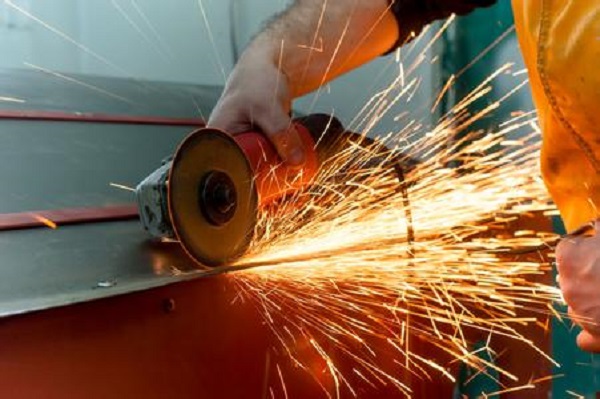
As the laser moves along the cutting path, melted or vaporized material is ejected—often assisted by high-pressure gas (oxygen, nitrogen, or compressed air). This gas blows away molten material, leaving a clean cut edge.
For thin stainless steel, a high-power fiber laser with a precisely focused beam melts the steel along the cutting line. Oxygen gas blown coaxially oxidizes and ejects molten metal, creating a smooth, accurate cut.
What Are the Applications of Prototype Laser Cutting?
Applications span metals, plastics, and other materials.
Metal Industry
In automotive, laser cutting creates prototypes of engine components—intake manifolds, cylinder heads—from metal sheets or blocks. Engineers quickly test fit and functionality before mass production.
In aerospace, lightweight, high-strength components are critical. Laser cutting fabricates prototype brackets, structural frames, and turbine blades from titanium and aluminum alloys. A study by a leading aerospace manufacturer found that prototype laser cutting reduced development time for a new aircraft wing component by 30% —from 12 months to 8.4 months. Precision ensures parts meet tight tolerances, typically within ±0.05 mm.
Plastic and Non-Metal Industry
For consumer electronics, laser cutting creates prototype plastic housings for smartphones and tablets. Precision cutouts for ports, buttons, and speakers are achieved.
In woodworking, laser cutting produces intricate furniture parts, decorative elements, and art pieces. A furniture designer can create prototype chair legs with complex geometric patterns. Laser cuts through wood up to 50 mm thick with clean edges and minimal splintering.
For printed circuit boards (PCBs), laser cutting creates prototype layouts, precisely cutting non-conductive substrate materials like fiberglass-reinforced epoxy resin, ensuring accurate component placement.
How Do You Ensure High-Quality Prototype Laser Cutting?
Quality depends on equipment selection and material preparation.
Selecting the Right Laser Equipment
Laser power is critical. Cutting thick metal plates requires high power. A 1000-watt fiber laser cuts mild steel up to 6 mm thick with good quality. A 2000-watt laser handles up to 12 mm. Higher power increases material removal rate but also equipment and operating costs.
Beam quality, characterized by the beam parameter product (BPP), affects focus. Lower BPP indicates better beam quality. A high-quality beam focuses to a smaller spot, creating higher energy density. A laser with small BPP achieves spot sizes below 0.1 mm—ideal for cutting fine details in thin-gauge stainless steel for jewelry or electronics.
Laser type matters. Fiber lasers are highly efficient with long lifespans—popular for metal cutting. CO₂ lasers are often used for non-metallic materials like plastics and wood due to their specific wavelength absorption characteristics.
Material Selection and Preparation
Material properties affect cutting. Stainless steel has higher melting point and thermal conductivity than mild steel—requiring higher power, careful cutting speed, and assist-gas flow rate to prevent oxidation and achieve clean cuts.
Surface preparation is essential. Oil, rust, or dirt can cause uneven cutting. Materials should be degreased with solvents or cleaned with abrasive methods.
Pre-heating may be required for thick-walled metals to reduce thermal stress, preventing cracking and improving quality.
Flatness and thickness uniformity matter. Non-flat materials cause varying focal distance, leading to inconsistent cut quality. Consistent thickness within specified tolerances ensures uniform cutting speed and power requirements.
What Factors Affect Cost?
Costs are influenced by multiple factors.
| Factor | Impact |
|---|---|
| Material cost | Different materials have different prices |
| Complexity | Intricate designs require more time and laser energy |
| Quantity | Higher volume increases material consumption, processing time, and equipment maintenance |
| Thickness | Thicker materials require higher power and slower speeds |
For simple parts with few cuts, cost is relatively low. For large-scale or complex parts in high-volume production, cost increases accordingly.
How Does Yigu Technology Approach Prototype Laser Cutting?
As a non-standard plastic and metal products custom supplier, Yigu Technology values prototype laser cutting for its precision and speed.
We Handle Complex Custom Needs
Whether a unique-shaped plastic component for an electronic device or a high-precision metal part for industrial machinery, we ensure high-quality cutting.
We Optimize Parameters
Our trained technicians optimize cutting parameters—power, speed, assist gas—according to material and design requirements. This guarantees both quality and efficiency.
We Support Rapid Development
We help clients bring innovative product ideas to life quickly and cost-effectively—meeting diverse requirements for accuracy and production cycle.
Conclusion
Prototype laser cutting is a precision manufacturing process that uses high-energy laser beams to cut materials with exceptional accuracy and speed. It serves critical roles across automotive, aerospace, electronics, and woodworking industries—enabling rapid design iteration, functional testing, and customization.
Success depends on selecting the right laser equipment (power, beam quality, type) and proper material preparation (clean surfaces, consistent thickness). By understanding these factors, you can achieve high-quality prototypes that accelerate development and reduce risk.
Frequently Asked Questions
What materials can be processed by prototype laser cutting?
Common metals: stainless steel, carbon steel, aluminum, copper. Common non-metals: plastics (acrylic, PVC, ABS), wood, rubber, fabric, acrylic. Each material requires optimized cutting parameters—power, speed, assist gas—for high-quality results.
How accurate is prototype laser cutting?
Typical accuracy ranges from ±0.01 mm to ±0.1 mm. High-end laser cutting machines with advanced optical systems and precise motion control achieve even higher accuracy, suitable for applications with tight tolerance requirements. Factors affecting accuracy include laser equipment quality, material properties, thickness, and process parameters.
What are the costs associated with prototype laser cutting?
Costs depend on material cost (different prices), complexity (intricate designs require more time and energy), and quantity (higher volume increases material consumption, processing time, and maintenance). Simple parts with few cuts have relatively low cost. Large-scale or complex parts in high-volume production cost more.
What is the difference between fiber lasers and CO₂ lasers for cutting?
Fiber lasers are highly efficient with long lifespans—excellent for metal cutting. They operate at shorter wavelengths (typically 1.06 µm) that are well absorbed by metals. CO₂ lasers operate at longer wavelengths (10.6 µm) and are often used for non-metallic materials like plastics, wood, and acrylic due to absorption characteristics. Choose based on your material and application.
How do I ensure a clean cut edge?
Ensure proper assist gas selection—oxygen for oxidation and ejection of molten metal, nitrogen for clean, oxide-free cuts. Maintain correct focus position—laser focused at optimal point on material surface. Keep material surface clean—oil, rust, or dirt cause uneven cutting. Optimize cutting speed—too fast leaves incomplete cuts; too slow causes excessive heat and rough edges.
Contact Yigu Technology for Custom Manufacturing
Ready to use prototype laser cutting for your next project? Yigu Technology offers precision laser cutting services for plastic and metal components. Our engineers help you select the right equipment parameters and materials for high-quality results. Contact us today to discuss your project.