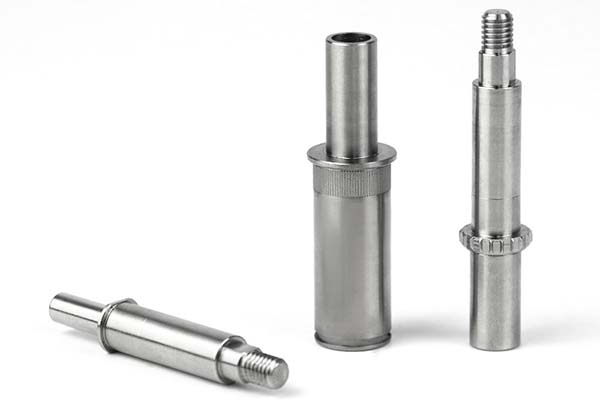
How Do You CNC Machine AL5086 H116/H321 for Precision and Performance?
Introduction Manufacturers across industries face a common challenge: finding a material that balances strength, corrosion resistance, and machinability while meeting tight tolerances. When it comes to CNC machining AL5086 H116/H321 , these challenges multiply—from selecting the right temper to optimizing cutting parameters, every decision impacts final part quality. This guide breaks down the critical factors […]
Manufacturers across industries face a common challenge: finding a material that balances strength, corrosion resistance, and machinability while meeting tight tolerances. When it comes to CNC machining AL5086 H116/H321 , these challenges multiply—from selecting the right temper to optimizing cutting parameters, every decision impacts final part quality. This guide breaks down the critical factors of AL5086 aluminum alloy machining, helping you avoid costly mistakes and achieve consistent results.
What Makes AL5086 Aluminum Alloy Stand Out?
AL5086 is a magnesium-based wrought alloy renowned for its exceptional balance of properties, making it a top choice for demanding applications.
Alloy Composition
Element
Percentage
Aluminum (Al)
95 – 97%
Magnesium (Mg)
3.5 – 4.5%
Manganese (Mn)
0.4 – 0.8%
Chromium (Cr)
0.05 – 0.25%
Magnesium enhances strength without sacrificing ductility; manganese and chromium contribute to corrosion resistance and grain structure control.
Mechanical Properties: H116 vs. H321
Property
H116 Temper
H321 Temper
Tensile strength
310 MPa
330 MPa
Yield strength
220 MPa
280 MPa
Hardness (HB)
65
70
Ductility (% elongation)
12%
10%
Typical use case
Marine structures
High-stress parts
Key Characteristics
Property
Value
Significance
Corrosion resistance
Excellent—especially in marine, industrial environments
Magnesium content + natural oxide layer
Fatigue resistance
Endurance limit ~110 MPa
Superior to many alloys under cyclic loading
Thermal conductivity
110 W/(m·K)
Efficient heat dissipation
Density
2.66 g/cm³
30% lighter than steel—ideal for weight-sensitive designs
Weldability
Good; H321 requires careful heat control
Higher strength requires pre-heating (100–150°C)
What CNC Machining Processes Work for AL5086?
Key Machining Techniques
Process
Recommendations
CNC milling
Primary process; carbide end mills outperform HSS
CNC turning
Cylindrical parts
CNC drilling
Carbide drills with high-pressure coolant
Machining Parameters
Parameter
Range
Cutting speed
150 – 300 m/min (carbide tools)
Feed rate
0.1 – 0.3 mm/rev
Depth of cut
1 – 5 mm (depending on tool diameter)
Surface Finish and Tolerances
Metric
Achievable Value
Surface finish
Ra as low as 0.8 μm with proper toolpaths and coolant
Machining tolerances
±0.01 mm feasible with high-precision machines; H321 may require tighter control due to higher hardness
Overcoming Machinability Challenges
Challenge
Solution
Chip control (ductility)
Chip breakers on tools; high-pressure coolant (100–300 bar); optimize feed rates for short, brittle chips
Tool wear
Carbide tools last 30–50% longer than HSS for H321—offsetting higher upfront cost
What Heat Treatment and Temper Conditions Apply?
H116 vs. H321: Key Differences
Temper
Process
Characteristics
H116
Strain-hardened + low-temperature annealing
Stabilized condition; maximum corrosion resistance in thick sections (>6 mm); ideal for marine applications
H321
Strain-hardened + partial annealing (315–345°C)
Boosts tensile/yield strength 6–10% vs. H116; slightly reduced ductility
Post-Machining Heat Treatment
Process
Parameters
Purpose
Stress relief annealing
120 – 180°C for 1–2 hours
Reduces residual stress; prevents distortion
Avoid
Temperatures above 200°C for H321
Can soften the material
Where Is AL5086 Applied?
Industry
Applications
Why AL5086?
Marine
Boat hulls, decking, fittings
H116’s corrosion resistance reduces maintenance costs 20–30% vs. carbon steel
Thermal conductivity; density 30% lighter than steel
How Is Quality and Performance Ensured?
Critical Quality Checks
Method
Purpose
CMM (Coordinate Measuring Machine)
Dimensional accuracy verification
Profilometer
Surface roughness measurement
Visual inspection
Cracks, burrs detection
Salt spray test (ASTM B117)
H116 resists white rust for >1000 hours
Ultrasonic testing
Subsurface defect detection
Dye penetrant testing
Surface crack identification
Standards Compliance
Standard
Scope
ISO 9001
Quality management system
ASTM B209
Aluminum sheet and plate specifications
ASME Y14.5
Dimensioning and tolerancing
What Is Yigu Technology’s Perspective?
At Yigu Technology , we have machined thousands of AL5086 H116/H321 components for industries ranging from marine to aerospace. Our experience shows:
H116: Pair with carbide tools and high-pressure coolant (100–300 bar) for optimal results in corrosion-critical parts (marine structures).
H321: Excels in high-strength applications (automotive suspension, aerospace interior structures) when using rigid machining setups and tight parameter control.
Quality control: Material certification to final inspection ensures parts meet even the tightest specifications.
Conclusion
CNC machining AL5086 H116/H321 requires understanding its magnesium-based composition and temper-specific properties. AL5086 offers excellent corrosion resistance (H116 resists white rust >1000 hours in salt spray tests) and 30% lighter density than steel (2.66 g/cm³). H116 provides 310 MPa tensile strength , 12% elongation , and superior corrosion resistance—ideal for marine structures. H321 delivers 330 MPa tensile strength , 280 MPa yield strength , and 6–10% higher strength than H116—suitable for high-stress automotive and aerospace parts. Optimal machining parameters: cutting speeds 150–300 m/min , carbide tools (30–50% longer life than HSS), high-pressure coolant (100–300 bar) for chip control, and stress relief annealing (120–180°C) to prevent distortion. Achievable tolerances: ±0.01 mm ; surface finish: Ra 0.8 μm . Applications span marine (20–30% lower maintenance costs vs. carbon steel), automotive, aerospace, industrial equipment, and consumer electronics. With proper tool selection, parameter optimization, and quality control, AL5086 delivers reliable performance in demanding environments.
FAQs
What is the main difference between H116 and H321 tempers? H116 offers better corrosion resistance and higher ductility (12% elongation) , making it ideal for marine applications. H321 provides higher tensile strength (330 MPa) and yield strength (280 MPa) —6–10% stronger than H116—suited for high-stress automotive and aerospace parts.
Can AL5086 be welded after CNC machining? Yes. H321 requires pre-heating (100–150°C) to prevent cracking. Post-weld annealing may be needed to restore mechanical properties. H116 welds more readily due to its lower strength and higher ductility.
What is the maximum part size achievable with CNC machining AL5086? With large-format CNC mills, parts up to 3000 × 1500 × 500 mm can be machined. Tolerance control becomes more challenging for larger components—requires rigid setups, high-precision machines, and careful thermal management.
Contact Yigu Technology for Custom Manufacturing
At Yigu Technology , we combine deep material knowledge with advanced CNC machining to deliver precision AL5086 H116/H321 components. Our 3-axis, 4-axis, and 5-axis CNC machines are equipped with carbide tools , high-pressure coolant systems (100–300 bar) , and rigid setups to achieve tolerances as tight as ±0.01 mm and surface finishes Ra 0.8 μm . From marine boat hulls to automotive suspension parts, we provide DFM feedback to optimize your designs for manufacturability.
Ready to machine your next AL5086 project? Contact Yigu Technology today for a free consultation and quote. Let us help you achieve precision, strength, and corrosion resistance in every component.
Related Plastic & Metal Custom Manufacturing Articles