Introduction
Imagine this. A defense contractor orders complex titanium components with ±0.001 mm tolerances. The manufacturer they choose cannot hold the specification consistently. Parts fail inspection. Deadlines slip. The project goes over budget by hundreds of thousands.
Or consider a medical device company preparing for a product launch. Their supplier delivers components with inconsistent surface finishes. Assembly line workers reject batch after batch. The launch date moves—again.
These scenarios happen more often than you might think. A survey of engineers found that 60% of equipment failures trace back to poorly machined parts. In industries where failure is not an option, the cost of inconsistency is measured in more than dollars. It is measured in safety, reputation, and lost opportunity.
The difference between success and failure often comes down to one choice: the manufacturer you partner with. This guide explores what separates top-tier precision machining suppliers from the rest. You will learn how they ensure quality, what capabilities to look for, and why their approach matters for your most critical projects.
What Are Precision Machined Components?
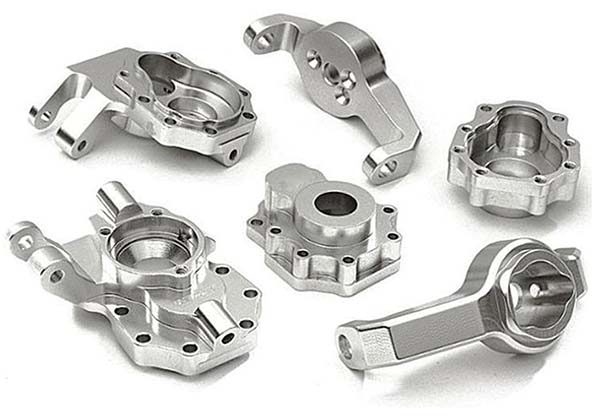
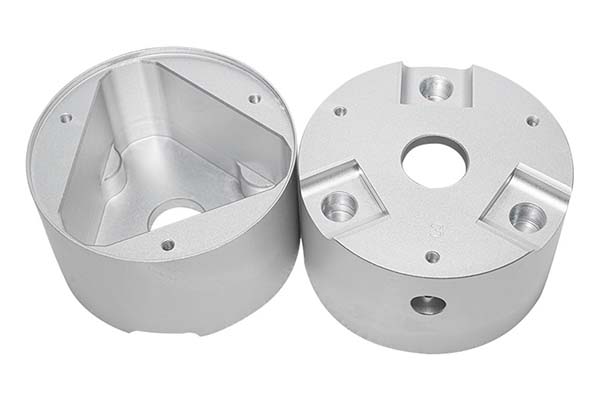
Precision machined components are the building blocks of modern machinery. But they are more than just parts. They are engineered solutions designed to meet exacting standards that off-the-shelf components cannot satisfy.
High-precision parts routinely hold tolerances as tight as ±0.0005 mm . That is about 1/140th the thickness of a human hair. At this scale, a gear in a surgical robot meshes perfectly with its counterpart. No vibration. No backlash. Just smooth, reliable operation.
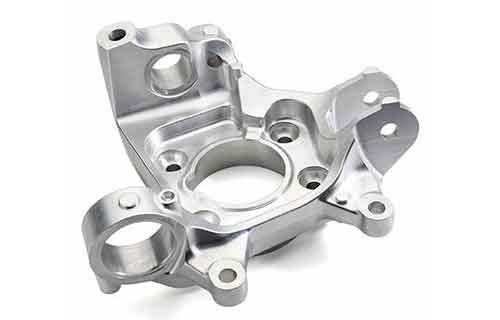
Complex geometries separate precision machining from standard fabrication. A jet engine fuel injector contains internal passages, undercuts, and micro-holes that cannot be created with conventional equipment. Advanced machining makes these features possible.
Custom components dominate the work of leading manufacturers. One top supplier reports that 85% of their projects involve custom designs. Standard parts rarely meet specialized requirements. A lightweight aluminum bracket for a drone needs different properties than a corrosion-resistant stainless steel valve for an oil rig. Each demands a tailored approach.
The common thread is consistency. A part that meets specification once is not enough. It must meet specification every time, in every batch, across every production run.
What Capabilities Should You Look For?
Multi-Axis CNC Machining
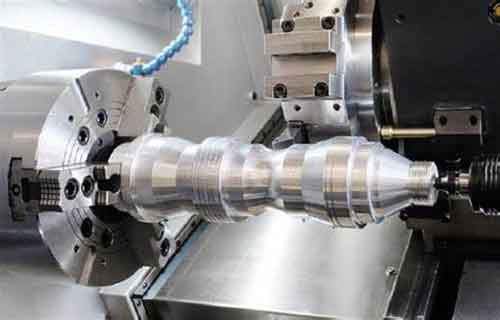
CNC machining forms the foundation of precision manufacturing. But not all CNC equipment delivers the same results.
Three-axis machines cut in X, Y, and Z directions. They work well for simple parts but require multiple setups for complex geometries. Each setup introduces positioning errors. A part requiring three setups on a three-axis machine carries three times the error risk of a part machined in one setup.
Five-axis machines add rotational axes, allowing the cutting tool to approach from multiple angles without repositioning the workpiece. A complex aerospace fitting that needs three setups on a three-axis machine can be completed in one setup on a five-axis machine. Fewer setups mean fewer errors, better accuracy, and shorter lead times.
Grinding and Honing
Some applications demand more than machined surfaces. Grinding and honing achieve surface finishes that cutting tools cannot match.
A hydraulic valve manufacturer needed sealing surfaces that would hold pressure at 10,000 psi without leaking. Standard milling produced surfaces with micro-grooves that allowed fluid passage. Grinding achieved Ra 0.02 μm surface finish —smooth enough to form a perfect seal.
For components where friction matters—bearings, sealing surfaces, precision slides—grinding is not optional. It is essential.
Batch Size Flexibility
The best manufacturers handle the full range of production volumes with equal precision.
| Batch Size | Typical Approach | Key Consideration |
|---|---|---|
| Prototypes (1–5) | Manual programming, flexible setups | Speed matters more than efficiency |
| Small-batch (5–100) | Dedicated teams, quick changeovers | Flexibility preserves margins |
| Medium-run (100–1,000) | Optimized programs, semi-automation | Balance of speed and setup cost |
| Large-scale (1,000–10,000+) | Automated cells, dedicated lines | Consistency across high volumes |
A manufacturer who can only handle large runs may struggle with prototypes. One who only does small batches may lack the consistency for high-volume production. Look for partners who span the spectrum.
Specialized Processes
Beyond standard machining, specialized processes extend capability:
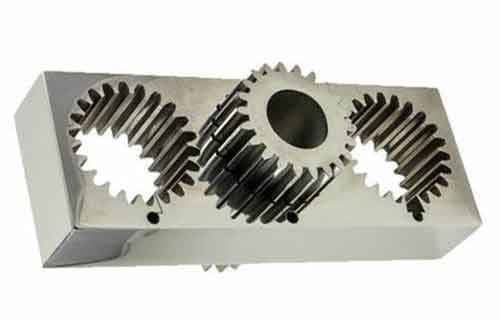
- Hobbing cuts gears with precision tooth profiles. A gear manufacturer using precision hobbing reports 50% longer gear life compared to standard methods.
- Broaching creates keyways, splines, and internal shapes efficiently.
- EDM (Electrical Discharge Machining) cuts hardened materials and creates features that conventional tools cannot reach.
How Does Material Selection Affect Performance?
A component's material determines what it can do. The right manufacturer understands this and processes each material accordingly.
Common Materials and Their Requirements
| Material | Key Properties | Processing Needs | Common Applications |
|---|---|---|---|
| Aluminum | Lightweight, corrosion-resistant | Fast machining; anodizing optional | Aircraft brackets, electronics housings |
| Stainless steel | High strength, heat-resistant | Slow feeds, sharp tools; passivation | Medical tools, industrial valves |
| Titanium | Exceptional strength-to-weight | Coolant-rich; controlled feeds | Aerospace fasteners, implants |
| Engineering plastics | Low friction, electrical insulation | Sharp tools; low heat to prevent melting | Electrical connectors, wear components |
| Inconel / Hastelloy | Extreme heat and corrosion resistance | Specialized tools; slow speeds | Turbine parts, oil and gas valves |
Heat Treatment and Surface Finishing
Raw material properties are rarely sufficient. Heat treatment transforms material characteristics after machining.
Carburizing steel components adds carbon to the surface layer. Hardness increases by 300% . Wear life in high-friction applications—automotive transmissions, industrial gears—extends dramatically.
Surface treatments add protection:
- Anodizing hardens aluminum surfaces and adds corrosion resistance
- Passivation removes free iron from stainless steel, preventing rust
- Plating adds wear resistance or electrical conductivity
A manufacturer who understands these processes can recommend the right combination for your application.
What Quality Systems Ensure Consistency?
Quality is not inspected in at the end. It is built into every step. Leading manufacturers embed quality throughout their operations.
Certifications Set the Baseline
Third-party certifications provide evidence of systems and discipline:
- ISO 9001: Quality management foundation. Applies across industries.
- AS9100: Aerospace-specific. Adds requirements for safety, traceability, and risk management.
- ISO 13485: Medical device standard. Emphasizes process validation and regulatory compliance.
Manufacturers with these certifications undergo regular audits. Their systems are documented. Their processes are consistent.
First Article Inspection (FAI)
FAI verifies that the first part off the line meets all specifications before production proceeds. This step catches errors before they multiply.
In one recent case, FAI detected a 0.002 mm error in a medical device component. The error was corrected before any additional parts were made. The alternative—discovering the issue after 1,000 parts—would have triggered a costly recall and production delay.
Non-Destructive Testing (NDT)
Some defects are invisible to the naked eye. NDT methods reveal internal flaws without damaging parts.
- Ultrasonic testing sends sound waves through the material. Reflections indicate internal voids or cracks.
- X-ray inspection images internal structures, revealing porosity or inclusions.
For aerospace components, where hidden cracks could lead to catastrophic failure, NDT is mandatory. For medical implants, it ensures patient safety.
Statistical Process Control (SPC)
SPC monitors production data in real time. Measurements from parts in process are plotted against control limits. When variations trend toward the limits, operators intervene before defects occur.
A manufacturer using SPC reduced scrap rates by 40% in six months. The system caught problems early, when corrections were cheap.
Where Does Precision Machining Matter Most?
Aerospace: Performance at the Limits
Jet engines operate at extreme temperatures and rotational speeds. A turbine blade with a 0.01 mm deviation can reduce engine performance by 2% —affecting fuel efficiency, range, and emissions.
Precision components in aerospace do more than enable performance. They ensure safety. Every part that leaves a certified aerospace manufacturer carries traceability records linking it back to raw material certificates and inspection data.
Medical: Precision That Saves Lives
Surgical instruments must function flawlessly. Implants must fit precisely. A bone screw with a poorly machined thread may not achieve the holding strength required for proper healing.
Medical device manufacturers demand ISO 13485 certification from their suppliers. This standard ensures that processes are validated, materials are traceable, and quality systems meet regulatory requirements.
Defense: Reliability Under Pressure
Missile guidance systems, armored vehicle components, and communications equipment must perform in extreme conditions. Failure is not an option.
A defense contractor who upgraded to precision-machined components reported 65% reduction in system failure rates. The investment in better parts paid back in improved mission reliability.
Energy: Withstanding Harsh Environments
Offshore oil rigs operate in corrosive saltwater environments. Wind turbines endure constant vibration and weather exposure. Components in these applications must resist wear, corrosion, and fatigue.
Precision-machined stainless steel and Inconel components prevent leaks in high-pressure valves. Properly finished gear surfaces extend turbine life. In energy applications, precision directly translates to uptime.
What Equipment Enables Precision?
High-End CNC Machines
Precision starts with machine capability. Leading manufacturers invest in equipment designed for accuracy.
Thermal compensation systems adjust for temperature changes that affect machine geometry. A shop floor can vary by ±5°C over a day. Without compensation, those temperature swings introduce errors. With compensation, the machine holds tolerances regardless of temperature.
Glass scales provide direct position feedback, eliminating errors from leadscrew wear or thermal expansion. Positioning accuracy reaches ±0.0005 mm .
Electrical Discharge Machining (EDM)
EDM uses electrical sparks to erode material. It cuts hardened steels that conventional tools cannot touch. It creates internal features that no cutting tool can reach.
Wire EDM achieves tolerances of ±0.0001 mm —ideal for micro-components in electronics and medical devices. Sinker EDM creates cavities, molds, and complex 3D features.
Metrology Equipment
You cannot make what you cannot measure. Precision manufacturers invest heavily in inspection equipment.
Coordinate Measuring Machines (CMMs) measure parts in three dimensions. A bridge CMM with scanning capability can inspect hundreds of features in minutes. Accuracy reaches ±0.00005 mm .
Laser scanners capture surface geometry without contact. They verify complex contours that CMM probes cannot reach.
Calibration is critical. Leading manufacturers calibrate their metrology equipment daily against certified standards.
Automation and Robotics
Human error remains a major source of variation. Robotic loading eliminates variation in workpiece positioning.
A robotic arm places parts in a CNC machine with ±0.001 mm repeatability. Manual loading achieves ±0.05 mm at best. The difference shows up in part consistency.
Automated cells run lights-out, maintaining consistency across overnight shifts that human operators cannot sustain.
How Do Design Services Add Value?
Design for Manufacturing (DFM)
The best manufacturers do not wait for drawings. They engage early, helping customers design parts that can be machined efficiently.
A DFM review might suggest adjusting a wall thickness from 0.8 mm to 1.0 mm . The change prevents warping during machining. Rework costs drop by 30% . The part costs less and arrives faster.
CAD/CAM Integration
Seamless transition from design to production reduces errors. Engineers use CAD (Computer-Aided Design) to create models. CAM (Computer-Aided Manufacturing) software generates tool paths directly from the model.
Integrated systems allow machining simulation before cutting begins. Engineers can detect collisions, verify tool paths, and optimize cycles—all without touching a machine.
Prototyping
Prototyping catches issues before production. A 3D-printed prototype verifies fit and form. A CNC-machined sample confirms material properties and surface finish.
One medical device company saved $200,000 by prototyping a surgical instrument before committing to production tooling. The prototype revealed a clearance issue that would have scrapped the first production run.
Yigu Technology's Perspective
At Yigu Technology, precision is not a slogan. It is a promise built into every part we make.
Our CNC machining capabilities span three-axis to five-axis equipment, handling materials from aluminum and stainless steel to titanium and exotic alloys. We invest in grinding and honing for applications where surface finish determines performance. Our metrology lab maintains CMM and laser scanning equipment calibrated to national standards.
We are certified to ISO 9001, ISO 13485, and AS9100 —demonstrating our commitment to quality across general, medical, and aerospace applications. Our quality control team uses SPC to monitor production in real time, catching variations before they affect your parts.
From prototypes to large-scale production, our engineering team partners with you from design to delivery. We do not just make parts. We solve problems. We help you choose materials, optimize designs, and navigate the complexities of precision manufacturing.
When your application demands accuracy you can trust, we deliver.
Conclusion
Choosing a precision machined components manufacturer is a decision with lasting consequences. The right partner delivers consistent quality, reliable delivery, and technical expertise that makes your products better. The wrong partner introduces variation, delays, and hidden costs that undermine your success.
Look for manufacturers who invest in multi-axis CNC equipment, comprehensive quality systems, and advanced metrology. Seek partners with industry certifications that match your requirements. Engage manufacturers early, leveraging their design expertise to optimize parts before production begins.
The best manufacturers do more than make parts. They become strategic partners—contributing to your success through their capability, consistency, and commitment to quality.
Choose carefully. Your products—and your reputation—depend on it.
FAQ
How do you ensure consistency across large production runs?
Consistency comes from automated machining cells, statistical process control (SPC) , and regular equipment calibration. Each part is inspected at key stages. Production data is tracked in real time. Variations are addressed before they affect quality. This layered approach maintains tolerances across thousands of parts.
What is the typical lead time for custom precision components?
Lead times depend on complexity and quantity. Prototypes often ship in 3–5 days. Small batches (1–100 parts) typically take 2–3 weeks. Large production runs (10,000+ parts) require 4–6 weeks. Rush options are available for urgent projects. Your manufacturer should provide clear timing estimates based on your specific requirements.
Can you work with unusual or exotic materials?
Yes. Experienced manufacturers machine materials including Inconel, Hastelloy, PEEK, and other exotic alloys and plastics. Each material demands specific tools, speeds, and cooling strategies. A manufacturer with broad material experience can advise on the best choice for your application and process it to tight tolerances.
What certifications should I look for in a precision manufacturer?
ISO 9001 is the baseline quality standard. For medical devices, require ISO 13485 . For aerospace, require AS9100 . These certifications demonstrate that the manufacturer has documented quality systems, undergoes regular audits, and meets industry-specific requirements. Certification alone does not guarantee quality, but it provides evidence of capability and commitment.
How do I verify a manufacturer's quality before placing an order?
Request sample parts and inspect them yourself. Ask for First Article Inspection (FAI) reports showing measurement data against your specifications. Visit the facility if possible—observe their equipment, cleanliness, and quality systems in action. Check references from customers in your industry. The manufacturer's willingness to provide transparency tells you as much as the information itself.
Contact Yigu Technology for Custom Manufacturing
Looking for a precision machining partner you can trust? Yigu Technology delivers accuracy for critical applications across medical, aerospace, defense, and industrial markets. Our capabilities span CNC machining, grinding, EDM, and specialized processes. We hold ISO 9001, ISO 13485, and AS9100 certifications. Our quality systems ensure consistency you can count on.
From design support through production and delivery, we partner with you to turn challenging requirements into reliable components.
Contact Yigu Technology today to discuss your project or request a quote. Let us show you what precision—and partnership—really mean.