Introduction
C17200 (beryllium copper) is a unique alloy prized for its exceptional strength and versatility, but machining it poses distinct challenges. Its age-hardening properties, combined with high strength and specific conductivity requirements, often lead to issues like tool wear, dimensional instability, and surface finish inconsistencies. This guide addresses these pain points, offering actionable strategies to master CNC machining C17200 —from material properties and heat treatment to tooling, machining parameters, and applications.
What Are the Key Material Properties of C17200 (Beryllium Copper)?
C17200, commonly known as BeCu, is a high-performance copper alloy containing 1.8–2.0% beryllium and 0.2–0.6% cobalt/nickel. Its standout feature is being age-hardenable —strengthened through heat treatment after machining.
| Property | C17200 Specification | Significance |
|---|---|---|
| Beryllium content | 1.8 – 2.0% Be | Enables age hardening |
| Alloying elements | 0.2 – 0.6% Co/Ni | Enhances strength and conductivity |
| Electrical conductivity | 22 – 28% IACS | Lower than pure copper; balances conductivity and strength—ideal for electronic spring contacts |
| Post-age hardness | 36 – 42 HRC | Tensile strength up to 1,200 MPa after aging—surpasses many other copper alloys |
| Non-sparking, non-magnetic | — | Indispensable in hazardous environments (oil & gas) |
| Thermal conductivity | Good | Efficient heat dissipation in valve seats |
| Corrosion resistance | Excellent | Durability in harsh conditions |
| Biocompatibility | — | Suitable for medical instruments; handling requires care due to beryllium content |
What CNC Machining Strategies Work for C17200?
Solution-Treated vs. Age-Hardened Machining
| Condition | Hardness | Best For |
|---|---|---|
| Solution-treated (after annealing 790–815°C) | 20 – 25 HRC | Most operations—softer, easier to cut; minimizes tool wear; allows tighter tolerances |
| Age-hardened (after heat treatment) | 36 – 42 HRC | Final touches only; requires specialized tooling due to increased hardness |
Key Machining Techniques
| Technique | Description | Benefit |
|---|---|---|
| High-speed turning | Surface speeds up to 150 m/min; rigid setups to avoid chatter | Cylindrical parts |
| 5-axis milling | Complex geometries; multi-axis movement maintains accuracy | Aerospace connectors, intricate features |
| Trochoidal milling | Reduces tool engagement time; controls heat buildup | Prevents work hardening (C17200 work-hardens quickly) |
| Adaptive toolpaths | Adjusts feed rates based on material thickness | Prevents overload; consistent chip formation; avoids micro-cracks |
| Chip control | Single-flute end mills or chip-breaker inserts | Prevents stringy chips from tangling tools |
| Coolant-through-tool systems | High-pressure coolant (70–100 bar) directly to cutting zone | Reduces friction; flushes chips away |
| Low-stress fixturing | Soft jaws or vacuum chucks distribute clamping force evenly | Prevents distortion in thin-walled parts (bearing cages) |
| Vibration damping | Tuned toolholders or machine dampers | Minimizes chatter; preserves surface integrity for mirror-finish applications |
What Tooling and Cutting Parameters Are Optimal?
Tool Selection
| Tool Type | Recommendation | Why |
|---|---|---|
| Carbide inserts | AlTiN coating | Workhorses for C17200; wear resistance at moderate speeds |
| PCD tooling (polycrystalline diamond) | For mirror finishes or high-precision cuts | Outperforms carbide; higher cost |
| Rake angle | Positive (5–10°) | Reduces cutting forces |
| Edge prep | Sharp (0.01–0.02 mm radius) | Ensures clean cuts without tearing; critical for avoiding burrs in medical instruments |
Cutting Parameters
| Parameter | Solution-Treated | Age-Hardened |
|---|---|---|
| Cutting speed | 80 – 150 m/min | 50 – 80 m/min |
| Feed rate | 0.05 – 0.12 mm/tooth | 0.05 – 0.12 mm/tooth |
| Depth of cut | 0.1 – 1.0 mm (shallower for finishing) | 0.1 – 1.0 mm |
Higher speeds risk excessive tool wear.
Faster feeds can cause work-hardening; slower rates may induce rubbing.
Tool Wear Monitoring
| Method | Action |
|---|---|
| Laser sensors or visual checks | Replace inserts when flank wear exceeds 0.3 mm to prevent degraded surface finish |
| Micro-lubrication (MQL) | Vegetable-based oils reduce friction in precision areas; complements coolant systems |
What Heat Treatment and Post-Machining Processes Are Required?
Heat Treatment Sequence
| Process | Parameters | Purpose |
|---|---|---|
| Solution annealing | 790 – 815°C for 1–2 hours | Softens material; prepares for machining |
| Age hardening | 315°C for 2–4 hours | Develops full strength (36–42 HRC) |
Dimensional Control
| Factor | Consideration |
|---|---|
| Shrinkage during aging | 0.05 – 0.1%; compensate in CAD models (oversize by 0.001–0.002 mm per mm) to achieve ±0.005 mm tolerances |
| Distortion mitigation | Machine near-net shapes before aging; finish post-heat treatment |
| Stress relieving | 120 – 150°C for 1–2 hours after roughing |
How Do You Achieve Surface Finish and Precision?
Surface Finish
| Target | Method |
|---|---|
| Ra 0.1 – 0.4 μm | PCD tools; slow feeds (0.02–0.05 mm/rev); light cuts (0.05–0.1 mm) |
| Mirror finishing passes | 0.01 mm depth of cut; polished PCD tools |
Precision Requirements
| Requirement | Method |
|---|---|
| Tight tolerances (±0.005 mm) | Temperature-controlled environments (20±1°C); frequent CMM (coordinate measuring machine) inspection |
| Surface roughness verification | Profilometry; ensures compliance for medical instruments |
| Burr-free edges | Sharp tools; post-machining deburring (vibratory finishing or laser deburring) |
| Micro-cracking prevention | Avoid excessive cutting forces; critical for high-cycle fatigue components (springs) |
Where Is C17200 Used?
| Industry | Applications | Why C17200? |
|---|---|---|
| Aerospace | Connectors | Strength and conductivity |
| Oil & Gas | Non-sparking tools (wrenches, scrapers) | Non-sparking trait prevents explosions in volatile environments |
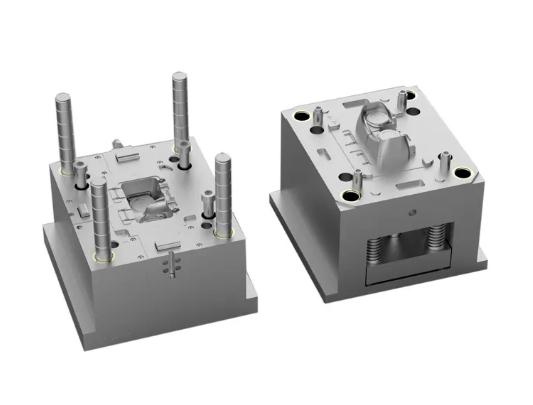
| Plastic molds | Mold inserts | Heat conductivity and polishability; ensures uniform cooling, high-quality part replication |
| Electronics | Electronic spring contacts | Combination of strength and conductivity for reliable connections |
| Medical | Instruments (scalpels, forceps) | Biocompatibility; corrosion resistance |
| Undersea | Connectors | Corrosion resistance; dimensional stability in harsh marine environments |
What Is Yigu Technology’s Perspective?
At Yigu Technology , we specialize in C17200 machining—from solution-treated roughing to age-hardened finishing. Our expertise includes:
- Heat treatment coordination: Solution annealing (790–815°C) followed by age hardening (315°C) to achieve 36–42 HRC; compensate for 0.05–0.1% shrinkage in CAD models.
- Precision tooling: Carbide inserts with AlTiN coating for moderate speeds; PCD tooling for Ra 0.1–0.4 μm mirror finishes.
- Machining parameters: Cutting speeds 80–150 m/min (solution-treated); 50–80 m/min (age-hardened); feed rates 0.05–0.12 mm/tooth; trochoidal milling and adaptive toolpaths to control work hardening.
- Quality control: Temperature-controlled environments (20±1°C); CMM inspection for ±0.005 mm tolerances; profilometry for surface finish verification.
- Applications: Aerospace connectors, oil & gas non-sparking tools, medical instruments, electronic spring contacts.
We optimize processes for cost-efficiency without compromising on precision, delivering components that meet aerospace and medical standards.
Conclusion
CNC machining C17200 (beryllium copper) requires understanding its age-hardening properties and applying tailored strategies. C17200 contains 1.8–2.0% beryllium , achieving tensile strength up to 1,200 MPa and 36–42 HRC after aging, with 22–28% IACS conductivity. Optimal machining strategy: perform most operations in solution-treated condition (20–25 HRC) —softer, easier to cut. Age-hardened machining (36–42 HRC) reserved for final touches. Key techniques: high-speed turning (up to 150 m/min) , 5-axis milling , trochoidal milling to control work hardening, coolant-through-tool systems (70–100 bar) , low-stress fixturing , and vibration damping. Tooling: carbide with AlTiN coating for moderate speeds; PCD tooling for Ra 0.1–0.4 μm mirror finishes. Cutting parameters: 80–150 m/min (solution-treated) , 50–80 m/min (age-hardened) ; feed rates 0.05–0.12 mm/tooth. Heat treatment: solution annealing (790–815°C) → age hardening (315°C, 2–4 hours) —compensate for 0.05–0.1% shrinkage to achieve ±0.005 mm tolerances. Applications: aerospace connectors, oil & gas non-sparking tools, electronic spring contacts, medical instruments, undersea connectors. With proper tooling, heat treatment coordination, and precision controls, C17200 delivers exceptional strength, conductivity, and reliability in critical applications.
FAQs
Is C17200 safe to machine?
Yes, with proper PPE (respirators, gloves) and ventilation. Beryllium dust is hazardous; wet machining reduces dust. Always follow safety protocols.
Can C17200 be welded?
Welding is possible but risks grain growth. Brazing is preferred for joining, preserving mechanical properties.
How does age hardening affect machining?
Age-hardened C17200 (36–42 HRC ) is 3× harder than solution-treated material (20–25 HRC). Requires slower speeds and harder tooling (PCD or CBN) for finishing operations.
Contact Yigu Technology for Custom Manufacturing
At Yigu Technology , we combine deep material knowledge with advanced CNC machining to deliver precision C17200 components. Our 3-axis, 4-axis, and 5-axis CNC machines are equipped with coolant-through-tool systems (70–100 bar) , PCD tooling , and low-stress fixturing to achieve tolerances as tight as ±0.005 mm and surface finishes Ra 0.1–0.4 μm . We coordinate solution annealing (790–815°C) and age hardening (315°C) with dimensional compensation for 0.05–0.1% shrinkage. From aerospace connectors to medical instruments, we deliver components that meet the most demanding standards.
Ready to machine your next C17200 project? Contact Yigu Technology today for a free consultation and quote. Let us help you achieve high-strength precision in every component.