Introduction
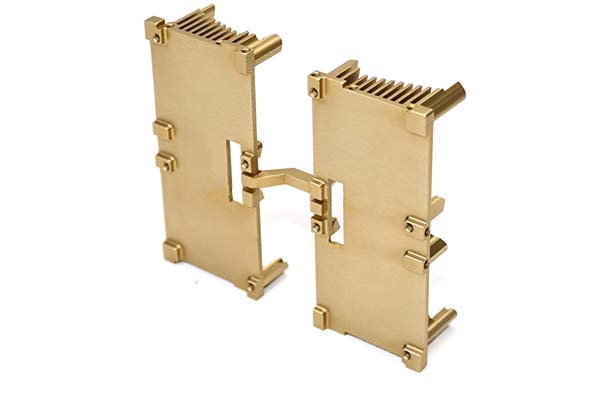
C10100 oxygen-free copper is a premium material prized for its exceptional purity—99.99% copper—and outstanding electrical and thermal conductivity. It is the material of choice for high-voltage connectors, RF waveguides, semiconductor lead frames, and particle accelerator components. But machining this high-purity copper comes with unique challenges. Its ductility produces gummy, stringy chips that clog tools. Its softness leads to burrs and poor surface finish if parameters are not optimized. And its tendency to work harden requires careful tool selection and cutting strategies. This guide covers material properties, machining techniques, tooling, parameters, surface finish control, and applications to help you achieve precision results with C10100.
What Makes C10100 Oxygen-Free Copper Unique?
Material Characteristics
C10100 is defined by its exceptional purity. With 99.99% copper content and oxygen content below 0.001%, it offers properties that standard copper alloys cannot match.
| Property | C10100 Value | Significance |
|---|---|---|
| Purity | 99.99% Cu | Maximum electrical and thermal conductivity |
| Electrical conductivity | >101% IACS | Superior to standard copper; minimizes power loss |
| Thermal conductivity | ~401 W/m·K | Efficient heat transfer—heat sinks, cryogenic components |
| Magnetic property | Non-magnetic | Essential for medical devices, particle accelerators |
| Ductility | Excellent | Can form complex shapes; but creates machining challenges |
| Outgassing | Very low | Suitable for vacuum environments—space applications, accelerators |
| Corrosion resistance | Good | Withstands moist and industrial environments |
Grain structure: Fine and uniform, contributing to consistent mechanical properties and enabling precise dimensional control during machining.
Why Purity Matters
The high purity of C10100 directly translates to:
- Maximum electrical conductivity: Over 101% IACS (International Annealed Copper Standard)
- Low outgassing: Releases minimal gases under vacuum—critical for particle accelerators and space applications
- Non-magnetic properties: No magnetic interference in sensitive medical or scientific equipment
- Consistent machinability: Uniform grain structure reduces variability in cutting behavior
What Machining Techniques Work for C10100?
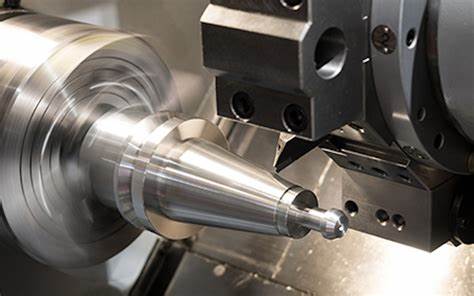
CNC Turning
Turning is commonly used for cylindrical parts—connectors, bus bars, and components.
Parameters:
- Cutting speed: 300–600 m/min (high speeds reduce chip adhesion)
- Feed rate: 0.1–0.2 mm/rev (moderate for surface finish)
- Depth of cut: 0.5–2 mm roughing; 0.1–0.5 mm finishing
Key technique: Use sharp tools with positive rake angles to cut cleanly rather than push the material.
CNC Milling
Milling requires careful toolpath selection to manage chip formation and heat.
Techniques:
- Trochoidal milling: Reduces tool engagement time, minimizes heat buildup—especially effective for roughing
- Climb milling: Produces cleaner cuts, reduces burr formation
- Adaptive toolpaths: Adjust feed rates based on material engagement
Parameters:
- Cutting speed: 200–400 m/min (carbide); up to 1000 m/min (diamond)
- Feed rate: 0.02–0.1 mm/tooth
- Depth of cut: 0.1–1 mm roughing; 0.01–0.1 mm finishing
Micro-Machining
C10100 is suitable for micro-components in vacuum systems, medical devices, and electronics.
Requirements:
- Micro-grain carbide tools
- Tight runout control (<0.0001")
- High spindle speeds (15,000–30,000 RPM)
- MQL (minimum quantity lubrication) to avoid flooding
High-Speed Machining
High-speed machining boosts productivity but requires stable setups.
Considerations:
- Spindle speeds above 10,000 RPM
- Balanced toolholders to prevent chatter
- Rigid machine construction
- Mist cooling for heat management
Coolant Strategy
Proper coolant is essential for preventing overheating and chip buildup.
| Operation | Coolant Strategy |
|---|---|
| Heavy roughing | Flood cooling—dissipates heat, flushes chips |
| High-speed finishing | Mist cooling—reduces friction without flooding |
| Micro-machining | MQL—minimal coolant, avoids contamination |
| Precision turning | Through-tool coolant—delivers to cutting edge |
Burr Reduction
C10100’s ductility makes it prone to burr formation. Prevention strategies:
- Sharp tools with positive rake angles
- Climb milling instead of conventional
- Optimized feed rates: 0.05–0.2 mm/rev for turning; 0.02–0.05 mm/tooth for finishing
- Deburring steps: Include as part of machining cycle or post-process
Chatter Mitigation
Chatter degrades surface finish and dimensional accuracy. Prevention:
- Rigid machine setups: Minimize tool overhang
- Short tool holders: Use stub-length tool holders where possible
- Balanced toolholders: Essential for high-speed operations
- Parameter adjustment: Lower feed rates for high-speed operations
What Tooling and Parameters Are Optimal?
Tool Materials
| Tool Type | Best For | Notes |
|---|---|---|
| Carbide | General machining | Uncoated or coated; fine-grain grades preferred |
| PCD (polycrystalline diamond) | Mirror finishes, high-volume | Excellent wear resistance; long tool life |
| Single-crystal diamond | Ultra-smooth finishes | Highest surface quality; used for finishing passes |
Important note: Uncoated carbide or diamond tools often perform better than coated tools for C10100, as coatings may not adhere well to copper.
Tool Geometry
| Feature | Recommended | Purpose |
|---|---|---|
| Rake angle | 5–10° positive | Reduces cutting forces |
| Clearance angle | 7–10° | Prevents rubbing against workpiece |
| Edge sharpness | Very sharp (finishing) | Clean cuts; minimal burrs |
| Edge preparation | Slight hone (roughing) | Prevents edge chipping |
Cutting Parameters
| Parameter | Carbide Tools | Diamond/PCD Tools |
|---|---|---|
| Cutting speed | 200–400 m/min | Up to 1000 m/min |
| Feed rate (turning) | 0.05–0.2 mm/rev | 0.02–0.1 mm/rev |
| Feed rate (milling) | 0.02–0.1 mm/tooth | 0.01–0.05 mm/tooth |
| Depth of cut (roughing) | 0.5–2 mm | 0.2–1 mm |
| Depth of cut (finishing) | 0.05–0.2 mm | 0.01–0.05 mm |
Tool Wear Management
Copper’s ductility can cause built-up edge (BUE) on tools. Mitigation:
- Use sharp tools—dull tools increase friction
- Maintain adequate feed rates—too slow causes rubbing
- Regular inspection: replace tools when flank wear exceeds 0.1–0.2 mm
- Consider uncoated carbide or diamond for best results
Lubrication
Water-soluble coolants with EP (extreme pressure) additives reduce friction and improve surface finish. For precision finishing, MQL avoids coolant residue.
What Surface Finish and Tolerances Are Achievable?
Surface Finish Levels
| Finish Level | Ra Value | Method |
|---|---|---|
| Standard | 0.8–1.6 μm | Carbide tools, standard parameters |
| Precision | 0.2–0.8 μm | Sharp tools, optimized feeds |
| High-quality | 0.05–0.2 μm | Diamond tools, slow feeds, light passes |
| Mirror finish | 0.02–0.05 μm | PCD/single-crystal diamond, final polishing pass |
Mirror finish technique:
- PCD or single-crystal diamond tool
- Slow feed rate: 0.01–0.05 mm/rev
- Light depth of cut: 0.01–0.05 mm
- Mist or MQL coolant
- Results in reflective surface—essential for RF waveguides, optical components
Dimensional Tolerances
| Part Type | Achievable Tolerance |
|---|---|
| Standard | ±0.01–0.02 mm |
| Precision | ±0.005 mm |
| Ultra-precision (semiconductor, medical) | ±0.001 mm |
Key factors:
- Rigid machine setup
- Sharp, high-quality tools
- Stable temperature environment
- In-process inspection
Post-Machining Polishing
Electrolytic polishing is effective for C10100, removing burrs and improving surface finish and corrosion resistance. Mechanical polishing can achieve mirror finishes for decorative or optical applications.
Surface Roughness Measurement
Regular measurement using profilometers ensures parts meet specifications. For medical devices, surface finish affects biocompatibility and cleanability. For RF components, surface roughness directly impacts signal loss.
Where Is C10100 Used?
High-Voltage Connectors
C10100’s high electrical conductivity (>101% IACS) ensures minimal power loss and reliable performance in power distribution systems, switchgear, and industrial equipment.
RF Waveguides
In telecommunications and radar systems, RF waveguides require high conductivity and smooth surface finishes to minimize signal loss. C10100 delivers both.
Semiconductor Lead Frames
Semiconductor lead frames demand tight tolerances and excellent conductivity. C10100’s low outgassing prevents contamination in semiconductor manufacturing environments.
Bus Bars
Bus bars machined from C10100 efficiently distribute electrical power in industrial and commercial settings. High conductivity and corrosion resistance ensure long-term reliability.
Cryogenic Components
C10100 maintains properties at low temperatures, making it suitable for cryogenic components in MRI machines, superconducting systems, and research equipment.
Particle Accelerator Parts
Particle accelerators demand low outgassing and high purity to prevent contamination. C10100’s non-magnetic property also avoids interference with particle beams.
Microwave Components
Microwave components benefit from high conductivity and precise dimensions, ensuring efficient signal transmission with minimal loss.
Medical Devices
In medical devices, C10100’s corrosion resistance and biocompatibility suit surgical instruments, diagnostic equipment, and components requiring non-magnetic properties.
A Real-World C10100 Machining Success
A manufacturer producing RF waveguides for telecommunications faced:
- Poor surface finish: Ra 0.8–1.2 μm causing signal loss
- Burr formation: Required extensive hand deburring
- Tool wear: 30 parts per carbide tool
Process improvements:
- Switched to PCD tools with single-crystal diamond finishing pass
- Reduced feed rate to 0.03 mm/rev on finishing pass
- Implemented trochoidal milling for roughing
- Added mist cooling with MQL for finishing
- Used electrolytic polishing post-machining
Results:
- Surface finish improved to Ra 0.04 μm (mirror finish)
- Burrs eliminated
- Tool life increased to 200 parts per tool
- Signal loss reduced by 15%
- Customer approved for high-volume production
Conclusion
CNC machining C10100 oxygen-free copper requires understanding its exceptional purity and the challenges it presents. High cutting speeds (300–600 m/min) reduce chip adhesion; sharp positive rake tools cut cleanly rather than push the material. Trochoidal milling and climb milling minimize heat and burr formation. Diamond tools—PCD or single-crystal—deliver mirror finishes (Ra 0.02–0.05 μm) and extended tool life. Proper coolant—flood for roughing, MQL for finishing—manages heat and chip evacuation. Achievable tolerances reach ±0.001 mm for precision components. From high-voltage connectors and RF waveguides to semiconductor lead frames and particle accelerator parts, C10100’s unmatched conductivity, purity, and non-magnetic properties make it indispensable—and with the right machining approach, you can achieve the precision and surface quality these demanding applications require.
FAQs
What makes C10100 better than other copper alloys for electrical applications?
C10100’s 99.99% purity gives it superior electrical conductivity—over 101% IACS (International Annealed Copper Standard). This minimizes power loss, making it ideal for high-efficiency electrical components like high-voltage connectors, bus bars, and RF waveguides. Standard copper alloys (C11000, C14500) have lower conductivity due to impurities or alloying elements.
How can I prevent burrs when machining C10100?
Burr prevention starts with sharp tools—dull tools push material rather than cut. Use positive rake angles (5–10°), climb milling, and optimized feed rates (0.05–0.2 mm/rev for turning; 0.02–0.05 mm/tooth for finishing). Include deburring steps in the machining cycle or post-process with electrolytic polishing for burr-free edges.
What cutting tools are best for machining C10100?
For general machining, fine-grain carbide tools with sharp edges work well. For high-precision and mirror finishes, PCD (polycrystalline diamond) and single-crystal diamond tools are best. They maintain sharpness longer, achieve superior surface finishes, and withstand high cutting speeds (up to 1000 m/min). Uncoated tools often perform better than coated because coatings may not adhere well to copper.
Is C10100 suitable for high-temperature applications?
C10100 has excellent thermal conductivity (~401 W/m·K), making it effective for heat dissipation. However, its strength decreases at temperatures above 300°C. It is best suited for moderate-temperature environments or applications where heat transfer (not high-temperature strength) is the primary requirement—heat sinks, cryogenic components, and electrical connectors.
What surface finish can I achieve with C10100?
With carbide tools and standard parameters, Ra 0.8–1.6 μm is typical. With optimized parameters and sharp carbide, Ra 0.2–0.8 μm is achievable. For mirror finishes (Ra 0.02–0.05 μm), use PCD or single-crystal diamond tools with slow feed rates (0.01–0.05 mm/rev) and light finishing passes. This level of finish is essential for RF waveguides, optical components, and high-precision medical devices.
Contact Yigu Technology for Custom Manufacturing
At Yigu Technology, we specialize in CNC machining C10100 oxygen-free copper for high-precision applications—RF waveguides, semiconductor lead frames, high-voltage connectors, and particle accelerator components. Our expertise includes PCD and single-crystal diamond tooling, high-speed machining strategies, and mirror-finish capabilities (Ra 0.02 μm). We achieve tolerances down to ±0.001 mm with rigorous CMM inspection. Whether you need components for telecommunications, medical devices, or scientific research, we deliver the precision and surface quality that C10100 demands. Contact us to discuss your oxygen-free copper machining project.