Overview
Imagine walking into a factory where machines build parts by adding material instead of cutting it away. No loud machining sounds. No piles of metal shavings or plastic scraps. Just layer upon layer of material growing into finished products. This is what happens inside 3D printing manufacturing companies every day.
Additive manufacturing has moved far beyond the hobbyist printers sitting on someone's desk. Today, specialized companies use industrial-scale machines to produce everything from jet engine components to custom medical implants. They're not just prototyping anymore—they're making final, end-use products that go directly into cars, airplanes, and human bodies.
But how do these companies actually operate? What technologies do they use? And why are traditional manufacturers paying attention? Let's walk through the real world of 3D printing manufacturing and see what makes these companies tick.
What Different 3D Printing Technologies Do Manufacturers Use?
Not all 3D printing is the same. Walk into any professional 3D printing facility, and you'll find multiple machines using different methods. Each technology serves specific purposes. Here's what manufacturers actually work with:
FDM: The Workhorse for Prototypes and Tooling
Fused Deposition Modeling (FDM) is the technology most people recognize. A machine feeds plastic filament through a heated nozzle, melting it and laying down thin layers that fuse together as they cool.
What manufacturers actually use FDM for:
- Functional prototypes that need to withstand handling and testing
- Jigs and fixtures for assembly lines—tools that hold parts during manufacturing
- Low-cost production runs where appearance matters less than function
The reality check: FDM parts show visible layer lines. They're strong enough for many applications but rarely used for consumer-facing products without significant post-processing. However, for internal use—think shop floor tools—FDM delivers incredible value at low cost.
SLA: When Surface Finish Actually Matters
Stereolithography (SLA) takes a different approach. A UV laser traces patterns into liquid resin, hardening it precisely where needed. The result? Parts with smooth surfaces and fine details that FDM can't match.
Real-world applications:
- Dental models for crowns, bridges, and aligners
- Jewelry patterns for investment casting
- Medical models for surgical planning
Here's what manufacturers know: SLA delivers precision but requires careful handling. Uncured resin is messy, parts need washing and post-curing, and materials cost more than FDM filaments. The trade-off makes sense when detail matters more than budget.
SLS: Strong Parts Without Support Structures
Selective Laser Sintering (SLS) uses a laser to fuse powder particles—typically nylon—into solid shapes. Because unsintered powder surrounds the part, supports aren't needed. This opens design possibilities that other methods can't match.
Where SLS shines in manufacturing:
- Durable end-use parts for aerospace and automotive
- Complex assemblies printed as single pieces
- Ventilation ducts and other organic shapes
The catch? SLS machines cost more, powder handling requires care, and surface finishes feel slightly grainy. But for functional parts that must perform, SLS often wins.
Metal Printing: The Game Changer for Industry
Metal 3D printing deserves special attention because it changes what's possible. Technologies like Direct Metal Laser Sintering (DMLS) and Electron Beam Melting (EBM) build fully dense metal parts with properties matching wrought materials.
What metal printing enables:
- Lightweight aerospace brackets with organic lattice structures
- Cooling channels in molds that follow complex curves
- Custom surgical implants matching patient anatomy
The numbers tell the story: A conventionally machined titanium part might waste 80% of the material as chips. A printed version uses exactly what's needed, nothing more. In aerospace, where titanium costs can exceed $50 per kilogram, this matters enormously.
| Technology | Materials | Strengths | Typical Applications |
|---|---|---|---|
| FDM | Plastics (ABS, PLA, nylon) | Low cost, strong parts | Prototypes, jigs, fixtures |
| SLA | Photopolymer resins | High detail, smooth finish | Dental models, jewelry, surgical guides |
| SLS | Nylon powders | No supports, durable parts | Functional prototypes, end-use parts |
| Metal | Titanium, aluminum, stainless steel | Fully dense metal, complex geometry | Aerospace, medical implants, tooling |
Who Are the Major Players in 3D Printing Manufacturing?
Understanding the industry means knowing who builds the machines and supplies the materials. These companies shape what manufacturers can actually achieve.
Stratasys: The FDM Pioneer
Stratasys essentially invented commercial FDM printing. Their machines dominate education and professional prototyping. Beyond FDM, their PolyJet technology jets photopolymer droplets, curing them instantly with UV light—think multi-material, full-color printing.
What makes Stratasys significant: They've built an ecosystem of materials, software, and support that makes adoption easier for companies new to additive manufacturing.
3D Systems: The SLA Originator
3D Systems traces back to the very beginning of 3D printing. They commercialized SLA and continue pushing resolution boundaries. Their metal and dental offerings serve specialized markets with demanding requirements.
Their role in industry: 3D Systems provides solutions for applications where precision can't be compromised. Aerospace and medical clients rely on their technology for mission-critical parts.
Desktop Metal: Making Metal Accessible
Desktop Metal focused on solving metal printing's biggest problem: cost and complexity. Their binder jetting technology prints metal parts quickly, then sinters them in furnaces. The result? Metal printing at fractions of traditional costs.
The practical impact: Small machine shops and manufacturers can now explore metal printing without million-dollar investments.
Formlabs: Professional SLA for Everyone
Formlabs democratized SLA printing. Before them, high-resolution resin printing cost tens of thousands. Formlabs brought quality SLA to the desktop, making it accessible to engineers, dentists, and designers.
Their contribution: Formlabs proved that professional-grade 3D printing doesn't require industrial budgets. This opened applications in dental labs, engineering offices, and small businesses worldwide.
What Industries Actually Use 3D Printing Today?
Let's move beyond theory and look at where 3D printing manufacturing companies create real value.
Aerospace: Can You Trust Printed Parts at 35,000 Feet?
Yes, absolutely—when they're made correctly. GE Aviation prints fuel nozzles for their LEAP engines. Each nozzle was traditionally assembled from 20 separate parts. Now it's printed as one piece, 25% lighter and five times more durable.
Boeing prints over 200 different parts for their aircraft, including environmental control system ducts and cabin components. The key insight: 3D printing enables shapes that optimize airflow, reduce weight, and consolidate assemblies.
Canadian companies like Magellan Aerospace follow suit, printing components for commercial and defense aircraft. The certification process is rigorous, but once approved, printed parts perform reliably.
Medical: How Does Printing Help Patients Directly?
This might be 3D printing's most human application. Consider a patient needing jaw reconstruction after cancer surgery. Traditional implants require surgeons to modify standard plates during operation. With 3D printing, surgeons plan the procedure digitally, print exact guides, and place implants designed specifically for that patient.
Real examples from practice:
- Hip replacements matched to individual bone structure
- Cranial implants filling skull defects exactly
- Surgical models letting surgeons practice before entering the operating room
Dental applications alone justify the technology. Clear aligners, crowns, bridges, and dentures all benefit from digital workflows. A dental lab can scan a patient's mouth, design restorations digitally, and print them in hours instead of days.
Automotive: Speed and Customization Matter
Ford maintains multiple 3D printing centers. They print prototypes for testing, tools for assembly lines, and limited production parts for specialty vehicles. When developing a new model, engineers can test design iterations overnight instead of waiting weeks for tooling changes.
Ferrari uses 3D printing for engine components in their road cars. The ability to optimize shapes for performance—not just manufacturability—lets them extract every possible horsepower from their designs.
For custom and vintage vehicles, 3D printing solves the parts problem. When a 1960s sports car needs a discontinued plastic component, manufacturers can scan an original, model it, and print replacements. No need for expensive molds or searching salvage yards.
Consumer Goods: What About Products We Buy?
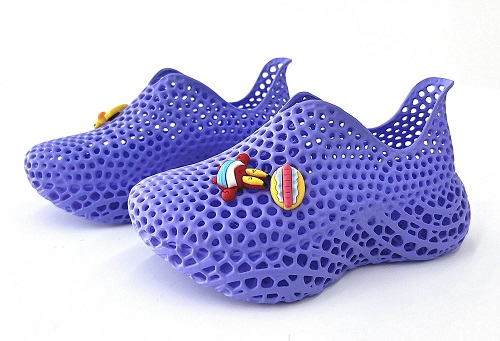
Adidas made headlines with their 3D-printed midsoles. By scanning customers' feet and printing lattice structures tuned to their running style, they created shoes that fit and performed better than anything off the shelf.
Eyewear companies print custom frames. Hearing aids are nearly all printed because every ear canal differs. Jewelry designers create complex pieces impossible to cast traditionally.
The pattern here? When consumers want personalization, 3D printing delivers. Traditional manufacturing excels at making millions of identical items. 3D printing excels at making each item slightly different to match individual preferences.
Why Do Manufacturers Switch to 3D Printing?
The decision to adopt additive manufacturing isn't casual. Companies invest real money and time. Here's what drives that decision.
Cost Efficiency: When Does Printing Save Money?
Traditional manufacturing carries fixed costs. Injection molds cost $10,000 to $100,000 before producing a single part. Casting patterns require tooling. Machining setups take time.
3D printing eliminates most of these upfront costs. For low volumes—typically under a few thousand parts—printing often costs less than traditional methods. The breakeven point varies, but the math works consistently: no tooling means no risk if designs change.
Material waste adds another factor. Machining a bracket from solid aluminum might generate pounds of chips. Printing the same bracket uses only the material that ends up in the final part. For expensive materials like titanium, this alone justifies the switch.
Customization: Can You Make Each Part Different?
Here's where 3D printing fundamentally changes manufacturing. In traditional production, making each part different requires new tooling, new setups, new everything. The cost per unique part is prohibitive.
With 3D printing, variation costs nothing. The machine reads a digital file. Change the file, change the part. No extra steps, no additional cost.
This capability transforms industries:
- Medical – Implants matching individual anatomy
- Consumer – Products sized and styled for each customer
- Industrial – Replacement parts for legacy equipment
Speed: How Fast Can You Go from Design to Part?
Time matters in manufacturing. Getting products to market faster means competitive advantage. 3D printing compresses timelines dramatically.
Consider a typical development cycle: Design, create tooling, wait for tooling, produce samples, test, revise tooling, repeat. Each iteration takes weeks or months.
With 3D printing: Design, print overnight, test tomorrow, revise, print again. Iterations happen daily instead of monthly. Products reach market faster, and designs improve through more testing cycles.
Complexity: Does Intricate Design Cost More?
Conventional wisdom says complexity costs money. Intricate shapes require special tooling, multiple setups, skilled operators. Every curve adds expense.
3D printing reverses this logic. Complexity is free. The machine deposits material regardless of geometry. Internal channels, lattice structures, organic shapes—none increase printing time or cost meaningfully.
This freedom changes how engineers think. Instead of designing for manufacturability, they design for performance. The question shifts from "Can we make this?" to "What works best?"
What Challenges Do 3D Printing Companies Face?
Honest assessment requires acknowledging limitations. 3D printing isn't magic, and manufacturers deal with real constraints.
Speed remains an issue. For high volumes, traditional methods produce parts faster. Printing each part individually takes time. The technology suits low-to-medium volumes best.
Surface finish varies. Many printed parts need post-processing—sanding, polishing, coating—before final use. This adds labor and time.
Material properties differ. While printed metals approach wrought properties, plastics may show layer adhesion weaknesses. Understanding these differences matters for engineering applications.
Certification challenges exist. Aerospace and medical applications require rigorous testing and approval. Proving that a printed part meets specifications takes effort and documentation.
Conclusion: How Is 3D Printing Reshaping Manufacturing?
3D printing manufacturing companies aren't replacing traditional factories. They're adding new capabilities that change what's possible. Prototyping happens faster. Custom products become economical. Complex geometries that were once impossible now roll off printers daily.
Industries across the board—aerospace, medical, automotive, consumer goods—benefit from these advances. The technology continues maturing, with faster machines, better materials, and lower costs appearing regularly.
For manufacturers considering adoption, the question isn't whether 3D printing matters. It's which applications make sense for their specific needs. Start with prototyping, explore tooling, then consider production parts. Each step builds understanding and capability.
The future of manufacturing includes both traditional and additive methods, each applied where it makes sense. Companies that understand both will lead in efficiency, innovation, and customer satisfaction.
Frequently Asked Questions
How much does industrial 3D printing equipment cost?
Entry-level industrial machines start around $10,000 to $20,000. Production-ready systems range from $50,000 to over $500,000 depending on technology, size, and capabilities. Metal systems typically cost more than plastic systems.
What materials can be 3D printed for manufacturing?
Common materials include engineering plastics (ABS, nylon, polycarbonate), high-performance thermoplastics (PEEK, PEKK), photopolymer resins, metals (titanium, aluminum, stainless steel, Inconel), and ceramics. Material options expand continuously.
How strong are 3D printed parts compared to machined parts?
Properly printed metal parts achieve properties comparable to wrought materials after appropriate heat treatment. Printed plastics typically show some anisotropy—strength varies between directions—but can approach injection-molded properties with proper orientation and processing.
What industries benefit most from 3D printing?
Aerospace, medical, dental, automotive, and consumer goods show the most adoption. Each industry finds specific value: aerospace values weight reduction, medical values customization, automotive values speed, consumer goods value personalization.
Can 3D printing replace injection molding?
For high volumes, no. Injection molding produces parts faster and cheaper once production reaches thousands of units. For prototyping, customization, and low volumes, 3D printing offers advantages that molding can't match.
Contact Yigu Technology for Custom Manufacturing
Have a project that needs 3D printing expertise? At Yigu technology, we bridge the gap between ideas and finished products. Our team understands both traditional and additive manufacturing, helping clients choose the right approach for their specific needs.
Whether you're prototyping a new design, need production parts, or want to explore what 3D printing can do for your business, we're ready to help. Contact us today to discuss your manufacturing challenges and discover solutions that actually work.