Introduction
In precision fields like aerospace, medical devices, and automotive manufacturing, standardized “one-size-fits-all” parts no longer meet individual needs. Custom part machining has emerged as the key to breaking through technical bottlenecks and enhancing product competitiveness. With its core advantages—on-demand design and precision manufacturing—it enables components tailored to exact specifications.
But with a wide variety of machining processes, material selections, and service models, how can companies accurately match needs and avoid risks? This guide explores the core logic of precision custom part machining across four dimensions: technology, applications, service, and quality—supported by real cases and data.
What Processing Technologies Enable Custom Part Machining?
The accuracy and performance of precision customized parts depend fundamentally on process selection and execution capability.
5-Axis Machining: The Ultimate Solution for Complex Curved Parts
5-axis machining controls three linear axes (X, Y, Z) plus two rotary axes, enabling single-setup machining of complex curved parts without multiple clamping.
| Advantage | Impact |
|---|---|
| Precision breakthrough | Positioning accuracy to ±0.005 mm—meeting aerospace and medical demands |
| Efficiency increase | Reduces machining time for complex parts by 40–60% vs. traditional 3-axis |
Real-world example: An aero engine blade manufacturer used 5-axis machining to reduce titanium blade machining cycles from 15 days to 6 days, cutting scrap rates from 8% to 1.2%—reducing production costs by 30%.
CNC Milling vs. CNC Turning: The Golden Combination
| Process | Core Applications | Accuracy Range | Advantages |
|---|---|---|---|
| CNC milling | Flat surfaces, grooves, cavities | ±0.01–0.003 mm | Suitable for multi-sided parts; strong stability in mass production |
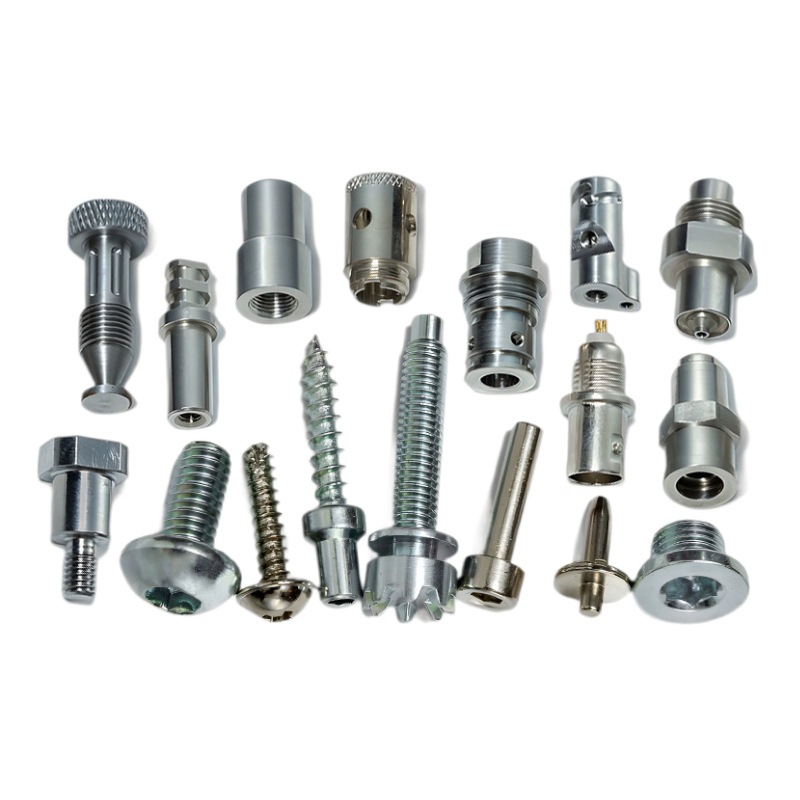
| CNC turning | Shafts, discs, sleeves | ±0.005–0.001 mm | High efficiency for rotational parts; surface finish to Ra 0.8 μm |
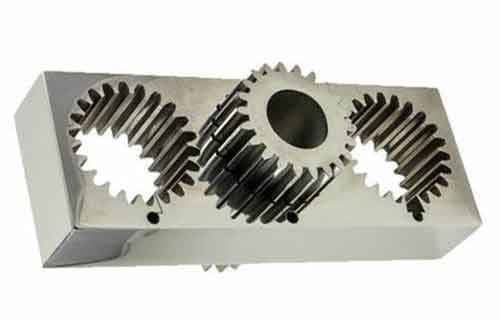
Practical advice: For small to medium precision parts (e.g., medical device micro-gears), prefer the “CNC milling + CNC turning” combination—ensuring accuracy while controlling costs.
Special Machining Technologies
| Technology | Best For | Accuracy |
|---|---|---|
| Precision grinding | High-precision flat/cylindrical surfaces | Sub-micron (≤0.001 mm)—optical instrument parts |
| Micromachining | Micro parts (<1 mm) | Micro-milling, micro-EDM—electronics, medical devices |
| Laser cutting | Thin sheet cutting (stainless steel, titanium) | 3–5× faster than traditional; smooth cuts |
| EDM (Electrical Discharge Machining) | Superhard materials (>HRC 60) | Mold manufacturing; complex cavities |
Surface Treatment Technologies
| Technology | Benefit | Applications |
|---|---|---|
| Electroplating | Wear resistance; conductivity | Electronic parts, mechanical connectors |
| Anodizing | Corrosion resistance; hardness | Aluminum alloy parts—automotive, aerospace |
| Painting | Moisture-proof; rust-proof | Housing parts |
What Materials and Industries Drive Custom Part Machining?
Material characteristics determine process selection; industry demand drives innovation.
Mainstream Material Characteristics and Processing
| Material | Core Features | Suitable Processes | Typical Applications |
|---|---|---|---|
| Stainless steel | Corrosion resistance; high strength | CNC milling, laser cutting | Medical devices, food machinery |
| Titanium alloy | Lightweight; high temperature resistance; biocompatible | 5-axis machining, EDM | Aerospace parts, artificial joints |
| Aluminum alloy | Lightweight; easy to machine | CNC turning, anodizing | Auto parts, electronics housings |
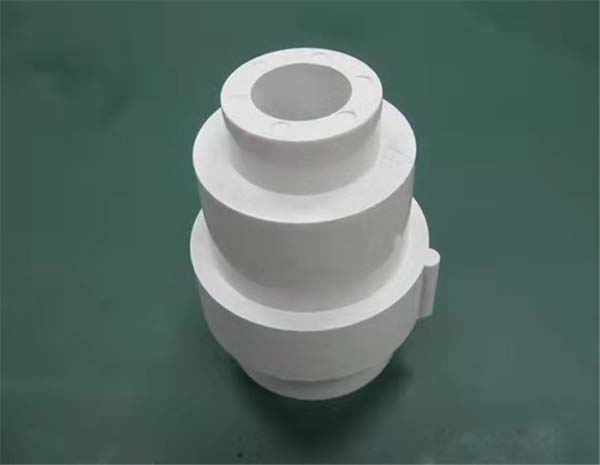
| Plastics (POM, PC, nylon) | Lightweight; wear-resistant; insulating | CNC milling, micromachining | Mechanical gears, optical parts |
Core Industry Applications
| Industry | Application | Result |
|---|---|---|
| Aerospace | Engine turbine blades (titanium) | 20% weight reduction; 15% fuel efficiency improvement via 5-axis machining + precision grinding |
| Medical devices | Pacemaker micro-electrode needles | ±0.002 mm accuracy; biocompatible plastics—ensuring safety after implantation |
| Automotive | EV battery trays (aluminum) | 30% weight reduction via laser cutting + CNC welding |
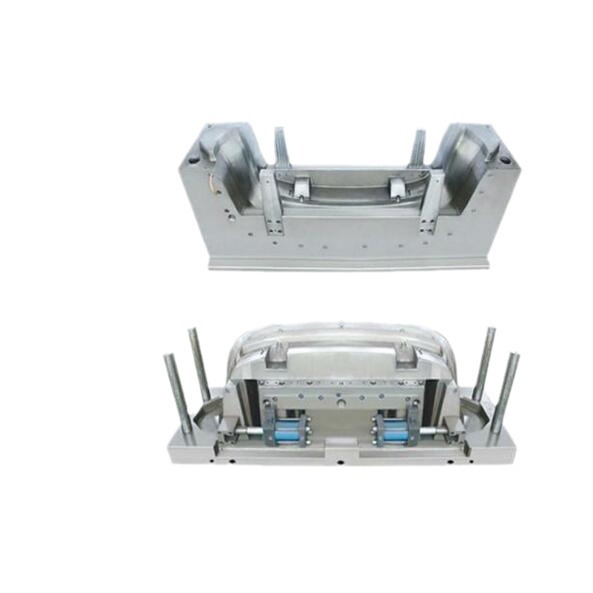
| Mold manufacturing | Complex injection mold cavities | ±0.005 mm accuracy; plastic part pass rate increased from 92% to 99.5% via EDM |
What Service Processes Ensure Success?
High-quality custom machining services provide end-to-end support—from demand to delivery.
Standard Service Process: From Idea to Product
| Step | Description | Timeline |
|---|---|---|
| Demand communication | Clarify dimensions, accuracy, material, batch, application | — |
| Design optimization | Engineer DFM feedback—optimize tolerances, simplify structures | — |
| Rapid prototyping | 3D printing or CNC machining to validate design | 1–3 days |
| Small-batch trial | Optimize parameters for quality stability | 10–100 pieces |
| Mass production | Integrated processes; efficient delivery | — |
| After-sales service | Quality traceability; technical support | — |
Core Service Advantages
| Advantage | Benefit |
|---|---|
| Tolerance control | ±0.001 mm ultra-high precision—meeting high-end field needs |
| One-stop processing | Cutting, grinding, surface treatment—all in one; avoid multiple suppliers |
| Fast delivery | Small orders: 3–7 days; bulk orders: 30% faster than industry average |
| Cost-benefit analysis | Material substitution; process optimization—10–20% cost reduction |
Case study: An electronics manufacturer needed 500 custom micro connectors. Original design used stainless steel—costly, long cycle. The processor recommended wear-resistant plastic + micromachining + CNC milling combination. Result: 18% cost reduction; lead time from 15 days to 5 days.
What Quality Control and Certifications Are Required?
Quality directly impacts end-product safety and reliability.
Core Certifications and Standards
| Certification | Meaning |
|---|---|
| ISO 9001 | International quality management—stable, qualified products |
| Material certification | ROHS, REACH—material meets environmental and performance standards |
| Traceability standards | Full-process traceability—raw material to finished product; unique part identification |
Key Inspection Methods
| Method | Purpose | Accuracy |
|---|---|---|
| CMM (Coordinate Measuring Machine) | Dimensional verification; shape tolerance | ±0.001 mm |
| Non-destructive testing | Internal defects (cracks, porosity)—ultrasonic, X-ray | Aerospace, medical critical parts |
| Surface roughness testing | Surface smoothness for seals, friction parts | Ra values |
Data support: Custom parts using CMM inspection have 25% higher dimensional qualification rate than traditional methods. Companies with full traceability systems improve quality issue resolution efficiency by 40%.
Conclusion
Custom part machining enables precision customization through:
- Advanced technologies: 5-axis machining (±0.005 mm accuracy; 40–60% efficiency gain); CNC milling/turning (±0.001–0.01 mm); special processes (micromachining, EDM, laser cutting); surface treatments
- Material expertise: Stainless steel, titanium, aluminum, plastics—matched to industry needs
- Industry applications: Aerospace (20% weight reduction; 15% fuel efficiency), medical (±0.002 mm accuracy), automotive (30% weight reduction), mold manufacturing (99.5% part pass rate)
- Service process: Demand communication; DFM optimization; rapid prototyping (1–3 days); one-stop processing; fast delivery (3–7 days for small orders)
- Quality control: ISO 9001; CMM inspection (±0.001 mm); non-destructive testing; full traceability (40% faster issue resolution)
Under the trend of intelligent manufacturing, processing enterprises must evolve from “technology providers” to “solution service providers”—deepening core technologies (5-axis, micromachining) while strengthening customer-centric services (design optimization, cost control, fast delivery). As material science and AI technologies integrate, precision custom part machining will move toward more precise, more efficient, and more environmentally friendly—becoming indispensable core support for high-end manufacturing.
FAQs
What batch sizes is custom part machining suitable for?
It suits both small-batch customization (1–100 pieces) and large-batch production (1000+ pieces) . Small orders via rapid prototyping + low-volume trial; large orders via process optimization + automated production.
How do I choose the right machining process?
Consider part shape, size, accuracy, material, and application:
- Complex curved parts → 5-axis machining
- Shaft/disc parts → CNC turning
- Micro parts → micromachining
- Superhard materials → EDM
Consult with engineers for professional advice.
What tolerance range can custom parts achieve?
Conventional custom parts: ±0.01 mm. High-precision requirements (medical devices, aerospace): ±0.001 mm—depending on process, material, and part complexity.
How does material selection affect custom part machining?
Material hardness, toughness, and processability directly impact process choice and cost:
- Titanium alloy → high hardness → 5-axis machining or EDM → higher cost
- Aluminum alloy → easy to machine → CNC turning/milling → lower cost
Balance material properties and processing cost while meeting application requirements.
Contact Yigu Technology for Custom Manufacturing
At Yigu Technology, we specialize in custom part machining for aerospace, medical, automotive, and industrial applications. With 15 years of experience, advanced 5-axis machining, CNC milling/turning, EDM, and ISO 9001 certification, we deliver precision components with tolerances to ±0.001 mm.
Our services include design optimization, rapid prototyping (1–3 days), one-stop processing (cutting, grinding, surface treatment), and full traceability. Contact us today to discuss your custom part machining requirements.