Introduction
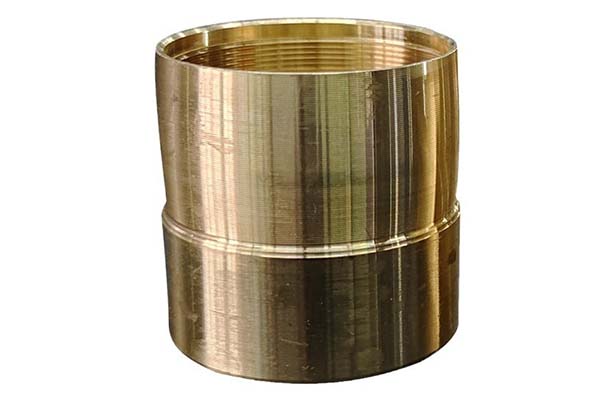
C46400 naval brass is a marine-grade alloy built for the harshest saltwater environments. It powers propeller shafts, secures rigging with turnbuckles, and forms reliable valve stems in marine plumbing. Its strength and corrosion resistance are well known. But machining it? That is another story.
The high zinc content and tough duplex structure create challenges. Stringy chips, built-up edges, and faster tool wear are common. Unlike the more forgiving C36000, C46400 demands respect and a well-planned approach.
This guide covers everything you need to machine C46400 successfully. You will learn about its properties, optimal cutting parameters, tool selection, and post-processing. By the end, you will have a clear strategy for producing precise, durable marine-grade components.
What Makes C46400 Unique for Marine Use?
Chemical Composition
C46400 naval brass has a carefully balanced composition:
| Element | Percentage |
|---|---|
| Copper | 59% |
| Zinc | 40% |
| Tin | 1% |
| Lead | <0.2% |
The alloy is lead-free, meeting modern environmental standards. Its structure is duplex alpha-beta brass, combining two phases that give both strength and corrosion resistance.
Key Marine-Grade Properties
| Property | Value | Significance |
|---|---|---|
| Dezincification resistance | Excellent | Prevents zinc leaching in saltwater |
| Seawater corrosion | Superior | Outperforms many brass alloys |
| Tensile strength | 55–88 ksi | Handles high stress in marine components |
| Modulus | 17,000 ksi | Balances stiffness with flexibility |
| Density | 0.304 lb/in³ | Adds stability to underwater parts |
The 1% tin content is the key difference. It provides dezincification resistance that C36000 lacks. In saltwater, zinc can leach out of brass over time, weakening the material. C46400 resists this, making it the preferred choice for marine applications.
What Are the Machining Challenges with C46400?
Lower Machinability
C46400 has a machinability rating of 30–35% compared to C36000 (which is 100%). This means:
- Slower cycle times
- More frequent tool checks
- Adjusted expectations on material removal rates
Stringy Chips
The alloy produces long, stringy chips that tangle around tools and workpieces. These chips can:
- Jam the machine
- Damage surface finishes
- Create safety hazards
Built-Up Edge
C46400 is sticky. Material can weld itself to the cutting edge, causing built-up edge (BUE). This leads to:
- Poor surface finish
- Dimensional inaccuracies
- Premature tool failure
Tool Wear
The tough duplex structure accelerates tool wear compared to free-machining brasses. Sharp tools are essential, but they do not stay sharp as long.
How Should You Set Cutting Parameters?
Speed and Feed
| Operation | Cutting Speed (SFM) | Feed Rate (ipr) |
|---|---|---|
| Turning | 100–200 | 0.005–0.015 |
| Milling | 150–250 | 0.002–0.008 per tooth |
Low-speed, high-feed strategy works best. This approach:
- Breaks chips more effectively
- Reduces rubbing and friction
- Minimizes heat buildup
Depth of Cut
| Operation | Roughing | Finishing |
|---|---|---|
| Turning | 0.030–0.080 inches | 0.005–0.020 inches |
| Milling | 0.050–0.150 inches | 0.010–0.030 inches |
Shallow finishing passes with sharp tools achieve the best surface finish.
Coolant Strategy
Flood coolant is preferred over mist. Benefits include:
- Better heat control
- Effective chip flushing
- Reduced built-up edge formation
Use a high-quality water-soluble coolant with good lubricity.
What Tooling Works Best for C46400?
Inserts and Endmills
| Tool Type | Recommendation |
|---|---|
| Inserts | Sharp carbide with high-positive rake |
| Endmills | Variable-helix design to disrupt chip flow |
| Micro-tools | Micro-grain carbide for precision work |
Sharp edges are non-negotiable. Dull tools exacerbate built-up edge and poor surface finish. High-positive rake angles reduce cutting forces and friction.
Coatings
| Coating | Benefit |
|---|---|
| TiCN | Anti-gumming, resists material adhesion |
| TiAlN | Thermal protection for higher speeds |
TiCN coating is particularly effective for C46400. It resists the sticky nature of the alloy, preventing material from welding to the cutting edge.
Toolholder Requirements
For high-speed operations:
- Minimum runout – Keep below 0.0002 inches
- Balanced toolholders – Reduce vibration that degrades surface finish
How Do You Control Chips Effectively?
Trochoidal Milling
Trochoidal milling uses a circular cutting path instead of a straight line. This technique:
- Keeps tool engagement consistent
- Breaks chips into manageable pieces
- Reduces heat buildup
For C46400, trochoidal paths are highly effective at preventing long, stringy chips.
Pecking for Drilling and Slotting
For drilling and slotting operations:
- Use peck cycles to break chips
- Retract fully to clear chips
- Apply flood coolant to flush the cutting zone
Chip Breakers
Use inserts with built-in chip breakers designed for brass. These geometries:
- Curl chips tightly
- Break them into small segments
- Prevent tangling around the tool
What Surface Finish Can You Achieve?
Typical Targets
| Application | Target Ra |
|---|---|
| Standard machined surfaces | 0.8–1.6 μm |
| Precision turning | 0.2–0.4 μm |
| Mirror finish (polished) | <0.05 μm |
With sharp tools and steady feeds, Ra 0.2 μm is achievable on turned surfaces.
Achieving Mirror Polish
For decorative marine hardware:
- Machine with sharp tools and fine feeds
- Progress through abrasive grits (320, 600, 1200)
- Final buffing with compound
The result is a lasting shine that withstands salt spray.
How Do You Handle Post-Machining?
Deburring
Stringy chips leave burrs that must be removed:
- Rotary brushes – For accessible edges
- Ultrasonic deburring – For complex parts and internal features
- Manual deburring tools – For small batches
Cleaning
Ultrasonic cleaning removes machining residues, chips, and coolant from complex parts. This step is essential because residues can hide corrosion spots.
Oxide Removal
Citric acid passivation gently removes oxides without attacking the base metal. It prepares the surface for protective coatings and improves corrosion resistance.
Tarnish Protection
For exposed components, a tarnish protection coating is essential. Options include:
- Clear lacquer – Preserves appearance
- Wax coating – Simple, removable
- Specialized anti-tarnish treatments – Long-term protection
How Do You Prevent Distortion in Thin Parts?
Workholding Methods
| Method | Best For |
|---|---|
| Soft-jaw chuck | Round parts, distributes clamping force |
| Vacuum fixture | Thin plates, uniform hold without pressure points |
| Low clamp pressure | Any ductile part—use just enough force to secure |
C46400 is ductile. Excessive clamping pressure causes warping. Custom-machined soft jaws distribute force evenly, avoiding dents.
Thermal Considerations
C46400 has a thermal expansion coefficient of 11.8 µin/in·°F. For precision components:
- Allow parts to stabilize at room temperature before final inspection
- Account for heat generated during machining
- Use coolant to maintain consistent temperature
Fixturing for Complex Parts
For multi-axis work:
- Zero-point clamping – Ensures repeatable positioning
- Tombstone pallets – Allow multiple parts in one setup
- 5-axis fixtures – Reduce setups and handling
Where Is C46400 Used?
Marine Applications
| Component | Why C46400 |
|---|---|
| Propeller shafts | Strength + seawater corrosion resistance |
| Marine turnbuckles | Toughness for rigging tension |
| Valve stems | Reliable in marine plumbing |
| Heat-exchanger tubes | Thermal conductivity + corrosion resistance |
| Decorative hardware | Polishes to lasting shine, withstands salt spray |
Aerospace and Defense
C46400’s high tensile strength and corrosion resistance make it suitable for demanding applications. Missile fasteners are one example—reliability in harsh conditions is critical.
Industrial Components
Beyond marine, C46400 serves in:
- Pump shafts
- Valve components
- Bearings and bushings
- Hydraulic fittings
Conclusion
CNC machining C46400 naval brass requires a deliberate approach. Its high zinc content and duplex structure demand respect. Stringy chips, built-up edges, and tool wear are real challenges. But with the right strategies, you can overcome them.
Use sharp carbide tools with TiCN coatings. Apply a low-speed, high-feed strategy. Use flood coolant for heat control and chip flushing. Employ trochoidal milling and peck cycles to manage chips. For precision work, maintain minimum runout below 0.0002 inches .
Post-machining matters too. Ultrasonic cleaning removes residues. Citric acid passivation prepares surfaces. Tarnish protection preserves appearance and corrosion resistance.
With these techniques, C46400 transforms from a difficult material into a reliable choice for marine-grade components that perform for years in the harshest environments.
FAQ
Why is C46400 better for marine use than C36000?
C46400 contains 1% tin, which enhances dezincification resistance. This prevents zinc from leaching out in saltwater. C36000, while easier to machine, lacks this protection and is prone to corrosion in marine environments.
What’s the best way to prevent built-up edges when machining C46400?
Use sharp, TiCN-coated carbide inserts with high-positive rake angles. Combine this with flood coolant and a low-speed, high-feed strategy. This reduces friction and heat, preventing material from welding to the cutting edge.
Can C46400 be micro-machined for small marine components?
Yes. Use micro-grain carbide tools with minimum runout below 0.0002 inches . Apply trochoidal milling paths to control chips. Use slower speeds (100–150 SFM) and light feeds to prevent tool damage.
What coolant is best for machining C46400?
Flood coolant is preferred over mist. It provides better heat control and chip flushing, which helps prevent built-up edge. Use a high-quality water-soluble coolant with good lubricity.
How do you achieve a mirror finish on C46400?
Start with sharp tools and fine feeds during machining. Then progress through abrasive grits (320, 600, 1200) and finish with buffing compound. This sequential approach produces a lasting shine suitable for decorative marine hardware.
Contact Yigu Technology for Custom Manufacturing
At Yigu Technology, we specialize in CNC machining C46400 naval brass for marine and high-performance applications. Our team understands the alloy’s unique challenges. We use TiCN-coated carbide tools, trochoidal milling paths, and flood coolant strategies to control chips and prevent built-up edge.
We maintain strict quality control with runout below 0.0002 inches and CMM inspection to verify tolerances. Our post-machining services include ultrasonic cleaning, citric acid passivation, and tarnish protection coatings to ensure your components are ready for the harshest marine environments.
Contact us today to discuss your C46400 machining project. Let our expertise help you achieve precision, durability, and corrosion resistance that lasts.