Introduction
In the fast-evolving landscape of modern manufacturing, precision stands as the bedrock upon which innovation thrives. Nowhere is this more evident than in industries where the tiniest deviation in component tolerances can have far-reaching consequences—from product malfunctions to safety hazards. CNC metal milling has emerged as a revolutionary technology, redefining the boundaries of what is possible in precision engineering. It enables engineers to create complex metal parts with astonishing accuracy—often reaching the micron level—with tolerances as small as a few millionths of a meter, ensuring perfect fit in assemblies. In aerospace, for example, turbine blades require extreme precision; a slight deviation can reduce fuel efficiency, increase emissions, or cause engine failure. CNC metal milling delivers the tight tolerances demanded by such critical sectors. Its flexibility—quickly switching between part designs via CAD/CAM software—makes it ideal for both small-batch production and large-scale manufacturing. Efficiency is another hallmark: these machines operate continuously, 24/7, with minimal human intervention, performing multiple operations (milling, drilling, tapping) in a single setup, reducing time and cost. High-speed spindles (up to 100,000 RPM) and automated tool changers further enhance productivity.
What Are the Technical Foundations of CNC Metal Milling?
The Mechanics of CNC Metal Milling
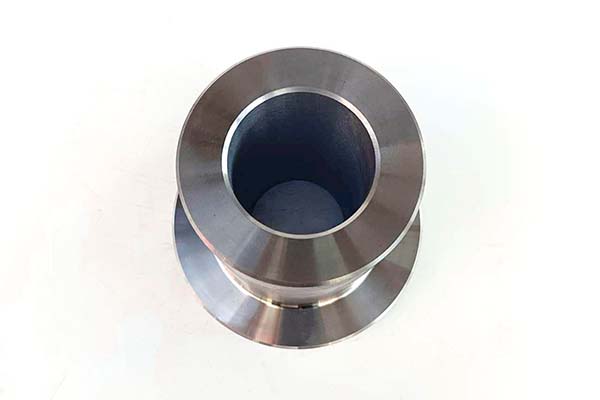
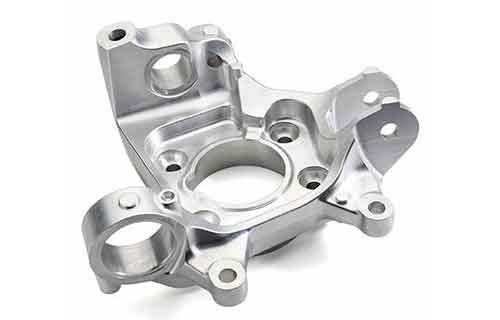
CNC metal milling is a subtractive manufacturing process where computer-programmed tools remove material from a metal workpiece to create precise geometries—a far cry from traditional manual milling, which relies heavily on operator skill.
| Component | Role | Capability |
|---|---|---|
| High-rigidity machine tools | Frames from stress-relieved cast iron or granite—excellent damping properties minimize thermal and vibrational distortions | Positional accuracy ±0.001 mm—critical for jet engine components where misalignment causes inefficiencies or catastrophic failures |
| Advanced spindle systems | High-speed spindles (up to 40,000 RPM) with ceramic bearings—reduce friction, heat generation | Surface finishes as low as Ra 0.2 μm—engine pistons require smooth finishes to reduce friction, improve fuel efficiency |
| Multi-axis capability | 5-axis CNC machines navigate complex angles, free-form surfaces; reduce setup times by 50% vs. 3-axis | Creates features like 0.5 mm-thick walls in titanium alloy medical implants—challenging with traditional methods |
Precision vs. Traditional Machining: A Data-Driven Comparison
| Parameter | Traditional Milling | CNC Metal Milling | Improvement |
|---|---|---|---|
| Dimensional accuracy | ±0.05 mm | ±0.001 mm | 98% |
| Surface roughness (Ra) | 1.6 μm | 0.4 μm | 75% |
| Material removal rate | 50 cm³/min | 200 cm³/min | 300% |
| Tool life (Inconel) | 2 hours | 6 hours | 200% |
Dimensional accuracy: CNC milling achieves ±0.001 mm—parts fit perfectly without additional finishing; critical for high-end optical equipment where lenses require precise alignment.
Surface roughness: Lower Ra (0.4 μm) means smoother surfaces—beneficial for hydraulic components (reduces fluid leakage, improves efficiency).
Material removal rate: 200 cm³/min—4× higher than traditional milling—increases productivity; large-scale automotive manufacturing sees significant cost savings.
Tool life: CNC milling extends tool life for tough materials like Inconel from 2 to 6 hours—fewer tool changes, reduced downtime.
What Unmatched Advantages Does CNC Metal Milling Offer?
Mastery of Exotic Materials
High-strength, low-weight materials—titanium (Ti-6Al-4V), Inconel 718, tungsten carbide—are critical for aerospace, medical, and high-performance automotive applications. CNC metal milling overcomes the unique challenges of machining these exotic materials.
| Material | Challenge | CNC Solution | Impact |
|---|---|---|---|
| Titanium (Ti-6Al-4V) | High heat generation | High-pressure coolant systems (up to 100 bar) reduce tool temperatures by 200°C | Tool life extended 30%; Boeing 787 titanium wing rib: weight reduced 15% via optimized feed rates, toolpath algorithms—meets FAA fatigue standards |
| Inconel 718 | Vibration | Active vibration control systems minimize chatter | Machining thin-wall structures with wall thickness as low as 0.8 mm without deformation—critical for turbine casings |
Complex Geometry Expertise
CNC metal milling produces features previously unattainable or extremely difficult with traditional methods.
| Feature | Capability | Application |
|---|---|---|
| Sharp internal corners | Radii as small as 0.05 mm | Automotive molds—intricate mold cavities for dashboard panels, door handles; ensures smooth, seamless appearance |
| Deep-hole drilling | Depth-to-diameter ratio 50:1—1 mm diameter holes in 50 mm thick stainless steel | Hydraulic components—fluid channels in valves, cylinders; precise holes prevent leaks, ensure efficient operation |
| Tapered surfaces | 5-axis interpolation enables 30° tapered cuts | Aerospace turbine blades—optimizes aerodynamic efficiency; reduces turbulence, increases engine efficiency |
Where Does Precision Define Performance Across Industries?
Aerospace: Crafting Flight-Critical Components
| Component | Material | Precision Requirement | Impact |
|---|---|---|---|
| Turbine blades | Inconel 718 | Chordal tolerance 0.01 mm | Rolls-Royce study: 5% increase in engine efficiency—for Airbus A380 (12,000 L/hr fuel consumption), significant cost savings |
| Landing gear parts | Aluminum alloy 7075-T6 | Accuracy ±0.002 mm | Withstands 50,000+ landing cycles without fatigue—vs. traditional machining: 30,000–35,000 cycles |
Medical Devices: Micron-Level Precision for Life-Saving Tools
| Component | Material | Precision Requirement | Impact |
|---|---|---|---|
| Orthopedic implants (knee) | Cobalt-chromium | Fit accuracy ±0.005 mm based on patient-specific MRI data | 95% osseointegration rate—study: 100 patients, only 5 minor post-surgical issues vs. 15–20% complication rate with traditionally manufactured implants |
| Surgical instruments (forceps) | Stainless steel | Jaw thickness 0.3 mm; surface finish Ra 0.1 μm | Enhanced dexterity—reduced tissue adhesion; better surgical outcomes, shorter recovery times |
Automotive: Driving Innovation in Electric Vehicles
| Component | Material | Precision Requirement | Impact |
|---|---|---|---|
| EV motor components (rotors) | Copper | Concentricity ±0.01 mm | Minimizes electromagnetic interference; motor efficiency up to 97%; Tesla Model 3: 10–15% increase in driving range |
| Lightweight structures (chassis) | Aluminum alloy | Lattice cores machined via CNC | Weight reduction up to 40% while maintaining crash resistance; Ford study: 10% weight reduction → 6–8% improvement in energy efficiency |
Conclusion
CNC metal milling is far more than a manufacturing process—it is the vanguard of precision engineering, redefining modern manufacturing by marrying mechanical prowess, material science, and Industry 4.0 digital innovation. Technical foundations deliver ±0.001 mm dimensional accuracy (98% improvement vs. traditional), 0.4 μm surface roughness (75% improvement), 200 cm³/min material removal rate (300% improvement), and 6-hour tool life for Inconel (200% improvement). Mastery of exotic materials —high-pressure coolant reduces tool temperatures 200°C, extends tool life 30%; Boeing 787 titanium wing rib weight reduced 15%. Complex geometry expertise —sharp internal corners (0.05 mm radii), deep-hole drilling (50:1 depth-to-diameter ratio), tapered surfaces (30° tapered cuts for turbine blades). Industry applications : aerospace—turbine blades achieve 5% efficiency gain, landing gear parts withstand 50,000+ cycles; medical—orthopedic implants achieve 95% osseointegration, surgical instruments with 0.3 mm jaws and Ra 0.1 μm finish; automotive—EV motors achieve 97% efficiency, lightweight chassis reduces weight 40% (6–8% energy efficiency improvement per 10% weight reduction). By achieving micron-level precision, mastering exotic materials, and enabling complex geometries, CNC metal milling provides the indispensable edge for industries where precision is not a luxury but a necessity.
FAQs
What is the maximum precision achievable in CNC metal milling?
CNC metal milling can achieve dimensional accuracy up to ±0.001 mm in high-end applications. This precision is enabled by high-rigidity machine tools (stress-relieved cast iron/granite frames), advanced spindle systems (up to 40,000 RPM with ceramic bearings), and multi-axis capabilities (5-axis reduces setup times 50%).
Can CNC metal milling be used for mass production?
Yes. CNC metal milling is well-suited for mass production. Its automation capabilities—AI-powered toolpath optimization, continuous operation (24/7)—enable high-volume production with consistent quality. CAD/CAM software allows quick design changes, providing flexibility for different production requirements.
What are the challenges in machining exotic materials with CNC metal milling?
Challenges include high heat generation (titanium) and vibration (Inconel 718). Advanced techniques overcome these: high-pressure coolant systems (up to 100 bar) reduce tool temperatures by 200°C, extending tool life 30%; active vibration control minimizes chatter, enabling thin-wall structures as low as 0.8 mm without deformation.
Contact Yigu Technology for Custom Manufacturing
At Yigu Technology , we harness CNC metal milling to deliver precision components for aerospace, medical, and automotive applications. Our 5-axis CNC machines achieve ±0.001 mm dimensional accuracy and 0.4 μm surface finishes. We machine exotic materials—titanium (Ti-6Al-4V), Inconel 718, tungsten carbide—with high-pressure coolant systems (extending tool life 30%) and active vibration control (0.8 mm thin-wall structures). From turbine blades (5% engine efficiency gain) to orthopedic implants (95% osseointegration) and EV motor components (97% efficiency), we provide DFM feedback to optimize your designs for manufacturability.
Ready to shape the future of precision engineering with CNC metal milling? Contact Yigu Technology today for a free consultation and quote. Let us help you achieve micron-level precision, efficiency, and performance in every component.