Introduction
Nylon 20% GF (20% glass fiber reinforced nylon) strikes a unique balance between performance and processability. Compared to unfilled nylon, the glass fibers increase abrasiveness—leading to faster tool wear. But with lower fiber content than Nylon 30% GF, different machining strategies are needed to avoid surface defects like fiber pull-out. Manufacturers often struggle to find the right tooling and parameters that balance material removal rates with tool longevity.
This guide addresses these pain points, offering expert insights to master Nylon 20% GF machining.
What Are the Material Properties of Nylon 20% GF?
Nylon 20% GF blends nylon resin with 20% glass fibers, enhancing key properties without sacrificing too much machinability.
Mechanical Properties
| Property | Nylon 20% GF | Nylon 30% GF | Unfilled Nylon PA6 |
|---|---|---|---|
| Tensile strength | 90–110 MPa | 120–140 MPa | 45–60 MPa |
| Impact strength | 15–20 kJ/m² | 10–15 kJ/m² | 30–40 kJ/m² |
| Flexural modulus | 3500–4500 MPa | 5000–6000 MPa | 2800–3200 MPa |
| Moisture absorption | 1–1.5% | 0.5–1% | 2–3% |
| Density | 1.18–1.20 g/cm³ | 1.28–1.32 g/cm³ | 1.12–1.14 g/cm³ |
Key Characteristics
| Property | Value | Significance |
|---|---|---|
| Tensile strength | 90–110 MPa | Significantly higher than unfilled nylon (45–60 MPa); ideal for medium-to-heavy load applications |
| Impact strength | 15–20 kJ/m² | Notably higher than Nylon 30% GF; reduces risk of cracking during machining and assembly |
| Thermal stability | 110–130°C continuous | Suitable for under-hood automotive components; industrial machinery |
| Chemical resistance | Oils, greases, alkalis | Not strong acids or oxidizing agents |
| Dimensional stability | Moisture absorption 1–1.5% | Much lower than unfilled nylon (2–3%); predictable in humid environments—key for precision parts |
What Machining Processes Work for Nylon 20% GF?
Milling
| Aspect | Recommendation |
|---|---|
| Machine type | 3-axis mills for most parts; 5-axis for intricate geometries |
| Spindle power | 15–20 kW sufficient—lower fiber content reduces cutting forces vs. Nylon 30% GF |
Turning
| Aspect | Recommendation |
|---|---|
| Applications | Cylindrical parts—bushings, shafts |
| Spindle speed | 1000–2000 RPM—higher than Nylon 30% GF; lower than unfilled nylon |
| Focus | Consistent speeds to avoid heat buildup |
Drilling
| Aspect | Recommendation |
|---|---|
| Feed rate | 0.1–0.15 mm/rev—ensures clean holes |
| Tool | Sharp tools to prevent fiber pull-out |
Tapping and Reaming
| Aspect | Recommendation |
|---|---|
| Thread cutting | Coated tools; slower feed rates 0.08–0.1 mm/rev—precise, burr-free threads |
Coolant
| Aspect | Recommendation |
|---|---|
| Coolant type | Water-soluble; 5–8% concentration |
| Purpose | Dissipates heat; flushes glass fiber chips—reduces tool wear; prevents surface defects |
What Tooling Works Best for Nylon 20% GF?
Tool Materials
| Tool | Best For | Tool Life |
|---|---|---|
| Carbide (grade K20–K30) | General machining | 30–40% longer than Nylon 30% GF—cost-effective choice |
| HSS | Low-volume, low-precision parts | Requires more frequent sharpening than unfilled nylon |
Tool Geometry
| Feature | Recommendation | Why |
|---|---|---|
| Cutting edge | Sharp (<0.02 mm radius) | Minimizes fiber pull-out |
| Helix angle | 35–40° (end mills) | Steeper than unfilled nylon; less aggressive than Nylon 30% GF |
| Flute count | 2-flute for chip evacuation; 4-flute for finer finishes | Balance chip removal and surface quality |
Tool Coatings
| Coating | Benefit |
|---|---|
| TiN (Titanium Nitride) | Extends tool life 20–30% vs. uncoated carbide; reduces friction; reduces heat buildup |
Edge Preparation
| Feature | Benefit |
|---|---|
| Slight hone (0.01–0.02 mm) | Prevents chipping during heavy cuts—balances sharpness and durability |
What Surface Finish Can Be Achieved?
Typical Surface Roughness
| Condition | Ra |
|---|---|
| Proper machining | 0.8–1.2 μm |
| Comparison | Smoother than Nylon 30% GF; slightly rougher than unfilled nylon (due to glass fibers) |
Achieving Smooth Finish
| Strategy | Parameters |
|---|---|
| Tools | Sharp carbide with TiN coatings—minimizes fiber pull-out |
| Feed rates | Consistent 0.1–0.12 mm/tooth during finishing passes—faster than Nylon 30% GF; slower than unfilled nylon |
Surface Defects
| Defect | Cause | Prevention |
|---|---|---|
| Fiber pull-out, fuzzing | Dull tools; excessive feed rates | Sharp, coated tools; optimal feed rates; coolant |
Post-Machining Treatments
| Treatment | Purpose | Parameters |
|---|---|---|
| Light sanding | Improve finish for aesthetic applications | 600–800 grit sandpaper—Ra 0.4–0.6 μm |
| Deburring | Remove sharp edges—critical for consumer goods | Abrasive brushes |
| Annealing | Relieve internal stresses; reduce warping in large parts | 90–100°C for 1–2 hours |
Where Is Nylon 20% GF Used?
| Industry | Applications | Why |
|---|---|---|
| Automotive | Steering system parts, sensor housings, interior trim | Strength; temperature resistance (110–130°C) |
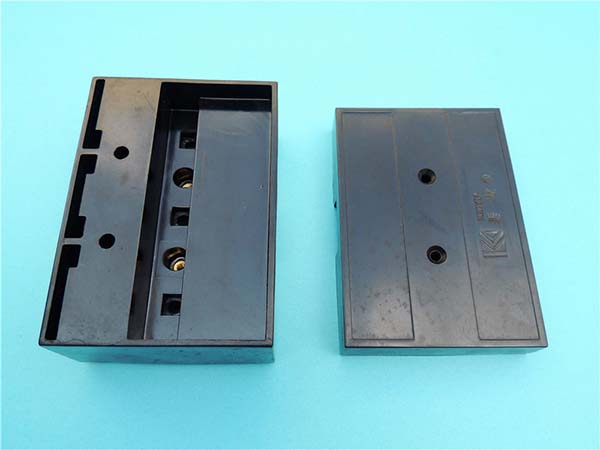
| Electrical | Terminal blocks, motor components | Electrical insulation; medium-temperature environments |
| Mechanical | Gears, pulleys, bearing retainers | Moderate loads; lightweight |
| Consumer goods | Power tool housings, appliance components, sports equipment | Impact resistance; aesthetic potential |
| Industrial | Conveyor guides, pump impellers, valve parts | Wear resistance; processability |
| Prototyping | Functional prototypes | Machinability—test form and fit before scaling |
| Custom parts | Low-to-medium volume custom components | Predictable machining behavior; consistent quality |
| Injection mold inserts | Short-run mold components | Dimensional stability; moderate heat resistance |
Conclusion
CNC machining Nylon 20% GF requires understanding its unique properties and applying targeted strategies:
- Material properties: Tensile strength 90–110 MPa (vs. 45–60 MPa unfilled nylon); impact strength 15–20 kJ/m² (higher than Nylon 30% GF); moisture absorption 1–1.5% (predictable dimensional stability); continuous service temperature 110–130°C
- Machining parameters: Milling: 3-axis or 5-axis; Turning: 1000–2000 RPM; Drilling: feed 0.1–0.15 mm/rev; Coolant: water-soluble (5–8%)
- Tooling: Carbide (K20–K30) for general machining; TiN coatings extend tool life 20–30%; sharp cutting edges (<0.02 mm); helix angle 35–40°; 2-flute for chip evacuation; 4-flute for finer finishes
- Surface finish: Ra 0.8–1.2 μm achievable; defects (fiber pull-out, fuzzing) from dull tools or excessive feed—prevent with sharp tools, optimal feeds, coolant
- Post-processing: Light sanding to Ra 0.4–0.6 μm; deburring; annealing (90–100°C for 1–2 hours) to relieve stresses
- Applications: Automotive (sensors, housings), electrical (terminal blocks), mechanical (gears, pulleys), consumer goods, industrial equipment, prototyping, injection mold inserts
By using TiN-coated carbide tools, optimized parameters (consistent feed rates, proper coolant), and sharp cutting edges, manufacturers can balance tool life and surface finish—delivering precision components that leverage Nylon 20% GF’s balanced strength and machinability.
FAQs
How does machining Nylon 20% GF differ from Nylon 30% GF?
Nylon 20% GF requires less aggressive tooling (softer carbides, less steep helix angles) and can handle higher feed rates due to lower abrasiveness. It has better impact resistance (15–20 kJ/m² vs. 10–15 kJ/m²), reducing cracking risk during machining, and offers longer tool life.
Can HSS tools be used for machining Nylon 20% GF?
HSS tools can be used for low-volume, low-precision parts, but they wear significantly faster than carbide tools. For most applications, carbide tools (especially coated ones) are more cost-effective due to longer life and better surface finishes.
What causes surface defects in Nylon 20% GF, and how do you prevent them?
Fiber pull-out and fuzzing are the main defects, caused by dull tools or excessive feed rates. Prevention:
- Use sharp, coated carbide tools
- Maintain optimal feed rates (0.1–0.12 mm/tooth for finishing)
- Use coolant to flush chips
What surface finish can be achieved when machining Nylon 20% GF?
With proper tooling and parameters, Nylon 20% GF achieves surface roughness of Ra 0.8–1.2 μm. Light sanding with 600–800 grit sandpaper can improve finishes to Ra 0.4–0.6 μm for aesthetic applications.
What coolant is recommended for machining Nylon 20% GF?
Water-soluble coolant at 5–8% concentration is recommended. It dissipates heat and flushes away glass fiber chips—reducing tool wear and preventing surface defects. Coolant is not as critical as with higher fiber grades but still beneficial.
Contact Yigu Technology for Custom Manufacturing
At Yigu Technology, we specialize in CNC machining Nylon 20% GF for automotive, electrical, mechanical, and industrial applications. With 15 years of experience, advanced CNC milling and turning capabilities, and ISO 9001 certification, we deliver precision components with surface finishes to Ra 0.8 μm.
Our expertise includes TiN-coated carbide tooling, optimized feed rates, and coolant strategies to balance tool life and surface quality. Contact us today to discuss your Nylon 20% GF machining project.