Introduction
CNC turning relies on a precise combination of G-codes (motion commands) and M-codes (auxiliary functions). Key G-codes include G00 (rapid positioning), G01 (linear interpolation), G02/G03 (clockwise/counterclockwise arcs), and G96 (constant surface speed). M-codes like M03 (spindle on) and M30 (program end) are equally critical. Understanding these codes is fundamental—a wrong G-code or M-code can lead to incorrect tool movements, spindle malfunctions, or damage to the workpiece and machine. This guide explores the foundations of CNC turning, advanced techniques for precision, comparative analysis with other machining methods, and real-world applications—helping you master the art of CNC turning.
What Are the Foundations of CNC Turning?
Core G-Codes and M-Codes for Turning Operations
| Code Type | Code | Function |
|---|---|---|
| G-code | G00 | Rapid positioning of tool to specified location |
| G-code | G01 | Linear interpolation for straight-line cutting at specified feed rate |
| G-code | G02 | Clockwise circular interpolation for cutting a circular arc |
| G-code | G03 | Counterclockwise circular interpolation for cutting a circular arc |
| G-code | G96 | Sets spindle speed to maintain constant surface speed during turning |
| M-code | M03 | Starts spindle clockwise |
| M-code | M04 | Starts spindle counterclockwise |
| M-code | M05 | Stops spindle |
| M-code | M30 | Ends program; returns control to program start |
Example program start:
N10 G54 G90 G00 X50 Z2   (Set coordinate system, absolute programming, rapid-position to starting point)
N20 M03 S800            (Start spindle clockwise at 800 RPM)
G54 selects workpiece coordinate system; G90 indicates absolute programming; G00 rapidly positions tool; M03 activates spindle; S800 sets spindle speed.
Toolpath Strategies for Efficient Material Removal
Successful turning requires strategic toolpath planning. Radial and axial cuts must balance depth of cut (DOC) and feed rate to optimize cycle time. A common approach uses roughing cycles (e.g., G71 for cylindrical parts) followed by finishing passes.
| Operation | Strategy | Example |
|---|---|---|
| Roughing | Remove as much material as possible in shortest time | G71 roughing cycle removes 3 mm material in 0.5 mm increments |
| Finishing | Achieve final dimensions and surface finish | ±0.02 mm precision with lower feed rate, smaller depth of cut |
G71 roughing cycle example (Fanuc):
N30 G71 U0.5 R0.1                    (Depth of cut per pass 0.5 mm; retract amount 0.1 mm)
N40 G71 P50 Q100 U0.2 W0.1 F0.3      (Start/end of finishing path; X/Z finish allowances; feed rate)
Finishing pass:
N50 G00 X39.8 Z2                     (Rapid-position to finishing start)
N60 G01 X40 Z-50 F0.1                (Cut outer diameter with fine feed rate)
Impact: Proper toolpath planning reduces machining time, improves final product quality, prevents tool breakage (excessive feed), and ensures surface finish (excessive depth of cut compromises finish).
What Advanced Techniques Elevate Precision?
Subprograms and Pattern Repeating Cycles
| Technique | Description | Example |
|---|---|---|
| Subprograms | Self-contained code segments called multiple times | Threading operation repeated on different parts or locations |
| Pattern repeating cycles | Repeating specific toolpath pattern for irregular-shaped workpieces | G73 for roughing non-linear profiles with multiple undulations |
Subprogram example (O0050 for thread cutting):
N10 G00 X[start_x] Z[start_z]          (Position tool at thread start)
N20 G92 X[end_x] Z[end_z] F[feed_rate] (Execute thread cutting)
N30 M99                                (Return to main program)
Calling subprogram in main program:
N30 M98 P0050 (Call subprogram O0050)G73 pattern repeating cycle (Fanuc):
G73 U[total_retract_x] W[total_retract_z] R[number_of_repetitions]
G73 P[start] Q[end] U[finish_allowance_x] W[finish_allowance_z] F[feed_rate]
G73 efficiently removes material following workpiece contour—reducing roughing time and improving overall efficiency.
Tool Compensation and Adaptive Machining
| Technique | Function | Impact |
|---|---|---|
| Tool wear compensation (G41/G42) | Adjusts toolpath for tool radius; ensures dimensional accuracy | Without compensation, 0.5 mm radius tool would undersize part by 1 mm |
| Adaptive machining | Real-time sensor data adjusts feed rate based on cutting forces | Research: adaptive control reduced cycle times 15–20%; extended tool life 30% |
Tool radius compensation example:
N10 G41 G01 X[compensated_x] Z[compensated_z] D[tool_radius_register] F[feed_rate]D[tool_radius_register] refers to register storing tool radius value.
Adaptive machining benefits: Prevents tool breakage from wear or material hardness variations; maintains surface finish quality; reduces tool changes; lowers tooling costs; contributes to sustainable manufacturing by reducing waste.
How Does CNC Turning Compare with Other Machining Methods?
| Parameter | CNC Turning | CNC Milling | Conventional Lathe |
|---|---|---|---|
| Workpiece motion | Rotates | Stationary | Rotates |
| Tool motion | Linear along X, Z (sometimes Y) | Rotates; moves in multiple axes (X, Y, Z, A, B) | Manual control |
| Geometry focus | Axially symmetric | Complex 3D shapes | Simple profiles |
| Tolerance | ±0.005 mm | ±0.02 mm | ±0.1 mm |
| Surface finish (Ra) | 0.4 – 1.6 μm | 0.8 – 3.2 μm | 1.6 – 6.3 μm |
| Production speed | High (3–5 parts/hr) | Moderate (1–3 parts/hr) | Low (0.5–1 part/hr) |
CNC turning advantages: High precision (±0.005 mm) for axially symmetric parts—automotive axle shafts, artificial hip joints; high production speed (3–5 parts/hr). CNC milling excels at complex 3D geometries—engine blocks, aircraft wing components. Conventional lathes limited to simple profiles; lower precision (±0.1 mm); slower production.
Conclusion
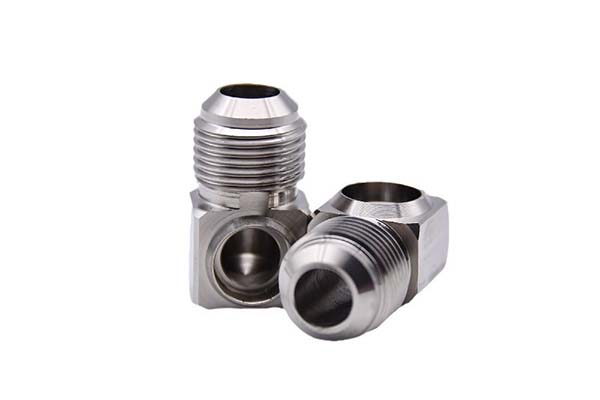
CNC turning foundations require mastery of G-codes (G00 rapid positioning, G01 linear interpolation, G02/G03 circular arcs, G96 constant surface speed) and M-codes (M03 spindle start, M30 program end). Toolpath strategies balance roughing cycles (G71 removes material in 0.5 mm increments) and finishing passes (achieving ±0.02 mm precision). Advanced techniques include subprograms (threading operations called multiple times), pattern repeating cycles (G73 for irregular-shaped workpieces), tool compensation (G41/G42 adjusts for tool radius—without compensation, 0.5 mm radius undersizes part by 1 mm), and adaptive machining (real-time sensor data reduces cycle times 15–20%, extends tool life 30%). Comparative analysis: CNC turning achieves ±0.005 mm tolerances , 0.4–1.6 μm surface finish , and 3–5 parts/hour production speed —ideal for axially symmetric parts (shafts, bushings, threaded components). CNC milling handles complex 3D geometries (±0.02 mm tolerances). Conventional lathes are limited to simple profiles (±0.1 mm tolerances). With proper programming, toolpath planning, and advanced techniques, CNC turning delivers precision, efficiency, and reliability for high-performance applications.
FAQs
How do you select the right cutting tools for CNC turning?
Select tools based on workpiece material (carbide for steel, ceramic for titanium), required surface finish , and feature geometry . Always prioritize shorter tool overhangs to minimize vibration.
What are the common causes of dimensional inaccuracies in CNC turning, and how can you prevent them?
Common causes include thermal expansion (monitor coolant flow), tool wear (apply compensation G41/G42), and insufficient clamping force (use hydraulic chucks for high-precision parts).
Can CNC turning be used for non-axially symmetric parts?
While primarily for axially symmetric components, multi-axis turning centers can create off-center features using live tooling attachments —expanding design possibilities.
Contact Yigu Technology for Custom Manufacturing
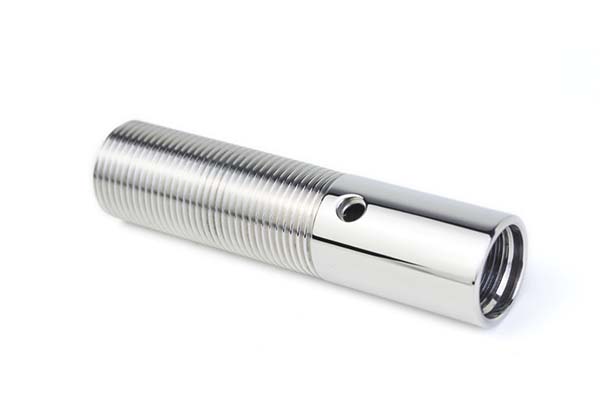
At Yigu Technology , we master the art of CNC turning for precision components. Our CNC lathes achieve ±0.005 mm tolerances and 0.4–1.6 μm surface finishes —ideal for axially symmetric parts (shafts, bushings, threaded components). We use G71 roughing cycles (removing material in 0.5 mm increments) and G41/G42 tool compensation for dimensional accuracy. From automotive axle shafts to artificial hip joints, we provide DFM feedback to optimize your designs for manufacturability.
Ready to master CNC turning for your next project? Contact Yigu Technology today for a free consultation and quote. Let us help you achieve precision, efficiency, and reliability in every turned component.