Introduction
Injection molding is one of the most widely used manufacturing processes in the world. It transforms plastic pellets into finished products—from tiny electronic components to large automotive bumpers—with remarkable speed and precision. But behind every successful injection molded part lies a critical stage that often determines success or failure: cooling.
Cooling accounts for 70–80% of the total cycle time in injection molding. It is the phase where molten plastic solidifies into its final shape. Proper cooling ensures dimensional stability, good surface finish, and consistent mechanical properties. Improper cooling causes warpage, sink marks, internal stress, and extended cycle times.
This guide explains the fundamentals of cooling in injection molding. You will learn about cooling time, cooling channel design, mold temperature control, and how to optimize cooling for better parts and faster cycles. Whether you are new to injection molding or looking to improve your process, this guide provides essential knowledge.
What Is Injection Molding and Why Does Cooling Matter?
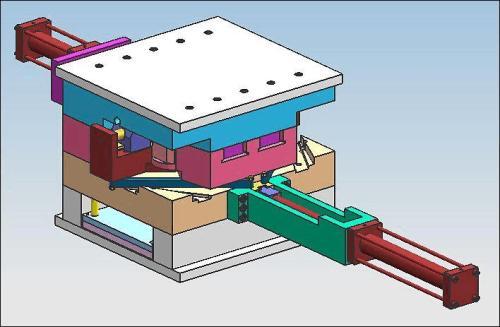
Injection molding is a manufacturing process where molten plastic is injected into a mold cavity under high pressure. The plastic cools and solidifies, taking the shape of the cavity. The mold opens, and the finished part is ejected.
The Significance of Cooling
Cooling is the stage where the molten plastic loses heat and solidifies. It directly impacts:
| Impact Area | Why It Matters |
|---|---|
| Dimensional stability | Uneven cooling causes differential shrinkage; parts warp or distort |
| Surface quality | Improper cooling causes sink marks, flow marks, and surface defects |
| Mechanical properties | Rapid cooling can create internal stress; slow cooling affects crystallinity |
| Production efficiency | Cooling time accounts for 70–80% of cycle time; longer cooling reduces output |
Example: In plastic container production, uneven cooling can cause lids that do not fit properly. In automotive parts, warpage can compromise assembly fit and function.
What Is Cooling Time and How Is It Determined?
Cooling time is the period from when the molten plastic fills the mold cavity until it has solidified enough to be safely ejected. It is the longest phase of the injection molding cycle.
Factors Affecting Cooling Time
| Factor | Impact |
|---|---|
| Plastic material | Higher melting point materials (PEEK) require longer cooling; lower melting point (PE) cool faster |
| Part thickness | Cooling time increases with the square of thickness. Double thickness = approximately quadruple cooling time |
| Mold design | Efficient cooling channels reduce cooling time |
| Mold temperature | Lower mold temperature = faster cooling; higher = slower |
Rule of thumb:
- 2 mm thick part: 10–20 seconds cooling time
- 4 mm thick part: 40–80 seconds cooling time (approximately 4× longer)
Material Examples
| Material | Melting Point | Typical Cooling Time (3 mm part) |
|---|---|---|
| Polyethylene (PE) | 110–130°C | 10–20 seconds |
| Polypropylene (PP) | 160–170°C | 15–25 seconds |
| ABS | 200–240°C | 20–30 seconds |
| Polycarbonate (PC) | 260–300°C | 30–45 seconds |
| PEEK | 340–380°C | 40–60 seconds |
How Do Cooling Channels Affect Cooling Performance?
Cooling channels are passages within the mold through which coolant (typically water) circulates to remove heat. Their design is critical to cooling efficiency and uniformity.
Channel Layout
| Principle | Explanation |
|---|---|
| Follow part shape | Channels should follow the contour of the part to provide uniform cooling |
| Avoid straight lines for complex shapes | Complex parts require channels that mirror the geometry |
| Balance flow paths | Equal flow resistance to all areas ensures uniform cooling |
Example: A smartphone case requires cooling channels that follow its curved contours. Straight channels would leave corners with inadequate cooling, causing warpage.
Channel Diameter
| Diameter | Effect |
|---|---|
| Too small | Restricts flow; inadequate cooling |
| Optimal (6–14 mm) | Good flow; effective heat transfer |
| Too large | Weakens mold structure; may reduce cooling efficiency |
Guideline: For most applications, 8–12 mm diameter channels provide optimal balance.
Channel Spacing
| Spacing | Effect |
|---|---|
| Too close | Over-cooling in some areas; inefficient use of coolant |
| Optimal (3–5× diameter) | Uniform cooling across cavity |
| Too far | Hot spots; uneven cooling |
Example (6 mm diameter channels):
- 20 mm spacing → over-cooling; warpage
- 30 mm spacing → hot spots; insufficient cooling in some areas
- 24 mm spacing (4× diameter) → uniform cooling
Channel Distance from Cavity
| Distance | Effect |
|---|---|
| Too close | May weaken mold; risk of breakthrough |
| Optimal (1.5–2× channel diameter) | Efficient heat transfer; mold strength maintained |
| Too far | Inefficient cooling; longer cycle times |
How Does Mold Temperature Control Impact Quality?
Mold temperature directly affects cooling rate, part quality, and cycle time.
Impact of Mold Temperature
| Mold Temperature | Effect on Cooling | Effect on Part Quality |
|---|---|---|
| Lower | Faster cooling; shorter cycle | Higher risk of warpage; internal stress; surface defects |
| Higher | Slower cooling; longer cycle | Better surface finish; lower stress; risk of sticking |
Controlling Mold Temperature
Mold temperature is controlled by circulating coolant through the cooling channels.
| Control Element | Function |
|---|---|
| Coolant temperature | Adjusted by chiller or temperature control unit |
| Flow rate | Higher flow = more heat removal |
| Coolant type | Water (high heat capacity) for most applications; oil for higher temperatures |
Typical settings:
- Water-based cooling: 20–30°C for general applications
- Higher mold temperature (40–80°C) for crystalline materials or high-gloss finishes
Material-Specific Considerations
| Material | Mold Temperature | Reason |
|---|---|---|
| PE, PP | 20–40°C | Fast cooling; avoid warpage |
| ABS | 40–60°C | Balance surface finish and cycle time |
| PC | 70–90°C | Reduce stress; prevent cracking |
| High-gloss finishes | Higher | Smooth surface; defect-free appearance |
What Is Conformal Cooling and Why Is It Important?
Conformal cooling is an advanced mold design technique where cooling channels follow the exact shape of the part. Unlike traditional straight-drilled channels, conformal channels are created using additive manufacturing (3D printing) or specialized machining.
Traditional vs. Conformal Cooling
| Aspect | Traditional Cooling | Conformal Cooling |
|---|---|---|
| Channel shape | Straight lines; drilled holes | Follows part contour |
| Uniformity | May be uneven for complex shapes | Uniform cooling throughout |
| Cycle time | Limited by channel placement | 20–40% reduction possible |
| Mold cost | Lower | Higher (due to advanced manufacturing) |
Benefits of Conformal Cooling
| Benefit | Impact |
|---|---|
| Reduced cycle time | 20–40% faster cooling |
| Less warpage | Uniform cooling minimizes distortion |
| Improved surface finish | Eliminates hot spots; reduces defects |
| Better dimensional stability | Consistent shrinkage |
Example: A complex automotive part with traditional cooling had a 45-second cooling time. After implementing conformal cooling, cooling time dropped to 28 seconds—a 38% reduction—with improved part quality.
How Can You Optimize Cooling in Injection Molding?
Cooling Channel Design Optimization
| Strategy | Action |
|---|---|
| Use mold flow analysis | Simulate cooling; identify hot spots before tooling |
| Balance flow paths | Ensure equal flow resistance to all channels |
| Place channels close to cavity | 1.5–2× channel diameter from cavity surface |
| Use conformal cooling | For complex geometries; high-volume production |
Cooling System Maintenance
| Task | Frequency | Purpose |
|---|---|---|
| Clean channels | Regularly | Prevent scale buildup; maintain heat transfer |
| Check flow rates | Periodic | Ensure adequate coolant circulation |
| Inspect seals | Per production run | Prevent leaks |
Process Parameter Optimization
| Parameter | Optimization |
|---|---|
| Coolant temperature | Balance cycle time and part quality |
| Coolant flow rate | Maximize within system capabilities |
| Mold temperature | Set based on material; monitor consistently |
What Are Common Cooling Problems and Solutions?
| Problem | Cause | Solution |
|---|---|---|
| Warpage | Uneven cooling; temperature gradients | Balance cooling channels; use conformal cooling |
| Sink marks | Insufficient cooling in thick sections | Add cooling near thick areas; optimize wall thickness |
| Long cycle time | Inefficient cooling | Improve channel design; increase flow rate; use conformal cooling |
| Surface defects | Hot spots; uneven cooling | Balance channel layout; optimize mold temperature |
| Sticking | Part too hot when ejected | Extend cooling time; reduce mold temperature |
How Does Yigu Technology Optimize Cooling for Custom Parts?
At Yigu Technology, we understand that cooling is critical to producing high-quality custom plastic and plastic-metal products.
Our Approach
| Step | Method |
|---|---|
| Mold flow analysis | Simulate cooling; identify hot spots before tooling |
| Optimized channel design | Advanced CAD/CAM for channel layout; conformal cooling for complex parts |
| Material-specific parameters | Select cooling settings based on material properties |
| Process monitoring | Real-time temperature and flow rate control |
| Continuous improvement | Analyze data; refine cooling parameters |
Example: For custom electronic device housings, we design cooling channels that follow complex shapes, ensuring uniform heat dissipation and consistent part quality.
Conclusion
Cooling is the most time-consuming and quality-critical phase of injection molding. Key takeaways:
- Cooling accounts for 70–80% of cycle time—optimizing it directly improves productivity
- Cooling time depends on material, part thickness, and mold design
- Cooling channel design—layout, diameter, spacing, and distance from cavity—affects cooling uniformity
- Mold temperature balances cycle time and part quality
- Conformal cooling can reduce cycle time by 20–40% while improving part quality
By optimizing cooling, manufacturers achieve:
- Faster cycles (higher output)
- Better dimensional stability (less warpage)
- Improved surface finish (fewer defects)
- Consistent mechanical properties
Frequently Asked Questions (FAQ)
How can I reduce cooling time in injection molding?
Reduce cooling time through optimized cooling channel design (channels follow part shape; proper diameter and spacing), conformal cooling for complex parts, efficient cooling system (adequate flow rate; clean channels), and material selection (faster-cooling materials if appropriate). Avoid reducing cooling time excessively—insufficient cooling causes warpage and defects.
What are common problems caused by improper cooling?
Warpage – Uneven cooling causes differential shrinkage; parts distort. Dimensional inaccuracy – Parts deviate from specifications; critical for precision components. Surface defects – Sink marks (depressions) and flow marks (visible flow lines) reduce aesthetics and functionality. Internal stress – Rapid cooling can cause stress that leads to cracking over time.
How does the choice of plastic material affect cooling?
Thermal properties—materials with higher melting points (PEEK, PC) require longer cooling than lower melting point materials (PE, PP). Coefficient of thermal expansion—materials with high expansion (ABS) require careful cooling to avoid warpage. Crystalline vs. amorphous—crystalline materials (PP, PE) release additional heat during solidification, requiring longer cooling than amorphous materials (ABS, PS).
What is conformal cooling and when should it be used?
Conformal cooling uses cooling channels that follow the exact shape of the part, created through additive manufacturing or specialized machining. Use conformal cooling for complex geometries (parts with curves, ribs, varying thickness), high-volume production (cycle time reduction justifies higher mold cost), and parts with tight dimensional requirements (uniform cooling minimizes warpage). Benefits include 20–40% cycle time reduction and improved part quality.
How do you control mold temperature effectively?
Use a temperature control unit (TCU) to regulate coolant temperature and flow rate. Circulate coolant through cooling channels; monitor temperature with sensors. Adjust settings based on material—higher mold temperature for crystalline materials or high-gloss finishes; lower for amorphous materials. Maintain consistent temperature across the mold to avoid hot spots. Regularly clean channels to prevent scale buildup that reduces heat transfer.
Contact Yigu Technology for Custom Manufacturing
At Yigu Technology, we optimize every aspect of injection molding—including cooling—to deliver high-quality custom plastic and plastic-metal parts. Our expertise in mold design, cooling channel optimization, and process control ensures efficient production and superior part quality.
Our cooling optimization capabilities include:
- Mold flow analysis – Simulate cooling; identify hot spots
- Conformal cooling design – Advanced channel layouts for complex parts
- Precision mold manufacturing – High-quality steel and aluminum molds
- Process monitoring – Real-time temperature and flow control
- Material expertise – Cooling parameters optimized for each material
We help clients achieve faster cycles, better part quality, and consistent results.
Contact us today to discuss your injection molding project. Let our expertise help you master the cooling process for superior results.