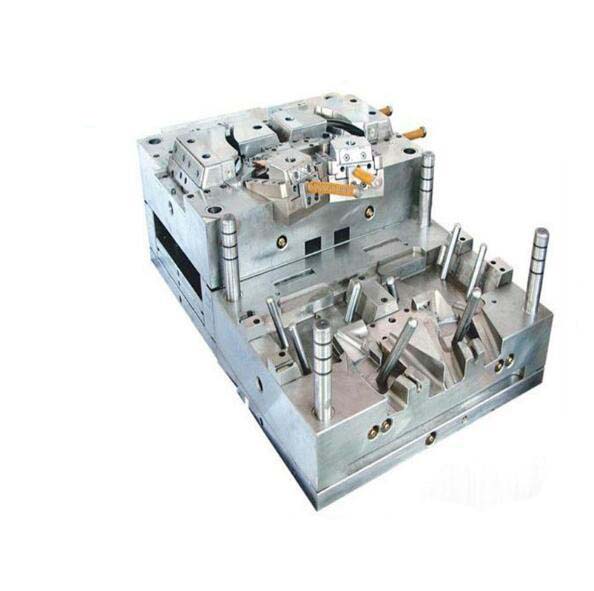
Introduction
Gas assisted injection molding (GAIM) is an advanced manufacturing process that uses inert gas—typically nitrogen—to create hollow sections within plastic parts. Unlike conventional injection molding that produces solid components, GAIM injects gas into the molten plastic to form internal channels, reducing weight, eliminating sink marks, and shortening cycle times.
This technology has transformed how manufacturers produce large, thick-walled, or structurally complex plastic components. From automotive interior panels to laptop cases, gas assisted molding delivers parts that are lighter, stronger, and more dimensionally stable than their solid counterparts.
This guide explains what gas assisted injection molding is, how the process works, its applications across industries, and the advantages it offers over conventional molding. You will learn the technical details of gas injection, hollow structure formation, and how to optimize the process for your applications.
What Is Gas Assisted Injection Molding?
Gas assisted injection molding (GAIM) is a manufacturing process where an inert gas—typically nitrogen—is injected into the molten plastic inside the mold cavity. The gas creates hollow channels within the part, reducing material usage, weight, and cycle time while improving surface quality.
The Basic Concept
Unlike conventional injection molding that fills the entire cavity with solid plastic, GAIM uses a short-shot technique. Only enough plastic to partially fill the cavity is injected first. Then, high-pressure gas is introduced, pushing the molten plastic to the cavity walls and forming a hollow core.
How Does It Differ from Conventional Molding?
| Aspect | Conventional Molding | Gas Assisted Molding |
|---|---|---|
| Part structure | Solid throughout | Hollow core; solid skin |
| Material usage | Full shot volume | 20–40% less material |
| Sink marks | Common in thick sections | Eliminated |
| Warpage | Higher risk | Reduced |
| Cooling time | Longer (solid thick sections) | Shorter (hollow core) |
| Injection pressure | Higher | Lower |
How Does the Gas Assisted Molding Process Work?
The process consists of several precisely controlled stages. Each stage affects the final part quality.
Step 1: Initial Plastic Injection (Short-Shot)
The process begins with a short-shot—only a portion of the plastic needed to fill the cavity is injected.
Key parameters:
- Plastic is heated to its melting point (e.g., polypropylene at 180–250°C)
- Injection volume is carefully calculated—typically 60–80% of the full cavity volume
- The plastic begins cooling against the mold walls, forming a solid outer skin
Why short-shot? The unfilled space allows gas to expand and create the hollow structure. If too much plastic is injected, gas cannot penetrate; too little results in incomplete parts.
Step 2: Gas Injection
After the short-shot, high-pressure nitrogen gas is injected into the mold cavity through specialized nozzles.
Gas parameters:
| Parameter | Typical Range |
|---|---|
| Gas pressure | 10–30 MPa (1,500–4,500 psi) |
| Gas type | Nitrogen (inert; safe; dry) |
| Injection timing | Immediately after plastic injection; before plastic solidifies |
| Nozzle location | Gate; runner; or multiple points for complex parts |
Timing is critical: Gas must be injected while the plastic is still molten enough to flow but after enough outer skin has formed to maintain shape.
Step 3: Gas Diffusion and Hollow Structure Formation
Once injected, the gas follows the path of least resistance—moving toward areas with higher temperature and lower viscosity.
How gas moves:
- Gas penetrates thicker sections first (they cool more slowly and remain molten longer)
- Gas pushes molten plastic toward the mold walls
- The solid outer skin (cooled against mold) maintains part shape
- A hollow channel forms in the center of thick sections
Multiple gas nozzles: For complex parts, multiple gas injection points ensure even distribution and consistent hollow structures throughout the part.
Step 4: Cooling and Ejection
After the hollow structure forms, the mold cools to solidify the plastic.
Cooling advantages:
- Hollow core reduces the amount of plastic that needs to cool
- Cooling time can be 20–50% shorter than solid parts of equivalent thickness
- Shorter cycles increase production efficiency
Once solidified, the mold opens, gas is vented, and the part is ejected.
What Are the Key Parameters and Their Effects?
Short-Shot Volume
| Short-Shot % | Effect |
|---|---|
| Low (50–60%) | Larger hollow core; lighter part; may risk incomplete filling |
| Optimal (60–80%) | Balanced; good surface; adequate strength |
| High (80–90%) | Smaller hollow core; heavier part; less weight reduction |
Gas Pressure
| Pressure | Effect |
|---|---|
| Too low | Gas does not penetrate fully; incomplete hollow structure |
| Optimal | Uniform hollow channel; good surface finish |
| Too high | Gas breakthrough; surface defects; possible part damage |
Research finding: Increasing gas pressure from 5 MPa to 8 MPa can reduce average cell size by 30% in structural foam applications.
Gas Injection Timing
| Timing | Effect |
|---|---|
| Too early | Plastic too fluid; gas may break through surface |
| Optimal | Gas penetrates while plastic still flows; creates uniform channel |
| Too late | Plastic too solid; gas cannot penetrate; short shots |
Temperature Control
| Temperature | Effect |
|---|---|
| Melt temperature | Affects viscosity; higher temp = easier gas penetration |
| Mold temperature | Affects skin formation; uniform temperature prevents warpage |
What Are the Advantages of Gas Assisted Molding?
Design Flexibility
GAIM allows combinations of thick and thin sections in one part:
- Thick sections – For structural strength or mounting points
- Thin sections – For aesthetics or weight reduction
- Variable wall thickness – Without sink marks
Example: A plastic chair leg can have thick structural sections where strength is needed and hollow sections where weight reduction is desired—all in one part.
Weight Reduction
Hollow structures reduce part weight by 20–40% compared to solid parts.
| Part Type | Weight Reduction |
|---|---|
| Automotive dashboard | 30–40% |
| Bumper | 20–30% |
| Laptop case | 15–20% |
Eliminates Sink Marks
Sink marks occur when thick sections cool and shrink unevenly. GAIM eliminates them because hollow sections replace solid thick areas. The result is a smooth, defect-free surface without secondary finishing.
Reduced Cycle Time
Hollow sections cool faster than solid thick sections:
- Cooling time can be 20–50% shorter
- Overall cycle time reduced
- Higher production output
Lower Injection Pressure
Gas assists in filling the cavity, so injection pressure can be reduced by 20–40%. Benefits include:
- Lower energy consumption
- Reduced mold wear
- Smaller machine requirements (lower tonnage)
Improved Strength-to-Weight Ratio
The hollow structure creates a sandwich-like effect—solid skin with hollow core. This provides:
- High stiffness per unit weight
- Good impact resistance
- Structural efficiency similar to an I-beam
Reduced Internal Stress
Lower injection pressure and more uniform cooling reduce internal stress. Results:
- Less warpage
- Better dimensional stability
- Improved long-term performance
What Are the Limitations?
Higher Equipment Cost
GAIM requires:
- Gas injection system – Nitrogen supply; pressure control; injection nozzles
- Specialized molds – Gas channels; seals; precise nozzle placement
- Advanced controls – Timing and pressure coordination
Initial investment is higher than conventional molding.
Process Complexity
Multiple parameters must be controlled:
- Short-shot volume
- Gas pressure and timing
- Melt and mold temperatures
- Cooling rate
Incorrect settings cause defects. Process development requires expertise.
Design Constraints
Not all parts are suitable:
- Parts with very thin walls may not have space for hollow channels
- Complex gas channels require careful mold design
- Gas must follow a defined path; multiple injection points may be needed
Material Limitations
Most thermoplastics work, but:
- Materials with very low viscosity may not hold gas pressure
- Highly filled materials may affect gas penetration
- Engineering materials may require specialized parameters
What Are the Applications Across Industries?
Automotive Industry
| Component | Benefit |
|---|---|
| Dashboards | 30–40% weight reduction; reduced internal stress; better surface finish |
| Bumpers | Lightweight (20–30% reduction); maintains impact strength |
| Door panels | Weight reduction; uniform wall thickness |
| Intake manifolds | Smooth internal channels; 5–10% fuel efficiency improvement |
| Handles | Hollow structure; eliminates sink marks; comfortable grip |
Industry data: Some automakers report fuel efficiency improvements of 5–10% from GAIM-optimized intake manifolds due to improved airflow and weight reduction.
Electronics Industry
| Component | Benefit |
|---|---|
| Laptop cases | 15–20% weight reduction; thin walls; durability |
| Tablet cases | Lightweight; smooth surface; impact resistance |
| Heat sinks | Hollow fins increase surface area; lighter weight |
| Enclosures | Structural integrity; reduced weight |
Medical Industry
| Component | Benefit |
|---|---|
| Device enclosures | Smooth surfaces (easy cleaning); lightweight; durable |
| Surgical instrument handles | Hollow core reduces weight; ergonomic; sterile surfaces |
| Diagnostic equipment | Precision dimensions; no harmful by-products (inert nitrogen) |
Consumer Products
| Component | Benefit |
|---|---|
| Furniture components | Weight reduction; structural strength |
| Power tool handles | Hollow core; ergonomic grip; reduced fatigue |
| Large containers | Lightweight; durable; material savings |
How Do You Design for Gas Assisted Molding?
Part Design Guidelines
| Feature | Recommendation |
|---|---|
| Wall thickness | Design gas channels in thick sections; transition gradually to thin walls |
| Gas channel layout | Connect thick sections to gas injection points |
| Ribs and bosses | Position where gas can flow through |
| Surface finish | Excellent; no sink marks |
Gas Channel Design
Gas channels should:
- Follow the natural flow path
- Connect thick sections
- Have smooth transitions to prevent turbulence
- Be positioned where strength is needed
Gate and Nozzle Placement
- Gas nozzles can be at the gate or dedicated points
- Multiple nozzles for complex parts
- Nozzle location affects gas flow pattern
Mold Design Considerations
- Sealing – Prevent gas leakage at parting lines
- Venting – Allow air escape without gas loss
- Cooling – Balanced cooling prevents warpage
- Gas pins – Precision nozzles for gas injection
How Do You Ensure Quality?
In-Process Monitoring
- Gas pressure sensors – Verify pressure profile
- Cavity pressure sensors – Detect gas penetration timing
- Temperature monitoring – Ensure uniform cooling
Common Defects and Solutions
| Defect | Cause | Solution |
|---|---|---|
| Gas breakthrough | Gas pressure too high; timing too early | Reduce pressure; delay injection |
| Incomplete hollow | Short-shot too large; gas pressure low | Reduce short-shot; increase pressure |
| Surface marks | Gas nozzle location; timing | Optimize nozzle position; adjust timing |
| Warpage | Uneven cooling | Balance cooling channels |
Conclusion
Gas assisted injection molding (GAIM) is a powerful technology that creates lighter, stronger, and more dimensionally stable plastic parts. The process injects nitrogen gas into molten plastic to form hollow channels, reducing material usage and cycle time while eliminating sink marks.
Key advantages include:
- Weight reduction – 20–40% lighter than solid parts
- Eliminated sink marks – Smooth surfaces without secondary finishing
- Shorter cycle times – 20–50% faster cooling
- Lower injection pressure – Reduced energy and wear
- Improved strength-to-weight – Structural efficiency
Applications span automotive, electronics, medical, and consumer goods industries where lightweight, strong components are essential. While GAIM requires higher equipment investment and process expertise, the benefits in weight reduction, quality, and production efficiency make it the preferred choice for many large or thick-walled components.
Frequently Asked Questions (FAQ)
What are the main advantages of gas assisted injection molding?
The main advantages are weight reduction (20–40% lighter than solid parts), elimination of sink marks, shorter cycle times (20–50% faster cooling), lower injection pressure, and improved strength-to-weight ratio. GAIM also reduces internal stress, minimizing warpage and improving dimensional stability. These benefits make it ideal for large, thick-walled components where weight and surface quality matter.
What materials work best with gas assisted molding?
Most thermoplastics are suitable, including polypropylene (PP) , polyethylene (PE) , ABS , polycarbonate (PC) , and nylon. Materials with good flow characteristics work best. Highly filled materials may affect gas penetration; parameters must be adjusted. The gas used is nitrogen—inert, dry, and safe at processing temperatures.
How does gas assisted molding compare to conventional injection molding?
GAIM uses a short-shot (60–80% of cavity volume) followed by gas injection, while conventional molding fills the entire cavity with plastic. GAIM produces hollow parts with solid skin; conventional produces solid parts. GAIM offers 20–40% weight reduction, eliminates sink marks, and provides 20–50% shorter cooling times. However, GAIM requires higher equipment investment and more complex process control.
Can gas assisted molding be used for small parts?
GAIM is most effective for large, thick-walled parts where weight reduction and cycle time improvements are significant. For very small parts, the benefits are less pronounced, and conventional molding may be more economical. However, GAIM can be used for small parts with specific thick sections where sink marks are a concern.
What is the typical gas pressure used in GAIM?
Gas pressure typically ranges from 10–30 MPa (1,500–4,500 psi). The exact pressure depends on part geometry, material viscosity, and desired hollow structure. Higher pressures create smaller, more uniform hollow channels but increase the risk of gas breakthrough. Optimal pressure is determined through process development for each application.
Contact Yigu Technology for Custom Manufacturing
At Yigu Technology, we specialize in gas assisted injection molding for lightweight, high-strength plastic components. Our expertise spans automotive, electronics, medical, and consumer goods industries where weight reduction and part quality are critical.
Our GAIM capabilities include:
- Process development – Optimizing short-shot volume, gas pressure, and timing
- Precision mold design – Gas channels; sealing; multiple nozzle configurations
- Material expertise – PP, PE, ABS, PC, nylon, and filled materials
- Quality assurance – In-process monitoring; dimensional inspection
- Production scalability – Prototypes to high-volume runs
We help clients achieve weight reduction without sacrificing strength, eliminate sink marks for superior surface quality, and reduce cycle times for higher productivity.
Contact us today to discuss your gas assisted injection molding project. Let our expertise help you create lighter, stronger, better parts.