Introduction
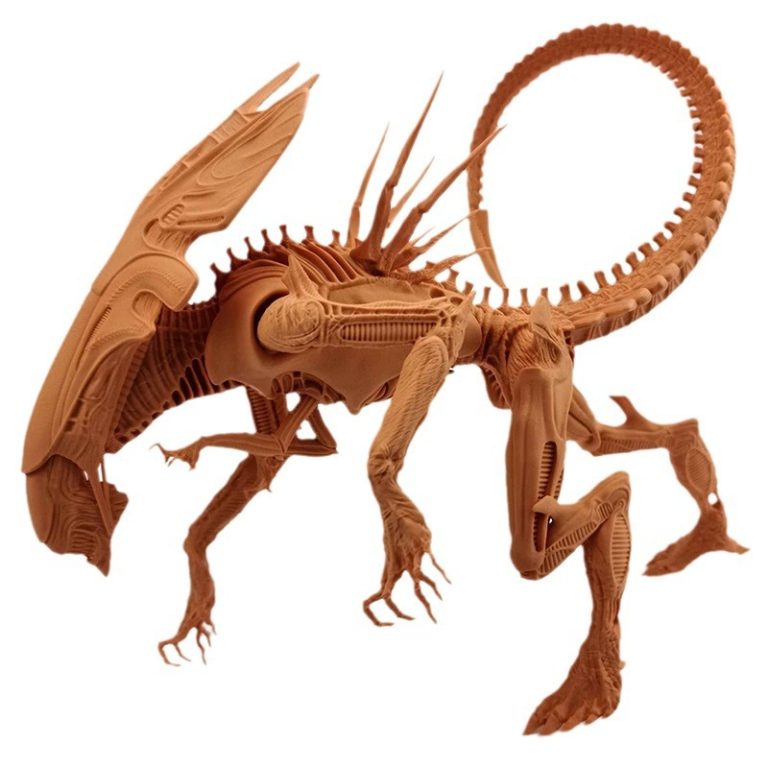
Let's be honest. 3D printing a dragon is the ultimate boss fight of additive manufacturing. Every hobbyist dreams of printing one. But most end up with snapped wings, fused joints, or a blob of plastic that looks like a sad lizard.
The truth? Dragons are the hardest models to print well. Why? Because they have everything that makes 3D printing miserable. Thin wings. Spiky horns. Tiny scales. Complex articulation points. And overhangs everywhere.
In this guide, I'll walk you through every step. From picking the right model to painting the final coat. I've printed over 200 dragon models myself. Some flew. Some crashed. I learned the hard way so you don't have to.
The three biggest enemies? Broken wings. Stuck joints. Lost details. Let's kill all three.
Choosing the Right Dragon Model
Not all dragon files are created equal. The model you pick determines whether your print succeeds or fails. This is the first and most important decision.
Static vs. Articulated Dragons
| Feature | Static Dragon | Articulated (Flexi) Dragon |
|---|---|---|
| Print Difficulty | Low to Medium | High |
| Print Time | 8–20 hours | 15–40 hours |
| Break Risk | Low | High |
| Detail Level | Very High | Medium |
| Best For | Display pieces | Poseable toys |
| Support Needs | Moderate | Heavy |
Static dragons are solid one-piece prints. They hold more detail. They break less. If you're new to dragon printing, start here. A great example is the Wingless Guardian Dragon by Wicked3D. It has no wings to snap. Just pure detail.
Articulated dragons have moving joints. They look cooler. But they fail more often. The joints fuse during printing. The clearances are too tight. I once printed a 30cm articulated dragon. Every single joint fused shut. 18 hours wasted.
My advice: Print static first. Master it. Then try flexi.
Supports-Free Designs for Beginners
Some dragon models are designed to print without supports. These are gold for beginners.
Look for models with these traits:
- Flat base with no overhangs
- Thick limbs (4mm+ walls)
- Self-supporting wings (angled at 45° or less)
- Minimal undercuts on the body
A great starter file is the Low-Poly Dragon by Madlab. It prints clean on any FDM printer. No supports needed. Takes about 6 hours. Looks amazing on a shelf.
High-Detail Resin Models
If you have a resin printer, go for high-detail models. Resin captures scales, teeth, and claws way better than FDM.
Top resin dragon picks:
- Ancient Red Dragon by Tabletop Minions — 32mm scale, insane detail
- Storm Dragon by Artisan Guild — 75mm scale, great for display
- Frost Wyrm by Loot Studios — translucent resin option, stunning effect
Resin prints take longer to wash and cure. But the detail payoff is massive. Layer lines are nearly invisible. Scales look real.
Slicer Settings for Strength & Detail
Your slicer settings make or break the print. Even a perfect model fails with bad settings. Here's what works.
Layer Height Recommendations
| Printer Type | Best Layer Height | Why |
|---|---|---|
| FDM (PLA/PETG) | 0.12mm – 0.16mm | Balances detail and speed |
| FDM (ABS/ASA) | 0.16mm – 0.20mm | Stronger layer adhesion |
| Resin (MSLA) | 0.025mm – 0.05mm | Captures fine scales and teeth |
For dragon wings, go 0.12mm on FDM. Thinner layers mean stronger wing membranes. I tested this on a 40cm dragon. 0.2mm layers snapped the wing tips. 0.12mm held firm.
Wall Loops and Infill for Wings
Wings are the #1 failure point. Here's how to armor them:
- Wall loops: Use 4–6 perimeters on wings. Not 2. Not 3. Four minimum.
- Infill: Set wing infill to 30–40% gyroid. Gyroid is stronger than grid or lines.
- No infill in wing tips: Fill tips with 100% solid. They're too thin to risk hollow.
Pro tip: Increase wall count on the slicer. Don't just bump infill. Walls matter more for thin parts.
| Part | Walls | Infill | Pattern |
|---|---|---|---|
| Body | 4 | 20% | Gyroid |
| Wings | 6 | 35% | Gyroid |
| Wing Tips | 6 | 100% | Solid |
| Horns | 4 | 15% | Grid |
| Tail | 4 | 25% | Gyroid |
Tree Supports vs. Normal Supports
This matters a lot for horns, jaws, and spines.
| Support Type | Best For | Removal Difficulty | Scar Risk |
|---|---|---|---|
| Normal (Linear) | Flat overhangs, body underside | Easy | Low |
| Tree Supports | Horns, jaws, claws, spikes | Medium | Medium |
| Support Blockers | Protecting specific areas | N/A | N/A |
Use tree supports for horns and jaws. They leave smaller scars. But they're harder to remove. Use needle-nose pliers. Work slowly.
For the inside of a dragon's mouth, add a support blocker in your slicer. This keeps supports out of the teeth. Trust me. I learned this after ruining 3 prints.
Preventing Articulation Failure
Flexi dragons are amazing. Until the joints fuse. Here's how to stop that.
Proper Clearance Gaps
This is the #1 reason flexi dragons fail. The gaps between joint parts are too small.
| Joint Type | Recommended Gap | Minimum Gap |
|---|---|---|
| Neck joints | 0.3mm | 0.2mm |
| Wing joints | 0.3mm | 0.2mm |
| Tail joints | 0.25mm | 0.15mm |
| Leg joints | 0.2mm | 0.15mm |
Most free flexi dragon files have 0.1mm gaps. That's not enough. I bump mine to 0.25–0.3mm in my slicer. Use the "scale" function. Scale each joint piece up by 1–2%.
Printing Orientation for Movable Spines
Orientation changes everything. Here's my tested setup:
- Print the body on its side (not flat on the back)
- Spines should point up or at 45°
- This reduces supports on the spine tips
- It also makes spine joints print cleaner
I printed a spine dragon flat on its back once. Every spine broke off. 22 hours gone. Printed it on its side next time. Every spine survived.
First Wiggle Test: When and How
Don't wiggle the joints right off the build plate. Wait.
Step-by-step wiggle test:
- Let the print cool for 30 minutes on the plate
- Gently try to move one joint with your fingernail
- If it moves — great. If not, wait 10 more minutes
- Use a thin flathead screwdriver to gently pry stuck joints
- Never force it. You'll snap the joint
Rule of thumb: PLA joints are easier to free when warm. Resin joints need a little isopropyl alcohol on a cotton swab.
Post-Processing Without Damage
The print is done. But the work isn't. Post-processing can destroy hours of effort. Do it right.
Removing Supports from Teeth and Scales
This is the most annoying part. Supports hide in every tiny gap.
Tools you need:
- Flush cutters (for big supports)
- Needle-nose pliers (for small ones)
- X-Acto knife (for scale-level supports)
- Tweezers (for inside the mouth)
My method:
- Snap off big supports with flush cutters
- Soak the print in warm water (50°C) for 10 min if using PVA supports
- Use tweezers for inside the jaw
- Use an X-Acto knife at a shallow angle for between scales
I once spent 45 minutes removing supports from a dragon's teeth. A warm water soak cut that to 15 minutes. Use PVA supports when you can.
Sanding Curved Horns and Wings
| Area | Sandpaper Grit | Technique |
|---|---|---|
| Horns (curved) | 400 → 800 → 1200 | Wet sand, small circles |
| Wing membranes | 200 → 400 | Light pressure, flat strokes |
| Body scales | 600 → 1000 | Follow the scale direction |
| Joint areas | 800 only | Very light, don't round edges |
Wet sanding is key. Dry sanding clogs the paper fast. It also creates dust. Use a spray bottle. Keep the surface damp.
For curved horns, wrap the sandpaper around a pen. This lets you reach the tight curves. I use this trick every time.
Filling Layer Lines Without Hiding Texture
You want smooth surfaces. But you don't want to lose the scale texture.
The trick: use filler primer, not sanding.
- Spray a thin coat of gray filler primer
- Let it dry for 15 minutes
- Sand with 400 grit wet sandpaper
- The primer fills lines but keeps the raised details
This takes 10 minutes. Sanding everything smooth takes hours. And you keep the dragon's texture.
Painting Like a Miniature Master
A well-painted dragon looks 10x better than a raw print. These tricks make a huge difference.
Dry-Brushing Scales for Contrast
Dry brushing is the fastest way to make scales pop.
How to do it:
- Dip your brush in paint
- Wipe most of it off on paper towel
- Lightly drag the brush over the raised scales
- The paint stays on the tops. Recesses stay dark.
This creates instant depth. No washes needed. I use this on every dragon I paint. It takes 5 minutes and transforms the look.
| Color Layer | Purpose | Example |
|---|---|---|
| Base coat | Uniform color | Dark red for a fire dragon |
| Dry brush | Highlight scales | Light orange or gold |
| Wash (optional) | Darken recesses | Black or dark brown |
| Edge highlight | Define shapes | Bright red or white |
Eye Painting Trick (Toothpick Method)
Dragon eyes are tiny. Most people mess them up. Here's the fix.
The toothpick method:
- Cut a toothpick to a fine point
- Dip it in white paint
- Dot the center of the eye
- Use a finer needle for the pupil (black dot)
- Add a tiny white reflection dot on the pupil
That tiny white dot makes the eye look alive. It's the difference between a dead stare and a fierce dragon gaze. I use this on every single dragon. Every time.
Clear Coating to Protect Fragile Tails
Dragon tails break easy. Wings snap. Horns chip. Clear coat fixes this.
| Coat Type | Best For | Durability |
|---|---|---|
| Matte clear | Display pieces | Medium |
| Glossy clear | Tabletop gaming | High |
| Spray polyurethane | Kids' toys / handles | Very High |
Spray 2–3 thin coats. Let each dry for 10 minutes. Don't glob it on. Thin coats prevent drips. Drips ruin detail fast.
I coat every tail and wing tip. It adds almost no weight. But it makes them 10x harder to break.
Conclusion
3D printing a dragon doesn't have to be a nightmare. You just need the right model, the right settings, and the right post-processing.
To recap the key wins:
- Pick static dragons first. Flexi models are harder.
- Use 0.12mm layers for wings. Thicker layers snap.
- Add 0.25–0.3mm gaps to flexi joints. Free files are too tight.
- Wet sand with filler primer. Don't sand everything smooth.
- Dry brush and toothpick the eyes. Instant pro look.
I've printed dragons that flew off the build plate. I've printed ones that survived a 5-year-old's playroom. The difference was always the settings and the patience.
Start small. Use a supports-free model. Nail the basics. Then go big. Your first dragon doesn't have to be perfect. It just has to survive.
FAQ
What is the easiest dragon to 3D print for beginners?
The Low-Poly Dragon by Madlab is the best starter. It needs no supports. Prints in about 6 hours. Works on any FDM printer.
How long does it take to 3D print a dragon?
A small 10cm dragon takes 4–8 hours. A large 30cm dragon takes 20–50+ hours. Resin dragons add 1–2 hours for washing and curing.
Can I 3D print a dragon with moving wings?
Yes. Use an articulated (flexi) dragon file. Set joint gaps to 0.25–0.3mm. Print with tree supports on the wing joints.
What material is best for 3D printing dragons?
PLA is easiest. PETG is stronger for wings. Resin gives the best detail for scales and teeth.
How do I stop dragon wings from breaking during printing?
Use 4–6 wall loops, 35% gyroid infill, and 0.12mm layer height. Print wing tips at 100% infill.
Do I need supports for a dragon print?
Most dragons need supports. Horns, jaws, and wings need them. Use tree supports for spiky parts. Use support blockers for teeth and mouth interiors.
Contact Yigu Technology for Custom Manufacturing
Need a custom 3D printed dragon? Yigu Technology specializes in high-detail dragon models. We handle FDM and resin printing. From prototyping to small-batch production.
📩 Get a quote today. We turn your dragon idea into a print-ready reality.
Contact Yigu Technology for custom manufacturing.