Introduction
You've got a 3D model saved as an STL file. Now what? How do you turn that digital design into a physical object you can hold, test, or sell? That's where STL printing services come in. As a product engineer at Yigu technology, I've spent years helping clients navigate exactly this transition—from file to finished part. Whether you're an engineer needing a prototype, a designer with a creative concept, or a small business looking for low-volume production, understanding how STL printing works and what to expect can save you time, money, and frustration. In this guide, we'll walk through everything you need to know: the process, materials, quality control, and how to choose the right service for your project.
What Is an STL Printing Service?
How Does It Work?
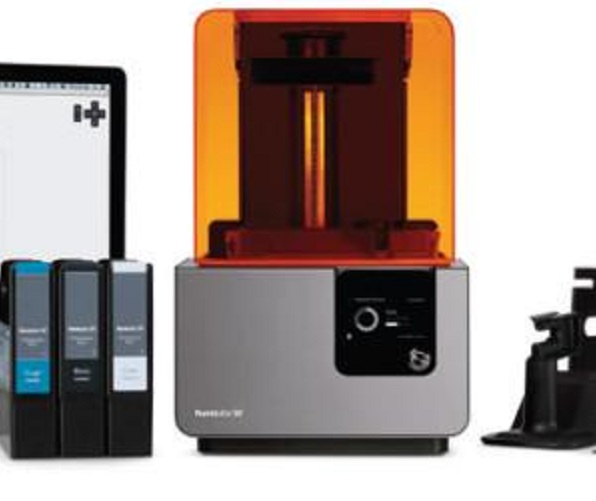
An STL printing service takes your digital 3D model (in STL format) and uses industrial 3D printing technology to create a physical object. The name comes from the STL file format—the industry standard for 3D printing—which stands for Stereolithography but now represents any 3D model saved as a mesh of triangles.
Here's the typical workflow:
| Step | What Happens | Why It Matters |
|---|---|---|
| 1. Upload Your File | You send your STL file through our website or email | The starting point for everything |
| 2. File Review | Our engineers check for errors—holes, inverted normals, wall thickness | Catches problems before they waste time and material |
| 3. Material Selection | You choose from plastics, resins, or metals based on your needs | Determines part properties—strength, flexibility, appearance |
| 4. Quoting | We provide a price based on volume, material, and complexity | No surprises—you know the cost upfront |
| 5. Printing | Your part is built layer by layer (hours to days) | The magic happens here |
| 6. Post-Processing | Supports removed, surfaces finished, parts inspected | Turns raw print into finished product |
| 7. Shipping | Your part is packaged and sent to you | You hold your creation |
Real example: A client needed a prototype bracket for a new product. They uploaded an STL on Monday. We reviewed, found a thin wall that would fail, and suggested a fix. Revised file arrived Tuesday. Printed Wednesday. Shipped Thursday. In their hands Friday. Five days from idea to physical part. Traditional machining? Six weeks.
Why Use a Service Instead of Buying a Printer?
This is the first question most people ask. Here's the honest answer:
| Factor | Using a Service | Buying Your Own Printer |
|---|---|---|
| Upfront Cost | $0 (pay per part) | $500-500,000+ |
| Learning Curve | None—we handle it | Steep—software, materials, maintenance |
| Material Options | Dozens available | Limited to what your machine can handle |
| Quality | Professional, consistent | Varies with your skill |
| Time | Fast for one-off parts | Fast once you're up to speed |
| Best For | Prototypes, production, occasional needs | High-volume, in-house printing |
The bottom line: Unless you're printing constantly, a service makes more sense. You get professional quality without the headaches.
What Materials Can You Print With?
Plastics: The Workhorses
| Material | Key Properties | Best Applications |
|---|---|---|
| PLA | Biodegradable, easy to print, low odor, smooth finish | Educational models, prototypes, decorative items |
| ABS | Strong, impact-resistant, heat-resistant up to 80°C | Functional prototypes, automotive parts, electronics housings |
| PETG | Tough, chemical-resistant, transparent options | Food containers, mechanical parts, clear prototypes |
| Nylon (PA12) | Very strong, wear-resistant, flexible | Gears, hinges, functional end-use parts |
| TPU | Rubber-like flexibility, durable | Seals, gaskets, phone cases, soft-touch products |
PLA is the most common plastic for general use. It prints beautifully, smells like waffles (seriously), and is perfect for concept models. But don't leave it in a hot car—it softens at 60°C.
ABS is the workhorse for functional parts. It's what LEGOs are made of. Tough, heat-resistant, and durable. Requires ventilation during printing, but we handle that.
PETG hits the sweet spot—easier to print than ABS, tougher than PLA, and clear options available. Great for parts that need to survive real use.
Nylon is for when you need strength and durability. Gears, moving parts, anything that will see wear. It's the go-to for functional prototyping.
Resins: For High Detail
| Material | Key Properties | Best Applications |
|---|---|---|
| Standard Resin | High detail, smooth surface, brittle | Miniatures, concept models, display pieces |
| Tough Resin | Stronger, impact-resistant | Functional prototypes, snap-fit assemblies |
| Flexible Resin | Rubber-like properties | Grips, seals, soft-touch components |
| Castable Resin | Burns out cleanly | Jewelry investment casting |
| Dental/Medical Resin | Biocompatible, sterilizable | Surgical guides, dental models |
Resin printing (SLA) delivers the finest details. If your part has small text, intricate patterns, or smooth curves, resin is the answer.
Example: A jeweler needed a master pattern for casting. We printed in castable resin at 0.025mm layers. Every detail of the hand-carved design was preserved. Cast perfectly.
Metals: For Production Parts
| Material | Key Properties | Best Applications |
|---|---|---|
| Stainless Steel | Strong, corrosion-resistant | Tooling, medical devices, marine parts |
| Aluminum | Lightweight, good thermal conductivity | Brackets, heat sinks, lightweight structures |
| Titanium | Highest strength-to-weight, biocompatible | Aerospace, medical implants |
| Inconel | High-temperature strength | Engine components, exhaust systems |
Metal 3D printing is a different world—expensive, specialized, but capable of parts that can't be made any other way.
Case: A medical device company needed a custom surgical tool in titanium. Traditional machining: 8 weeks, $5,000. Printed: 2 weeks, $2,500, and the design included features that improved grip and reduced weight. Patient outcomes improved.
How Do You Ensure Quality?
Pre-Printing: Catching Problems Early
Most printing failures happen because the file has issues. That's why we review every STL before printing:
| Common File Issues | Why It Matters | How We Fix It |
|---|---|---|
| Non-manifold geometry | Printer doesn't know what's inside vs. outside | Automated repair tools, manual cleanup |
| Holes in mesh | Missing surfaces cause print failures | Fill holes, repair mesh |
| Inverted normals | Surfaces facing wrong way | Flip normals in software |
| Wall thickness too thin | Part will break or fail to print | Alert client, suggest redesign |
| Overlapping faces | Confuses slicing software | Merge or remove duplicates |
Our internal data: Over 95% of files that pass our pre-print check result in successful prints. The ones that fail? We catch them before wasting your time and money.
During Printing: Real-Time Monitoring
Industrial printers don't just run unattended. We monitor:
- Temperature—consistent heat prevents warping
- Layer adhesion—each layer must bond properly
- Material flow—no clogs or under-extrusion
- Build progress—compare to expected timeline
Any deviation triggers an alert. Problems get fixed immediately, not after the print finishes.
Post-Printing: Inspection and Finishing
Every part gets inspected:
- Dimensional accuracy—does it match the CAD?
- Surface quality—any defects or roughness?
- Structural integrity—solid, no weak spots?
Our defect detection rate exceeds 98%. If it's not perfect, you don't get it.
Why Choose Our STL Printing Service?
Industry Experience You Can Trust
With over a decade in the 3D printing industry, we've printed everything:
- Aerospace brackets that needed certification
- Medical implants with strict biocompatibility requirements
- Automotive prototypes tested on actual vehicles
- Consumer products sold in stores
- Art pieces displayed in galleries
Example: We partnered with a major automotive brand on a concept car. The brief: print complex interior trim pieces that looked production-ready. The challenge: parts had to survive heat, UV exposure, and repeated handling. We delivered on time, on spec, and the car wowed at the auto show.
A Team That Knows Their Stuff
Our team isn't just machine operators—they're engineers and designers:
Our engineers:
- Master's degrees in mechanical engineering
- 10+ years average experience
- Experts in FDM, SLA, SLS, and metal printing
- They speak your language—tolerances, material properties, design for manufacturing
Our designers:
- Proficient in SolidWorks, AutoCAD, Blender, Rhino
- Can take your napkin sketch and make it print-ready
- Know how to optimize designs for strength, cost, and printability
Our quality team:
- Trained inspectors with precision measurement tools
- They find defects you'd never see
- If it passes them, it's ready for you
What Our Customers Say
Don't just take our word for it:
"Yigu Technology has been an amazing partner for our prototyping needs. Their STL printing service is top-notch. The quality is outstanding, and they always deliver on time." — R&D Manager, Automotive Supplier
"I was really impressed with the level of customization. They took my rough design and made suggestions that improved it significantly. The final product exceeded my expectations." — Independent Product Designer
"We needed 50 identical parts for a product launch. Traditional manufacturing would have taken months and cost a fortune. Yigu printed them in two weeks, and they were perfect. Launch saved." — Startup Founder
What Does an STL Printing Project Cost?
Factors That Affect Price
| Factor | Impact on Cost | Why |
|---|---|---|
| Model Complexity | Higher complexity = higher cost | More detailed features take longer to print |
| Material | Metals > Resins > Plastics | Material cost varies widely |
| Size | Larger = more expensive | More material, longer print time |
| Quantity | Volume discounts apply | Setup costs spread over more parts |
| Post-Processing | Extra finishing adds cost | Sanding, polishing, dyeing, assembly |
Typical ranges:
- Small plastic part (like a bracket): $20-100
- Detailed resin miniature: $50-200
- Medium metal part: $200-1,000
- Large complex assembly: $1,000-5,000+
Getting an Accurate Quote
The best way to know your cost: send us your STL file. We'll analyze:
- Print time estimate
- Material needed
- Post-processing requirements
- Any potential issues
Then we'll give you a firm quote—no surprises, no hidden fees.
So, Should You Use an STL Printing Service?
After thousands of projects, here's my practical advice:
Use a service when:
- You need a prototype quickly
- You want professional quality without buying equipment
- You're not sure which material or technology to use
- You need one or a few parts—not thousands
- Your design is complex and benefits from expert review
Consider other options when:
- You're printing constantly and have the space/skills
- Your parts are simple and you have a printer
- You need high volumes where injection molding wins
- Speed is everything and you have in-house capability
The beauty of a service is flexibility. You pay for what you need, when you need it. No capital investment, no learning curve, no maintenance headaches. Just parts, delivered.
Frequently Asked Questions
What file formats do you accept?
We prefer STL—it's the industry standard. We also accept OBJ (which can include color and texture info), 3MF, and STEP (for engineering applications). If you have another format, just ask—we can probably convert it.
How do I prepare my STL file for printing?
Start with a watertight mesh—no holes, no inverted normals. Ensure wall thickness is at least 0.8-1.0mm for plastics, 0.3-0.5mm for resins (depending on size). Orient the model considering how it will be printed—we can help with this. When in doubt, send it to us and we'll check.
How long does printing take?
It depends on size and complexity. Small parts: hours. Medium parts: 1-2 days. Large complex parts: 3-5 days. We'll give you an estimate when you request a quote. Rush service is available for an additional fee.
Can you print in multiple colors?
For FDM, yes—we can print multi-color parts. For resin, single-color only unless we paint after printing. For metal, color isn't really a thing (though we can plate or coat). Tell us what you need, and we'll advise.
What if my part doesn't meet specifications?
If we make a mistake, we reprint at no cost and expedite the replacement. If the issue is in your design, we'll explain what went wrong and suggest fixes. Our goal is a perfect part, every time.
Do you offer design help?
Absolutely. Our design team can:
- Fix problematic STL files
- Optimize designs for printing
- Add features, text, or details
- Convert sketches to CAD
- Advise on material selection
Just ask.
Contact Yigu Technology for Your STL Printing Needs
Ready to turn your STL file into a physical part? At Yigu technology, we've been providing professional STL printing services for over a decade. From one-off prototypes to production runs, we've got the experience, equipment, and expertise to deliver quality parts on time, every time.
Let's bring your design to life. [Contact us today] for a free quote. Upload your file, tell us about your project, and we'll get back to you with options, timelines, and honest advice. No pressure, no jargon—just engineering sense from people who love making things as much as you do.