Introduction
Manufacturing has always been about transformation—turning raw materials into useful objects. For centuries, that meant one of two approaches: cutting away what wasn't needed (subtractive) or forcing material into molds (formative). Additive manufacturing, commonly known as 3D printing, offers a third path. Instead of removing or shaping, it builds objects layer by layer from digital files. This fundamental shift is transforming how products are designed, prototyped, and produced. From aerospace components that must withstand extreme forces to custom medical implants that match patient anatomy perfectly, additive manufacturing is driving innovation across industries. This article explores what additive manufacturing is, how it compares to traditional methods, its key advantages, and its real-world applications.
What Is Additive Manufacturing?
Definition and Core Principles
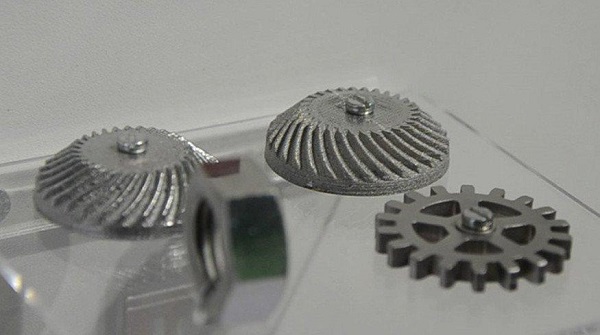
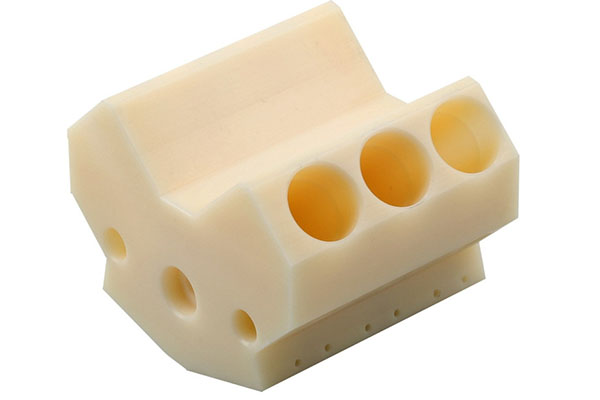
Additive manufacturing (AM) , often called 3D printing, is the process of creating three-dimensional objects by adding material layer by layer based on a digital model. Unlike subtractive manufacturing that cuts away material from a larger block, AM builds up from nothing.
The process follows a consistent workflow:
Step 1: Digital Modeling
A 3D model is created using Computer-Aided Design (CAD) software. Designers have complete freedom to define every detail—internal cavities, complex curves, organic shapes. Models can also be captured from physical objects using 3D scanners.
Step 2: Slicing
Specialized software divides the 3D model into hundreds or thousands of thin horizontal layers. Each layer becomes a set of instructions for the printer—where to deposit material, how fast to move, and at what temperature.
Step 3: Printing
The printer follows these instructions, building the object layer by layer. Different technologies achieve this differently, but all share the same additive principle.
Step 4: Post-Processing
After printing, parts may need cleaning, support removal, curing, or surface finishing before they're ready for use.
Main Types of Additive Manufacturing
| Technology | Working Principle | Materials | Typical Applications |
|---|---|---|---|
| FDM (Fused Deposition Modeling) | Extrudes melted thermoplastic filament | PLA, ABS, PETG, Nylon, Polycarbonate | Prototypes, jigs, fixtures, large parts |
| SLA (Stereolithography) | UV laser cures liquid resin layer by layer | Photopolymer resins | High-detail models, jewelry, dental |
| SLS (Selective Laser Sintering) | Laser sinters powder particles | Nylon, TPU, composites | Functional parts, complex geometries |
| SLM/DMLS (Metal) | Laser melts metal powder | Stainless steel, titanium, aluminum | Aerospace, medical, automotive |
| EBM (Electron Beam Melting) | Electron beam melts metal in vacuum | Titanium, cobalt-chrome | Aerospace, orthopedic implants |
| Binder Jetting | Binder bonds powder, then sintered | Stainless steel, bronze, ceramics | Medium-volume metal parts, full-color models |
| PolyJet | Jetted droplets of resin cured by UV | Photopolymer resins | Multi-material, multi-color parts |
How Does Additive Manufacturing Compare to Traditional Methods?
Subtractive Manufacturing
Subtractive manufacturing removes material from a larger block to achieve the desired shape. Common techniques include:
- Milling: Rotating cutting tools remove material
- Turning: Part rotates while cutting tool removes material
- Drilling: Creates holes
- Grinding: Abrasive surface removes small amounts
Strengths:
- Well-established, predictable processes
- Excellent surface finish achievable
- Wide material range
- Suitable for high volumes
Weaknesses:
- Significant material waste (up to 90% for complex parts)
- Limited geometric complexity
- Tool access constraints
- Long setup times
Additive Manufacturing Advantages
| Aspect | Additive Manufacturing | Subtractive Manufacturing |
|---|---|---|
| Design Flexibility | Almost unlimited—complexity is free | Constrained by tool access |
| Material Waste | <10% | 30–90% typical |
| Tooling Required | None | Fixtures, tools, often molds |
| Lead Time | Days to weeks | Weeks to months |
| Customization | Free—each part can differ | Expensive—new tooling required |
| Geometric Freedom | Internal channels, lattices, organic shapes | Limited by process |
| Part Consolidation | Multiple parts into one | Assembly required |
Key Differences Explained
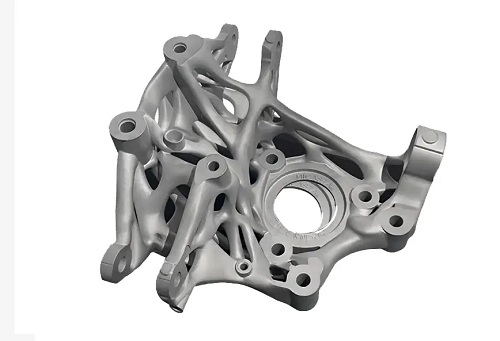
Design Flexibility: Traditional manufacturing imposes rules—draft angles for molds, tool access for machining. Additive manufacturing removes these constraints. Internal cooling channels, lattice structures, and organic shapes become routine.
Material Waste: Machining a titanium bracket from solid might waste 90% of the material. Additive manufacturing uses only what goes into the part—waste under 10%. For expensive materials, this is transformative.
Tooling: Traditional methods often require expensive molds or fixtures—$5,000 to $500,000+ depending on complexity. Additive manufacturing requires none. Design changes cost nothing.
Lead Time: From design to part in days instead of weeks or months. This accelerates development cycles and enables rapid iteration.
Customization: Each part can be different without cost penalty. Patient-specific medical implants. Custom brackets for unique applications. This is impossible with traditional methods.
What Are the Key Advantages of Additive Manufacturing?
Greater Design Flexibility
Designers are no longer constrained by what machines can cut or molds can form. They can create:
- Internal channels for cooling or fluid flow
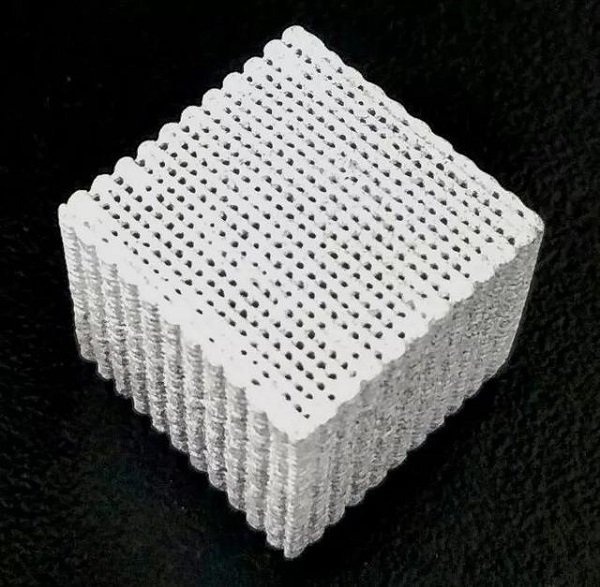
- Lattice structures that reduce weight while maintaining strength
- Organic shapes that distribute stress efficiently
- Consolidated assemblies that replace multiple parts with one
Real-world example: GE Aviation's LEAP engine fuel nozzle previously required 20 parts welded together. Additive manufacturing produces it as one piece. Weight down 25%, durability up 5x.
Material Efficiency
Additive manufacturing uses material only where needed:
- Waste typically <10% versus 30–90% for machining
- Unused powder in powder bed systems recycles
- For expensive materials like titanium, this is enormous savings
Real-world example: A titanium aerospace bracket machined from solid starts as 10 kg and ends as 1 kg—90% waste. Additive manufacturing uses 1.1 kg to produce the same part.
Cost Reduction in Prototyping
Traditional prototyping is slow and expensive. Additive manufacturing changes this:
| Factor | Traditional Prototyping | Additive Prototyping |
|---|---|---|
| Lead time | Weeks to months | Days |
| Cost per iteration | High (tooling changes) | Low (material only) |
| Design changes | Modify tooling—expensive | Modify file—free |
| Complexity cost | High for complex parts | Free |
Real-world example: A product designer needed to test three handle variations. Traditional method: $3,000 and three weeks. Additive: $150 and two days. The designer tested, refined, and finalized in days instead of months.
Rapid Product Development
Speed matters in competitive markets. Additive manufacturing enables:
- Faster iteration: Multiple design cycles in the time one traditional cycle would take
- Early user feedback: Show real parts to customers before committing
- Parallel testing: Print multiple variations simultaneously
- Quicker market entry: Get products to market months sooner
Sustainability
Additive manufacturing offers environmental benefits:
- Reduced waste: Material only where needed
- Local production: Print where parts are needed—less shipping
- Recycled materials: Many printers accept recycled content
- Lightweighting: Lighter parts mean less energy in transport
Where Is Additive Manufacturing Used?
Aerospace Industry
Aerospace demands lightweight, complex, high-performance components. Additive manufacturing delivers.
Applications:
- Engine components: Fuel nozzles, turbine blades, combustion chambers
- Structural brackets: Lightweight titanium parts—30–50% lighter than machined
- Ducting and air management: Complex shapes impossible to mold
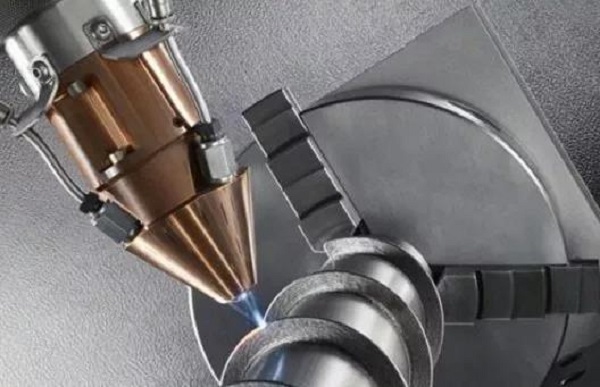
- Repair: DED rebuilds worn turbine blades at fraction of replacement cost
Real-world example: GE Aviation has printed over 100,000 fuel nozzles. Each nozzle replaces 20 parts, reduces weight 25%, and lasts five times longer.
Automotive Sector
Automakers use additive manufacturing throughout development and production.
Applications:
- Prototyping: Test designs before tooling—iterate weekly instead of monthly
- Custom parts: Limited edition components, restoration parts
- Tooling: Printed jigs and fixtures improve assembly efficiency
- Small-batch production: Low-volume parts without tooling investment
Real-world example: Ford uses 3D printing for prototype parts, cutting development time for new components by up to 75%. They've printed over 500,000 parts.
Medical Field
Medicine may be additive manufacturing's most impactful application.
Applications:
- Custom implants: Hip replacements, spinal cages, cranial plates from patient CT scans. Perfect fit, faster recovery.
- Prosthetics: Custom sockets, affordable options. A child outgrowing a prosthetic gets a new one quickly and economically.
- Surgical guides: Patient-specific tools ensure precise implant placement.
- Anatomical models: Surgeons practice on replicas before operating.
Real-world example: A study found patients with 3D-printed hip implants had 30% shorter recovery time compared to standard implants. Better fit means faster healing.
Consumer Goods
Personalization drives value in consumer markets.
Applications:
- Custom products: Jewelry, phone cases, eyewear tailored to individuals
- Rapid iteration: Test designs in real-world conditions before production
- Small-batch production: Limited editions, seasonal items
- Complex aesthetics: Intricate patterns impossible to mold
Real-world example: Nike uses 3D printing to produce shoes with customized fit and performance. Athletes receive footwear tailored to their specific needs.
What Are the Limitations?
Speed
Additive manufacturing is slower than high-volume traditional methods. A complex part might take days. For millions of parts, injection molding remains faster.
Cost at Scale
For high volumes, per-part cost remains higher than traditional methods. The breakeven point depends on part complexity and material.
Material Constraints
Not every engineering material is available in printable form. Properties can vary with print orientation. Certification requires testing.
Size Limitations
Most printers have limited build volumes. Large parts must be printed in sections and assembled. Industrial-scale printers exist but cost millions.
Post-Processing
Parts often need support removal, surface finishing, heat treatment, and inspection. These steps add time and cost.
Quality Assurance
Ensuring consistent quality requires process control. For regulated industries, certification demands rigorous testing and documentation.
What Does the Future Hold?
Technology Advancements
Printers get faster, larger, and more precise each year. Multi-laser systems increase throughput. Better process control improves consistency.
New Materials
More alloys, composites, and high-performance polymers become printable. Material properties approach and sometimes exceed wrought equivalents.
Hybrid Manufacturing
Machines that combine printing and machining in one platform—print near-net shape, then machine critical surfaces—all in one setup.
Mass Customization
Products tailored to individual preferences become economical. Custom medical devices, personalized consumer goods, application-specific components.
Supply Chain Transformation
Digital inventory replaces physical stock. Need a part? Download and print locally. No warehouses, no shipping delays, no obsolescence.
Sustainability
Local production, reduced waste, recycled materials—additive manufacturing aligns with circular economy principles.
How Does Yigu Technology Approach Additive Manufacturing?
As a non-standard plastic and metal products custom supplier, Yigu Technology treats additive manufacturing as one tool in a broader manufacturing toolbox. We match process to application.
Our Experience in Action
Aerospace: A client needed titanium brackets with complex internal geometries. Traditional machining impossible. We printed them via SLM. Weight reduced 30%. Parts passed all qualification testing.
Medical: A surgeon required custom spinal implants from patient CT data. Each implant unique. We printed them in Ti-6Al-4V. Perfect fit. Faster recovery.
Automotive: An engine builder needed prototype components for testing. Traditional fabrication weeks. We printed in aluminum overnight. Testing proceeded immediately.
Our Capabilities
We maintain multiple additive technologies:
- FDM for large parts and engineering materials
- SLA for high-detail models
- SLS for durable nylon components
- Metal printing for production-grade parts
- Material variety across plastics, resins, and metals
Quality Commitment
- Process validation
- Material traceability
- Inspection protocols
- Documentation for certification
Conclusion
Additive manufacturing is transforming how products are designed, prototyped, and produced. Its advantages over traditional methods are clear:
- Greater design flexibility: Complexity costs nothing
- Material efficiency: Waste under 10% versus 30–90%
- Rapid prototyping: Parts in days instead of months
- Customization: Each part can be unique
- Sustainability: Reduced waste, local production
Applications span aerospace, automotive, medical, and consumer goods—anywhere that complexity, customization, or speed matters.
Limitations remain—speed at scale, material constraints, post-processing. But technology advances rapidly. Faster printers, better materials, and lower costs expand application ranges each year.
For manufacturers, the message is clear: additive manufacturing is not experimental. It is a production tool ready for integration. Companies that adopt it strategically gain competitive advantage—faster development, better products, lower costs.
The future of manufacturing is additive. The question is not whether to adopt, but how soon.
Frequently Asked Questions
Q1: What are the main types of additive manufacturing?
Main types include: FDM (extruded thermoplastic), SLA (cured resin), SLS (sintered powder), SLM/DMLS (melted metal powder), EBM (electron beam melting), Binder Jetting, and PolyJet. Each uses different materials and processes but shares the layer-by-layer principle.
Q2: How does 3D printing reduce waste in manufacturing?
Additive manufacturing deposits material only where needed, unlike subtractive methods that cut away excess. Waste is typically <10% versus 30–90% for machining. Unused powder in powder bed systems recycles.
Q3: Can 3D printing be used for mass production?
For appropriate applications—complex geometries, customization, low volumes—yes. For extremely high volumes of simple parts, traditional methods remain more economical. As technology advances, the breakeven point shifts.
Q4: What industries benefit most from additive manufacturing?
Aerospace (lightweight, complex components), medical (custom implants, surgical guides), automotive (prototyping, custom parts), and consumer goods (personalized products) all gain significant advantages.
Q5: How accurate is additive manufacturing?
Accuracy depends on technology. FDM: ±0.1–0.5 mm. SLA: ±0.05–0.1 mm. SLS: ±0.1 mm. Metal printing: ±0.02–0.1 mm. High-end systems achieve even tighter tolerances.
Q6: What materials can be used in additive manufacturing?
Range includes plastics (PLA, ABS, nylon, polycarbonate), resins (standard, tough, flexible, castable), metals (stainless steel, titanium, aluminum, Inconel), ceramics, and composites. Material options expand continuously.
Q7: Is additive manufacturing environmentally friendly?
Yes. Benefits include reduced waste, local production (less shipping), recycled materials, and lightweighting (less energy in transport). Additive aligns with sustainability goals.
Contact Yigu Technology for Custom Manufacturing
Ready to explore additive manufacturing for your next project? At Yigu Technology, we combine AM expertise with broader manufacturing capabilities. Our team helps you select the right technology and materials, optimize designs for printability, and deliver quality parts on schedule.
Visit our website to see our capabilities. Contact us today for a free consultation and quote. Let's build the future together.