Introduction
Stereolithography—usually called SLA—is the original 3D printing technology. Invented in the 1980s, it's still one of the most precise and versatile methods available.
Unlike FDM printers that melt plastic filament, SLA uses a UV laser to cure liquid resin into solid objects. The results are stunning: smooth surfaces, fine details, and accuracy that other technologies struggle to match.
From jewelry designers creating intricate patterns to surgeons planning complex procedures with patient-specific models, SLA serves industries that demand precision.
At Yigu technology, we've used SLA for countless projects. This guide explains how it works, what it's good for, and when to choose it over other methods.
What Is Stereolithography 3D Printing?
The Basic Idea: Curing Liquid with Light
Stereolithography builds parts from liquid photopolymer resin. A UV laser selectively cures the resin, turning it from liquid to solid. Each layer is cured on top of the previous one until the object is complete.
Think of it like growing a shape from a pool of liquid, using light as the catalyst.
The name tells the story:
- Stereo: Three-dimensional
- Litho: Stone (referring to solid material)
- Graphy: Writing/drawing
Light "drawing" solid forms in liquid.
How It's Different
| Technology | Material | Process | Best For |
|---|---|---|---|
| SLA | Liquid resin | UV laser cures resin | High detail, smooth surfaces |
| FDM | Solid filament | Melts and extrudes | Large parts, functional prototypes |
| SLS | Powder | Laser sinters powder | Strong, complex parts |
SLA excels where detail and surface finish matter most.
How Does Stereolithography 3D Printing Work?
The Principle: Photopolymerization
At the core of SLA is photopolymerization—a chemical reaction where light triggers liquid resin to turn solid.
The resin contains photoinitiators. When UV light hits them, they start a chain reaction. Resin molecules link together, forming long polymer chains. The liquid becomes solid, precisely where the light hit.
This happens almost instantly. Cure a layer, lower the platform, cure the next layer, and repeat.
Step-by-Step Working Steps
1. Three-Dimensional Modeling
Everything starts with a 3D model created in CAD software. Designers specify every dimension, curve, and feature.
For a custom prosthetic, the model captures exact contours from a patient scan. For a jewelry piece, it includes every filigree detail. For a prototype, it matches the intended final design exactly.
2. Slice Processing
The model is sliced into thin horizontal layers—typically 0.05 mm to 0.2 mm thick. Thinner layers = smoother surfaces = longer print times.
The slicing software generates a toolpath for the UV laser, telling it exactly where to cure each layer.
3. Printing
The printer has a build platform positioned just below the surface of liquid resin.
- The UV laser cures the first layer according to the toolpath
- The platform lowers by one layer thickness
- Fresh resin flows over the cured layer
- The laser cures the next layer, bonding it to the previous one
- Repeat until complete
4. Post-Processing
After printing, the part needs finishing:
Washing: The part is rinsed in solvent (usually isopropyl alcohol) to remove excess uncured resin. This is critical for internal cavities and fine details.
Support removal: Supports are carefully cut away. In SLA, supports are necessary for overhangs but leave small marks where they attach.
Secondary curing: The part goes into a UV curing chamber. This ensures all resin is fully cured, improving strength and durability.
Finishing: Sanding, polishing, or painting for desired appearance.
What Are the Key Advantages of SLA?
Exceptional Detail and Surface Finish
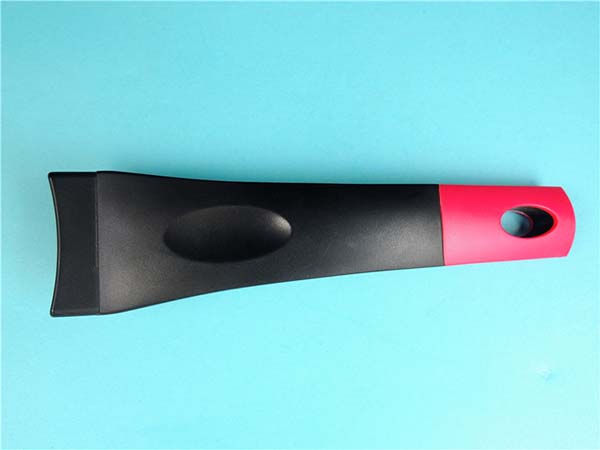
SLA produces the smoothest surfaces of any 3D printing technology. Layer lines are barely visible. Fine details—down to 0.1 mm—print cleanly.
For applications where appearance matters, SLA is unmatched.
High Accuracy
Dimensional accuracy is excellent—typically ±0.1-0.2% with a lower limit around ±0.05 mm. Parts fit together as designed.
Wide Range of Materials
SLA resins come in many formulations:
- Standard resins: Good general-purpose properties
- Tough resins: Engineering-grade strength
- Flexible resins: Rubber-like elasticity
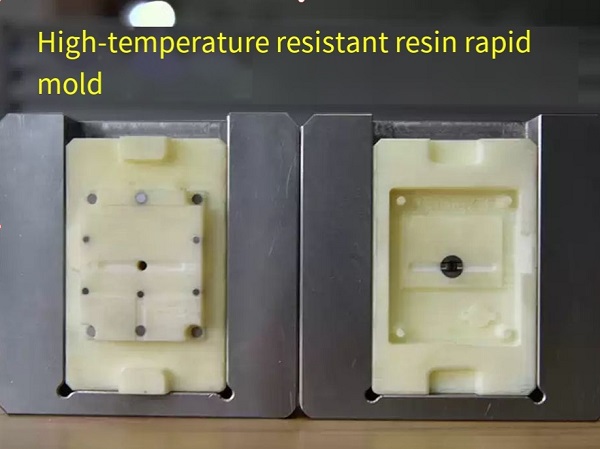
- High-temperature resins: Withstand heat up to 200°C+
- Castable resins: Burn out cleanly for investment casting
- Dental resins: Biocompatible for medical use
- Clear resins: Transparent for optical applications
Smooth Surfaces Reduce Post-Processing
Parts come out of the printer with surfaces ready for many applications. Less sanding, less finishing, less time.
Intricate Details
Fine features, small text, detailed textures—SLA captures them all. For jewelry, miniatures, and medical models, this matters.
What Are the Limitations?
Brittleness
Standard SLA resins are more brittle than FDM materials like ABS or nylon. Parts can snap under stress. For functional parts requiring toughness, engineering resins or other technologies may be better.
UV Sensitivity
Parts will continue to cure if exposed to UV light (like sunlight). Over time, they may yellow or become more brittle. Coatings can protect them.
Support Structures
Unlike SLS, SLA needs supports for overhangs. These leave small marks where they attach. Removal requires care to avoid damaging the part.
Messy Post-Processing
Handling liquid resin requires gloves and care. Washing in alcohol creates waste. Uncured resin must be disposed of properly. It's not as clean as FDM.
Size Limitations
SLA printers have smaller build volumes than FDM systems. Large parts may need to be printed in sections and assembled.
Material Cost
Resin costs more than filament—$50-150 per liter vs. $20-50 per kilogram for PLA. For large parts, this adds up.
What Are the Applications of SLA 3D Printing?
Medical Field
SLA has transformed medical practice:
Anatomical models: From CT or MRI scans, surgeons can print exact replicas of patient anatomy. They study the model, plan the surgery, and practice before ever touching the patient. Studies show this reduces surgery time by 20-30% for complex procedures.
Surgical guides: Custom guides position cuts exactly where planned. Better outcomes, faster procedures.
Custom prosthetics: Each patient's residual limb is unique. SLA prints sockets that fit perfectly, improving comfort and function.
Dental applications: Crowns, bridges, aligners, and surgical guides—all printed with precision from digital impressions.
Manufacturing Industry
Rapid prototyping: New designs go from CAD to physical part in hours, not weeks. Iterate quickly, test frequently, launch faster. One study found SLA cut prototyping time from weeks to days and reduced costs by 70% for small runs.
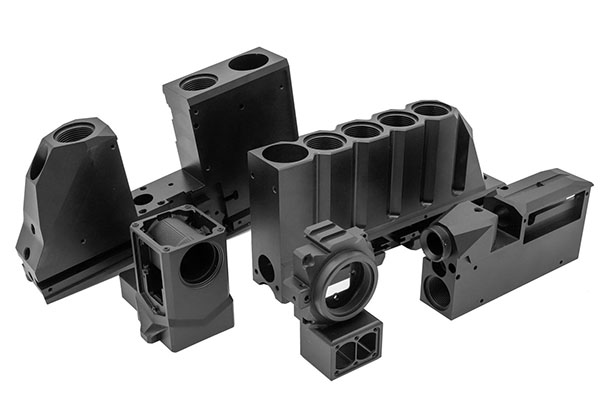
Small-batch production: For quantities where tooling costs can't be justified, SLA produces high-quality parts. Jewelry, custom components, limited editions.
Patterns for casting: Castable resins burn out cleanly, leaving perfect molds for investment casting.
Art and Design
SLA gives artists and designers freedom to create:
Jewelry: Intricate designs with fine details that would be impossible to carve by hand. Print the master pattern, cast in precious metals.
Product design: Test form, fit, and aesthetics before committing to production. Organic shapes, complex curves—if you can model it, you can print it.
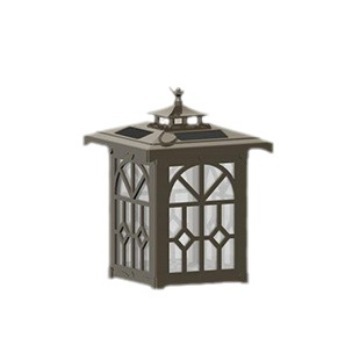
Interior design: Custom light fixtures, decorative elements, one-of-a-kind pieces. The high surface quality means minimal finishing.
Consumer Goods
Custom eyewear: Frames tailored to individual face shapes.
Figurines and miniatures: Incredible detail for collectors and gamers.
Custom accessories: Phone cases, watch bands, and more, personalized for each customer.
How Does SLA Compare to Other Technologies?
| Factor | SLA | FDM | SLS |
|---|---|---|---|
| Surface finish | Excellent, smooth | Layer lines visible | Slightly grainy |
| Detail resolution | Excellent (0.05-0.1 mm) | Moderate (0.2-0.3 mm) | Very good (0.1-0.2 mm) |
| Strength | Moderate, can be brittle | Good | Excellent |
| Material options | Wide range of resins | Very wide (filaments) | Nylons, composites |
| Supports needed | Yes | Yes | No |
| Post-processing | Washing, curing, support removal | Support removal | Powder removal |
| Cost per part | Medium-high | Low | Medium-high |
| Best for | Detail, aesthetics | Size, cost | Strength, complexity |
Choose SLA when:
- Surface finish matters most
- You need fine details
- Parts are small to medium
- Aesthetics are critical
Choose FDM when:
- Parts are large
- Cost is the main concern
- Strength requirements are moderate
- You need wide material choice
Choose SLS when:
- Parts need to be strong and functional
- Geometries are complex (no supports)
- You're making multiple parts
- Slight surface texture is acceptable
What Post-Processing Do SLA Parts Need?
Washing
Parts come out of the printer coated in uncured resin. They must be washed in isopropyl alcohol or another solvent. This removes the liquid resin and reveals the true surface.
For parts with internal channels, this step is critical. Uncured resin trapped inside will never cure properly.
Support Removal
Supports are cut away using pliers, cutters, or knives. This leaves small marks where they attached. These can be sanded smooth.
Secondary Curing
After washing, parts go into a UV curing chamber. This ensures all resin is fully cured, improving:
- Strength
- Stiffness
- Temperature resistance
- Long-term stability
Sanding and Polishing
For the smoothest finish, sand with progressively finer grits. Start with 400 grit, work up to 1000+ grit. Polishing compounds can achieve a glossy, injection-molded look.
Painting
SLA parts take paint well. Prime first, then paint with acrylics or spray paints. Clear coat protects the finish.
Yigu Technology's Perspective
At Yigu technology, SLA is one of our most valuable tools for projects requiring precision and surface quality.
Where we use SLA:
- Medical models: Patient-specific anatomy from CT scans
- Dental applications: Crowns, bridges, surgical guides
- Jewelry patterns: Castable resins for investment casting
- High-detail prototypes: When appearance matters as much as function
- Small-batch production: For parts where quality justifies cost
What we've learned:
Material selection drives success. Standard resins for general use. Tough resins for functional parts. Castable resins for jewelry. Choose based on your application.
Design for the process. Orient parts to minimize supports. Add drainage holes for trapped resin. Consider post-processing from the start.
Post-processing is part of the process. Plan for washing, curing, support removal, and finishing. These steps take time and skill.
Quality requires control. Resin age, printer calibration, and environmental factors all affect results. We maintain strict standards.
SLA isn't the answer for everything. But for parts that need to look perfect and capture every detail, it's unmatched.
Conclusion
Stereolithography 3D printing delivers:
- Exceptional detail: Layer heights down to 0.05 mm
- Smooth surfaces: Almost invisible layer lines
- High accuracy: ±0.1-0.2% typical
- Wide material range: Standard, tough, flexible, castable, dental
- Applications across industries: Medical, manufacturing, art, consumer goods
The process is straightforward:
- Create a 3D model in CAD
- Slice into thin layers
- Print with UV laser curing resin
- Wash, remove supports, post-cure
- Finish as needed
Compared to other methods, SLA wins for detail and surface quality. FDM wins for size and cost. SLS wins for strength and complexity.
For anyone designing parts where appearance and precision matter, SLA deserves a place in your toolkit.
FAQ
What types of materials are commonly used in stereolithography 3D printing?
The primary materials are photocurable resins. Common types include:
- Standard resins: Good general-purpose properties
- Tough resins: Engineering-grade strength for functional parts
- Flexible resins: Rubber-like elasticity
- High-temperature resins: Withstand heat up to 200°C+
- Castable resins: Burn out cleanly for investment casting
- Dental resins: Biocompatible for medical use
- Clear resins: Transparent for optical applications
Choose based on your application requirements.
How accurate is the stereolithography 3D printing process?
SLA achieves excellent accuracy—typically ±0.1-0.2% with a lower limit around ±0.05 mm. Factors affecting accuracy include:
- 3D model quality: Errors in design transfer to the print
- Printer calibration: Well-calibrated printers produce better results
- Resin properties: Shrinkage during curing affects dimensions
- Layer thickness: Thinner layers improve accuracy
For critical dimensions, test prints verify actual tolerances.
Can stereolithography 3D printing be used for large-scale production?
Generally, no. SLA is better suited for:
- Prototyping: Quick iteration, design validation
- Small-batch production: Custom parts, limited editions
- Highly detailed components: Where quality justifies cost
Limitations include:
- Cost: Equipment and materials are expensive
- Speed: Slower than mass-production methods
- Size: Limited build volume
- Material options: Narrower than traditional manufacturing
For high volumes of simple parts, injection molding remains more economical. For complex, customized, or detailed parts, SLA excels.
How strong are SLA printed parts?
Strength varies by resin. Standard resins produce parts that are strong but somewhat brittle—they can snap under stress. Tough resins approach engineering plastic properties. For applications requiring high strength and impact resistance, consider SLS nylon or FDM with engineering materials. SLA is best where detail and surface finish matter most.
Do SLA parts need post-processing?
Yes. Essential post-processing includes:
- Washing in solvent to remove uncured resin
- Support removal (carefully, to avoid damage)
- Secondary UV curing to fully cure the part
Optional post-processing may include:
- Sanding to improve surface finish
- Polishing for glossy appearance
- Painting for color and protection
How long does SLA printing take?
Print time depends on:
- Part size and height: Taller parts take longer
- Layer thickness: Thinner layers = more layers = longer time
- Laser speed: Faster lasers reduce time
- Part geometry: Complex shapes may need slower scanning
A small, detailed part might take 2-4 hours. A larger, complex model could run 10-20 hours or more. Post-processing adds additional time.
Contact Yigu Technology for Custom Manufacturing
Ready to use stereolithography 3D printing for your project? Yigu technology specializes in custom manufacturing with all major 3D printing technologies.
We offer:
- Free quotes within 24 hours—just send your CAD file
- Design for SLA—optimizing your parts for success
- Wide material selection—standard, tough, castable, dental resins
- Printing—on industrial equipment with proven parameters
- Post-processing—washing, curing, finishing to your specifications
- Production runs—from prototypes to small batches
Contact us to discuss your project. Tell us what you're making and what it needs to do. We'll help bring your design to life.