Introduction
3D printing for car models has transformed from a niche prototyping tool into a core manufacturing technology across the automotive industry. Today's engineers and designers use additive manufacturing to create everything from concept models to functional end-use parts. The technology delivers rapid prototyping capabilities, significant cost savings, and unprecedented design freedom that traditional methods simply cannot match.
This comprehensive guide explores how 3D printing in automotive applications works, from its historical development to current applications and future potential. Whether you're an automotive professional or simply curious about how modern cars are created, you'll discover how this technology is reshaping vehicle development and production.
What Makes 3D Printing Ideal for Automotive Applications?
Additive manufacturing builds objects layer by layer from digital files, completely different from traditional subtractive manufacturing that cuts away material from solid blocks. This fundamental difference unlocks unique advantages for car makers.
Key 3D Printing Technologies Used in Automotive
| Technology | Method | Best For | Automotive Examples |
|---|---|---|---|
| FDM (Fused Deposition Modeling) | Extrudes thermoplastic filament | Prototyping, jigs, fixtures | Assembly tools, concept models |
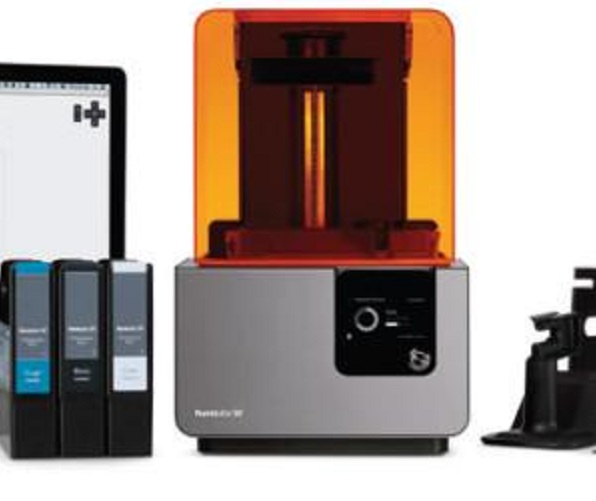
| SLA (Stereolithography) | UV laser cures liquid resin | High-detail parts | Interior trim prototypes, display models |
| SLS (Selective Laser Sintering) | Laser fuses powder material | Durable functional parts | Ductwork, brackets, housings |
| Metal 3D Printing | Laser or electron beam melts metal powder | End-use metal components | Engine brackets, heat exchangers |
| Multi-Jet Fusion | Fusing agent and infrared energy | Production-ready polymer parts | Interior components, custom parts |
Each technology serves specific needs within the automotive development and production ecosystem. The choice depends on factors like required strength, surface finish, production volume, and material properties.
How Did 3D Printing Enter the Automotive World?
The relationship between 3D printing and cars began in the late 1980s, when early adopters recognized its potential for speeding up prototype development.
From Rapid Prototyping to Production Reality
1980s-1990s: The Prototyping Era
Automakers first used 3D printing exclusively for creating concept models and fit-check prototypes. These early parts helped designers visualize ideas and engineers verify assemblies before committing to expensive tooling. A single prototype that once took weeks and thousands of dollars could now be produced overnight.
2000s: Functional Testing
As materials improved, 3D-printed parts began appearing in functional tests. Wind tunnel models, intake manifolds, and mounting brackets proved that additive parts could survive real-world conditions.
2014: The Breakthrough Moment
Local Motors introduced the Strati, the world's first 3D-printed car. This full-scale electric vehicle featured a body entirely printed in just 44 hours. While not production-ready, the Strati proved that printing entire vehicles was technically feasible.
Industry data: By 2020, over 70% of major automakers had integrated 3D printing into their development processes, with some maintaining dozens of industrial printers running 24/7.
What Benefits Does 3D Printing Deliver for Car Models?
How Much Can 3D Printing Reduce Costs?
Cost efficiency drives much of the automotive industry's adoption of 3D printing. Traditional manufacturing requires expensive molds, dies, and tooling that can cost $50,000 to $500,000 for a single component. These costs only make sense for high-volume production.
Direct cost savings come from:
- Eliminating tooling: Parts print directly from digital files
- Reducing material waste: Additive processes use only what's needed
- Consolidating assemblies: Multiple parts combine into single prints
- Lowering inventory costs: Print on demand instead of stockpiling
Real-world example: Ford Motor Company reported saving $2 million on tooling costs for their F-150 truck by using 3D-printed production aids. A single intake manifold prototype that would have cost $20,000 with traditional methods cost just $400 to print.
How Fast Can 3D Printing Accelerate Development?
Time reduction in prototyping represents another massive advantage. Traditional prototype creation involved waiting weeks for machined parts or injection-molded samples. Design changes meant starting over.
3D printing compresses timelines dramatically:
| Traditional Process | Time | 3D Printing Process | Time |
|---|---|---|---|
| Design → Tooling → Sample | 6-8 weeks | Design → Print | 1-3 days |
| Modify → New tooling | 4-6 weeks | Modify → Re-print | 1-2 days |
| Multiple iterations | 4-6 months | Multiple iterations | 1-2 weeks |
This acceleration allows automakers to explore more design options, test more variations, and bring vehicles to market faster.
How Does Material Efficiency Improve Sustainability?
Material efficiency matters increasingly as automakers pursue sustainability goals. Traditional machining can waste 80-90% of the original material block. 3D printing typically achieves 95-98% material utilization.
Weight reduction compounds these benefits. Lighter vehicles consume less fuel and produce fewer emissions. 3D printing enables topology optimization—designs that place material only where structurally needed, often reducing component weight by 40-60% while maintaining strength.
Where Is 3D Printing Used in Car Manufacturing Today?
How Are Prototypes Created with 3D Printing?
Prototyping complex components remains the most widespread application. Modern vehicles contain thousands of parts that must fit perfectly and function reliably. 3D printing allows engineers to:
- Verify fit before tooling commitment
- Test ergonomics of interior controls
- Evaluate airflow through ducts and intakes
- Assess assembly sequence and access
Case study: BMW's prototype department prints over 100,000 parts annually across their facilities. A single prototype run that once required 8 weeks and €50,000 now takes 3 days and €500. This speed allows them to test 10 times more design variations than previously possible.
Can 3D Printing Create Custom Car Parts?
Customization of car models represents one of 3D printing's most exciting capabilities. Traditional manufacturing economics discourage personalization—tooling costs remain the same whether producing one part or one million.
3D printing enables personalization at no additional cost per unit:
- Personalized interiors: Dashboard trim with owner's name
- Custom ergonomics: Pedals positioned for individual drivers
- Heritage parts: Replacement components for classic cars
- Performance upgrades: Custom intake systems and brackets
Real-world example: Porsche offers 3D-printed bucket seats with three firmness zones—customers select their preferred comfort level, and the seat prints with varying densities in different areas. The technology adds just 10% to seat cost while delivering personalized comfort impossible with traditional methods.
Are 3D-Printed Parts Used in Production Vehicles?
Production of end-use parts has grown significantly as materials and processes mature. While high-volume components still use traditional methods, 3D printing excels for:
Low-volume production (under 10,000 units):
- Specialty and luxury vehicles
- Racing components
- Replacement parts for older models
Complex geometries impossible to cast or machine:
- Conformal cooling channels
- Lattice structures for weight reduction
- Optimized organic shapes
Parts requiring multiple materials:
- Overmolded combinations
- Varying densities in single components
Industry data: A 2023 survey found that 65% of automotive manufacturers now use 3D printing for production parts, not just prototypes. Common applications include brackets, housings, ductwork, and interior trim components.
What Challenges Limit 3D Printing in Automotive?
Do 3D-Printed Parts Match Traditional Strength?
Material strength and durability concerns persist despite significant advances. While printed parts continue improving, they sometimes fall short of forged or cast equivalents for critical applications.
Current material capabilities:
| Material Type | Tensile Strength | Applications |
|---|---|---|
| Standard polymers | 30-50 MPa | Interior trim, covers |
| Reinforced polymers | 60-100 MPa | Brackets, housings |
| Aluminum alloys | 300-400 MPa | Structural components |
| Titanium alloys | 800-1200 MPa | High-performance parts |
| Tool steels | 1000-2000 MPa | Tooling, inserts |
For many automotive applications, current materials work perfectly. However, components subjected to extreme loads, high temperatures, or millions of fatigue cycles still require traditional manufacturing methods.
Can 3D Printing Scale to Mass Production?
Scalability of 3D printing processes presents economic challenges for high volumes. A single injection molding machine can produce thousands of parts daily. Matching that output would require dozens of 3D printers and significant floor space.
Current economics favor hybrid approaches:
- 3D printing for prototypes, tooling, and low-volume parts
- Traditional methods for mass production
- Combined workflows leveraging both strengths
Real-world example: Volkswagen uses 3D printing for production tools and fixtures in their main plants, while continuing traditional high-volume manufacturing for most components. This hybrid model captures benefits from both technologies.
How Do Safety Standards Apply to Printed Parts?
Regulatory and safety standards require rigorous validation for any vehicle component. 3D-printed parts face the same testing requirements as traditionally manufactured ones:
- Crash testing for structural components
- Flammability testing for interior parts
- Durability testing for under-hood applications
- Chemical resistance for fluid-contact components
The industry continues developing standardized testing protocols specifically for additive manufacturing, recognizing that layer-by-layer construction creates different material characteristics than casting or forging.
What Does the Future Hold for 3D Printing in Automotive?
Larger Print Volumes and Faster Production
Industrial 3D printers now achieve build volumes large enough for complete body panels and interior assemblies. Print speeds continue increasing as manufacturers develop multi-laser systems and continuous printing processes.
Multi-Material and Multi-Color Printing
Advanced systems now print multiple materials in single jobs, enabling:
- Rigid structures with flexible seals
- Colored graphics without painting
- Conductive traces for embedded electronics
On-Demand and Distributed Manufacturing
The ultimate vision: digital inventories replacing physical warehouses. Automakers would store part files, not parts. Dealerships or local service centers would print replacement components on demand, eliminating shipping costs and inventory overhead.
Industry projection: By 2030, analysts predict 25% of automotive replacement parts will be produced through additive manufacturing, representing a $10 billion market annually.
Conclusion: 3D Printing's Growing Role in Automotive Innovation
3D printing creation of car models has evolved from experimental prototyping to essential manufacturing technology. Today's automotive engineers leverage additive processes across the entire vehicle lifecycle—from initial concept models through production parts to service components.
The benefits are clear and measurable:
- Cost reductions of 50-90% for prototypes and low-volume parts
- Time savings compressing months into days
- Design freedom enabling previously impossible geometries
- Customization capabilities meeting individual customer preferences
- Sustainability gains through material efficiency and weight reduction
Challenges remain, particularly in material properties for extreme applications and economic scalability for mass production. However, ongoing advances in materials science, printer technology, and process control continue expanding the possibilities.
For automotive professionals and enthusiasts alike, understanding how 3D printing creates car models provides insight into an industry undergoing fundamental transformation. The cars of tomorrow will be designed, prototyped, and in many cases produced using technologies that barely existed a decade ago.
Frequently Asked Questions
What are the primary benefits of 3D printing in car model creation?
The main benefits include cost efficiency (eliminating expensive tooling), reduced prototyping time (days instead of weeks), material efficiency (minimal waste), and enhanced customization options (unique parts at no extra cost). These advantages allow faster development cycles and more design iterations.
How does 3D printing impact the development cycle of car models?
3D printing accelerates every phase of development. Designers can print concept models overnight. Engineers can test functional prototypes within days. Multiple design iterations happen in weeks instead of months. This speed helps manufacturers respond to market demands and bring vehicles to market faster.
Are there any limitations to using 3D printing for car model creation?
Yes, limitations exist. Material strength for extreme applications, scalability for high-volume production, and regulatory compliance remain challenges. Some 3D-printed parts still don't match the mechanical properties of traditionally manufactured components, particularly for parts subjected to heavy loads or extreme temperatures.
Can 3D printing produce entire cars?
Technically yes, as demonstrated by Local Motors' Strati in 2014. However, practical considerations make full-vehicle printing rare. Current approaches focus on printing individual components and assemblies, then assembling with traditionally manufactured parts (chassis, powertrain, electronics) for complete vehicles.
What types of 3D printing work best for automotive applications?
The best technology depends on the application. FDM works well for large prototypes and tooling. SLA produces detailed interior components. SLS creates durable functional parts. Metal printing handles structural components. Many automotive facilities maintain multiple printer types to cover the full range of needs.
How much money can 3D printing save in automotive manufacturing?
Savings vary by application but can be dramatic. Ford reported $2 million saved on F-150 tooling alone. BMW cut prototype costs from €50,000 to €500 per part. For low-volume production, eliminating tooling can save hundreds of thousands of dollars per component.
Is 3D printing environmentally friendly for car manufacturing?
Generally yes. 3D printing reduces material waste by 80-95% compared to machining. Lighter printed parts improve vehicle fuel efficiency. On-demand production reduces inventory waste. However, energy consumption during printing and specialized material production must be considered in full lifecycle analysis.
Contact Yigu Technology for Custom Manufacturing
3D printing for car models requires expertise across technologies, materials, and applications. At Yigu Technology, we combine deep engineering knowledge with hands-on manufacturing experience to help automotive professionals achieve their design and production goals.
Our automotive manufacturing capabilities include:
- Rapid prototyping for design validation and fit testing
- Functional prototyping for performance evaluation
- Low-volume production of end-use components
- Custom parts for specialty and classic vehicles
- Tooling and fixture production for assembly lines
- Material selection guidance for specific applications
Whether you're developing a concept vehicle, need replacement parts for a classic car restoration, or require production components for a low-volume specialty model, our team delivers quality results.
Contact us today to discuss your automotive 3D printing project. Let our expertise help you create better vehicles faster and more efficiently than ever before.