Introduction
Every product development journey faces obstacles. Designs that look perfect on screen fail in users’ hands. Teams miscommunicate, leading to wasted effort. Technical constraints force compromises that weaken the final product. These problems are not inevitable—they can be solved. Product design and prototyping are not just about creating a product; they are about creating a product that meets user needs, is technically feasible, and can be produced efficiently. By understanding common problems and implementing proven solutions, companies can increase their chances of success. At Yigu Technology, we help clients navigate these challenges daily. This article covers the most common problems in product design and prototyping—and how to solve them.
What Are the Common Problems in Product Design?
Inadequate User Research
The problem: Without deep understanding of target users’ needs, preferences, pain points, and behaviors, products become misaligned with market demand.
Impact: According to McKinsey, about 80% of new products fail in the market—and a significant portion of these failures stem from lack of understanding of user needs.
Example: A company designs a fitness tracker with advanced features (sleep stage analysis, blood oxygen monitoring) but discovers that most target users only want basic functions—step counting, calorie tracking, simple heart rate monitoring. Low adoption follows.
Poor Communication Within the Team
The problem: When designers, engineers, and other stakeholders have different interpretations of project requirements, inconsistent design directions emerge.
Impact:
- UI/UX designers envision minimalist interfaces; back-end developers implement complex processes that conflict
- Marketing insights are not communicated promptly, delaying incorporation of market-driven features
- Delays, rework, disjointed user experience
Example: In a software product design project, the UI team designs an intuitive interface, but developers—unaware of the full design concept—implement a complex data-retrieval process that undermines user experience.
Technical Constraints
The problem: Available technology may not support desired product features, forcing design compromises.
Impact: Products become less innovative and competitive.
Example: A company wants to create a foldable smartphone with a seamless folding mechanism and high-resolution display. Current display and hinge technologies have limitations—displays develop creases; hinges fail over time. Designers must compromise on their original concept.
What Are the Solutions?
Thorough User Research Methods
Solution: Adopt comprehensive research methods before design begins.
| Method | Description | Example |
|---|---|---|
| Questionnaire surveys | Structured surveys with multiple-choice and open-ended questions | E-commerce app: “What product categories do you frequently purchase?” “What features are missing from current apps?” |
| Interviews | One-on-one conversations to understand motivations and behaviors | Fitness app: Interviews reveal users want simple tracking, not complex analytics |
| Usability testing | Observing users interact with prototypes | Watch users struggle with button placement—redesign before production |
| Competitor analysis | Study existing products to identify gaps | Identify features competitors lack—differentiate your product |
Distribution channels: Email, social media, website, in-app feedback to reach diverse, representative samples.
Establishing Effective Communication Channels
Solution: Create structured communication systems that keep all team members aligned.
| Practice | Description |
|---|---|
| Regular team meetings | Weekly syncs where designers, developers, testers report progress, share challenges, discuss solutions |
| Shared documentation | Centralized repositories for requirements, designs, decisions |
| Design review sessions | Cross-functional review of designs before development |
| Prototype demonstrations | Physical or interactive prototypes shown to all stakeholders |
Example: In a software product design project, weekly meetings ensure everyone is on the same page. Designers explain interface concepts; developers raise technical constraints early; testers identify usability issues before code is written.
Overcoming Technical Constraints
Solution: Collaborate with technical experts and explore alternatives before compromising design.
| Strategy | Description | Example |
|---|---|---|
| Partner with experts | Collaborate with research institutions or hire specialists | EV battery charging limitations: partner with electrochemistry researchers for new materials or methods |
| Explore alternative technologies | Investigate different materials, processes, or approaches | Flexible display issues: explore alternative hinge mechanisms or materials |
| Iterative prototyping | Build and test small-scale versions to validate technical approaches | Prototype hinge mechanisms incrementally—test each iteration for durability |
| Design for manufacturability (DFM) | Involve manufacturing experts early to align design with production capabilities | Early DFM feedback prevents designs that are impossible or too costly to produce |
How Do You Solve Prototyping Problems?
Prototype Fails Functional Testing
Problem: The prototype does not perform as designed.
Solution:
- Test early with low-fidelity prototypes before investing in high-fidelity
- Document test results systematically—track failures and fixes
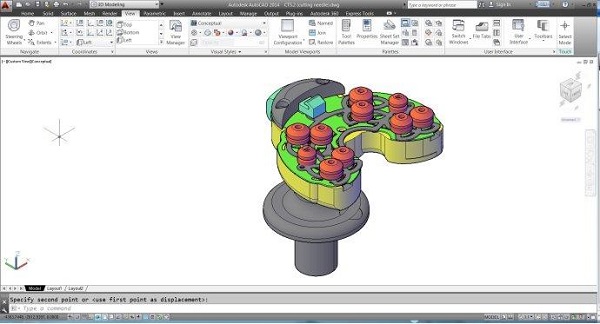
- Use simulation software (ANSYS, FEA) to predict performance before physical testing
Prototype Does Not Match Design
Problem: The physical prototype deviates from CAD specifications.
Solution:
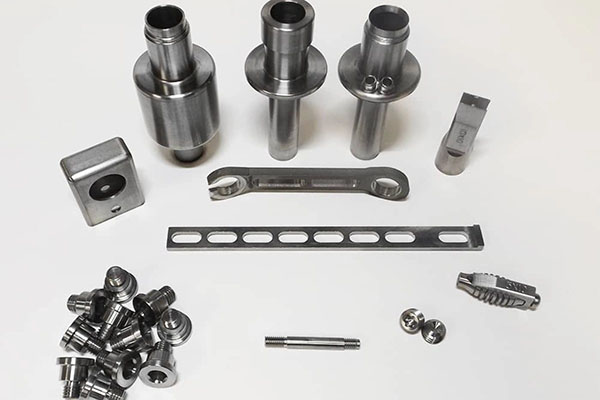
- Choose manufacturing methods that match required tolerances (CNC for precision, 3D printing for complexity)
- Use inspection tools (CMM, optical measurement) to verify dimensions
- Work with experienced manufacturers who provide quality reports
Iteration Takes Too Long
Problem: Each prototype cycle takes weeks, delaying development.
Solution:
- Use rapid prototyping methods (3D printing) for early iterations
- Combine simulation and physical testing—validate digitally before fabricating
- Parallelize work—test one iteration while designing the next
How Do You Reduce Prototyping Time?
| Strategy | Impact |
|---|---|
| Use simulation software | Identify flaws virtually before physical prototyping—saves weeks |
| Choose appropriate technology | FDM for quick concepts; SLA for detail; CNC for final validation |
| Plan for iteration | Budget for multiple cycles; don’t aim for perfection on first prototype |
| Partner with experienced shops | DFM feedback prevents rework; efficient processes reduce lead time |
Example: In automotive part design, simulation software (ANSYS) can test stress, temperature, and vibration performance virtually—identifying design flaws without physical prototypes. This reduces prototyping time by weeks or months.
What Is the Most Cost-Effective Way to Create a Prototype?
| Scenario | Recommended Approach | Cost Drivers |
|---|---|---|
| Simple prototype, basic functionality | Desktop FDM 3D printing | One-time printer investment ($200–$2,000); filament ($20–$50/kg) |
| Complex geometry, low volume | SLA or SLS 3D printing | Higher material cost; no tooling |
| Precision metal parts | CNC machining | Higher per-part cost; production-grade materials |
| Production-like parts, small batches | Vacuum casting or rapid tooling | Moderate tooling cost; low per-part cost |
Example: A startup developing a new smartphone stand can use a desktop 3D printer to create multiple prototypes at low cost—testing and refining before committing to production.
Yigu Technology's Perspective
As a custom manufacturer of non-standard plastic and metal products, Yigu Technology helps clients solve product design and prototyping problems daily.
What we offer:
- DFM feedback: Early design review prevents manufacturing issues
- Multiple technologies: FDM, SLA, SLS, CNC—match method to requirements
- Quality control: Inspection reports, CMM verification
- Rapid turnaround: Prototypes in days, not weeks
Our advice:
- Start with user research: Understand needs before designing
- Communicate early and often: Align all stakeholders before fabrication
- Test early, test often: Low-fidelity prototypes reveal major issues cheaply
- Partner with experts: Manufacturers and technical specialists solve constraints faster
Conclusion
Product design and prototyping face common challenges:
| Problem | Solution |
|---|---|
| Inadequate user research | Surveys, interviews, usability testing, competitor analysis |
| Poor team communication | Regular meetings, shared documentation, cross-functional reviews |
| Technical constraints | Partner with experts; explore alternative technologies; iterative prototyping |
| Prototype failures | Test early; document results; use simulation software |
| Long iteration cycles | Rapid prototyping methods; parallel work; experienced partners |
Key principles:
- Understand users deeply before designing
- Communicate clearly across all teams
- Collaborate with technical experts to overcome constraints
- Test early, test often, iterate rapidly
- Choose manufacturing methods that match requirements
By implementing these solutions, companies can reduce development risks, accelerate time-to-market, and create products that truly meet user needs.
Frequently Asked Questions
What is the most cost-effective way to create a prototype?
For simple prototypes with basic functionality, desktop FDM 3D printing is most cost-effective. One-time printer investment ($200–$2,000) plus filament ($20–$50/kg) allows multiple low-cost iterations. For complex geometries, SLA or SLS offers better detail at higher cost. For precision metal parts, CNC machining is necessary despite higher per-part cost.
How can I ensure that my product design meets user needs?
Start with thorough user research: surveys, interviews, usability testing. Analyze data to identify common needs and pain points. Create user personas. Test prototypes with real users early and often. Iterate based on feedback. Involve users throughout development—not just at the end.
What are the key steps in reducing the time spent on prototyping?
Use simulation software (ANSYS, FEA) to test performance virtually before physical prototyping. Choose appropriate technologies: FDM for quick concepts; SLA for detail; CNC for final validation. Plan for multiple iterations—don’t aim for perfection on the first prototype. Work with experienced partners who provide DFM feedback and efficient processes.
How do I choose between FDM, SLA, SLS, and CNC for my prototype?
Choose FDM for low-cost concept models and early iterations. Choose SLA for high detail and smooth surfaces. Choose SLS for functional parts, complex geometries, and good mechanical properties. Choose CNC for precision, production-grade materials, and tight tolerances. Many projects use multiple methods across stages.
What should I do if my prototype fails functional testing?
Document the failure—what failed, under what conditions? Analyze root cause. Modify CAD design based on findings. Create new prototype. Test again. Use simulation software to predict performance before physical testing. Ensure materials match production-grade properties if functional testing is critical.
Contact Yigu Technology for Custom Manufacturing
At Yigu Technology, we specialize in solving product design and prototyping problems. Our capabilities include FDM, SLA, SLS, CNC machining, and design for manufacturability (DFM) feedback. We serve aerospace, automotive, medical, and consumer goods industries.
If you are developing a new product and need help navigating design challenges or prototyping issues, contact our engineering team. Let us help you turn your vision into reality—faster and with fewer obstacles.