Introduction
Polylactic Acid—PLA —is the star of sustainable manufacturing. Derived from corn starch and sugarcane, it breaks down in industrial composting facilities within 3 to 6 months . It meets standards like ASTM D6400 for compostability.
But PLA is not like traditional plastics. It is moisture-sensitive. It degrades if overheated. It warps if cooled unevenly. Manufacturers who treat PLA like polypropylene face voids, brittleness, and surface defects.
This guide covers everything you need to know about PLA injection molding: material properties, process parameters, mold design, quality control, and applications.
What Makes PLA Unique?
PLA is a biodegradable, renewable-resource plastic with specific properties that influence processing.
Key Properties
| Property | Value | Significance |
|---|---|---|
| Tensile strength | 40 – 60 MPa | Comparable to polystyrene |
| Elongation at break | 3 – 5% | Brittle; limited flexibility |
| Glass transition temperature | 55 – 60°C | Softens above this point |
| Melting point | 150 – 170°C | Lower than many traditional plastics |
| Optical clarity | Near transparent | Ideal for visibility applications |
| Moisture absorption | High | Requires careful drying |
Environmental Benefits
PLA is derived from renewable resources—corn starch, sugarcane. It is biodegradable and compostable under industrial conditions. This makes it attractive for single-use products and packaging where end-of-life disposal is a concern.
Challenges
- Moisture sensitivity: Absorbs water quickly; moisture causes hydrolysis and degradation
- Thermal sensitivity: Degrades above 220°C
- Brittleness: Low elongation at break limits flexibility
- Heat resistance: Softens above 60°C, unsuitable for hot applications
How Do You Injection Mold PLA?
Critical Process Parameters
Melt Temperature: 180°C to 210°C. Exceeding 220°C causes thermal degradation, reducing molecular weight and causing brittleness.
Injection Speed: Moderate—30 to 50 mm/s . Higher speeds create shear heating, which can degrade PLA.
Injection Pressure: 500 to 900 bar. Thin-walled parts require higher pressure.
Cooling Time: 8 to 15 seconds for most parts. PLA solidifies quickly.
Cycle Time: 20 to 40 seconds—efficient for high-volume runs.
The table below summarizes parameters:
| Parameter | Range | Notes |
|---|---|---|
| Melt temperature | 180 – 210°C | Above 220°C causes degradation |
| Injection speed | 30 – 50 mm/s | Moderate to avoid shear heating |
| Injection pressure | 500 – 900 bar | Higher for thin walls |
| Cooling time | 8 – 15 seconds | PLA solidifies quickly |
| Cycle time | 20 – 40 seconds | Efficient for high volume |
How to Handle PLA Material?
Drying Requirements
PLA is highly hygroscopic—it absorbs moisture rapidly. Even 0.05% moisture causes voids and surface defects. Target moisture content: below 0.02% .
Drying conditions: 60°C to 80°C for 4 to 6 hours in a dehumidifying dryer. Standard hot-air dryers are insufficient—moisture removal requires dry air.
Storage and Handling
- Keep pellets in sealed bags or containers with desiccants
- Store in rooms with relative humidity below 40%
- Limit exposure to ambient air to 30 minutes before processing
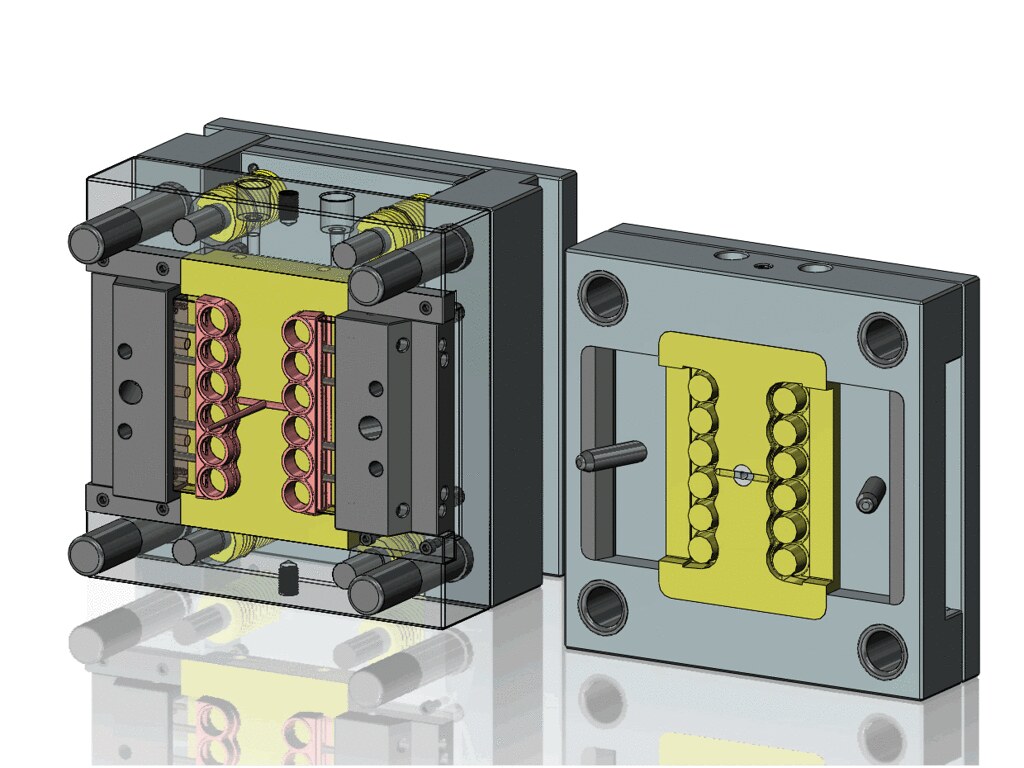
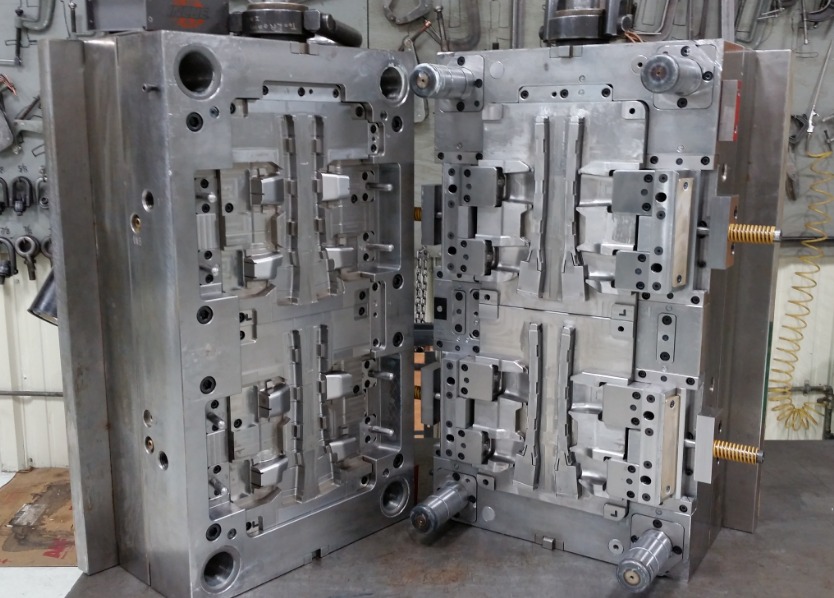
How Should Molds Be Designed for PLA?
Venting
PLA traps air easily. Proper venting prevents burn marks and short shots.
Vent depth: 0.01 to 0.02 mm
Vent width: 8 to 10 mm
Place vents at the end of flow paths and around ribs where air is most likely trapped.
Cooling Channels
Even cooling prevents warpage—a common PLA defect.
Channel distance from cavity: 8 to 10 mm
Channel diameter: 6 to 8 mm
Length-to-diameter ratio: 2:1 for efficient cooling
Draft Angles and Surface Finish
Draft angle: Minimum 1° per side. Increase to 2° for textured surfaces.
Surface finish: Ra 0.4 to 0.8 μm. Smooth surfaces improve part release and appearance.
Mold Materials
P20 steel: Standard for PLA molds. Good machinability and durability.
H13 steel with nitride coating: For high-volume production. Coating thickness: 50 to 70 μm reduces wear.
Hot runner systems: Can be used but require precise temperature control—180°C to 200°C . Insulate hot runners from the cold mold to prevent premature solidification.
What Defects Occur and How to Prevent Them?
| Defect | Cause | Solution |
|---|---|---|
| Warpage | Uneven cooling or mold temperature variation | Balance cooling channels; set mold temperature to 40-50°C |
| Voids | Moisture in material or insufficient packing | Improve drying; increase packing pressure by 10% |
| Flash | Excessive injection pressure or mold wear | Reduce pressure; check and repair mold seals |
| Surface defects | Contaminated material or poor flow | Use clean resin; increase melt temperature slightly |
| Brittleness | Thermal degradation (melt temperature >220°C) | Reduce melt temperature; shorten residence time |
Quality Control Measures
Statistical Process Control (SPC): Monitor melt temperature, injection pressure, and cooling time. Keep variations within ±2% .
Degradation testing: Measure melt flow rate (MFR) of processed PLA. An increase of more than 20% indicates degradation.
Dimensional accuracy: Use CMMs. Target tolerances:
- Parts under 50 mm: ±0.1 mm
- Larger parts: ±0.2 mm
Visual inspection: Check every 30 minutes for surface defects.
Where Is PLA Used in Injection Molding?
Packaging Materials
PLA’s optical clarity makes it ideal for:
- Food containers
- Clamshell packaging
- Blister packs
Clear packaging allows product visibility while offering sustainability benefits.
Single-Use Products
PLA decomposes quickly in composting facilities, making it suitable for:
- Cutlery
- Straws
- Disposable cups
Medical Devices
Biocompatible PLA grades are used for:
- Surgical sutures
- Drug delivery devices
- Temporary implants that dissolve in the body over time
Consumer Products
PLA combines appearance with eco-friendliness:
- Toys
- Cosmetic containers
- Electronic device casings
What Post-Processing Options Exist?
Painting and Coating
Use acrylic or water-based paints . Solvent-based paints can craze PLA. Clean surfaces with isopropyl alcohol before painting for better adhesion.
Ultrasonic Welding
Works well for PLA. Use 20 to 30 kHz frequencies. Weld times: 0.5 to 1.5 seconds . Ensure parts have an energy director for strong bonds.
Machining and Trimming
PLA machines easily with high-speed steel tools. Cutting speeds: 1000 to 1500 RPM . Keep tools sharp to prevent chipping. Avoid overheating—excessive heat melts the material.
What Does a Real-World Example Look Like?
A manufacturer of food packaging wanted to replace petroleum-based plastic clamshells with a sustainable alternative. PLA was selected for its clarity and compostability.
Initial trials produced parts with voids and warpage. Investigation showed:
- PLA moisture content was 0.08%—above the 0.02% target
- Cooling channels were unevenly distributed
- Mold temperature was too low (30°C)
Improvements:
- Drying extended to 6 hours at 70°C
- Cooling channels redesigned for uniform flow
- Mold temperature increased to 45°C
The result: voids eliminated, warpage reduced to acceptable levels. The packaging passed all food-contact requirements. Production volume reached 500,000 units per month.
Conclusion
PLA injection molding combines sustainability with manufacturing efficiency. The material offers good mechanical strength (40–60 MPa tensile), optical clarity, and biodegradability.
But PLA is not forgiving. It requires:
- Drying to below 0.02% moisture
- Melt temperatures between 180°C and 210°C
- Moderate injection speeds (30–50 mm/s)
- Proper mold venting and even cooling
- Storage below 40% relative humidity
Applications span packaging, single-use products, medical devices, and consumer goods. Post-processing options include painting, ultrasonic welding, and machining.
When processed correctly, PLA delivers high-quality, sustainable parts that meet the demands of environmentally conscious markets.
FAQ
Can PLA parts withstand high temperatures?
No. PLA softens above 60°C, so it is not suitable for hot applications. For higher temperature resistance, use PLA blends with heat stabilizers, which can withstand up to 80°C. For applications above 80°C, consider other bioplastics or traditional engineering plastics.
How long can PLA parts be stored before degradation?
Properly stored—sealed, dry, cool conditions—PLA parts remain stable for 1 to 2 years . Exposure to heat, moisture, or UV light accelerates degradation. For long-term storage, keep parts in sealed containers with desiccants away from direct sunlight.
Is recycled PLA suitable for injection molding?
Yes, but with limitations. Recycled PLA should be blended with 50% or more virgin resin to maintain mechanical properties. It is best for non-critical applications like packaging. Pure recycled PLA often has reduced molecular weight, leading to brittleness and poor flow.
What is the most critical parameter for PLA injection molding?
Drying is the most critical. PLA absorbs moisture rapidly. Even 0.05% moisture causes voids and surface defects. Dry PLA to below 0.02% moisture at 60–80°C for 4–6 hours in a dehumidifying dryer. Without proper drying, other parameter adjustments cannot prevent defects.
How does PLA compare to petroleum-based plastics in cost?
PLA is generally more expensive than commodity plastics like polypropylene (PP) or polyethylene (PE). However, costs have decreased as production scales up. For applications where sustainability is a selling point—packaging, single-use products—the premium is often justified. Blending PLA with lower-cost fillers can reduce material cost.
Contact Yigu Technology for Custom Manufacturing
At Yigu Technology , we specialize in PLA injection molding. Our dehumidifying dryers ensure PLA reaches below 0.02% moisture. Our molds are designed with proper venting and cooling channels for PLA’s unique behavior.
We serve packaging, medical, and consumer goods industries. From compostable cutlery to biocompatible medical components, we deliver high-quality, sustainable parts.
Contact Yigu Technology today to discuss your PLA injection molding project.