Introduction
Injection molding is everywhere. It produces the plastic parts that surround us—from car dashboards to medical syringes. But getting it right is not simple.
Manufacturers face constant challenges. Choosing the wrong material leads to part failure. Poor process control creates defects. Bad mold design wastes time and money.
This guide covers the essential elements of injection molding plastics. You will learn how to select materials, optimize processes, design effective molds, and control quality. By the end, you will have a practical framework for producing consistent, high-quality plastic parts.
What Plastics Are Used in Injection Molding?
Thermoplastics
Thermoplastics are the most common materials in injection molding. They can be melted, cooled, and remelted multiple times. This makes them recyclable and easy to process.
| Material | Key Properties | Common Applications |
|---|---|---|
| HDPE | Stiff, strong, chemical resistant | Pipes, bottles, heavy-duty containers |
| LDPE | Flexible, transparent | Plastic bags, wraps, flexible containers |
| PP | Lightweight, chemical resistant, high melting point | Automotive parts, food packaging, living hinges |
| PS | Transparent, dimensionally stable | Disposable containers, electronics packaging |
| PVC | Versatile (rigid or flexible) | Pipes (rigid), tubing, flooring (flexible) |
| ABS | High impact resistance, good surface finish | Automotive parts, electronics housings, toys |
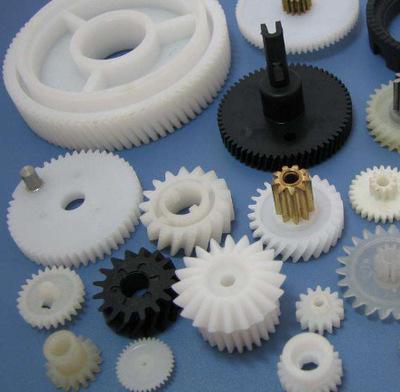
| Nylon (PA) | Abrasion resistant, high strength, heat resistant | Gears, bearings, engine components |
| PC | High impact strength, transparent, heat resistant | Safety helmets, eyewear, automotive lighting |
Thermosets
Thermosets undergo a chemical change during curing. Once cured, they cannot be remelted. This makes them suitable for high-temperature applications.
Epoxy resins offer high strength and chemical resistance. They are used in aerospace components and electronics encapsulation.
How Do You Select the Right Material?
Material selection determines whether your part performs as intended. Consider these factors:
Mechanical Properties
The part’s function dictates required mechanical properties.
A gear needs high strength and abrasion resistance. Nylon or acetal are good choices.
A consumer product housing needs impact resistance. ABS or polycarbonate work well.
Thermal Properties
Consider operating temperature.
Parts exposed to engine heat need high melting points. Nylon and polycarbonate handle elevated temperatures.
Parts in cold environments need to maintain flexibility at low temperatures. Some polypropylenes perform well in freezing conditions.
Chemical Resistance
If the part contacts chemicals, choose a resistant material.
PP and HDPE resist many acids and alkalis. They are suitable for chemical storage containers.
Polystyrene degrades when exposed to organic solvents like acetone. Avoid it in chemical environments.
Additives and Reinforcements
Additives modify base resin properties.
Glass fiber increases strength and stiffness. It also improves dimensional stability but can make parts more brittle.
UV stabilizers protect against sunlight degradation. Use them for outdoor applications.
Flame retardants meet fire safety standards. They are essential for electrical enclosures.
Colorants add aesthetic appeal without painting.
The table below summarizes selection factors:
| Factor | Consideration | Example |
|---|---|---|
| Mechanical | Strength, impact, abrasion | Nylon for gears, ABS for housings |
| Thermal | Operating temperature range | PC for high heat, PP for moderate |
| Chemical | Resistance to acids, solvents | HDPE for chemical containers |
| Additives | Glass fiber, UV, flame retardant | Glass-filled nylon for structural parts |
What Process Parameters Matter Most?
Injection Speed
Injection speed affects how the melt fills the cavity.
Too fast: Air traps, flash, surface defects.
Too slow: Short shots, incomplete filling.
Thin-walled parts need higher speeds to fill before cooling. Thick parts need slower speeds to prevent jetting.
Injection Pressure
Pressure forces the melt into the cavity.
Insufficient pressure: Short shots, incomplete filling.
Excessive pressure: Warping, flash, internal stresses.
Optimal pressure depends on material viscosity, mold geometry, and part size.
Cooling Time
Cooling time determines whether the part solidifies properly.
Too short: Warping, internal stresses.
Too long: Increased cycle time, reduced productivity.
Cooling time is influenced by material thermal properties, part thickness, and mold cooling design.
Cycle Time
Cycle time includes injection, cooling, and ejection. Minimizing it without sacrificing quality is a key goal.
Temperature Control
Melt temperature must stay within the material’s processing range. Too low causes incomplete melting. Too high causes thermal degradation.
Mold temperature affects cooling rate and part quality. Consistent mold temperature produces uniform shrinkage and good surface finish.
How Should Molds Be Designed?
Mold Components
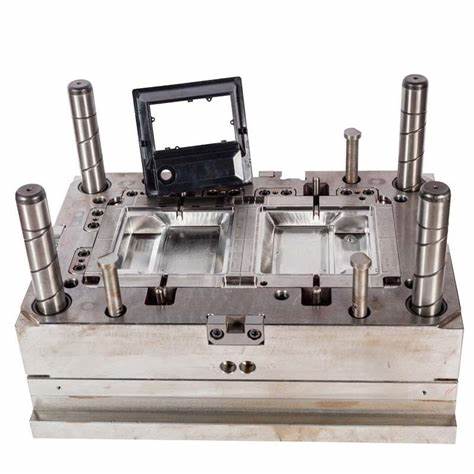
Cavity and core: The cavity forms the external shape. The core forms internal features. They must align precisely to prevent misalignment.
Runner system: Distributes plastic from the sprue to the cavities. Hot runner systems keep plastic molten in the runners, reducing waste. Cold runner systems require runners to be removed after molding.
Gate: Connects the runner to the cavity. Gate size, shape, and location affect filling and part quality. Poor gate design causes surface defects or uneven shrinkage.
Venting: Allows air to escape as plastic fills the cavity. Without adequate venting, trapped air causes voids or burn marks. Vent depths typically range from 0.02 to 0.05 mm depending on material.
Cooling channels: Integrated into the mold to control temperature. Uniform cooling prevents warping. Conformal cooling channels follow the part shape for better heat extraction.
Ejector pins: Push the solidified part out after cooling. Their location and number must avoid damaging the part.
Mold Materials
Steel molds are durable and suitable for high-volume production. They withstand millions of cycles. Common grades include P20 and H13.
Aluminum molds are lighter and less expensive. They work well for prototypes and low-volume production (10,000 to 50,000 cycles).
Surface Finish
The mold surface transfers to the plastic part.
Smooth finishes (Ra 0.1 μm or better) produce glossy parts. This is important for optical components and consumer products.
Textured finishes hide minor defects and improve grip.
How Do You Control Quality?
Common Defects and Causes
| Defect | Cause |
|---|---|
| Short shots | Low pressure, low melt temperature, poor venting |
| Flash | Excessive pressure, poor mold fit, low clamp force |
| Voids | Trapped air, insufficient packing |
| Sink marks | Uneven cooling, insufficient packing in thick sections |
| Warping | Uneven cooling, internal stresses, high shrinkage |
| Burn marks | Trapped air compressing and heating, poor venting |
Quality Control Methods
Dimensional accuracy: Measure parts with calipers, micrometers, or coordinate measuring machines (CMMs). Ensure they meet specifications.
Surface finish inspection: Visual inspection or surface roughness measurement. Check for gloss, texture, and defects.
Material consistency: Test incoming materials for MFI, moisture content, and mechanical properties. Inconsistent material causes process variation.
Process monitoring: Use sensors to track injection pressure, temperature, and cycle time. Detect deviations in real time.
Statistical Process Control (SPC): Collect and analyze process data. Identify trends before defects occur. Adjust proactively.
Sampling and inspection: Randomly sample parts from production. Perform detailed inspections. Use non-destructive testing (ultrasonic, X-ray) for internal defects when needed.
What Are Common Applications?
| Industry | Applications |
|---|---|
| Automotive | Dashboards, door panels, bumpers, interior trim |
| Consumer Electronics | Smartphone cases, computer housings, connectors |
| Packaging | Bottles, containers, caps, closures |
| Medical | Syringes, device housings, surgical instruments |
| Toys | Molded figures, construction sets, game pieces |
| Household | Kitchen utensils, storage containers, furniture components |
| Industrial | Gears, pulleys, handles, machine components |
| Aerospace | Interior components, non-structural parts, lightweight assemblies |
What Does a Real-World Example Look Like?
A manufacturer of electronic housings faced a recurring problem. Parts were warping after ejection. The defect rate was 8% , causing high scrap costs.
Investigation revealed uneven cooling. The mold had standard straight cooling channels. They did not follow the part contour. Hot spots remained in thick sections, causing differential shrinkage.
The solution was conformal cooling . Cooling channels were redesigned to follow the part shape. A metal 3D printing process created the new cooling layout.
The result: Warping dropped to under 1% . Cycle time decreased by 15% because cooling was more efficient. The investment in the new mold paid for itself in six months.
Conclusion
Injection molding plastics is a complex field, but mastering it comes down to four areas: material selection, process optimization, mold design, and quality control.
Choose materials based on mechanical, thermal, and chemical requirements. Use additives to enhance properties.
Optimize injection speed, pressure, cooling time, and temperatures for each material and part geometry.
Design molds with proper runner systems, gates, vents, cooling channels, and ejection mechanisms. Match mold material to production volume.
Control quality through dimensional inspection, process monitoring, SPC, and regular sampling. Understand common defects and their causes to prevent them.
When all these elements work together, you get consistent, high-quality parts with minimal waste.
FAQ
How do I choose the right plastic material for my injection-molded part?
Consider the part’s intended use, required mechanical and thermal properties, chemical resistance, and cost. For high-impact applications, ABS or polycarbonate work well. For chemical exposure, HDPE or PP are good choices. Test materials or consult a material expert before finalizing.
What causes warping in injection-molded parts?
Warping is caused by uneven cooling, excessive injection pressure, improper gate location, or using a material with high shrinkage. Solutions include optimizing cooling channel design, reducing pressure, relocating gates, or selecting a material with lower shrinkage.
How can I reduce cycle time without sacrificing quality?
Adjust injection speed, cooling time, and mold temperature. Use conformal cooling to extract heat faster. Consider hot runner systems to eliminate runner solidification time. Balance cycle time reductions against part quality—cooling too fast causes internal stresses.
What is the difference between a hot runner and a cold runner system?
Hot runner systems keep plastic molten in the runners. They eliminate runner waste and reduce cycle time. Cold runner systems allow runners to solidify with the part. Runners must be removed after molding, creating waste and adding a secondary operation.
How do I prevent voids in injection-molded parts?
Voids are caused by trapped air or insufficient packing. Improve venting to let air escape. Increase holding pressure and time to pack more material into the cavity. Reduce injection speed to prevent air entrapment. Dry hygroscopic materials to prevent moisture-related voids.
Contact Yigu Technology for Custom Manufacturing
At Yigu Technology , we specialize in injection molding plastics for diverse industries. Our team combines expertise in material selection, process optimization, and mold design.
We use advanced equipment and quality control systems to deliver consistent, high-quality parts. From prototypes to high-volume production, we provide customized solutions that meet your specific requirements.
Contact Yigu Technology today to discuss your injection molding project.