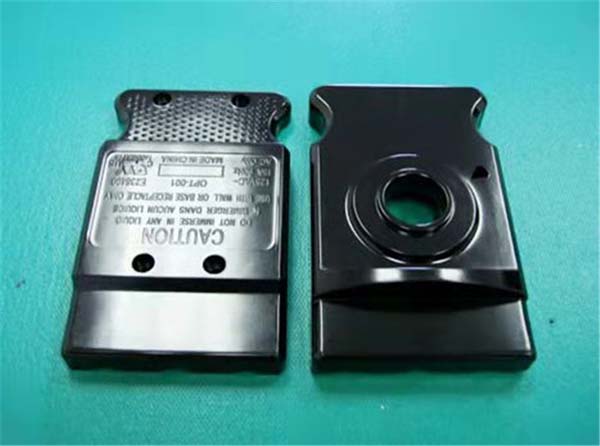
Bakelite was the world’s first fully synthetic plastic. Invented in 1907 by Leo Baekeland, it launched the modern plastics era. For decades, it dominated industries—electrical components, automotive parts, consumer goods. But today, with hundreds of advanced plastics available, does Bakelite still have a place?
This guide examines Bakelite’s properties, its strengths and weaknesses, and where it still outperforms modern alternatives. You will learn why it remains valuable in certain applications and where newer materials have taken over. Whether you are selecting materials for a project or simply curious about material history, this provides a balanced view.
What Makes Bakelite Unique?
The First Synthetic Plastic
Before Bakelite, manufacturers worked with natural materials—wood, metal, rubber. These had limits. Bakelite changed everything. It could be molded into complex shapes, produced in volume, and offered properties no natural material could match.
Bakelite is a thermosetting phenolic resin. It forms through a chemical reaction between phenol and formaldehyde. Once cured, it cannot be melted or reshaped. This permanence gives it durability that thermoplastics cannot match.
Chemical Structure That Defines Performance
The reaction between phenol and formaldehyde creates a three-dimensional cross-linked network. This structure provides:
- High strength
- Excellent heat resistance
- Electrical insulation
- Dimensional stability
The cross-linking is irreversible. Unlike thermoplastics that soften when heated, Bakelite maintains its shape and properties at high temperatures.
What Properties Does Bakelite Offer?
Heat Resistance That Still Impresses
Bakelite withstands temperatures up to 150–200°C without significant degradation. Compare this to common plastics:
| Material | Continuous Service Temperature |
|---|---|
| Bakelite | 150–200°C |
| Polyethylene | 80–100°C |
| Polypropylene | 90–110°C |
| ABS | 80–90°C |
In applications where heat matters—electrical components near heat sources, appliance parts—Bakelite still outperforms many modern plastics.
Electrical Insulation Properties
Bakelite has very high electrical resistivity: 10¹⁰ to 10¹⁴ ohm-cm. It does not conduct electricity. This made it essential for early electrical systems. Today, it still serves in high-voltage applications where insulation reliability is critical.
In electrical switchgear, Bakelite insulators separate live conductors. They withstand high voltages without breaking down. Many modern plastics cannot match this performance.
Mechanical Strength with Trade-Offs
Bakelite offers good strength under static loads:
| Material | Tensile Strength (MPa) |
|---|---|
| Bakelite | 41–63 |
| Low-density polyethylene | 7–20 |
| Polypropylene | 30–40 |
But Bakelite is brittle. Under sudden impact or rapid temperature change, it cracks. This limits its use in applications requiring impact resistance.
Dimensional Stability
Bakelite holds its shape over time. In stress testing under 500 N load for 1,000 cycles, Bakelite showed only 1% dimensional change. PVC changed 5% under the same conditions.
This stability matters for precision components where tolerances must hold over years of use.
How Is Bakelite Made?
Raw Materials
Two primary raw materials go into Bakelite:
Phenol (C₆H₅OH): An organic compound derived from benzene. Modern production uses the cumene process—benzene reacts with propylene to form cumene, which oxidizes to phenol and acetone.
Formaldehyde (HCHO): A simple aldehyde produced by oxidizing methanol. It serves as the cross-linking agent.
Fillers and Additives
Pure phenolic resin has limitations. Manufacturers add fillers to modify properties:
| Filler | Effect |
|---|---|
| Wood flour | Increases strength, reduces brittleness |
| Asbestos | Enhances heat resistance (now restricted due to health risks) |
| Cotton fibers | Improves flexibility and workability |
| Mineral fillers | Increases hardness, reduces cost |
Manufacturing Steps
1. Novolak resin formation: Phenol and formaldehyde react in acidic conditions with excess phenol. This creates a linear, thermoplastic polymer called novolak.
2. Additives mixed in: Fillers and curing agents (like hexamethylenetetramine, HMTA) are added.
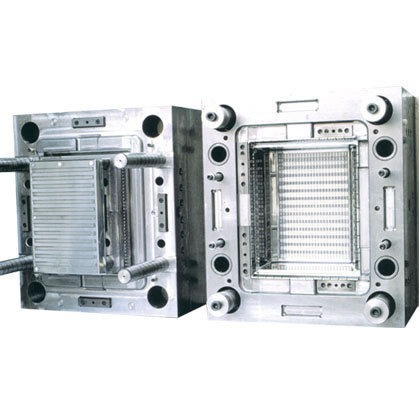
3. Molding and curing: The mixture is heated to a molten state, placed in a mold, and subjected to heat (150–200°C) and pressure. The curing agent triggers cross-linking, forming the permanent thermoset structure.
The process is irreversible. Once cured, Bakelite cannot be reshaped.
Where Is Bakelite Still Used Today?
Electrical and Electronics
Bakelite remains valuable in high-voltage applications:
- Switchgear components: Arc resistance and insulation properties exceed many modern plastics
- Transformer terminals: Dimensional stability under heat
- Circuit breaker parts: High dielectric strength
- Vintage equipment restoration: Period-correct materials for antique radios and electronics
A manufacturer of industrial switchgear continues to specify Bakelite for high-voltage insulators. Modern alternatives either cost more or fail under arc exposure.
Automotive and Industrial
Bakelite appears in:
- Distributor caps and ignition components: Heat resistance and electrical insulation
- Brake system components: Dimensional stability under temperature changes
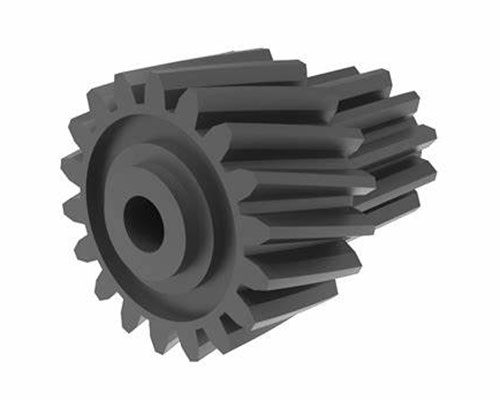
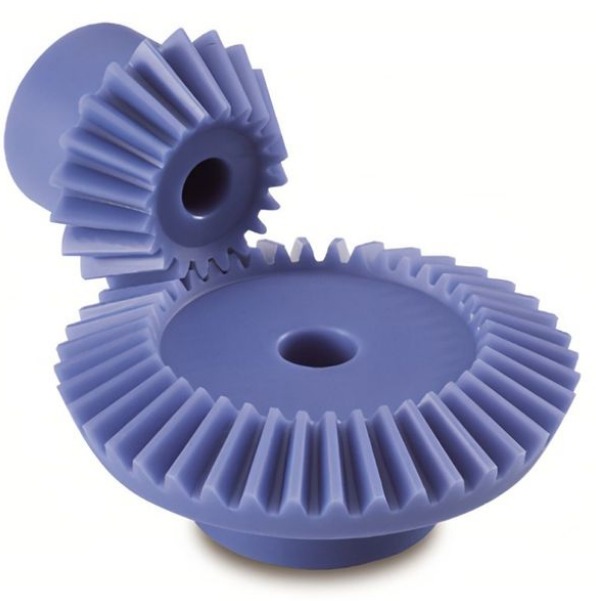
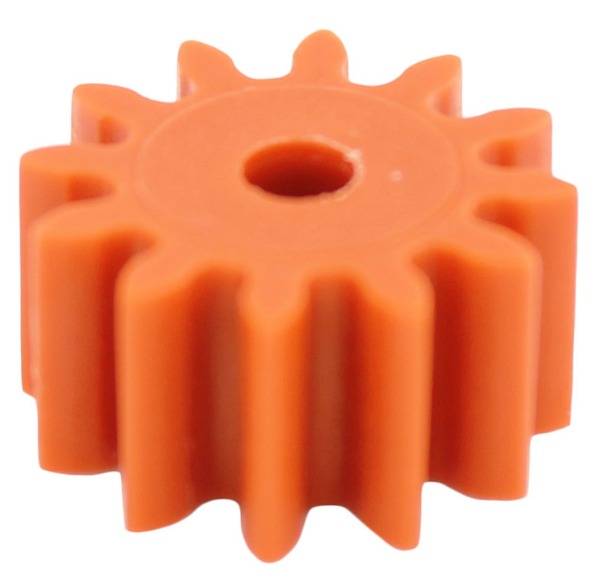
- Gears in moderate-load applications: Quiet operation, self-lubricating properties
- Pump components: Chemical resistance in certain environments
Consumer Goods
Vintage Bakelite items are collectible:
- Radio casings
- Fountain pens
- Kitchenware handles
- Jewelry
Modern production continues for some applications where the material’s properties justify its use.
Niche Industrial Applications
Bakelite serves where:
- High temperatures rule out thermoplastics
- Electrical insulation is critical
- Dimensional stability over time matters
- Cost must be controlled
One manufacturer we work with uses Bakelite for high-temperature electrical connectors. Polyamide alternatives failed under continuous 150°C exposure. Bakelite connectors have run reliably for years.
What Are Bakelite’s Limitations?
Brittleness
This is Bakelite’s biggest weakness. A Bakelite radio casing dropped on a hard floor likely cracks. Modern polycarbonate or ABS would absorb the impact.
For applications with impact risk, Bakelite is unsuitable.
Environmental and Health Concerns
Formaldehyde: A known carcinogen. Emissions during production and use raise concerns. Modern manufacturing controls reduce emissions, but the material still carries regulatory scrutiny.
Asbestos: Historically used as a filler for heat resistance. Asbestos-containing Bakelite poses health risks if disturbed. Modern Bakelite uses alternative fillers.
Production energy: Bakelite manufacturing requires significant energy. Modern plastics often have lower production energy footprints.
Processing Limitations
As a thermoset, Bakelite cannot be recycled by remelting. Scrap cannot be reprocessed into new parts. This limits sustainability compared to thermoplastics that can be reground and reused.
Aesthetic Limitations
Bakelite’s color options are limited. It typically comes in dark colors—brown, black, dark red. Modern plastics offer unlimited color choices.
How Does Bakelite Compare to Modern Plastics?
| Property | Bakelite | Modern Plastics (PC, ABS, Nylon) |
|---|---|---|
| Heat resistance | Excellent (150–200°C) | Good to excellent (80–200°C depending on grade) |
| Impact resistance | Poor | Good to excellent |
| Electrical insulation | Excellent | Good to excellent |
| Dimensional stability | Excellent | Good |
| Color options | Limited | Unlimited |
| Recyclability | None (thermoset) | Limited (thermoplastics can be reground) |
| Production cost | Moderate | Low to high depending on material |
| Environmental profile | Concerns with formaldehyde | Varies widely |
Is Bakelite Better Than Modern Plastics?
The answer depends entirely on the application.
Bakelite is better when:
- Continuous operating temperatures exceed 120°C
- Electrical insulation must be reliable under high voltage
- Dimensional stability is critical over decades
- The application involves arc exposure
- Cost must be controlled for specific property requirements
Modern plastics are better when:
- Impact resistance is needed
- Color or appearance matters
- Recycling or sustainability is a priority
- Flexibility is required
- High-volume production with fast cycle times is needed
Real-World Examples
Case 1: A manufacturer needed material for high-voltage transformer terminals. Operating temperature reached 140°C. Polyamide (nylon) softened. Polycarbonate degraded. Bakelite terminals passed 5,000-hour testing with no degradation.
Case 2: A consumer electronics company considered Bakelite for a portable device housing. Drop testing showed Bakelite cracked at 0.5 meters. Polycarbonate survived 1.5-meter drops. Bakelite was unsuitable.
Case 3: A vintage radio restoration specialist needed period-correct materials. Only Bakelite matched the original appearance and met collector expectations for authenticity. Modern plastics would have reduced value.
Why Isn’t Bakelite Used More Widely Today?
Several factors explain Bakelite’s decline:
1. Brittleness: Modern products must survive impacts. Bakelite does not.
2. Processing speed: Injection-molded thermoplastics cycle in seconds. Bakelite molding takes minutes—slower production, higher cost.
3. Material options: Modern plastics offer tailored properties—flexible, transparent, flame-retardant, UV-resistant. Bakelite offers one set of properties.
4. Environmental concerns: Formaldehyde emissions and limited recyclability make Bakelite less attractive in sustainability-focused markets.
5. Aesthetics: Consumers expect color options. Bakelite’s dark, limited palette does not meet modern design expectations.
Conclusion
Bakelite is not the dominant material it once was. Modern plastics have surpassed it in impact resistance, processing speed, and versatility. But Bakelite still holds value in specific applications where its unique properties matter.
Its heat resistance, electrical insulation, and dimensional stability remain outstanding. In high-voltage electrical applications, high-temperature environments, and restoration work, Bakelite is still the right choice.
For most mainstream applications—consumer electronics, automotive interiors, packaging—modern plastics offer better combinations of properties, lower cost, and greater design flexibility. Bakelite’s legacy is secure as the material that started the plastics revolution. Its continued use in niche applications proves that good properties never go completely out of style.
Frequently Asked Questions
Why is Bakelite no longer widely used?
Several factors reduced Bakelite’s usage: brittleness limits impact resistance; processing is slower than injection-molded thermoplastics; environmental concerns about formaldehyde; and modern plastics offer better property combinations for most applications. Bakelite remains in niche applications where its heat resistance and electrical insulation are critical.
What makes Bakelite special compared to modern plastics?
Bakelite was the first synthetic plastic—a historic material. Its heat resistance (150–200°C) and electrical insulation (10¹⁰–10¹⁴ ohm-cm) still exceed many modern plastics. Its dimensional stability under stress is excellent. For applications requiring these specific properties, Bakelite remains valuable.
Is Bakelite better than plastic?
There is no single answer. Bakelite is better for high-temperature electrical applications, arc-resistant components, and period-correct restorations. Modern plastics are better for impact-resistant applications, flexible parts, color-matched designs, and high-volume production. The right choice depends on your specific requirements.
What are the health concerns with Bakelite?
Formaldehyde, used in Bakelite production, is a known carcinogen. Older Bakelite may contain asbestos fillers that pose inhalation risks if disturbed. Modern Bakelite production controls emissions and uses alternative fillers. Proper handling and manufacturing practices minimize risks.
Can Bakelite be recycled?
No. Bakelite is a thermoset—it cannot be remelted or reformed. Scrap cannot be reprocessed into new products. This limits its sustainability compared to thermoplastics that can be reground and reused.
Contact Yigu Technology for Custom Manufacturing
Need Bakelite components for your application? At Yigu Technology, we understand where Bakelite still outperforms modern alternatives. From high-voltage electrical insulators to heat-resistant mechanical parts, we manufacture custom Bakelite components to your specifications.
Contact us today to discuss whether Bakelite is the right material for your project.