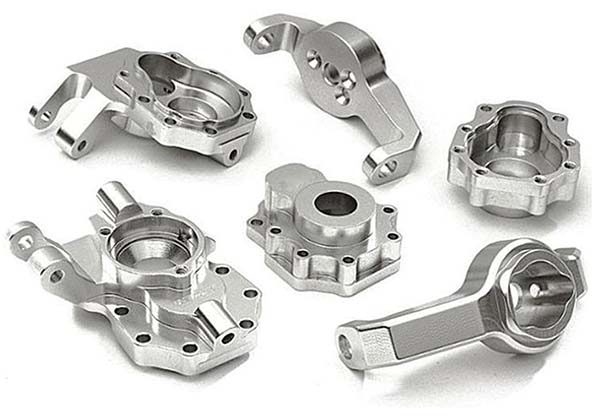
If you work with ultra-soft metals, you know the challenges. Materials that deform too easily, stick to dies, or wrinkle during forming can derail production. When precision and surface quality matter—like in electrical components or food packaging—these issues become critical. Metal Stamping 1050 / 1100 (Pure Al) offers exceptional formability but demands specialized techniques. This guide covers the properties, processes, and solutions that make stamping these high-purity aluminum alloys reliable and efficient.
What Makes 1050 and 1100 Aluminum Unique?
Composition and Key Properties
1050 and 1100 are classified as "pure" aluminum, with minimal alloying elements. Their high purity gives them unique characteristics.
| Grade | Purity | Hardness (HB) | Conductivity (W/m·K) | Best For |
|---|---|---|---|---|
| 1050 | 99.5% aluminum | 23–26 | 220 | Intricate forming, food contact |
| 1100 | 99% aluminum + trace copper | 25–28 | 230 | Electrical parts, decorative trim |
High Conductivity: Both grades offer among the best thermal and electrical conductivity of any aluminum alloy. This makes them ideal for heat sinks and electrical components.
Softness: With Brinell hardness of 23–28 HB, they are easy to shape but require careful handling to avoid damage.
Corrosion Resistance: A thick, self-healing oxide layer protects against rust, even in moist environments. This is critical for food packaging and outdoor applications.
Formability: Their ultra-high ductility allows for deep draws, tight bends, and complex shapes that would crack harder alloys.
How Do You Stamp Pure Aluminum?
Techniques Tailored to Softness
Stamping 1050 and 1100 requires adjustments to prevent over-deformation, sticking, and wrinkling.
Press Forces
Use lower press forces than with alloyed aluminum—typically 10–15% less than for 3003. This avoids over-deformation and maintains dimensional accuracy.
Deep Drawing
These alloys excel at deep drawing, with draw ratios up to 4:1—higher than most other aluminum grades. Use slow press speeds: 5–10 strokes per minute. This allows the material to flow evenly and reduces wrinkling.
Blanking and Piercing
Sharp, polished dies are essential. Use blanking clearance of 3–5% of material thickness—tighter than for harder alloys. This ensures clean edges without burrs.
Progressive Die Stamping
Ideal for high-volume parts like capacitor casings. Each die station should include release agents to prevent sticking. Check tooling regularly for micro-adhesions.
Where Is Stamped Pure Aluminum Used?
Key Applications Across Industries
The unique properties of 1050 and 1100 make them indispensable in several sectors.
| Industry | Application | Why Pure Aluminum Works |
|---|---|---|
| Electrical | Enclosures, switch housings | High conductivity; easy to form |
| Food Packaging | Foil containers, lids | 99.5% purity meets FDA standards |
| Thermal Management | Heat sinks for LED lighting | Conductivity of 220–230 W/m·K |
| Decorative | Nameplates, trim | Smooth surface takes polishing well |
| Chemical | Tanks, pipes for mild chemicals | Corrosion resistance and purity |
In each application, the ability to form complex shapes without compromising purity or conductivity is key.
What Challenges Arise in Stamping Pure Aluminum?
Common Problems and Proven Solutions
Working with ultra-soft aluminum presents unique hurdles. Here is how to address them.
Sticking to Dies
Soft aluminum can transfer to tooling, causing galling and surface defects.
- Solution: Use silicone-based or dry film lubricants to create a barrier. Polish die surfaces to Ra ≤ 0.2 μm to minimize friction.
Wrinkling
During deep draws, the soft material can fold or wrinkle.
- Solution: Apply blank holders with variable pressure—higher pressure around the edges to control material flow. Use draw beads to distribute tension evenly.
Tooling Wear
Soft aluminum can cause die pickup, where material accumulates on tools.
- Solution: Use carbide or coated tool steel (e.g., TiN) to reduce wear. Clean dies every 500–1000 strokes to prevent buildup.
Springback
Pure aluminum exhibits minimal springback—less than 1 degree.
- Solution: Over-bend by 0.5–1 degree to ensure tight tolerances in critical parts.
Clearance
Incorrect clearance can cause tearing or excessive burrs.
- Solution: For 1050, use 3% clearance. For 1100, use 4% clearance. This balance prevents tearing and reduces tool stress.
What Quality Standards Apply?
Ensuring Consistency and Performance
Maintaining quality with 1050 and 1100 aluminum requires adherence to strict standards.
| Standard | Purpose |
|---|---|
| ASTM B491 | Specifies chemical composition and mechanical properties for 1100 aluminum |
| ISO 2093 | Covers dimensional tolerances for stamped aluminum parts |
| ISO 16100 | Outlines stamping process controls |
Testing Requirements
- Surface Finish: Parts should have a smooth, burr-free surface. For decorative applications, require Ra ≤ 0.8 μm.
- Dimensional Tolerances: Critical features like hole diameters should meet ±0.01 mm, verified with CMMs.
- Non-Destructive Testing: Ultrasonic testing detects internal voids in thick parts. Eddy current testing checks for surface defects.
Conclusion
1050 and 1100 aluminum offer exceptional formability, high conductivity, and excellent corrosion resistance. Their ultra-soft nature allows deep draws up to 4:1 and complex shapes that harder alloys cannot achieve. However, stamping these pure aluminum grades requires specialized techniques. Use lower press forces, tight blanking clearance, and slow press speeds. Prevent sticking with polished dies and silicone-based lubricants. Control wrinkling with variable-pressure blank holders. With proper process control, stamped pure aluminum parts deliver reliable performance in electrical, food packaging, thermal management, and decorative applications.
FAQ
What is the main difference between 1050 and 1100 aluminum for stamping?
1050 (99.5% Al) is slightly softer and more formable, making it ideal for intricate shapes like deep-drawn food containers. 1100 (99% Al with trace copper) offers marginally higher strength, better for parts needing a bit more durability, such as electrical enclosures and nameplates.
Can 1050 and 1100 aluminum be welded after stamping?
Yes, but use low-heat techniques like TIG welding to avoid warping. Their high purity makes them compatible with most aluminum welding rods. For thin-gauge parts, consider adhesive bonding or mechanical fastening to avoid heat distortion.
How do you prevent surface scratches when stamping pure aluminum?
Use plastic or felt interleaving between sheets during storage and handling. Maintain polished dies with minimal surface roughness. During post-stamping handling, clean parts with soft cloths and avoid sliding across rough surfaces.
What lubricants work best for stamping 1050 and 1100 aluminum?
Silicone-based lubricants or dry film coatings work best. They create a barrier between the aluminum and tooling, preventing sticking. For food packaging applications, use food-grade lubricants that meet FDA requirements.
What is the typical draw ratio for deep drawing pure aluminum?
1050 and 1100 can achieve draw ratios up to 4:1, which is higher than most other aluminum alloys. For comparison, 3003 aluminum typically achieves 2.5:1 to 3:1. Achieving high draw ratios requires slow press speeds, proper lubrication, and variable-pressure blank holders.
Contact Yigu Technology for Custom Manufacturing
Stamping pure aluminum requires precision, the right tooling, and specialized techniques. At Yigu Technology, we specialize in custom stamping of 1050 and 1100 aluminum for electrical, food packaging, and industrial clients. We use polished carbide tooling and food-grade lubricants to prevent sticking and maintain surface quality.
Our quality control includes conductivity testing to verify purity, surface finish inspections, and strict dimensional checks. Whether you need deep-drawn containers or precision electrical enclosures, we deliver reliable results.
Contact Yigu Technology today to discuss your pure aluminum stamping project.