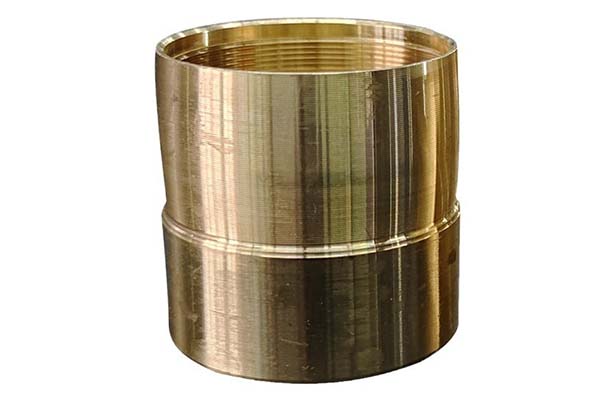
If you need a material that withstands repeated stress, resists corrosion, and maintains electrical conductivity, you face a common challenge. Many alloys offer strength but lack ductility. Others provide corrosion resistance at the cost of wear performance. Metal Stamping C5191 (Phosphor Bronze) solves this problem. This copper-tin-phosphorus alloy delivers high strength, fatigue resistance, and moderate conductivity—all in one material. However, stamping it requires careful handling to overcome its higher hardness. This guide covers C5191’s properties, processes, applications, and quality control to help you produce reliable, long-lasting components.
What Makes C5191 Phosphor Bronze Unique?
Composition and Mechanical Properties
C5191’s performance comes from its balanced composition: approximately 95% copper, 5% tin, and 0.03–0.35% phosphorus. This blend creates a material with standout characteristics.
| Property | Value | Significance |
|---|---|---|
| Tensile Strength | 480–965 MPa | Outperforms brass by 30–50% |
| Elongation | 10–30% | Retains enough ductility for stamping |
| Hardness | Increases with cold work | Wear-resistant for moving parts |
| Electrical Conductivity | 15–20% IACS | Suitable for connectors and switches |
| Thermal Conductivity | 120–150 W/m·K | Dissipates heat in high-use parts |
| Corrosion Resistance | Superior to brass | Resists tarnishing, freshwater, and mild chemicals |
The phosphorus additions create a fine-grained structure that resists wear while maintaining flexibility. This makes C5191 stronger than brass but more formable than beryllium copper.
Where Is C5191 Phosphor Bronze Used?
Critical Applications Across Industries
C5191’s unique properties make it indispensable where reliability is non-negotiable.
| Industry | Application | Why C5191 Works |
|---|---|---|
| Electrical | Relay contacts, switch mechanisms | Conductivity + wear resistance for thousands of cycles |
| Automotive | Fuel injectors, transmission components | Strength and heat resistance under extreme conditions |
| Aerospace | Wiring connectors, terminal blocks | Maintains low-resistance connection with repeated mating |
| Marine | Shipboard hardware, underwater sensors | Resists saltwater corrosion |
| Consumer Electronics | Battery contacts, spring terminals | Fatigue resistance for millions of compressions |
| Industrial | Valve springs, pump components | Durability under constant cyclic loading |
Each application leverages C5191’s ability to perform under stress, corrosion, and repeated use.
How Do You Stamp C5191 Phosphor Bronze?
Techniques for Higher-Strength Material
Stamping C5191 requires adjustments to handle its higher strength and lower ductility compared to brass.
Press Speed
Use slower press speeds—10–15 strokes per minute—to allow the material to flow evenly. This reduces the risk of cracking, especially in cold-worked tempers.
Die Design
Use carbide or D2 tool steel dies to handle C5191’s hardness. Maintain punch-die clearance of 10–12% of material thickness to minimize friction and prevent galling.
Blanking
Blanking requires high-pressure presses to ensure clean edges. C5191’s toughness can cause burring with insufficient force. Sharp, precision-ground dies are essential.
Forming
Use gradual bends with a minimum radius of 1× material thickness to avoid surface cracking. For tight radii, consider annealing before forming.
Deep Drawing
Deep drawing is possible but limited. Aim for draw ratios of 1.5:1 or lower. For deeper draws, anneal between passes to restore workability.
Heat Treatment
- Annealing: Heat to 600–700°C for 1–2 hours to soften the material before intensive forming.
- Spring Setting: For spring applications, a final heat treatment at 300–400°C enhances hardness and sets the spring tension.
What Advantages Does C5191 Offer?
Benefits Over Other Copper Alloys
C5191 provides clear advantages for precision components.
- High Strength: Tensile strength up to 965 MPa—outperforms brass (C2600) by 30–50%. Suitable for load-bearing parts.
- Wear Resistance: Phosphorus additions create a hard, fine-grained structure that resists abrasion. Extends part life in moving assemblies.
- Fatigue Resistance: Withstands millions of cycles in spring applications without losing tension.
- Cost-Effectiveness: More affordable than beryllium copper, providing similar fatigue resistance at 50–60% of the cost.
- Aesthetic Appeal: Develops a rich, warm patina over time. Used in decorative hardware and luxury goods.
How Is Quality Controlled?
Ensuring Consistency and Performance
Ensuring C5191 parts meet specifications requires rigorous quality checks.
Inspection Procedures
Conduct 100% visual inspections for surface defects like scratches, cracks, or burrs. This is critical for components with strict appearance or performance standards.
Dimensional Accuracy
Use coordinate measuring machines (CMMs) to verify tolerances. Maintain ±0.01 mm for critical features like spring coils or contact points.
Surface Finish
Measure roughness using profilometers. Require Ra ≤ 0.8 μm for smooth surfaces that reduce wear and improve electrical contact.
Material Testing
- Tensile Tests: Confirm strength meets requirements on sample parts.
- Composition Verification: Use X-ray fluorescence (XRF) to verify alloy chemistry.
Non-Destructive Testing (NDT)
- Ultrasonic Testing: Detects internal flaws in thick parts.
- Eddy Current Testing: Identifies surface cracks in thin components.
Statistical Process Control (SPC)
Monitor key parameters—press force, die temperature, material feed—in real time. Catch variations before they affect quality.
Conclusion
C5191 phosphor bronze offers a powerful combination of high strength, fatigue resistance, and corrosion resistance for stamped components. Its tensile strength reaches 965 MPa in cold-worked tempers, significantly outperforming brass. While stamping requires slower press speeds, carbide tooling, and careful clearance management, the material rewards proper handling with exceptional durability. Applications span electrical contacts, automotive springs, marine hardware, and aerospace connectors. With rigorous quality control—including dimensional checks, surface finish requirements, and material testing—C5191 delivers reliable performance in components that must withstand repeated stress, corrosion, and wear.
FAQ
How does C5191 compare to beryllium copper for springs?
C5191 offers similar fatigue resistance at 50–60% of the cost of beryllium copper. It is preferable for non-critical applications where extreme strength is not required. Beryllium copper is better for high-stress, high-cycle applications but requires stricter handling due to toxicity concerns.
Can C5191 be welded after stamping?
Yes, but use gas tungsten arc welding (TIG) with low heat input to avoid brittleness. Post-weld annealing at 600°C restores ductility in welded areas. For thin-gauge parts, consider mechanical fastening or adhesive bonding as alternatives.
What is the maximum thickness for stamping C5191?
C5191 is practical for sheets up to 2 mm thick. For thicker material—2–4 mm—pre-annealing and heavy-duty presses are required to ensure proper forming without cracking. Thicker gauges are better suited for machining or forging.
What lubricants work best for stamping C5191?
Use chlorinated lubricants or extreme pressure (EP) additives designed for copper alloys. These reduce friction and prevent galling. For deep drawing, consider heavy-duty compounds with high viscosity.
Why does C5191 develop a patina over time?
The copper content in C5191 reacts with oxygen and moisture to form a protective oxide layer. This patina is natural and does not indicate degradation. In fact, it enhances corrosion resistance. For applications requiring a bright finish, specify plating or clear coating.
Contact Yigu Technology for Custom Manufacturing
Stamping C5191 phosphor bronze requires precision tooling, controlled processes, and rigorous quality systems. At Yigu Technology, we specialize in custom stamping of phosphor bronze for electrical, automotive, marine, and industrial clients. We optimize die design and annealing cycles to handle C5191’s strength, ensuring parts meet tight tolerances and fatigue resistance requirements.
Our quality control includes non-destructive testing, statistical process control, and material verification. Whether you need spring contacts, electrical terminals, or corrosion-resistant hardware, we deliver reliable, high-performance components.
Contact Yigu Technology today to discuss your C5191 stamping project.