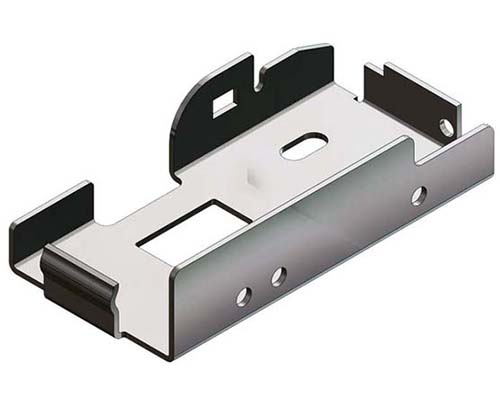
If you manufacture parts that must withstand harsh environments—like automotive underbody components or outdoor construction materials—you face a tough trade-off. You need precise, complex shapes, but you also need corrosion resistance. Metal Stamping Galvanized Steel offers a solution, but it adds complexity: how do you preserve the protective zinc coating during high-pressure stamping? Scratched coatings, uneven forming, and inconsistent zinc layers can derail production. This guide covers galvanized steel characteristics, stamping techniques, applications, and quality control to help you protect the coating while achieving precision.
What Makes Galvanized Steel Unique?
Material Characteristics and Their Impact
Galvanized steel features a protective zinc coating applied through either hot-dip galvanizing or electro-galvanizing. Each method influences stamping behavior differently.
| Method | Zinc Thickness | Surface Finish | Stamping Suitability | Coating Adhesion |
|---|---|---|---|---|
| Hot-Dip Galvanizing | 45–85 μm | Spangled | Medium (thicker coating risks cracking) | High |
| Electro-Galvanizing | 5–25 μm | Smooth | High (thin, uniform layer) | Moderate |
Mechanical Properties: Galvanized steel retains the strength of its base steel—typically 300–500 MPa tensile strength—while gaining a ductile zinc layer. This combination allows moderate forming but demands adjusted tooling to prevent coating damage.
Durability: When properly stamped, galvanized steel lasts 50+ years in rural environments and 15–30 years in coastal areas. This outperforms painted steel by 2–3 times in environmental resistance.
How Do You Stamp Galvanized Steel Effectively?
Techniques to Protect the Zinc Coating
Stamping galvanized steel requires specialized techniques to protect the zinc coating while achieving precision.
Punching Operations
Use sharp, carbide-tipped punches with 10–15% clearance to avoid tearing the zinc layer. Slow punch speeds—10–20 strokes per minute—reduce heat buildup, which can weaken coating adhesion.
Bending and Forming
Bend radii should be 2–3× material thickness (vs. 1× for uncoated steel) to prevent coating cracking. Apply a 5° over-bend followed by springback correction to achieve tight angles without damage.
Drawing and Deep Drawing
Electro-galvanized steel is preferred for deep drawing due to its thin, uniform coating. Use zinc-compatible lubricants—mineral oil-based—to reduce friction and prevent white rust.
Trimming and Piercing
Trim edges at a 45° angle to avoid sharp burrs that can scratch adjacent surfaces. Post-trim deburring removes zinc flakes that could cause corrosion.
Tooling and Equipment Adjustments
| Consideration | Recommendation | Why |
|---|---|---|
| Die Design | Polished surfaces (Ra ≤ 0.8 μm); crowned dies for bending | Minimizes coating abrasion; distributes pressure evenly |
| Press Machines | Servo presses for speed control; hydraulic for thick sheets | Slower descent reduces coating damage; steady pressure |
| Tooling Materials | Chrome-plated or nitrided tools | Resists zinc buildup; regular cleaning with compatible solvents |
Where Is Galvanized Steel Used?
Applications That Leverage Corrosion Resistance
Galvanized steel’s corrosion resistance and formability make it indispensable across industries.
| Industry | Application | Why It Works |
|---|---|---|
| Automotive | Underbody components, body panels (electro-galvanized), exhaust shields | Resists road salts and moisture |
| Construction | Roofing, siding, fencing, guardrails | Hot-dip galvanized for durability; weldable with zinc removal at joints |
| Architectural | Decorative grilles, facades | Electro-galvanized for smooth finish; accepts powder coating uniformly |
| Electrical | Cabinets, junction boxes | Protects internal components from humidity and outdoor exposure |
Real-World Performance:
- In coastal construction, galvanized steel structural components showed 80% less corrosion than painted steel after 10 years.
- In automotive applications, galvanized body panels reduced warranty claims for rust by 65% compared to uncoated alternatives.
How Do You Ensure Corrosion Protection?
Coating Integrity and Testing
The zinc coating is galvanized steel’s greatest asset. Protecting it during stamping is critical.
Zinc Coating Thickness
Measure thickness with a magnetic gauge (ASTM B499) to ensure it meets specifications. For coastal fencing, a minimum of 70 μm is required. Thinner areas are prone to early rust.
Corrosion Testing
Conduct salt spray tests (ASTM B117) to verify resistance. Galvanized steel should withstand 500+ hours without red rust. White rust (zinc oxide) is normal but can be removed with a 5% chromic acid solution.
Coating Uniformity
Use ultrasonic testing to detect thin spots, especially in stamped creases. Uniformity ensures consistent protection across complex shapes.
Post-Stamping Treatments
Apply a chromate conversion coating to repair minor zinc damage and enhance paint adhesion if needed.
How Is Quality Controlled?
Manufacturing and Inspection Protocols
Maintaining quality requires rigorous checks to ensure both the steel and its coating meet standards.
Quality Assurance
Adhere to ISO 9001 and ASTM A653 (galvanized steel standards) to document processes from material receipt to final inspection.
Material Testing
Verify base steel tensile strength and zinc coating weight (g/m²) before stamping. Reject batches with excessive oil or pre-existing rust.
Surface Defects
Inspect for coating cracks, bare spots, or zinc nodules using visual checks and dye penetrant testing. Defects larger than 3 mm² require touch-up with zinc-rich paint.
Dimensional Accuracy
Use CMMs to check tolerances—±0.05 mm for critical features—ensuring parts fit without damaging their coatings during assembly.
Process Optimization
Implement statistical process control (SPC) to monitor punch force and die temperature, reducing variability in coating integrity.
Conclusion
Galvanized steel combines the strength of base steel—300–500 MPa tensile strength—with a protective zinc coating that lasts 15–50 years in corrosive environments. Stamping it requires specialized techniques: use sharp carbide tools with 10–15% clearance, slow press speeds (10–20 strokes/min), and bend radii of 2–3× material thickness. Electro-galvanized steel (5–25 μm coating) suits deep drawing; hot-dip galvanized (45–85 μm) works for structural parts. Quality control includes zinc thickness measurement, salt spray testing (500+ hours), and dimensional checks (±0.05 mm). With proper process control, galvanized steel stamped parts deliver long-term corrosion resistance without sacrificing precision.
FAQ
Can galvanized steel be welded after stamping?
Yes, but weld areas require zinc removal—grinding or chemical cleaning—to avoid toxic fumes. After welding, touch up with zinc-rich paint to restore corrosion resistance. For structural applications, consider mechanical fastening as an alternative.
How does temperature affect galvanized steel stamping?
Temperatures above 150°C can weaken zinc coating adhesion. Keep press dies cool—below 120°C—and avoid prolonged contact during forming. Use lubricants that dissipate heat effectively.
What is the cost difference between stamping galvanized vs. uncoated steel?
Galvanized steel costs 15–30% more upfront. However, in corrosive environments, it reduces long-term maintenance costs by 50+%, offering a better total cost of ownership. For outdoor or marine applications, the investment pays off.
What lubricants work best for stamping galvanized steel?
Use zinc-compatible lubricants—mineral oil-based or synthetic oils without chlorine or sulfur additives that can react with zinc. For deep drawing, high-viscosity lubricants with extreme pressure additives provide the best protection.
How do you repair minor coating damage after stamping?
Small scratches or bare spots can be repaired with zinc-rich paint or cold galvanizing spray. For larger damaged areas, consider chromate conversion coating to restore corrosion resistance. Always test repairs with salt spray testing to verify protection.
Contact Yigu Technology for Custom Manufacturing
Stamping galvanized steel requires expertise in tooling design, coating protection, and process control. At Yigu Technology, we specialize in galvanized steel stamping for automotive, construction, and electrical clients. We optimize die designs with polished surfaces and adjusted clearances to protect zinc coatings, ensuring parts meet ASTM B117 salt spray test requirements.
Our servo presses and zinc-compatible lubricants minimize damage during forming, while post-stamping inspections verify coating integrity. Whether you need electro-galvanized components for electronics or hot-dip galvanized parts for outdoor construction, we deliver durable, corrosion-resistant solutions.
Contact Yigu Technology today to discuss your galvanized steel stamping project.