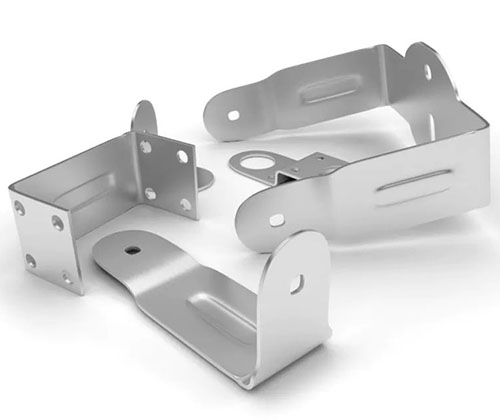
Manufacturers face a familiar dilemma: finding a material that offers both exceptional corrosion resistance and the ability to be shaped into complex forms. Many metals fail here. Some resist rust but crack under stamping pressure. Others form easily but deteriorate quickly in harsh environments. Metal Stamping Stainless Steel solves this problem. This guide covers stainless steel grades, stamping techniques, applications, and quality control to help you master its use in your production line.
What Stainless Steel Grades Work Best for Stamping?
Understanding the Four Main Families
Stainless steel’s versatility comes from its diverse grades. Choosing the right one is key to avoiding costly mistakes.
| Grade Family | Key Elements | Properties | Best For |
|---|---|---|---|
| Austenitic (304, 316) | 16–26% Cr, 8–24% Ni | High ductility, excellent weldability | Deep-drawn parts, medical devices |
| Ferritic (430) | 10.5–27% Cr, little Ni | Cost-effective, good corrosion resistance | Simple bends, indoor applications |
| Martensitic (410) | 11.5–18% Cr | Heat-treatable, high hardness (up to 1,200 MPa) | Cutlery, wear-resistant parts |
| Duplex | Mixed austenitic + ferritic | Balanced strength and corrosion resistance | Marine hardware, demanding applications |
Austenitic Grades (304 and 316)
These are the most common for stamping. 304 offers excellent ductility and weldability, making it ideal for complex shapes like deep-drawn medical components. 316 adds 2–3% molybdenum, boosting pitting resistance in saltwater environments. Both form a self-healing chromium oxide layer that ensures long-term corrosion resistance.
Ferritic Grades (430)
With little to no nickel, these are more affordable. Their lower ductility makes them better suited for simple bends than deep draws. They work well for indoor applications like appliance trim.
Martensitic Grades (410)
These can be heat-treated to high hardness. They are used for cutlery and wear-resistant parts but require careful stamping due to lower ductility.
Duplex Grades
These combine austenitic and ferritic structures. They offer high strength and excellent corrosion resistance, perfect for marine hardware. However, they need precise stamping parameters to avoid cracking.
How Do You Stamp Stainless Steel Effectively?
Techniques for Precision and Control
Stamping stainless steel requires specialized approaches to handle its strength and avoid surface damage.
Die Design
Dies must account for stainless steel’s higher tensile strength—typically 500–1,000 MPa—compared to carbon steel.
- Use rounded edges to reduce stress concentration.
- Increase clearance to accommodate springback.
- Polish surfaces to Ra ≤ 0.4 μm to minimize friction and preserve surface finish.
Punching
Use carbide tools to handle stainless steel’s abrasiveness. High-speed presses with sharp punches ensure clean cuts without burrs. Maintain punch-die clearance of 8–12% depending on grade.
Bending and Forming
Stainless steel tends to spring back to its original shape.
- Austenitic grades: Over-bend by 2–5 degrees.
- Ferritic grades: Over-bend by 5–8 degrees.
Use pressure pads to hold the material firmly during bending.
Drawing and Deep Drawing
Use heavy-duty presses with slow ram speeds—10–15 strokes per minute—to prevent work hardening. Apply high-pressure lubricants to reduce heat and friction. For deep draws, consider annealing between passes to restore ductility.
Tooling Materials
Use hardened steel or carbide dies to resist wear. Regular maintenance checks prevent micro-cracks that can mar the surface finish.
Where Is Stainless Steel Used in Stamping?
Applications Across Industries
Stainless steel’s unique properties make it indispensable across sectors.
| Industry | Common Applications | Why Stainless Steel Works |
|---|---|---|
| Food Processing | Equipment housings, conveyors | Non-reactive, easy to clean, resists food acids |
| Medical | Surgical instruments, implants | Biocompatible; meets ISO 13485 standards |
| Marine | Boat hardware, offshore components | Duplex grades resist saltwater corrosion |
| Automotive | Exhaust components, brake parts | Ferritic grades reduce weight; martensitic adds strength |
| Aerospace | Structural brackets, fasteners | High strength-to-weight; corrosion resistance |
| Electronics | Shielding, connectors | Conductivity with durability |
How Do You Ensure Corrosion Resistance?
Protecting the Passive Layer
Stainless steel’s corrosion resistance comes from a thin chromium oxide layer that self-heals when scratched. But this protection can be compromised.
Common Threats
- Crevice corrosion: Occurs in tight gaps where oxygen is limited.
- Stress corrosion cracking: Happens under tension in chloride-rich environments.
- Pitting: Localized corrosion from chlorides.
Testing Methods
- Salt spray test (ASTM B117): Evaluates resistance to saltwater.
- Electrochemical testing: Measures pitting resistance.
- Cyclic corrosion testing: Simulates real-world weathering for critical parts.
Enhancement Techniques
- Passivation: A chemical treatment that strengthens the oxide layer. Essential after stamping to remove embedded iron particles.
- Pickling: Removes heat tint and scale after welding.
- Grade selection: For high-risk areas, choose molybdenum-rich grades like 316.
How Is Quality Controlled in Stainless Steel Stamping?
Maintaining Standards
Consistent quality requires strict protocols.
Standards and Certifications
- ISO 9001: Quality management systems
- ISO 13485: Medical device quality management
- AS9100: Aerospace quality management
Inspection Methods
- Surface Defects: Visual checks and microscopy detect scratches, pits, or embedded particles that compromise corrosion resistance.
- Dimensional Accuracy: Coordinate measuring machines (CMMs) verify tolerances—critical for aerospace and medical components.
- Material Testing: Tensile tests confirm yield strength and ductility.
Process Optimization
- Cold working: Enhances strength but must be monitored to avoid overworking, which reduces ductility.
- Heat treatment: For martensitic grades, calibrate to balance hardness and toughness.
- Lubrication: Use clean, non-chlorinated lubricants to avoid residue that can trap moisture.
Conclusion
Stamping stainless steel requires matching the right grade to your application, using specialized techniques to handle its strength, and maintaining rigorous quality control. Austenitic grades like 304 and 316 offer excellent ductility for complex forms. Ferritic grades provide cost-effective solutions for simple bends. Martensitic grades deliver high hardness after heat treatment. Duplex grades balance strength and corrosion resistance for demanding environments. Key stamping considerations include die design, springback compensation, and proper lubrication. Post-stamping passivation protects the chromium oxide layer. With the right approach, stainless steel stamping delivers durable, corrosion-resistant components across industries.
FAQ
What causes stainless steel to rust during stamping?
Rust often occurs when the passive chromium oxide layer is damaged by tooling scratches or contamination from carbon steel particles. Using clean tools, avoiding contact with carbon steel, and passivating after stamping prevent this.
Can all stainless steel grades be deep-drawn?
No. Austenitic grades like 304 are best for deep drawing due to their high ductility. Ferritic and martensitic grades have lower ductility and are better suited for simple bends or shallow draws.
How does thickness affect stainless steel stamping?
Thicker sheets—over 3 mm—require higher press forces and may need pre-heating to avoid cracking, especially in ferritic grades. Thinner sheets—under 1 mm—demand precise die alignment to prevent warping and tearing.
What lubricants work best for stamping stainless steel?
Use high-pressure lubricants with extreme pressure (EP) additives. Chlorinated or sulfurized oils work well for austenitic grades. For food or medical applications, use food-grade, non-chlorinated lubricants and clean thoroughly after stamping.
Why is passivation important after stamping stainless steel?
Passivation removes embedded iron particles and contaminants from the surface. It strengthens the natural chromium oxide layer, restoring full corrosion resistance. This step is essential for parts exposed to moisture, chemicals, or saltwater.
Contact Yigu Technology for Custom Manufacturing
Stamping stainless steel requires expertise in grade selection, tooling design, and process control. At Yigu Technology, we specialize in custom stamping of stainless steel for medical, automotive, marine, and industrial clients. We select the right grade for your application—304 for food equipment, 316 for marine parts, or duplex for demanding environments—and optimize stamping parameters to prevent springback and surface damage.
Our quality control includes material testing, passivation, and dimensional verification. We deliver components that combine durability, precision, and long-term corrosion resistance.
Contact Yigu Technology today to discuss your stainless steel stamping project.