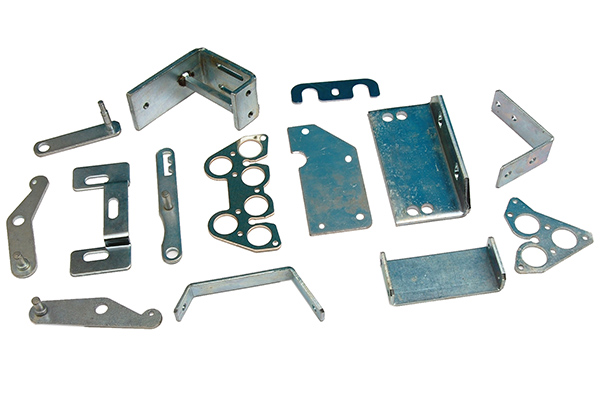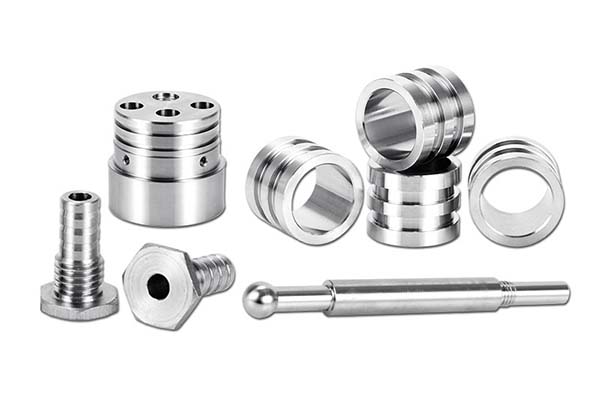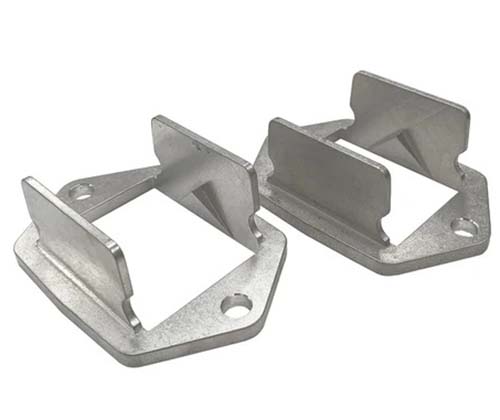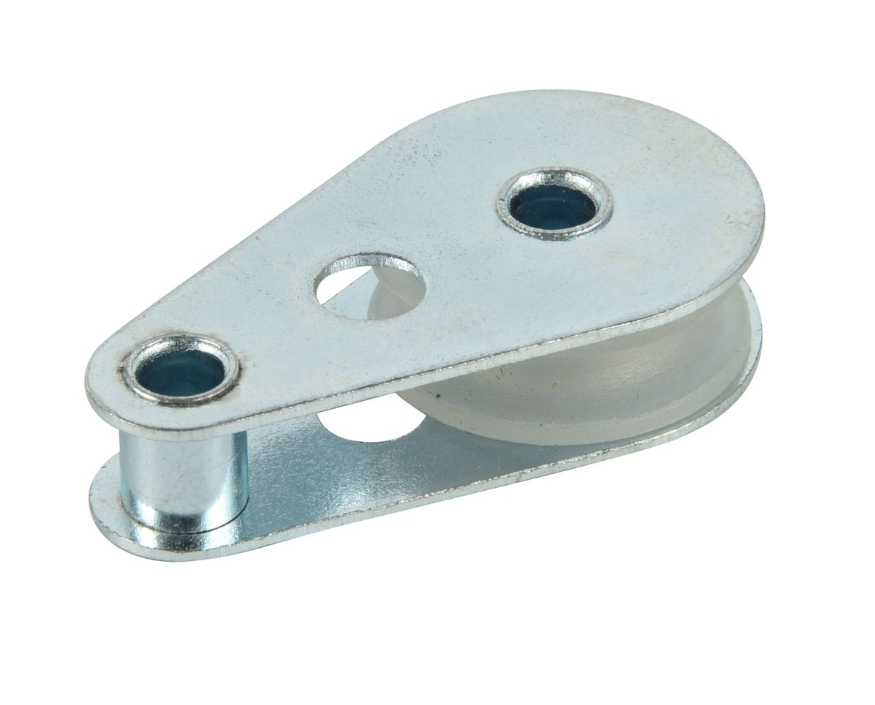
Manufacturers constantly seek ways to produce more parts faster, with higher precision, and at lower cost. Traditional stamping methods often require multiple presses, separate setups, and manual part transfer between operations. Each transfer introduces variability. Each setup consumes time. Progressive stamping solves these problems. It combines multiple operations into a single, continuous process. A strip of metal moves through a series of dies. Each die performs one operation. By the time the strip exits the press, a finished part emerges. This method is fast, precise, and highly automated. From automotive brackets to electronic connectors, progressive stamping produces the components that power modern industry.
How Does Progressive Stamping Work?
Progressive stamping starts with a coil of metal. The coil feeds into a press that contains a progressive die set. The die set has multiple stations. Each station performs a specific operation: piercing, blanking, forming, bending, or trimming.
As the press cycles, the strip advances through the stations. At each station, a portion of the strip is worked. The partially formed part moves to the next station for additional operations. At the final station, the finished part is separated from the strip. The process repeats continuously, producing a finished part with every press stroke.
What Are the Key Components of Progressive Stamping?
The Progressive Die
The progressive die is the heart of the process. It is a precision tool with multiple stations, each designed to perform a specific operation. Stations are arranged in sequence along the length of the strip.
| Station Type | Typical Operation |
|---|---|
| Pilot station | Establishes alignment holes |
| Piercing station | Cuts holes or slots |
| Blanking station | Cuts the rough shape |
| Forming station | Bends or shapes |
| Coining station | Compresses for detail |
| Cutoff station | Separates finished part |
Each station is precisely aligned so that the strip moves through in exact registration. Even a small misalignment can ruin the part.
The Stamping Press
The press provides the force that drives the die. Mechanical presses are common for progressive stamping. They offer high speed and consistent force. Servo presses offer additional control, allowing variable speed during the stroke. This is useful for complex forming operations.
Press sizes vary widely. A small press for electronic connectors might be 50 tons. A large press for automotive parts can be 1,000 tons or more.
The Feed System
The feed system advances the metal strip through the die. Roll feeds use precision rollers to pull the strip. Servo feeds use electric motors for precise control. The feed must advance the strip exactly one station per press stroke. Accuracy is typically ±0.02 mm or better.
What Happens at Each Die Station?
Station 1: Pilot Holes
The first station typically punches pilot holes. These holes align the strip for all subsequent operations. They are smaller than the final part features and are often located in areas that will become scrap.
Station 2: Piercing
Piercing stations cut holes, slots, or other openings in the strip. Multiple piercing stations may be needed for parts with many holes. Each station adds features in sequence.
Station 3: Blanking
Blanking cuts the rough shape of the part. But the blank is not yet separated. It remains attached to the strip by small carriers or webs. These carriers hold the part in place as it moves through forming stations.
Station 4: Forming and Bending
Forming stations bend, draw, or shape the part. This is where flat metal becomes a three-dimensional component. Multiple forming stations may be needed. Each station makes a small change, gradually shaping the part to avoid cracking or work hardening.
Station 5: Coining or Embossing
Coining compresses the metal to create detailed features. It is used for logos, text, or precision surfaces. Coining can also flatten areas or create fine details.
Station 6: Cutoff
The final station separates the finished part from the strip. The carriers are cut, and the part falls into a collection bin. The remaining strip—called scrap or skeleton—is wound onto a take-up reel or chopped.
What Are the Advantages of Progressive Stamping?
High Speed and Efficiency
Progressive stamping produces parts at high speed. A press running at 200 strokes per minute produces a finished part every 0.3 seconds. This speed makes progressive stamping ideal for high-volume production.
Consistent Quality
Because the process is automated and the strip remains in precise alignment, every part is identical. There is no variability from manual handling or multiple setups.
Reduced Labor Costs
One press and one operator can replace multiple machines and multiple operators. The automation reduces labor costs and minimizes human error.
Material Efficiency
Progressive dies are designed to nest parts closely on the strip. Scrap is minimized. For high-volume parts, material savings can be substantial.
Complex Parts from One Setup
Parts that require multiple operations—piercing, blanking, forming, and cutoff—can be produced in one continuous process. There is no need to transfer parts between presses or handle them between operations.
What Are the Limitations?
High Tooling Cost
Progressive dies are complex and expensive. A die for a simple part might cost $10,000 to $20,000. A die for a complex automotive part can exceed $100,000. The high tooling cost makes progressive stamping economical only for high-volume production.
Long Lead Times
Designing and building a progressive die takes time. Typical lead times range from 8 to 20 weeks, depending on complexity. This is not a process for urgent, short-run jobs.
Material Requirements
Progressive stamping works best with materials that have consistent thickness and good ductility. The material must also be available in coil form. Some materials are difficult to coil or have properties that vary along the strip.
Where Is Progressive Stamping Used?
Automotive
The automotive industry is the largest user of progressive stamping. Parts include:
- Engine brackets and mounts
- Transmission components
- Seat frames and adjusters
- Door latches and hinges
- Small structural reinforcements
A typical vehicle contains hundreds of progressive-stamped parts.
Electronics
Electronic devices demand small, precise parts in high volumes. Progressive stamping produces:
- Connector terminals
- Shielding cans
- Heat sink clips
- Battery contacts
- Lead frames for semiconductors
Appliances
Household appliances use stamped parts for:
- Hinges and brackets
- Control panel components
- Motor mounts
- Structural frames
Aerospace and Defense
Aerospace applications require precision and reliability. Progressive stamping produces:
- Small structural brackets
- Electrical connectors
- Shielding components
- Fastener components
How Do You Design for Progressive Stamping?
Part Complexity
Design parts with progressive stamping in mind. Avoid features that require forming in multiple directions. Where possible, keep bends in the same direction. This simplifies the die.
Material Selection
Choose materials with good ductility and consistent thickness. Aluminum, brass, and low-carbon steel are common. High-strength steels can be stamped but require more robust tooling.
Strip Layout
The layout of parts on the strip determines material efficiency and die complexity. Skilled die designers nest parts to minimize scrap while maintaining adequate carriers between parts.
Pilot Holes
Design parts to accommodate pilot holes. These holes are usually placed in areas that will become scrap. If the part has no natural scrap area, the die may include extra material that is removed at the cutoff station.
What Quality Controls Are Essential?
First Article Inspection
When a new die is set up, the first parts are measured thoroughly. Coordinate measuring machines (CMMs) verify all critical dimensions. The part must meet specifications before production begins.
In-Process Monitoring
Modern presses monitor:
- Strip position and alignment
- Punch force at each station
- Press speed and tonnage
- Part ejection
If any parameter moves outside limits, the press stops automatically.
Tool Maintenance
Progressive dies require regular maintenance. Punches are sharpened. Die surfaces are cleaned. Lubrication is replenished. A well-maintained die can run for millions of strokes.
Conclusion
Progressive stamping is a manufacturing method that combines speed, precision, and efficiency. It transforms a coil of metal into finished parts in one continuous process. The progressive die does the work—piercing, forming, bending, and cutting—in a sequence of stations. The press provides the force. The feed system advances the strip. The result is consistent, high-quality parts produced at high speed.
The process is not for every application. Tooling costs are high. Lead times are long. But for high-volume production of precision metal components, progressive stamping is unmatched. From the connectors in your phone to the brackets in your car, progressive-stamped parts are everywhere. Understanding how they are made helps you design better parts and choose the right manufacturing process for your needs.
FAQ About Progressive Stamping
What are the main advantages of progressive stamping over other manufacturing processes?
Progressive stamping offers cost efficiency, high precision, and scalability. It produces large quantities of identical parts with minimal waste and defects. The process is highly automated, reducing labor costs and human error. Multiple operations are combined into one continuous process, eliminating the need for part transfer between presses.
Which industries benefit the most from progressive stamping?
Automotive, electronics, appliances, aerospace, and defense industries benefit most. These sectors need high-precision parts with complex shapes, produced in large volumes. The automotive industry, in particular, relies heavily on progressive stamping for engine components, brackets, and structural parts.
How does progressive stamping compare to single-stage stamping?
Single-stage stamping performs one operation per press stroke. Complex parts require multiple presses or multiple hits in the same press with manual part transfer. Progressive stamping performs all operations in one continuous process. It is faster, more consistent, and requires less labor. However, tooling costs are higher, making it economical only for high volumes.
What is the typical minimum volume for progressive stamping?
There is no fixed minimum, but progressive stamping becomes cost-effective at volumes of 10,000 to 50,000 parts or more. Below that, the tooling cost per part may be too high. For lower volumes, single-stage stamping or other processes may be more economical.
How long do progressive dies last?
Die life depends on material, part complexity, and maintenance. Tool steel dies for mild steel can last 500,000 to 1,000,000 strokes. Carbide dies for high-volume work can exceed 5,000,000 strokes. Regular sharpening, cleaning, and lubrication extend die life significantly.
Contact Yigu Technology for Custom Manufacturing
Progressive stamping requires precision tooling, the right press, and deep process knowledge. At Yigu Technology, we specialize in custom progressive stamping for automotive, electronics, and industrial clients. Our team designs and builds progressive dies tailored to your part geometry. We run parts on modern servo and mechanical presses with automated feed systems. Quality control includes CMM inspection, in-process monitoring, and statistical process control. Whether you need terminals, brackets, or complex formed parts, we have the capabilities to deliver high volumes with consistent quality. Contact us today to discuss your project.