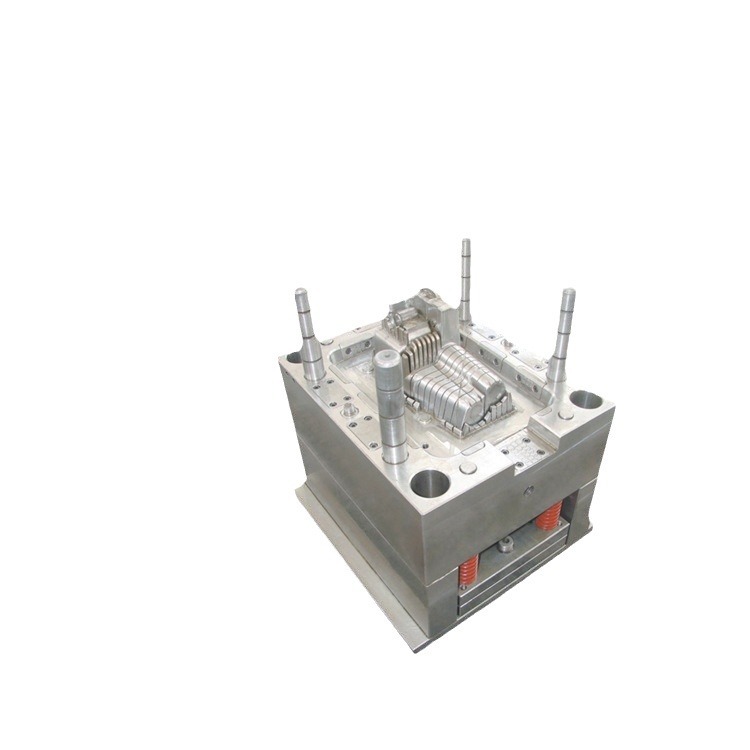
Introduction
You need a prototype mold that can handle high injection pressures—up to 15,000 psi. Standard aluminum like 6061 is too soft; it cracks or warps after a few thousand cycles. Steel is strong enough, but it takes weeks to machine and costs far more than you want to spend for a short production run.
You’re stuck between two imperfect options. Until you discover 7075-T6 aluminum.
7075-T6 is one of the strongest aluminum alloys available. It combines the lightweight benefits and fast machining of aluminum with strength approaching that of low-carbon steel. For high-pressure prototyping and low-volume production, it bridges the gap—delivering performance that 6061 can’t match at a fraction of the cost and lead time of steel.
This guide explores what makes 7075-T6 unique, its properties, applications, and how to maximize its performance in demanding mold applications.
What Is 7075-T6 Aluminum Alloy?
A High-Strength, Heat-Treated Alloy
7075-T6 is a zinc-magnesium-copper alloy aluminum, part of the 7000 series known for exceptional strength. The T6 temper indicates it has been solution heat-treated and artificially aged to achieve maximum strength and hardness.
| Property | Value |
|---|---|
| Tensile strength | 503 MPa (73,000 psi) |
| Yield strength | 434 MPa (63,000 psi) |
| Hardness (Brinell) | 150–160 HB |
| Thermal conductivity | 130 W/m·K |
| Density | 2.81 g/cm³ |
| Thermal expansion | 23.6 × 10⁻⁶/°C |
Standard Specifications
7075-T6 complies with:
- ASTM B209 (sheet/plate)
- ASTM B211 (bar/stock)
Chemical composition ensures consistent properties:
- Zinc: 5.1–6.1%
- Magnesium: 2.1–2.9%
- Copper: 1.2–2.0%
- Iron: 0.3–0.9%
How Does 7075-T6 Compare to Other Materials?
| Material | Tensile Strength (MPa) | Hardness (HB) | Thermal Conductivity (W/m·K) | Cost | Best For |
|---|---|---|---|---|---|
| 7075-T6 (Aluminum) | 503 | 150–160 | 130 | Medium | High-pressure; low-volume (10,000–50,000 cycles) |
| 6061-T6 (Aluminum) | 310 | 95–105 | 167 | Low | Standard prototyping; low-pressure |
| P20 (Steel) | 800–1,000 | 280–340 | 33 | High | Medium-volume production |
| H13 (Steel) | 1,000+ | 400–500 | 24 | Very High | High-volume; high-temperature |
Key takeaway: 7075-T6 offers 2–3× higher tensile strength than 6061-T6 and handles injection pressures up to 15,000 psi—far beyond 6061’s 10,000 psi limit. It machines 40–50% faster than steel and costs significantly less upfront.
What Properties Make 7075-T6 Ideal for Demanding Molds?
High Strength
With tensile strength of 503 MPa and yield strength of 434 MPa, 7075-T6 rivals some low-carbon steels. This strength allows it to withstand:
- Injection molding pressures up to 15,000 psi
- High clamping forces from engineering plastics (nylon, PBT, glass-filled materials)
Real impact: A prototype mold for a glass-filled polypropylene automotive component required 14,000 psi injection pressure. 6061 molds failed after 3,000 cycles. 7075-T6 ran for 25,000 cycles without deformation.
High Hardness
7075-T6 achieves Brinell hardness of 150–160 HB —significantly higher than 6061-T6 (95–105 HB). This hardness:
- Enhances wear resistance
- Extends mold life in repeated use
- Resists scratching and surface degradation
Good Corrosion Resistance
While not as corrosion-resistant as 5000-series alloys, 7075-T6 resists:
- Water-based coolants
- Mild chemicals
- Typical shop environments
For humid conditions or extended use, chromate conversion coatings or anodizing significantly boost corrosion resistance.
Excellent Fatigue Resistance
Molds undergo repeated opening and closing—stress cycles that can cause failure in weaker materials. 7075-T6 endures 100,000+ cycles at 50% of yield strength —20–30% better than 6061.
Good Thermal Conductivity
At 130 W/m·K , 7075-T6 conducts heat:
- 3× faster than steel (40–50 W/m·K)
- Faster cooling reduces injection molding cycle times by 10–15% compared to steel molds
Machinability
7075-T6 machines well but requires sharper tools than 6061 due to its higher strength.
| Parameter | Recommendation |
|---|---|
| Tools | Carbide with positive rake |
| Cutting speed | 200–300 SFM |
| Feed | 50–100 ipm |
| Coolant | Essential—prevents work hardening |
Thermal Expansion
7075-T6 expands at 23.6 × 10⁻⁶/°C —similar to other aluminum alloys. Proper mold design (expansion gaps in cooling channels) manages this effectively.
Where Is 7075-T6 Used in Mold Making?
High-Precision Molds
For parts requiring tolerances of ±0.0002 inches —aerospace components, microelectronics—7075-T6’s dimensional stability ensures consistent quality across production runs.
Low-Volume Production Molds
Runs of 10,000–50,000 parts benefit from 7075-T6’s strength:
- Specialty automotive components
- Industrial tools
- Custom machinery parts
Injection Molding
7075-T6 handles high-pressure injection molding of engineering plastics:
- Nylon (PA)
- PBT
- Glass-filled polypropylene (10–15% filler)
These materials require higher clamping forces than standard plastics—within 7075-T6’s capabilities.
Aerospace Molds
Prototyping molds for aerospace parts (interior components, brackets) rely on 7075-T6’s strength-to-weight ratio. It mimics the performance of production materials while reducing prototype costs.
Automotive Molds
For prototype molds testing high-stress parts—engine covers, suspension components—7075-T6 withstands the pressures of molding glass-filled materials without the expense and lead time of steel.
Consumer Electronics Molds
High-precision molds for smartphone frames and laptop hinges use 7075-T6 to maintain tight tolerances during low-volume production runs.
How Do You Machine and Fabricate 7075-T6?
Precision Machining
| Operation | Speed (SFM) | Tool |
|---|---|---|
| Roughing | 200–250 | Carbide |
| Finishing | 250–300 | Carbide (sharp) |
Key considerations:
- Cutting forces are 30–40% higher than for 6061
- Use positive rake angles and sharp edges
- Coolant is critical to prevent work hardening
- Replace tools at 50% wear to maintain precision
CNC Milling
3-axis and 5-axis CNC milling achieve tight tolerances (±0.0002 inches). Adaptive milling strategies reduce tool wear by adjusting feed rates in complex geometries.
EDM (Electrical Discharge Machining)
EDM works well for intricate details. 7075-T6’s high conductivity requires lower current settings to prevent electrode wear. The process produces clean, burr-free edges.
Grinding
| Parameter | Recommendation |
|---|---|
| Wheel | Silicon carbide |
| Grit | 400-grit achieves Ra 0.05 μm |
| Pressure | Light—prevents clogging |
Surface Finishing
Hard anodizing (Type III) is recommended for molds running >20,000 cycles:
- Adds 50–100 μm layer
- Hardness up to 50 HRC
- Improves wear resistance by 2–3×
Machining Challenges
| Challenge | Solution |
|---|---|
| Built-up edge (BUE) | Sharp tools; high-pressure coolant; chip breakers |
| Work hardening | Consistent feed; avoid dwell time |
| Tool wear | Replace at 50% wear; carbide tools |
How Is 7075-T6 Heat Treated?
The T6 temper is achieved through a specific sequence:
| Step | Process | Purpose |
|---|---|---|
| Solution treatment | Heat to 820–840°F (438–449°C) for 2–3 hours | Dissolve zinc, magnesium, copper into matrix |
| Quenching | Rapidly cool in cold water (60–80°F) | Trap alloying elements in solution |
| Artificial aging | Heat to 250°F (121°C) for 24 hours | Form fine precipitates; achieve T6 strength |
Post-treatment inspection:
- Verify hardness: 150–160 HB
- Verify tensile strength: ≥503 MPa
- Ultrasonic testing detects internal defects
Important: Avoid exposing 7075-T6 to temperatures >250°F (121°C) during use—this can over-age the alloy and reduce strength.
How Does 7075-T6 Compare to 6061-T6?
| Property | 7075-T6 | 6061-T6 | Advantage |
|---|---|---|---|
| Tensile strength | 503 MPa | 310 MPa | 7075 is 62% stronger |
| Yield strength | 434 MPa | 276 MPa | 7075 handles higher pressure |
| Hardness | 150–160 HB | 95–105 HB | 7075 wears better |
| Thermal conductivity | 130 W/m·K | 167 W/m·K | 6061 cools faster |
| Corrosion resistance | Moderate | Good | 6061 better in harsh environments |
| Cost | Higher | Lower | 6061 more economical for low-pressure |
When to choose 7075: High injection pressures, tighter tolerances, or where mold life matters.
When to choose 6061: Low-pressure applications, where cost is primary, or where maximum cooling speed is needed.
Yigu Technology’s Perspective
At Yigu Technology, we recommend 7075-T6 for clients needing strong, fast-turnaround molds. It’s our go-to for high-pressure prototype molds, where its strength prevents deformation during testing.
We’ve seen 7075-T6:
- Reduce prototype lead times by 40% compared to steel
- Handle 15,000 psi injection pressures for engineering plastics
- Achieve ±0.0002 inch tolerances with proper machining
Our team uses carbide tools and high-pressure coolant to achieve precision in 7075-T6. For clients needing extended mold life, we recommend hard anodizing (Type III), which increases wear resistance by 2–3×.
For low-volume production (10,000–50,000 cycles), 7075-T6 is a cost-effective alternative to steel—delivering the strength you need without the lead time or cost premium.
Conclusion
7075-T6 aluminum solves the dilemma between aluminum’s speed and steel’s strength. It offers:
- Strength: 503 MPa tensile—handles 15,000 psi injection pressure
- Hardness: 150–160 HB—wear resistance for 10,000–50,000 cycles
- Machinability: 200–300 SFM cutting speeds—40% faster than steel
- Fatigue resistance: 100,000+ cycles at 50% yield strength
- Cost: Significantly less than steel; moderate premium over 6061
For high-pressure prototyping and low-volume production runs—where 6061 is too weak and steel is too slow—7075-T6 delivers the performance you need at a price you can justify.
FAQ
How does 7075-T6 compare to steel in terms of mold life?
7075-T6 molds last 10,000–50,000 cycles for non-abrasive plastics. Steel molds last 1 million+ cycles. For low-volume runs (10,000–50,000 parts), 7075-T6 is sufficient and far more cost-effective than steel. For high-volume production, steel remains the better investment.
Can 7075-T6 molds handle abrasive plastics like glass-filled nylon?
7075-T6 with hard anodizing (Type III) can handle 10–15% glass-filled plastics for 10,000–20,000 cycles. Higher filler content (>20%) will cause excessive wear—use steel molds for these applications.
Is 7075-T6 suitable for food-grade or medical mold applications?
No. 7075-T6 contains copper, which can leach. It is not recommended for direct food or medical contact. Use 5083 aluminum or stainless steel (S136) for these applications, where corrosion resistance and biocompatibility are critical.
What’s the best way to extend 7075-T6 mold life?
Hard anodizing (Type III) adds a 50–100 μm layer with hardness up to 50 HRC, improving wear resistance by 2–3×. For abrasive materials, this can extend life from 10,000 to 25,000 cycles. Regular cleaning and avoiding corrosive chemicals also help.
How does 7075-T6 compare to 6061-T6 for mold making?
7075-T6 is significantly stronger (503 MPa vs. 310 MPa) and harder (150–160 HB vs. 95–105 HB), making it suitable for higher injection pressures and longer runs. 6061-T6 has better corrosion resistance and thermal conductivity, and costs less. Choose 7075 when strength and wear resistance matter most; choose 6061 for low-pressure, cost-sensitive applications.
Contact Yigu Technology for Custom Manufacturing
At Yigu Technology, we specialize in high-strength aluminum molds using 7075-T6. Our team helps you select the right material for your pressure, volume, and precision requirements.
We offer:
- Custom 7075-T6 mold design and manufacturing
- Precision CNC machining with ±0.0002 inch tolerances
- Hard anodizing (Type III) for extended wear life
- Rapid turnaround for prototyping and low-volume production
[Contact Yigu Technology today] to discuss your high-pressure mold project. Let’s build molds that are strong enough for demanding applications—without the wait and cost of steel.