Introduction
You’re running a die casting operation. Molten aluminum at 660°C fills the mold. Cycle after cycle, the tool heats and cools rapidly. After a few thousand shots, you see it: fine cracks spreading across the surface. Within weeks, the tool fails. Production stops. Replacement costs mount.
This scenario plays out daily in foundries and forging shops worldwide. The culprit? Using the wrong steel for the job.
Hot work tool steels are engineered to survive where ordinary steels fail. They maintain strength at red-hot temperatures, resist thermal fatigue, and withstand the mechanical stress of shaping metal under extreme conditions.
This guide explores what makes hot work steels unique, how they compare to cold work grades, and how to select the right material for your high-temperature application.
What Makes Hot Work Tool Steels Unique?
Engineered for Extreme Conditions
Hot work steels are designed for one purpose: performing under heat. Unlike cold work steels that excel at room temperature, hot work grades maintain their properties when the mercury rises.
| Property | Why It Matters |
|---|---|
| High-temperature strength | Resists deformation under load at elevated temperatures |
| Hot hardness | Stays hard when red-hot—critical for maintaining tool shape |
| Thermal fatigue resistance | Withstands repeated heating and cooling without cracking |
| Thermal conductivity | Dissipates heat evenly, preventing hot spots |
| Red hardness | Retains hardness after prolonged exposure to high temperatures |
| Dimensional stability | Maintains tight tolerances despite thermal expansion |
High-Temperature Strength
Hot work steels maintain their strength at temperatures up to 1,200°F (649°C) and beyond. For context, H13—the industry workhorse—retains 80% of its room-temperature strength at 1,000°F (538°C) .
This matters. In hot forging, dies experience compressive forces exceeding 50,000 psi while glowing red. A steel that softens under heat would deform instantly. Hot work steels hold their shape.
Hot Hardness
Hardness at temperature is measured differently from room-temperature hardness. At 1,000°F, hot work steels like H13 and 1.2344 maintain 45–50 HRC. Cold work steels like D2 drop to 30 HRC at the same temperature—too soft to resist wear or deformation.
Resistance to Thermal Fatigue
Thermal fatigue is the silent killer of hot work tools. Each cycle, the surface heats rapidly, then cools. This expansion and contraction creates stress. Over time, cracks form.
Hot work steels resist this with formulations that absorb thermal stress without cracking. Testing shows H13 withstands 500+ thermal cycles (1,000°F to room temperature) without failure. D2 fails after 50–100 cycles.
What Are the Main Hot Work Steel Grades?
H13 (AISI Grade)
The workhorse of hot work steels. Composition: 5% chromium, 1.5% molybdenum, 1% vanadium. Balances high-temperature strength and toughness. Ideal for die casting and hot forging.
Best for: General-purpose hot work applications. The go-to choice for most die casting and forging dies.
1.2344 (DIN Grade)
Europe’s equivalent to H13 with slightly better thermal stability. Often used in automotive hot stamping dies where consistent performance across thousands of cycles is critical.
Best for: Hot stamping, high-volume automotive applications.
SKD61 (JIS Grade)
Japan’s standard hot work steel. Lower silicon content than H13 improves polishability. Works well for plastic injection molds handling high-temperature resins.
Best for: Injection molding of PEEK, LCP, and other high-performance plastics.
Powder Metallurgy Hot Work Steels
Ultra-high-performance grades like ASP-2059. Uniform carbide distribution from powder metallurgy processing resists wear 20–30% better than H13. Ideal for extreme applications like extruding superalloys.
Best for: Hot extrusion of stainless steel, titanium, and nickel-based alloys.
High-Vanadium Grades (H11)
With 3–5% vanadium, these steels excel in red hardness. Perfect for continuous hot rolling where tools stay hot for hours, not minutes.
Best for: Hot rolling mills, continuous high-temperature operations.
High-Molybdenum Grades (H19)
Molybdenum boosts toughness at high temperatures. Suitable for impact-heavy hot forging of large components.
Best for: Large forging dies, heavy-impact applications.
How Are Hot Work Steels Heat Treated?
Heat treatment unlocks the properties of hot work steels. Skip steps or cut corners, and the steel won’t perform.
Annealing
Prepares steel for machining by softening it to 200–240 HB.
- Heat to 1,500–1,550°F (815–845°C)
- Hold for 2–4 hours
- Cool slowly (≤50°F/hour) to prevent internal stress
Hardening
Most hot work steels harden at 1,850–2,050°F (1,010–1,120°C) . Grade matters:
- H13: 1,875°F (1,024°C)
- 1.2344: 1,925°F (1,052°C)
Quenching
Vacuum quenching is preferred. It cools steel evenly (200–300°F/second) without oxidation, preserving surface quality. Oil quenching works for simpler shapes but may cause uneven cooling.
Tempering
Critical for balancing hardness and toughness. H13 is typically tempered at 1,000–1,100°F (538–593°C) for 2–4 hours, resulting in 44–48 HRC —ideal for withstanding thermal stress.
Surface Treatments
Nitriding adds a 5–10 micron hard layer, increasing surface hardness to 65–70 HRC and improving wear resistance at elevated temperatures by 40% .
Where Are Hot Work Steels Used?
Hot Forging Dies
H13 and 1.2344 dominate here. Dies withstand extreme pressure (up to 50,000 psi) and heat (1,200–1,800°F) while shaping metal billets into automotive parts, aerospace components, and industrial tools.
Die Casting Molds
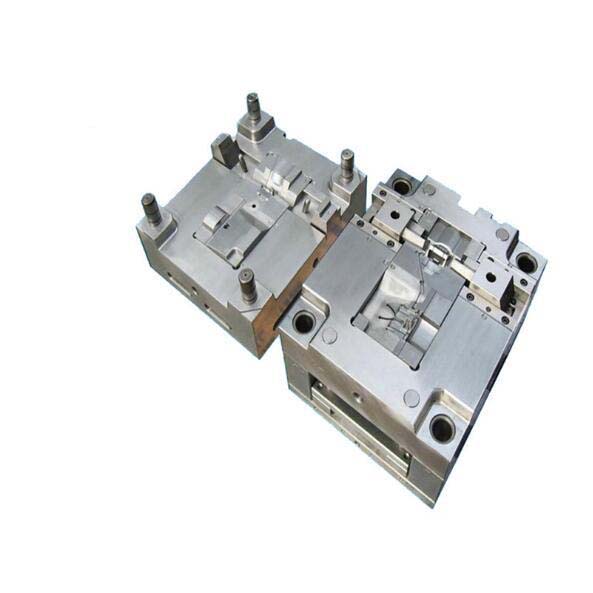
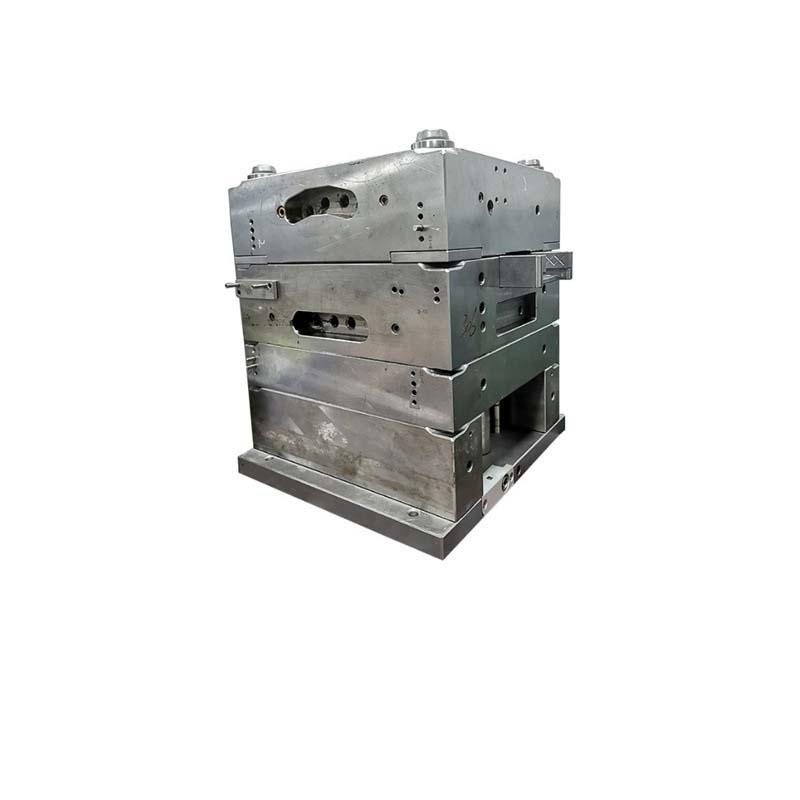
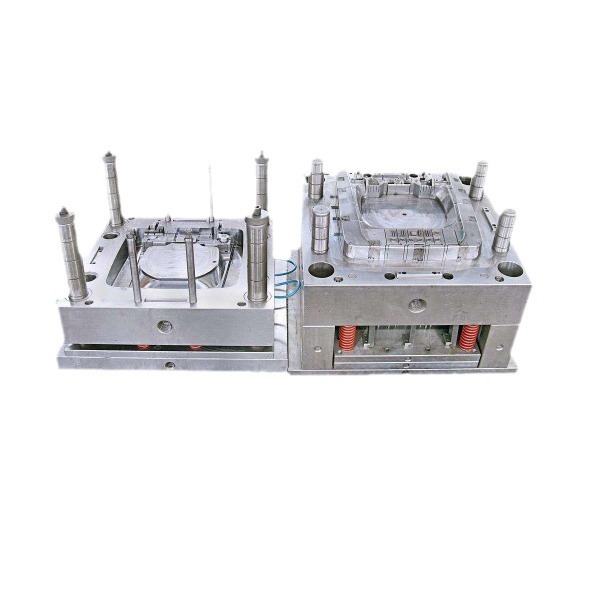
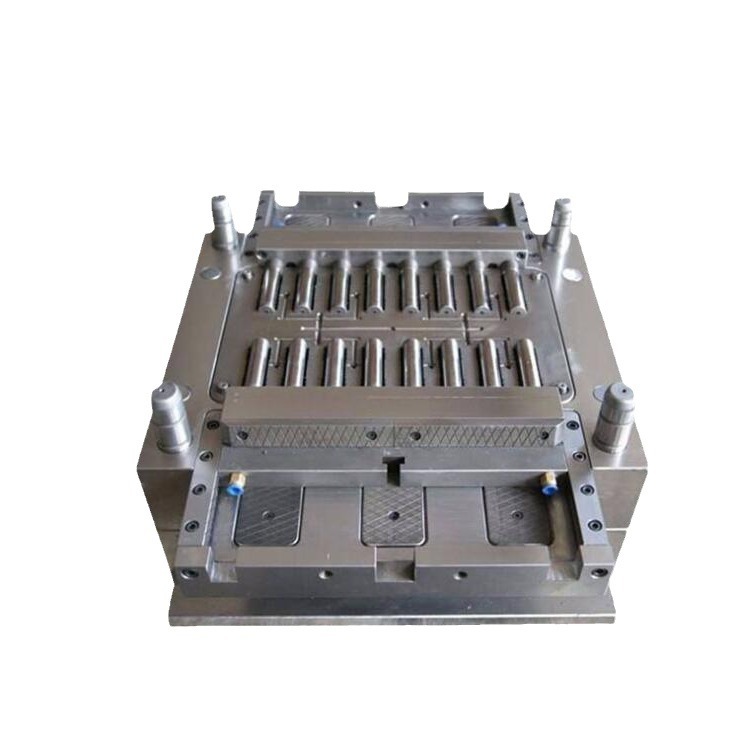
SKD61 and H13 handle the cyclic heating from molten aluminum (660°C) and cooling. Properly treated molds last 50,000–150,000 cycles —3× longer than cold work steels in the same application.
Hot Extrusion Tools
Powder metallurgy grades excel in extruding stainless steel and titanium. Die temperatures exceed 1,500°F. These tools last 2–3× longer than H13 in such harsh conditions.
Injection Molding for High-Temperature Plastics
SKD61 molds handle PEEK and other high-performance resins processed at 700–800°F. They maintain surface finish for 100,000+ cycles—essential for medical and aerospace components.
Automotive Hot Stamping
Hot stamping dies (using 1.2344) shape boron steel into crash-resistant parts. Blanks at 900°C cool to 200°C in seconds. Dies maintain precision through this extreme thermal shock.
How Do Hot Work Steels Perform Against Cold Work Grades?
| Property | Hot Work (H13) | Cold Work (D2) |
|---|---|---|
| Maximum service temperature | 1,200°F+ | ≤600°F |
| Hot hardness at 1,000°F | 45–50 HRC | 30–35 HRC |
| Thermal fatigue resistance | Excellent | Poor |
| Toughness at high temp | Good | Poor |
| Wear resistance at room temp | Good | Excellent |
| Cost | Higher | Lower |
D2 vs. H13: D2 offers superior room-temperature wear resistance but fails quickly at high temperatures. For hot work, D2 is unsuitable.
DC53 vs. SKD61: DC53’s toughness is no match for SKD61’s thermal stability. DC53 warps and cracks in die casting; SKD61 thrives.
Application choice: Cold work steels excel in low-heat, high-wear tasks (stamping cold metal). Hot work steels dominate high-heat, cyclic stress applications (die casting, hot forging).
What Performance and Durability Can You Expect?
Mold Life Expectancy
H13 die casting molds last 50,000–150,000 cycles, depending on the alloy cast. For aluminum, expect 100,000+ cycles—far exceeding the 10,000 cycles of cold work steel in the same application.
Resistance to Thermal Cracking
Properly heat-treated hot work steels resist thermal shock. In testing, H13 withstands 500+ thermal cycles (1,000°F to 70°F) without cracking. D2 fails after 50–100 cycles.
Cost-Effectiveness
H13 costs 2–3× more than D2 upfront. But its 10× longer life in hot applications makes it far cheaper over time. For high-volume die casting, switching to H13 reduces annual tooling costs by 40–60% .
Production Cycle Time
Hot work steels maintain their shape, reducing rework. This cuts cycle times by 10–15% compared to using worn or warped tools from inferior materials.
How Do You Maintain and Repair Hot Work Tools?
Preventive Maintenance
- Clean tools after each shift to remove scale and debris
- Apply protective coating during storage to prevent oxidation
- Inspect regularly for early signs of thermal cracking
Reconditioning
Grinding and re-tempering can restore worn H13 dies 3–5 times, extending life by 2–3× . Far more cost-effective than replacing the entire tool.
Crack Repair
Small thermal cracks can be welded with matching filler rods. Post-weld heat treatment is essential to restore toughness and prevent further cracking.
Tool Sharpening
For hot shearing tools, sharpen edges when wear reaches 0.002 inches. Use cubic boron nitride (CBN) wheels to avoid overheating the steel.
What Standards Govern Hot Work Steels?
| Standard | Grades Covered | Key Requirements |
|---|---|---|
| ASTM A681 | H13, H11, H19 | Chemical composition, heat treatment |
| DIN 1.2344 | 1.2344 | Carbide distribution, thermal stability |
| JIS G4404 | SKD61 | Toughness, sulfur and phosphorus limits |
ISO 9001-certified manufacturers adhere to strict processes from raw material testing to final heat treatment, ensuring each batch meets specifications.
Conclusion
Hot work tool steels are specialized materials engineered for the toughest manufacturing environments. They maintain strength at red-hot temperatures, resist thermal fatigue, and survive thousands of cycles that would destroy ordinary steels.
Key takeaways:
- H13 and 1.2344 balance performance and cost for most applications
- Proper heat treatment is non-negotiable—annealing, hardening, quenching, tempering
- Hot work steels cost more upfront but deliver 10× longer life in hot applications
- Powder metallurgy grades offer even greater wear resistance for extreme conditions
For die casting, hot forging, extrusion, and high-temperature molding, hot work steels aren’t an option—they’re the foundation of reliable production.
FAQ
Can hot work steels be used for cold work applications?
Technically yes, but it’s not cost-effective. Hot work steels have lower room-temperature hardness than cold work grades, leading to shorter tool life in cold stamping or extrusion. Use the right steel for the right temperature range.
What’s the best hot work steel for die casting aluminum?
H13 and SKD61 are ideal. Their resistance to thermal fatigue and good polishability make them perfect for aluminum die casting, with typical mold lives of 100,000+ cycles.
How does nitriding improve hot work tool performance?
Nitriding creates a hard, wear-resistant surface layer (65–70 HRC) while maintaining core toughness. This increases wear resistance at elevated temperatures by 40%, extending tool life in abrasive hot extrusion applications.
What’s the difference between H13 and 1.2344?
They are functionally equivalent—H13 is the AISI grade, 1.2344 is the DIN equivalent. Some users report 1.2344 has slightly better thermal stability. Both are excellent choices for most hot work applications.
How often should I recondition hot work tools?
Inspect regularly. Recondition when you see signs of wear or small thermal cracks. With proper maintenance, H13 dies can be reconditioned 3–5 times, extending total life by 2–3× the original.
Contact Yigu Technology for Custom Manufacturing
At Yigu Technology, we specialize in precision hot work tooling for demanding applications. Our in-house heat treatment experts optimize each grade to your specific requirements—whether you need die casting molds, hot forging dies, or extrusion tooling.
We offer:
- H13, 1.2344, SKD61, and powder metallurgy grades
- Vacuum heat treatment for consistent results
- Nitriding and surface treatment services
- CMM inspection and full documentation
[Contact Yigu Technology today] to discuss your hot work tooling needs. Let’s build tools that stand up to the heat.