Introduction
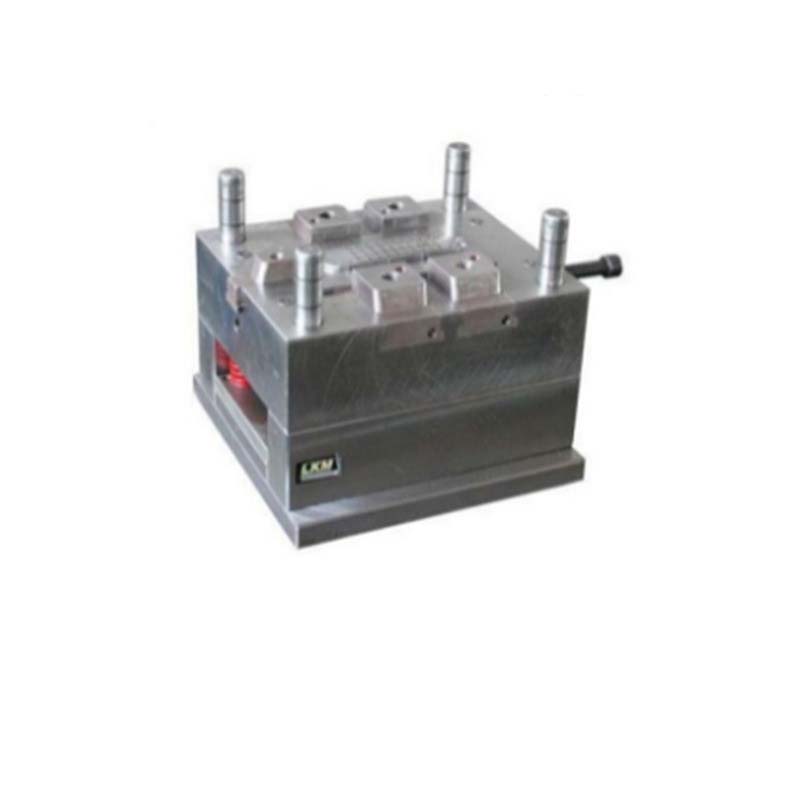
You’re manufacturing medical syringes. Or food containers. Or cosmetic packaging. Your mold is exposed to harsh cleaning agents, repeated sterilization, and strict hygiene standards. Standard mold steels like P20 or NAK80 corrode under these conditions—rust forms, surfaces degrade, parts become contaminated. The result: premature mold failure, costly replacements, and regulatory non-compliance.
This is where S136 (420 Stainless) becomes indispensable. As a premium martensitic stainless steel, S136 combines exceptional corrosion resistance with high polishability and durability. It’s the gold standard for molds in medical, food processing, and cosmetic applications—where hygiene and precision are non-negotiable.
This guide explores why S136 (420 Stainless) is the material of choice for demanding environments, its key properties, and how to maximize its performance.
What Is S136 (420 Stainless) Steel?
A Premium Stainless Steel for Molds
S136 is a modified version of 420 stainless steel, designed specifically for mold making. It’s a martensitic stainless steel—meaning it can be hardened through heat treatment to achieve excellent wear resistance while maintaining corrosion resistance.
| Property | Value |
|---|---|
| Composition | 13–14% chromium, 0.3–0.4% carbon |
| Hardness (after heat treat) | 48–52 HRC |
| Toughness | 15–20 J (Charpy impact) |
| Corrosion resistance | Superior—withstands harsh cleaning agents |
| Polishability | Mirror finish (Ra 0.01 μm) achievable |
| Thermal stability | Up to 400°F (204°C) |
Standard Specifications
- S136: Swedish/SSAB standard, optimized for mold making with low impurities
- 420 stainless: ASTM A276 standard
S136 features lower sulfur and phosphorus than standard 420, resulting in better polishability and more consistent corrosion resistance.
How Does S136 Compare to Other Mold Steels?
| Material | Hardness (HRC) | Corrosion Resistance | Polishability | Cost | Best For |
|---|---|---|---|---|---|
| S136 (420 Stainless) | 48–52 | Excellent | Excellent | High | Medical; food; cosmetics |
| NAK80 | 40–42 | Moderate | Excellent | Moderate | High-gloss; non-corrosive |
| 718 | 32–36 | Moderate | Good | Moderate | High-volume general purpose |
| P20 | 28–32 | Low | Good | Low | Medium-volume general purpose |
Key takeaway: S136 offers 3–4× better corrosion resistance than NAK80 and lasts 5–10× longer in corrosive environments than P20. The higher upfront cost is justified by extended mold life and eliminated contamination risk.
What Properties Make S136 Ideal for Demanding Applications?
High Hardness and Wear Resistance
After heat treatment, S136 achieves 48–52 HRC —higher than NAK80 (38–42 HRC) and significantly higher than P20 (28–32 HRC). This hardness ensures excellent wear resistance, even in high-volume production of non-abrasive plastics. S136 molds typically last 1–2 million cycles in medical injection molding applications.
Good Toughness
Despite its high hardness, S136 maintains good toughness (15–20 J in Charpy impact tests). This prevents cracking during repeated sterilization cycles, which create thermal stress. Lesser steels may develop micro-cracks from autoclaving; S136 withstands the stress.
Superior Corrosion Resistance
S136’s high chromium content (13–14%) forms a passive oxide layer that protects against corrosion. It withstands:
- Ethanol and isopropyl alcohol (common disinfectants)
- Weak acids (used in cleaning agents)
- High-pressure steam sterilization (autoclaving at 250°F/121°C)
- Salt spray: 500+ hours without rust (vs. 50–100 hours for P20)
Real impact: A medical device manufacturer using P20 molds saw rust after 6 months of daily cleaning with disinfectants. Switching to S136 eliminated rust—the mold remained pristine after 3 years of the same cleaning protocol.
Excellent Polishability
S136 polishes to a mirror finish (Ra 0.01 μm) with proper technique. While it requires 20–30% more polishing time than NAK80, the result is a surface that:
- Resists bacterial adhesion
- Produces flawless cosmetic parts
- Maintains finish through millions of cycles
Its low inclusion content ensures no micro-scratches—critical for optical and cosmetic applications.
Thermal Stability
S136 maintains dimensional stability at temperatures up to 400°F (204°C) —well above autoclave sterilization temperatures (250°F). This ensures molds maintain precision through repeated heating cycles.
Where Is S136 Used in Mold Making?
Medical Device Molds
S136 is essential for:
- Syringes and inhalers
- Surgical tool housings
- Diagnostic equipment components
- Implantable device manufacturing tools
Why: Medical molds face repeated cleaning with harsh disinfectants and autoclaving. S136 withstands these conditions while preventing bacterial growth in mold cavities—critical for patient safety.
Food-Grade Molds
Molds for:
- Plastic food containers
- Beverage caps
- Utensils
- Food packaging
Why: S136 resists corrosion from acidic foods and cleaning agents. It meets FDA standards for food contact, ensuring no metal particles leach into food products.
Cosmetic Packaging Molds
Lipstick tubes, perfume bottles, skincare containers require:
- Flawless surface finish
- Resistance to cosmetic chemicals (alcohols, oils)
S136 delivers both—maintaining mirror surfaces even after prolonged contact with these substances.
High-Precision Molds
Applications demanding tight tolerances:
- Microfluidic devices
- Optical components
- Electronic sensors
- Cleanroom manufacturing
Why: S136’s dimensional stability and low outgassing make it ideal for cleanroom environments. Its polishability ensures parts meet tolerances of ±0.0001 inches .
Automotive Molds
Components requiring fluid resistance:
- Fuel system parts
- Coolant reservoirs
- Under-hood components exposed to oils and coolants
S136 withstands exposure to gasoline, oils, and coolants better than standard steels.
How Do You Machine and Fabricate S136?
Precision Machining
S136 is best machined in its annealed state (200–250 HB) to reduce work hardening.
| Parameter | Recommendation |
|---|---|
| Tools | Carbide with positive rake angle |
| Roughing speed | 40–60 SFM |
| Finishing speed | 30–40 SFM |
| Coolant | Essential—dissipates heat |
Challenge: S136 work-hardens quickly. Even light cuts can increase surface hardness by 5–10 HRC, leading to tool chipping. Regular tool inspection prevents poor surface finishes.
CNC Milling
3-axis and 5-axis CNC milling are suitable. Key techniques:
- Climb milling (rather than conventional) reduces tool pressure and work hardening
- Minimize dwell time to avoid localized heating
- Rigid setups prevent vibration
EDM (Electrical Discharge Machining)
EDM is ideal for complex geometries, as it avoids mechanical stress. Use deionized water as dielectric to prevent corrosion during machining. Remove the recast layer (0.0001–0.0002 inches) via polishing to maintain corrosion resistance.
Grinding
| Parameter | Recommendation |
|---|---|
| Wheel | Resin-bonded diamond (aluminum oxide wears quickly) |
| Coolant | Continuous application to prevent heat-induced oxidation |
Surface Finishing
Polishing S136 requires patience:
- Start with 400-grit sandpaper
- Progress to 2000-grit
- Finish with 1–3 μm diamond compound
Result: Ra 0.01 μm —a true mirror finish. Takes 20–30% longer than NAK80 but yields a surface that resists bacterial adhesion and produces flawless parts.
How Is S136 Heat Treated?
Proper heat treatment is critical to unlocking S136’s full corrosion resistance and hardness.
| Step | Process | Purpose |
|---|---|---|
| Hardening | Heat to 1850–1900°F (1010–1038°C), hold 30–45 min, quench in oil or air | Forms martensitic structure; achieves 50–52 HRC |
| Tempering | Heat to 300–400°F (149–204°C) for 2 hours | Reduces brittleness; maintains 48–50 HRC |
| Annealing | Heat to 1500–1550°F (815–845°C) for 2 hours, cool slowly | Softens to 200–250 HB for easier machining |
| Passivation | Immerse in nitric acid | Enhances oxide layer; removes free iron; mandatory for medical/food molds |
Post-treatment inspection:
- Hardness testing: Rockwell C scale
- Water spot test: No rust after 24 hours exposure to distilled water
Yigu Technology’s Perspective
At Yigu Technology, we recommend S136 (420 Stainless) for clients in medical, food, and cosmetic industries. Its corrosion resistance eliminates the risk of mold degradation in harsh cleaning environments—reducing replacement costs by 60–70% compared to P20.
We’ve found S136 critical for FDA-compliant molds. Even minor rust can lead to part rejection. With S136, our clients maintain production with confidence.
While S136 requires more careful machining—specialized carbide tools, slower speeds, and passivation processes—its long-term performance justifies the effort. We deliver S136 molds that maintain precision and surface finish for 1+ million cycles in hygiene-critical applications.
Conclusion
S136 (420 Stainless) is the material of choice for molds in demanding, hygiene-critical environments. It offers:
- Hardness: 48–52 HRC—excellent wear resistance
- Corrosion resistance: 500+ hours salt spray; withstands harsh disinfectants
- Polishability: Mirror finish (Ra 0.01 μm)
- Thermal stability: Withstands autoclaving and repeated sterilization
- Mold life: 1–2 million cycles in medical applications
For medical devices, food packaging, cosmetic containers, and high-precision components, S136 delivers the performance that standard steels can’t match. The higher upfront cost is an investment in reliability, compliance, and long-term productivity.
FAQ
How does S136 compare to 420 stainless in mold making?
S136 is a premium version of 420 with lower impurities, better polishability, and more consistent corrosion resistance. It’s preferred for high-precision, cosmetic molds. Standard 420 is used in less demanding corrosion-resistant applications where surface finish requirements are lower.
Can S136 be used for molds requiring frequent autoclaving?
Yes. S136 withstands repeated autoclaving (250°F/121°C steam) without losing hardness or corrosion resistance. Its thermal stability and toughness prevent cracking from thermal stress—ideal for medical molds that undergo daily sterilization.
Is S136 cost-effective for non-hygiene applications?
For non-corrosive environments, S136 is often overkill. NAK80 or 718 offer better value, providing sufficient polishability and durability at a lower cost. Reserve S136 for applications where corrosion resistance is mandatory—medical, food, cosmetic, or fluid-exposed automotive components.
What’s the best way to polish S136?
Start with 400-grit sandpaper, progress to 2000-grit, then finish with 1–3 μm diamond compound. This achieves Ra 0.01 μm mirror finish. Expect 20–30% longer polishing time than NAK80, but the result is a surface that resists bacterial adhesion and produces flawless cosmetic parts.
Does S136 require special handling after heat treatment?
Yes. After heat treatment, passivation (immersing in nitric acid) is recommended—and mandatory for medical/food molds. This enhances the passive oxide layer and removes free iron from machining. Regular cleaning with mild detergents maintains corrosion resistance; abrasive cleaners should be avoided.
Contact Yigu Technology for Custom Manufacturing
At Yigu Technology, we specialize in S136 (420 Stainless) molds for medical, food, and cosmetic applications. Our team ensures proper heat treatment, precision machining, and passivation to deliver molds that meet the highest hygiene standards.
We offer:
- Custom S136 mold design and manufacturing
- Precision CNC machining and EDM
- Heat treatment and passivation services
- Mirror-finish polishing
- Full documentation for regulatory compliance
[Contact Yigu Technology today] to discuss your corrosion-resistant mold project. Let’s build tools that perform in the toughest environments.