Introduction
You press a button. A window rolls down. A printer feeds paper. A robot arm moves precisely. Behind these actions, small components called pinions transfer motion and power.
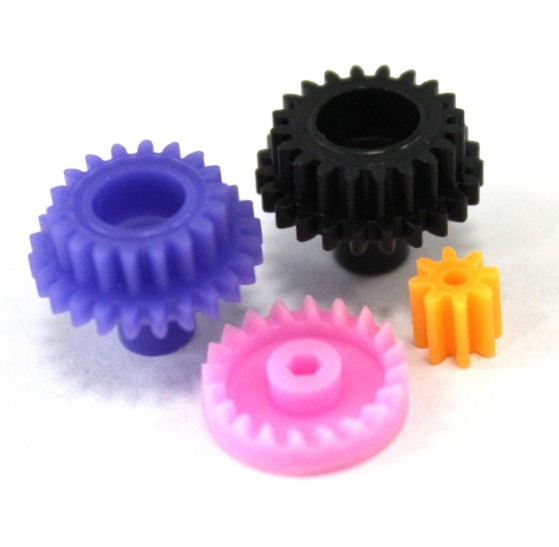
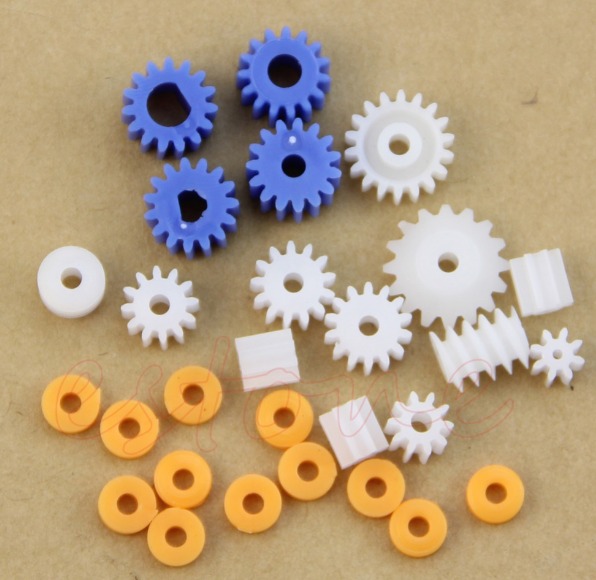
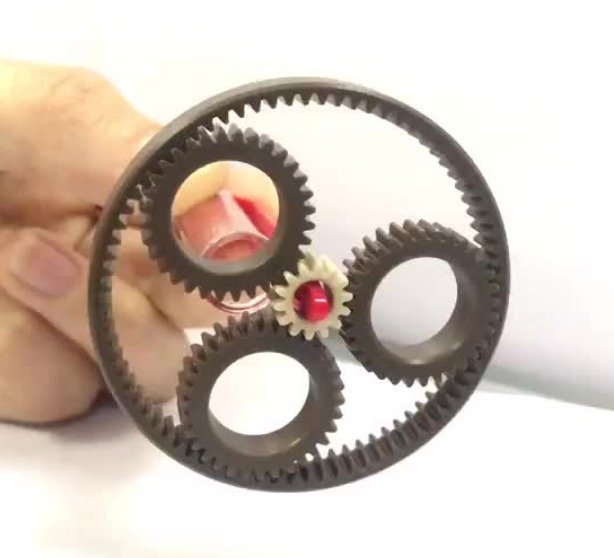
Pinions are small gears that mesh with larger gears or racks. For decades, they were made from metal. But pinion plastic has changed the game. Engineered polymers now offer advantages that metal cannot match.
Lower friction means more efficiency. Damping properties mean less noise. Design flexibility means custom solutions. Corrosion resistance means longer life.
This article explores how pinion plastic works, where it excels, and how to choose the right material for your application. You will learn why engineers across industries are switching to plastic pinions—and when metal still makes sense.
What Is Pinion Plastic?
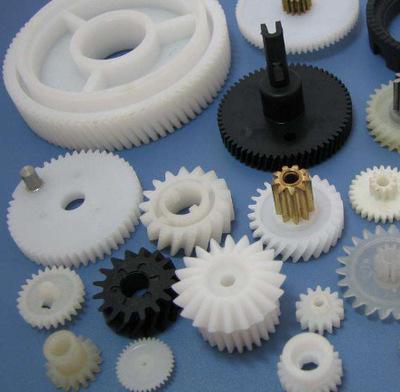
Pinion plastic refers to specialized polymer materials engineered for use in pinion gears. These materials are typically high-performance thermoplastics designed to handle the mechanical demands of gear systems.
Common materials include:
- Polyacetal (POM) : Excellent dimensional stability, low friction, high fatigue resistance
- Nylon (PA) : Good wear resistance, high strength-to-weight ratio, self-lubricating
- Polycarbonate (PC) : High impact strength, transparency options, good heat resistance
Each material offers distinct advantages for different applications.
Why Is Pinion Plastic Significant in Gear Systems?
How Does It Boost Efficiency?
Friction causes energy loss in gear systems. Plastic pinions have inherently low friction coefficients. POM, for example, has a friction coefficient of 0.05–0.2—far lower than typical metal gears.
In a small motor-driven gear system, a nylon pinion can reduce frictional losses by up to 30% compared to a metal pinion of the same size. Less friction means:
- More efficient power transmission
- Less heat generation
- Longer component life
How Does It Reduce Noise?
Noise is a common complaint in gear systems. Metal gears transmit vibrations through the system, creating audible noise. Plastic absorbs these vibrations.
A study comparing gear systems with plastic and metal pinions found noise reduction of up to 10 decibels with plastic. This matters in:
- Household appliances (quieter washing machines, dishwashers)
- Office equipment (printers, scanners)
- Medical devices (where patient comfort matters)
- Automotive interiors (reducing cabin noise)
How Does It Offer Design Versatility?
Plastic pinions can be injection molded into complex shapes that would be expensive or impossible with metal. This allows engineers to:
- Create custom tooth profiles for optimized performance
- Integrate features like lubrication channels directly into the pinion
- Design for tight spaces and compact assemblies
In a robotic joint mechanism, a uniquely shaped plastic pinion can fit into a compact space while delivering required torque. The design possibilities are limited only by imagination.
How Does It Resist Corrosion?
Metal corrodes. Plastic does not. In environments with moisture, chemicals, or food products, plastic pinions have a clear advantage.
In food processing equipment, plastic pinions operate reliably without rusting. They do not contaminate products. In outdoor machinery exposed to weather, they maintain performance where metal would degrade.
How Do Plastic Pinions Work in Gear Systems?
What Is the Structure?
A plastic pinion has two main parts:
- Hub: The central part that connects to the shaft. It can include keyways or splines for secure torque transfer.
- Teeth: The critical part for power transmission. Teeth are precisely shaped—typically with an involute profile—for smooth meshing.
The pitch (distance between teeth) is carefully calculated based on gear ratio requirements and rotational speed.
How Do They Function in Different Systems?
In automotive transmissions, plastic pinions help change gear ratios. During low-speed driving, a smaller pinion meshes with a larger gear to provide higher torque. At higher speeds, a larger pinion meshes with a smaller gear for increased rotational speed.
The damping properties of plastic reduce vibration during gear changes. This contributes to smoother shifting and a quieter cabin.
In industrial machinery, plastic pinions drive conveyor systems. Materials like nylon offer high wear resistance for continuous operation. In printing presses, plastic pinions ensure precise paper movement without damaging delicate materials.
Where Are Plastic Pinions Used?
In the Automotive Industry
Plastic pinions appear in multiple automotive systems.
Transmission synchronizer rings use plastic pinions to match gear speeds during shifts. The low-friction property reduces shifting effort. A study found vehicles with plastic pinion synchronizer rings had 15% improvement in shift smoothness compared to traditional metal components.
Power steering systems use plastic pinions to convert steering wheel rotation into wheel movement. The lightweight nature reduces overall system weight. In a mid-size sedan, replacing metal power steering pinions with plastic can save up to 2 kg—contributing to a 2–3% improvement in fuel economy.
In Robotics
Precision matters in robotics. Plastic pinions are used in harmonic drives for robot joints. These drives achieve high torque in compact sizes.
A robotic arm for precision assembly can achieve positioning accuracy of ±0.05 mm with plastic pinion-based harmonic drives. This accuracy is essential for micro-component assembly in electronics.
In mobile service robots, low-noise operation is critical. Plastic pinions in drive trains allow robots to move quietly in human-occupied environments—hotels, hospitals, offices.
In Home Appliances
Washing machines use plastic pinions in transmission systems for spin and wash cycles. Corrosion resistance is vital—plastic pinions are constantly exposed to water and detergents. One major manufacturer reported a 30% lower failure rate over five years for washing machines with plastic pinions compared to metal.
Air conditioners use plastic pinions in fan drive mechanisms. Quiet operation is a key selling point. Consumer surveys show that 80% of consumers prefer air conditioners with quieter operation. Plastic pinions help deliver that.
In Industrial Machinery
Textile machinery uses plastic pinions in weft insertion mechanisms. Smooth, precise yarn movement produces higher quality fabric. A textile mill using plastic pinion-equipped looms reported a 10% increase in fabric quality with fewer defects.
Food processing machinery relies on plastic pinions for conveyor systems. They do not rust. They do not contaminate food. In bakeries, plastic pinions move products along production lines without risk of metal particles entering food.
What Materials Are Used for Plastic Pinions?
| Material | Key Properties | Best Applications |
|---|---|---|
| Nylon (PA) | High strength-to-weight, self-lubricating, wear-resistant | Automotive, industrial conveyors, moderate loads |
| Polyacetal (POM) | Low friction, dimensional stability, high stiffness | Precision applications, high-speed operation |
| Polycarbonate (PC) | High impact strength, heat resistance, transparency | Impact-prone applications, electrical insulation |
How Do You Choose the Right Plastic Pinion?
What Load Requirements Matter?
For high-load applications, materials with high strength-to-weight ratios are essential. Nylon (especially glass-filled grades) or POM work well.
For light to medium loads, standard nylon or POM typically suffice.
What Speed Requirements Matter?
High-speed applications demand low friction to minimize heat generation. POM's very low coefficient of friction makes it ideal. Nylon also works but may generate more heat at extreme speeds.
What Environmental Factors Matter?
Corrosive environments: All plastic pinions resist corrosion better than metal. However, specific chemical resistance varies. Verify compatibility with your chemicals.
Temperature: Standard plastics operate up to 120°C. For higher temperatures, consider specialized high-temperature grades.
Moisture: Nylon absorbs moisture, which can affect dimensions. POM offers better moisture resistance for humid environments.
What Precision Needs Matter?
For precision applications—robotics, measuring devices, printers—POM's dimensional stability is ideal. It maintains shape and size under varying conditions.
How Does Cost Factor In?
Plastic pinions are generally more cost-effective than metal for high-volume production. Injection molding allows efficient mass production. However, specialized high-performance plastics may cost more. Balance performance needs against budget.
What Does Yigu Technology Offer?
Yigu Technology specializes in custom plastic pinion manufacturing. Our advanced injection molding capabilities achieve high precision and tight tolerances. We work with nylon, POM, polycarbonate, and specialty materials.
Our approach:
- Material selection: We help you choose the right material for your load, speed, and environment
- Custom design: Unique tooth profiles, hub configurations, and integrated features
- Material innovation: We research additives to enhance wear resistance and load capacity
We serve automotive, robotics, home appliance, and industrial machinery industries.
Conclusion
Pinion plastic is transforming gear systems. Its low friction boosts efficiency. Its damping properties reduce noise. Its design flexibility enables custom solutions. Its corrosion resistance extends service life.
Material selection matters. Nylon offers strength and wear resistance. POM provides precision and low friction. Polycarbonate delivers impact strength and electrical insulation.
While plastic cannot replace metal in extreme high-load applications, it is often the superior choice for applications where weight reduction, noise reduction, corrosion resistance, and design flexibility matter.
For many engineers and manufacturers, pinion plastic is not just an alternative—it is the optimal solution.
FAQ
What are the common materials for pinion plastic?
Common materials include nylon (PA) , which offers good mechanical strength, high wear resistance, and self-lubricating properties. Polyacetal (POM) provides high stiffness, low friction, and outstanding dimensional stability. Polycarbonate (PC) delivers high impact strength, good heat resistance, and transparency in some grades. Each material suits different applications based on load, speed, and environment.
How to choose the right pinion plastic for specific applications?
Consider load requirements—high loads may need glass-filled nylon or POM. Consider operating speed—high speeds favor low-friction POM. Consider environment—corrosive environments require chemical-resistant materials; high temperatures need specialized grades. Consider precision needs—POM for dimensional stability. Balance these factors against cost to select the optimal material.
Can pinion plastic replace metal gears completely?
No. Pinion plastic cannot replace metal in high-load, high-torque applications like large industrial gearboxes or heavy construction machinery. Metal gears have higher strength and better heat dissipation. However, in applications where noise reduction, weight reduction, corrosion resistance, or design flexibility are priorities—such as consumer electronics, household appliances, medical devices, and automotive components—plastic pinions are often the superior choice.
Contact Yigu Technology for Custom Manufacturing
Need custom plastic pinions for your gear system? Yigu Technology specializes in precision manufacturing with nylon, POM, polycarbonate, and other engineering plastics. Our team helps you select the right material and achieve the precision you need. Contact us today to discuss your project requirements.