Introduction
In modern manufacturing, precision and speed are no longer negotiable—they are essential. Digital Light Processing (DLP) rapid prototyping has emerged as a revolutionary technology, bridging the gap between intricate digital designs and high-precision physical prototypes. By projecting light patterns onto photosensitive resin, DLP cures material layer by layer, building three-dimensional objects with exceptional accuracy. This guide explores how DLP works, its technical advantages, material versatility, and its impact across industries.
What Is DLP Rapid Prototyping?
DLP rapid prototyping is an additive manufacturing process that uses a digital micro-mirror device (DMD) to project UV light images of each cross-sectional layer onto a vat of liquid photosensitive resin. The light causes photopolymerization—solidifying the resin layer by layer—gradually building a three-dimensional object.
The process begins with a CAD model sliced into thin 2D layers (typically 0.02–0.1 mm thick). The DMD projects UV light in the shape of each layer, curing the resin. The build platform lowers incrementally, allowing new resin to flow, and the process repeats until the prototype is complete.
Unlike SLA (Stereolithography), which cures point by point with a laser, DLP cures entire layers simultaneously. This parallel curing reduces positional errors, improves surface consistency, and results in smoother finishes—critical for applications where aesthetics or moving parts are involved.
How Does DLP Achieve Unmatched Precision?
DLP’s precision stems from three core innovations.
High-Resolution Projection
Modern DLP systems achieve 25–100 μm pixel sizes, enabling intricate details like 0.3 mm-diameter holes or 0.2 mm-thick walls. To put this in perspective, human hair thickness is typically 70–100 μm—DLP can create features smaller than a single strand of hair. In micro-electromechanical systems (MEMS), where sensors require extremely small and precise components, DLP’s high-resolution capabilities are essential.
Uniform Light Distribution
DLP’s flat-field illumination ensures ±2% light intensity variation across the build area, minimizing curing inconsistencies that cause warpage or dimensional deviations. Even light distribution is crucial—uneven intensity leads to distorted prototypes or dimensions that do not match specifications. In optical lens production, any warping or inaccuracies can significantly affect performance.
Thermal Stability Control
Integrated temperature management systems maintain resin temperature within ±1°C, critical for polymers like ABS-like resins that shrink 0.1–0.3% during curing. Stable temperature ensures consistent curing, reducing shrinkage and resulting in more accurate final products. In automotive manufacturing, thermal stability control ensures plastic components fit together correctly and function as intended.
| Parameter | DLP | SLA (Laser-Based) | FDM | SLS |
|---|---|---|---|---|
| Layer Thickness | 0.02–0.1 mm | 0.05–0.15 mm | 0.1–0.4 mm | 0.05–0.1 mm |
| Minimum Feature Size | 50 μm | 100 μm | 200 μm | 150 μm |
| Surface Roughness (Ra) | 0.8–1.6 μm | 1.2–2.0 μm | 3.2–6.3 μm | 2.0–4.0 μm |
| Build Speed (100mm Part) | 6–12 hours | 12–24 hours | 24–48 hours | 10–18 hours |
DLP’s advantages in layer thickness, minimum feature size, and surface roughness enable more detailed, precise prototypes with less post-processing.
What Materials Can DLP Use?
DLP works with a diverse range of resins, each engineered for specific mechanical, thermal, or optical requirements.
High-Strength Resins
Materials like DSM Somos PerFORM mimic injection-molded plastics with tensile strength of 55 MPa. Ideal for applications requiring durability—automotive snap-fit components. Engineers test functionality and performance before mass production, saving time and cost.
High-Temperature Resins
Formulations like Somos 12120 withstand temperatures up to 126°C after post-curing. Invaluable in automotive and aerospace industries where components operate in high-heat environments. Used for prototyping air ducts, engine components, and heat shields.
Optically Clear Resins
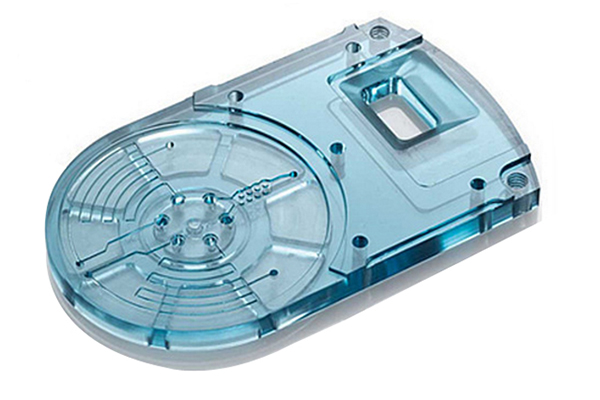
Resins like WaterShed XC achieve 92% light transmittance, designed for optical clarity. In medical field, endoscopes require clear visual images; in consumer electronics, lenses for cameras and displays need high clarity. These resins enable prototypes with minimal optical scatter.
Biocompatible Resins
USP Class VI-certified materials like EnvisionTec’s Perioteck are crucial for medical applications—surgical guides and temporary implants. Biocompatibility ensures patient safety while allowing testing of fit and functionality.
| Application | Resin Type | Key Property | Prototyping Outcome |
|---|---|---|---|
| Functional Testing | ABS-like thermoplastics | Impact resistance (45 J/m) | Durable parts for drop tests, assembly validation |
| Aesthetic Models | High-gloss resins | Surface finish (Ra ≤1.0 μm) | Showroom-quality prototypes, minimal post-processing |
| Medical Devices | Biocompatible resins | Cytotoxicity testing pass | Accurate anatomical models for surgical planning |
| High-Temp Environments | Ceramic-filled resins | Thermal conductivity 0.6 W/m·K | Engine components, industrial tools |
How Does DLP Accelerate Prototyping?
Time is critical in product development. DLP’s parallel curing mechanism drastically reduces build times.
A 100 mm-tall automotive headlight lens prototype can be printed in 6–8 hours—40% faster than equivalent SLA processes. A consumer electronics firm developing a new VR headset reduced iteration cycles from 14 days to 5 days using DLP, bringing the product to market 3 weeks earlier.
Faster turnaround enables more frequent design changes. Designers create multiple versions to test different features, materials, and geometries—optimizing for functionality, aesthetics, and manufacturability.
What Are the Limitations?
While DLP offers significant advantages, there are limitations.
- Resin formulation: Some high-performance engineering resins are difficult to formulate for DLP due to viscosity and curing behavior
- Cost: Specialized resins can be relatively high
- Build volume: DLP systems typically have smaller build volumes than other technologies
How Does Yigu Technology Approach DLP Prototyping?
As a non-standard plastic and metal products custom supplier, Yigu Technology leverages DLP rapid prototyping to deliver high-precision components.
We Achieve High Precision
Our DLP systems achieve feature sizes down to 50 μm and layer thicknesses as low as 0.02 mm—ideal for intricate details, medical devices, and micro-components.
We Offer Diverse Materials
From high-strength and high-temperature resins to optically clear and biocompatible materials, we help clients select the right resin for their application.
We Accelerate Development
Fast turnaround—6–12 hours for typical parts—enables rapid iteration and faster time-to-market.
Conclusion
DLP rapid prototyping is pioneering precision in manufacturing. Its high-resolution projection, uniform light distribution, and thermal stability control deliver unmatched accuracy. Versatile resin materials—high-strength, high-temperature, optically clear, biocompatible—enable tailored solutions across industries. With faster build speeds and rapid iteration cycles, DLP accelerates development, reduces time-to-market, and sets a new standard for precision prototyping.
Frequently Asked Questions
What is the smallest feature size achievable with DLP rapid prototyping?
Modern DLP systems achieve minimum feature sizes around 50 μm, enabling intricate details—very small holes, thin walls. This precision is essential for micro-electromechanical systems (MEMS), medical devices, and fine jewelry.
Are there any limitations to the types of resins used in DLP prototyping?
While DLP works with a wide range of resins, some high-performance engineering resins are difficult to formulate due to viscosity and curing behavior. Cost of specialized resins can be relatively high. However, the range of available resins continues to expand.
How does DLP rapid prototyping compare to other 3D printing technologies in terms of surface finish?
DLP offers good surface finish with Ra 0.8–1.6 μm—better than FDM (Ra 3.2–6.3 μm) and competitive with SLA (Ra 1.2–2.0 μm). DLP cures entire layers simultaneously, reducing positional errors and improving surface consistency, resulting in smoother finishes with less post-processing.
What is the difference between DLP and SLA?
DLP cures entire layers at once using a digital micro-mirror device to project UV light patterns—faster, fewer positional errors. SLA cures point by point with a laser—slower, but capable of larger build volumes. Both achieve high precision, but DLP typically offers faster speeds for small to medium parts.
Can DLP be used for functional testing?
Yes. High-strength resins mimic injection-molded plastics (tensile strength 55 MPa) for durable parts—snap-fit components, drop tests, assembly validation. High-temperature resins withstand up to 126°C for engine components. Biocompatible resins enable medical device testing.
Contact Yigu Technology for Custom Manufacturing
Ready to pioneer precision with DLP rapid prototyping? Yigu Technology offers DLP prototyping services with high-strength, high-temperature, optically clear, and biocompatible resins. Our engineers help you select the right materials for your application. Contact us today to discuss your project.