Introduction
If you are developing a new product, you have likely encountered the term "3-axis machining." It is one of the most common manufacturing processes in the world, but understanding whether it is the right fit for your specific part can be challenging. This guide breaks down the fundamentals of 3-axis CNC machining. We will explore how it works, what it excels at, and most importantly, how to determine if it meets your production needs for precision, cost, and complexity.
What Exactly Is 3-Axis Machining?
3-axis machining is a subtractive manufacturing process. A CNC (Computer Numerical Control) machine uses a rotating cutting tool to remove material from a solid block (workpiece). The machine guides this tool along three linear axes simultaneously:
- X-axis: Left to right (horizontal movement).
- Y-axis: Front to back (horizontal movement).
- Z-axis: Up and down (vertical movement).
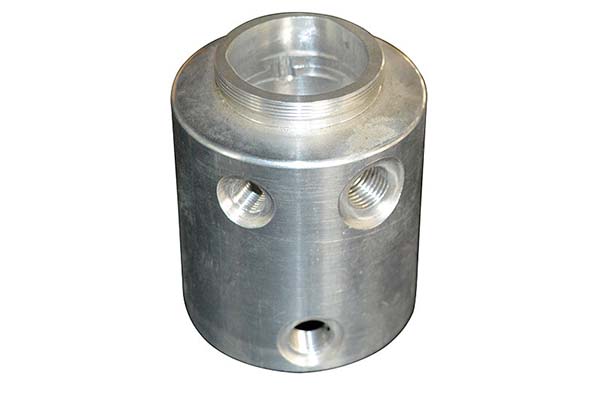
Because the tool moves in three directions, it can carve out detailed shapes, flat surfaces, and deep cavities. Think of it like a sculptor using a precision drill bit controlled by a computer. This method is foundational for creating everything from aluminum brackets to plastic enclosures.
How Does a 3-Axis CNC Machine Actually Work?
To understand the process, you need to look at three core elements: the brain (control system), the movement (coordinate system), and the hardware (machine components).
The Role of the CNC Control System
The machine does not "guess" where to cut. It follows a digital blueprint. A programmer writes a set of instructions called G-code. This code tells the machine:
- Where to position the tool (coordinates).
- How fast to spin the spindle (speed).
- How quickly to move through the material (feed rate).
The control system reads this code and converts it into electrical signals. This ensures that every part is identical, removing the risk of human error that comes with manual machining.
Breaking Down the Axes: X, Y, and Z
The magic of 3-axis machining lies in the coordination of these three movements. Imagine a rectangular block of metal:
- The X-axis moves the table or tool horizontally across the width.
- The Y-axis moves across the length.
- The Z-axis plunges the tool into the material for depth.
By moving all three at once, the machine can create complex contours, angled edges, and precise pockets that would be impossible with a manual drill press.
Key Components of a Machining Center
A standard 3-axis machining center relies on several critical components working in harmony:
| Component | Function |
|---|---|
| Machine Bed | The heavy base that absorbs vibration to ensure stability and accuracy. |
| Spindle | The motorized shaft that holds and spins the cutting tool at high RPMs. |
| Tool Changer | An automatic device (ATC) that swaps out drills, end mills, and taps without stopping production. |
| Coolant System | A fluid system that lubricates the cut, removes metal chips, and prevents overheating. |
| Control Panel | The interface where operators input commands and monitor the machining process. |
What Are the Real-World Applications?
Because 3-axis machining is so versatile, it appears in nearly every industry. However, its use varies based on the complexity and volume of the parts.
Aerospace and Automotive
In sectors where safety and precision are non-negotiable, 3-axis machining is a staple.
- Aerospace: Manufacturers use it to create engine mounts, landing gear components, and turbine blades. The ability to hold tight tolerances (often within 0.0005 inches) ensures parts can withstand extreme stress.
- Automotive: It is used for prototyping new engine parts and producing custom brackets, gearbox housings, and suspension components. For example, a race car team might use a 3-axis mill to produce a lightweight aluminum part overnight for testing.
Medical and Consumer Electronics
Precision and surface finish are critical here.
- Medical: 3-axis machining produces surgical instruments (like bone drills and forceps) and orthopedic implants. These require strict sterilization standards and biocompatible materials like titanium.
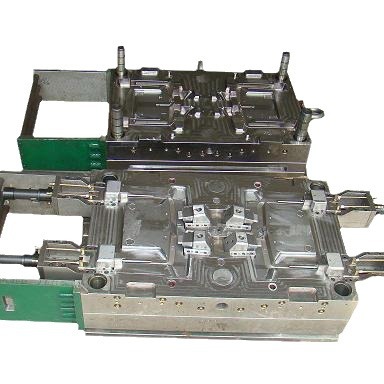
- Electronics: While high-volume phone casings are often molded, the prototypes and molds for those casings are typically machined. It is also used for heat sinks and structural frames for laptops.
Why Choose 3-Axis Over Other Methods?
Choosing the right machining process depends on your budget, part geometry, and timeline. Here is how 3-axis stacks up against its competitors.
Cost-Effectiveness for Medium Runs
For small to medium production runs (ranging from 1 to 1,000+ parts), 3-axis machining is highly cost-effective. It does not require the expensive molds needed for injection molding. Setup times are relatively quick, and you can switch materials easily—from soft plastics to hardened steel—without changing the machine.
3-Axis vs. 2-Axis vs. 5-Axis
It is helpful to see the differences clearly:
| Feature | 2-Axis Machining | 3-Axis Machining | 5-Axis Machining |
|---|---|---|---|
| Movement | X and Y only. | X, Y, and Z. | X, Y, Z + 2 rotational axes. |
| Complexity | Simple cuts, straight lines. | Prismatic parts, pockets, contours. | Highly complex, undercut features, organic shapes. |
| Setup | Minimal. | May require multiple setups to machine different sides. | Single setup typically completes the part. |
| Cost | Very low. | Moderate (Best value for most parts). | High (Machine cost and programming time). |
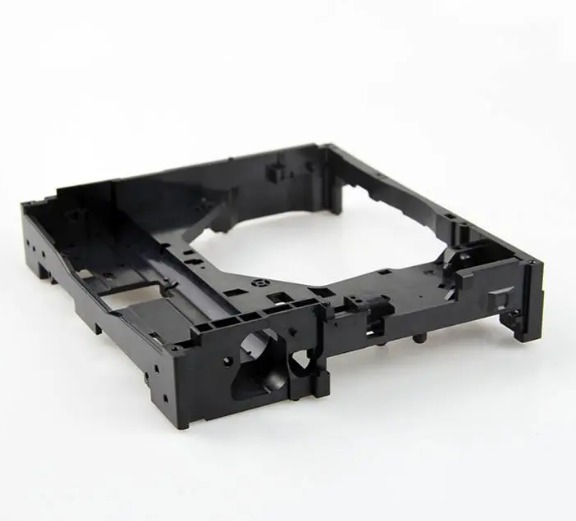
| Best For | Basic drilling, simple slots. | Brackets, enclosures, prototypes, molds. | Turbine blades, medical implants, complex aerospace parts. |
What Are the Limitations of 3-Axis Machining?
While 3-axis machining is incredibly reliable, it has physical limits that affect design. Understanding these limits will save you time and money.
Challenges with Undercuts and Complex Geometry
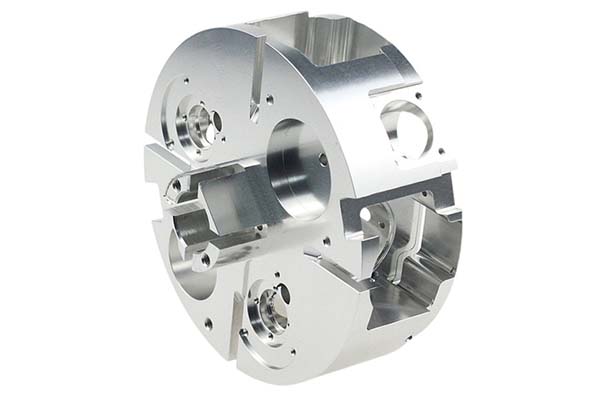
Because the cutting tool remains vertical (or fixed in orientation), it can struggle with undercuts (features where the top of the part is wider than the bottom). If a part requires machining on five sides of a cube, a standard 3-axis machine often requires manual repositioning. The operator must stop the machine, flip the part, and re-align it. This increases labor time and introduces potential for minor alignment errors.
When to Upgrade to Multi-Axis
You should consider 4-axis or 5-axis machining if:
- Your part has complex angles that require the tool to tilt to reach a surface.
- You need to machine all sides of a part in a single operation to maintain extreme accuracy.
- You are working with expensive materials where reducing scrap is critical.
Case Study: From Prototype to Production
To illustrate the practical value, consider a real-world example. A startup needed to manufacture a medical device handle made of 316L stainless steel.
The Challenge: The handle required a complex ergonomic shape, internal threading for assembly, and a smooth surface finish to prevent bacterial growth. The initial budget was limited to 50 units for clinical trials.
The Solution: Using 3-axis CNC machining:
- Prototyping: The engineers machined the first 5 units from aluminum to test the ergonomics. This was cheap and fast (3 days).
- Material Validation: Once the design was finalized, they switched to 316L stainless steel.
- Production: The 3-axis mill handled the complex contours using a ball nose end mill to create the curved surfaces. The internal threading was done using a tap in the automatic tool changer.
The Result: The company received 50 high-quality, sterilizable handles in 2 weeks. The total tooling cost was $0 (unlike injection molding, which would have cost $10,000+ just for the mold). This is the core advantage of 3-axis machining for custom manufacturing.
Conclusion
3-axis machining remains the backbone of modern manufacturing because it balances precision, versatility, and cost. It is the ideal solution for creating durable prototypes, functional brackets, enclosures, and complex components across industries like aerospace, automotive, and medical devices. While it may not handle the extreme geometry of a 5-axis machine, its ease of use and reliability make it the first choice for engineers bringing a product to life.
If your part requires tight tolerances, multiple material options, and medium production volumes, 3-axis CNC machining is likely the most efficient path forward.
FAQs
What materials can be used in 3-axis machining?
A wide range. Common materials include aluminum, stainless steel, brass, titanium, and engineering plastics like ABS, PEEK, and Nylon. The machine can switch between these materials easily.
Is 3-axis machining good for prototyping?
Yes, it is excellent for prototyping. It allows for rapid iterations without the need for expensive tooling. You can test the fit, form, and function of a part before committing to mass production.
How accurate is 3-axis CNC machining?
Standard 3-axis machining can achieve tolerances of ±0.005 inches (0.127 mm) . With advanced equipment and careful calibration, it can reach ±0.0005 inches (0.0127 mm) , which is suitable for high-precision industries like aerospace.
Contact Yigu Technology for Custom Manufacturing
Navigating the complexities of CNC machining can be challenging, especially when you need parts that meet strict quality standards. At Yigu Technology, we specialize in transforming your designs into reality using advanced 3-axis, 4-axis, and 5-axis machining centers. Whether you need a single prototype or a medium-volume production run, our engineers provide DFM (Design for Manufacturability) feedback to optimize your parts for cost and performance.
Ready to start your project? Contact Yigu Technology today for a free consultation and quote on your custom manufacturing needs.