Introduction
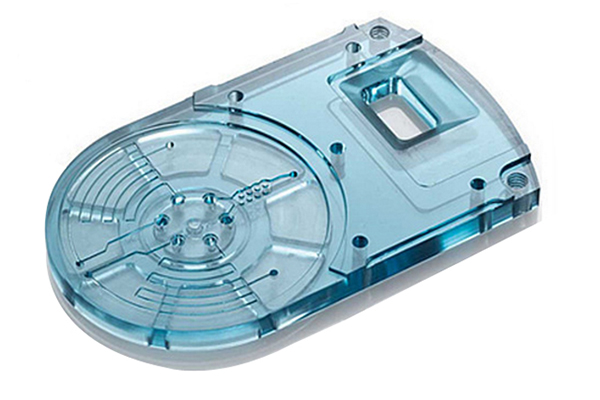
In the world of rapid prototyping, precision and surface quality often determine whether a prototype is useful or merely a rough representation. Stereolithography (SLA) , the first commercial 3D printing technology, has long set the standard for both. It produces parts with micron-level accuracy and smooth finishes that rival injection molding. As materials advance and applications expand, SLA is not just maintaining its position—it is revolutionizing what rapid prototyping can achieve. At Yigu Technology, we use SLA daily to create high-detail prototypes for medical, automotive, and consumer goods clients. This article explores how SLA works, how it compares to other technologies, and why it is shaping the future of rapid prototyping.
What Makes SLA Unique?
SLA operates on a simple but powerful principle: a UV laser cures liquid resin layer by layer to form solid parts.
A digital 3D model is sliced into thin cross-sectional layers. A UV laser traces each layer's pattern onto the surface of a vat of liquid photopolymer resin. Where the laser hits, the resin solidifies through photopolymerization. The build platform lowers, a new layer of resin is spread, and the process repeats.
This layer-by-layer approach delivers two hallmarks that set SLA apart: precision and surface finish.
Why Do Precision and Surface Finish Matter?
Micron-Level Precision
SLA achieves layer thicknesses as small as 25–100 microns. This allows reproduction of features that other technologies cannot capture.
| Technology | Typical Layer Thickness | Dimensional Accuracy |
|---|---|---|
| SLA | 25–100 microns | ±0.05–0.1 mm |
| FDM | 100–400 microns | ±0.1–0.5 mm |
| SLS | 100–150 microns | ±0.1–0.3 mm |
A dental lab uses SLA to produce crown prototypes with 0.05 mm accuracy. The precise fit reduces adjustment time during patient procedures.
A micro-mechanical component manufacturer prints gears with channels as small as 0.3 mm. The parts function as prototypes for miniaturized devices.
Superior Surface Finish
SLA parts emerge with surface roughness (Ra) of 1–5 μm—comparable to injection-molded parts. FDM parts typically have Ra of 20–100 μm with visible layer lines.
| Technology | Surface Finish (Ra) | Post-Processing Typically Needed |
|---|---|---|
| SLA | 1–5 μm | Minimal |
| FDM | 20–100 μm | Sanding, filling, coating |
| SLS | 10–25 μm | Tumbling, polishing |
An automotive designer uses SLA to prototype interior trim components. The smooth surface allows realistic evaluation of aesthetics without additional finishing. A jewelry designer prints wax-like masters for casting—the smooth surface reduces finishing work on the final metal piece.
How Does the SLA Process Work?
Step-by-Step Breakdown
- Resin Preparation: The vat is filled with photosensitive resin. Resin properties—viscosity, color, mechanical characteristics—are selected based on the application.
- Laser Scanning: A UV laser traces each cross-sectional layer. The laser's energy causes photopolymerization, transforming liquid resin into solid plastic. The laser can create features as small as a few microns.
- Layer Deposition: The build platform lowers by the layer thickness (25–100 microns). A recoater spreads fresh resin evenly across the surface. Each new layer bonds firmly to the previous one.
- Support Structure Removal: Parts often require supports for overhangs. These are removed after printing—either manually or by dissolving soluble supports.
- Secondary Curing: The part is exposed to additional UV light in a curing chamber. This ensures complete polymerization and enhances mechanical properties.
What Material Advancements Are Expanding SLA's Capabilities?
SLA resins have evolved significantly, expanding applications beyond visual models to functional testing and even production.
| Resin Type | Key Properties | Applications |
|---|---|---|
| High-temperature resins | Withstand up to 126°C | Automotive underhood testing, aerospace components |
| Biocompatible resins | ISO 10993 compliant | Medical implants, surgical guides, dental devices |
| Elastomeric resins | Rubber-like flexibility | Gaskets, seals, flexible prototypes |
| Tough resins | High impact resistance | Functional testing, snap-fits, moving parts |
| Clear resins | Optical clarity | Lenses, fluid flow visualization |
High-Temperature Resins
DSM Somos® 12120 withstands temperatures up to 126°C. This enables testing of automotive components in underhood conditions—simulating real-world heat exposure before production tooling.
A study comparing traditional materials with high-temperature SLA resins found that SLA-printed parts provided more accurate functional testing results due to their ability to maintain structural integrity at elevated temperatures.
Biocompatible Resins
Formlabs® Clear Resin meets ISO 10993 standards for medical applications. A dental clinic used this resin to print custom-fit surgical guides. The biocompatibility ensured no adverse reactions, while SLA precision allowed perfect fit.
Elastomeric Resins
Smooth-On® ProtoFlex mimics rubber properties. Engineers use it to prototype gaskets, seals, and flexible components. A plumbing fixture manufacturer printed prototype gaskets to test sealing performance under different conditions—validating the design before production.
How Does SLA Compare to Other Technologies?
SLA vs. FDM
| Factor | SLA | FDM |
|---|---|---|
| Precision | ±0.05–0.1 mm | ±0.1–0.5 mm |
| Surface finish | 1–5 μm Ra | 20–100 μm Ra |
| Materials | Photopolymer resins | Thermoplastics (ABS, PLA, nylon) |
| Equipment cost | $20,000–$100,000 | $5,000–$50,000 |
| Material cost | Higher per volume | Lower per volume |
| Best for | Detail, aesthetics, smooth surfaces | Function, low cost, large parts |
When to choose SLA: You need fine details, smooth surfaces, or high precision. Jewelry, dental, and high-end consumer prototypes.
When to choose FDM: You need low-cost functional parts, large models, or material variety. Early concept models, brackets, housings.
SLA vs. SLS
| Factor | SLA | SLS |
|---|---|---|
| Precision | ±0.05–0.1 mm | ±0.1–0.3 mm |
| Surface finish | 1–5 μm Ra | 10–25 μm Ra |
| Build speed | 20–50 mm/h | 10–20 mm/h |
| Support structures | Required for overhangs | Not required (powder supports) |
| Materials | Photopolymer resins | Nylon, metal, ceramic powders |
| Equipment cost | $20,000–$100,000 | $100,000–$500,000 |
| Mechanical properties | Good, can be brittle | Excellent, durable |
When to choose SLA: You need smooth surfaces, fine details, or faster build times for small parts.
When to choose SLS: You need durable functional parts, complex internal geometries, or metal components.
What Are the Real-World Applications?
Medical and Dental
SLA is the dominant technology for patient-specific medical devices.
Surgical guides: Printed from biocompatible resin with 0.05 mm accuracy. Surgeons use them to precisely position implants, reducing surgery time and improving outcomes.
Dental crowns and aligners: SLA produces custom-fit devices with smooth surfaces that are comfortable for patients. A dental clinic increased patient throughput by 30% using SLA for crown production.
Prosthetics: Lightweight, custom-fitted prosthetic sockets are printed directly from patient scans.
Automotive
Automotive engineers use SLA for both aesthetic and functional prototypes.
Interior components: Dashboard trim, console parts, and button panels are printed with smooth surfaces that match production appearance. Designers evaluate aesthetics without waiting for tooling.
Underhood testing: High-temperature resins enable functional testing of components exposed to engine heat. Engineers validate thermal performance before production.
Aerodynamic prototypes: Wind tunnel models require smooth surfaces for accurate airflow testing. SLA delivers the required surface finish without extensive post-processing.
Consumer Goods
SLA enables rapid iteration of consumer products where aesthetics matter.
Smartphone cases: Prototypes with precise cutouts and smooth finishes are user-tested for fit and feel.
Wearable devices: Watch cases and earbud housings are printed in multiple iterations to optimize ergonomics.
Jewelry: Master patterns for lost-wax casting are printed with fine details and smooth surfaces, reducing finishing work on final metal pieces.
Aerospace
Aerospace engineers use SLA for complex, high-precision components.
Wind tunnel models: Scale models require smooth surfaces and accurate geometries for reliable test data. SLA delivers both.
Complex brackets: High-temperature resins produce functional prototypes for testing in thermal environments.
Is SLA Sustainable?
SLA offers environmental advantages over traditional manufacturing.
| Factor | SLA | Traditional Machining |
|---|---|---|
| Material waste | 5–10% | 30–70% |
| Energy use (per part, low volume) | Lower | Higher |
| Bio-based options | Plant-based resins available | Limited |
SLA generates 90% less waste than subtractive methods. Bio-based resins, such as plant-based PLA formulations, reduce carbon footprint by up to 40% compared to petroleum-based alternatives.
Can SLA Be Used for Production?
Yes—for low to medium volumes.
High-performance resins like Accura® Xtreme achieve 100 MPa tensile strength, making them suitable for end-use parts in certain applications.
| Volume | Suitability |
|---|---|
| 1–100 units | Ideal—no tooling cost, fast turnaround |
| 100–1,000 units | Cost-effective for complex geometries |
| 1,000+ units | Traditional manufacturing may be more economical |
A manufacturer of custom medical devices produces 500 units per year using SLA. Each part is patient-specific, and the per-unit cost is lower than traditional manufacturing due to eliminated tooling.
What Does the Future Hold?
Faster Print Speeds
DLP (Digital Light Processing) technology cures entire layers at once, achieving 2–3x faster builds for large parts. While SLA offers superior edge definition, hybrid approaches are emerging.
New Materials
Resin formulations continue to expand:
- Ceramic-filled resins for high-temperature, wear-resistant parts
- Conductive resins for printed electronics
- Medical-grade materials with enhanced biocompatibility
Hybrid Manufacturing
Combining SLA with other processes—machining, coating, or injection molding—enables production of parts with SLA's detail and traditional manufacturing's material properties.
Yigu Technology's Perspective
As a custom manufacturer of plastic and metal parts, Yigu Technology uses SLA alongside other rapid prototyping technologies. We see its unique value daily.
When we recommend SLA:
- Detail matters—fine features, textures, small text
- Surface finish matters—smooth surfaces for aesthetics or fluid flow
- Precision matters—tight tolerances, mating parts
- Speed matters—rapid turnaround for high-detail parts
What we have learned:
- Match material to application: Standard resins for form studies. Engineering resins for functional testing. Biocompatible resins for medical.
- Plan for supports: Overhangs require supports. Design to minimize them or plan for removal.
- Consider post-processing: Secondary curing is essential for mechanical properties. Factor this into timelines.
- Think beyond prototyping: SLA is increasingly used for low-volume production. Evaluate if it fits your needs.
Conclusion
Stereolithography (SLA) remains the gold standard for precision and surface finish in rapid prototyping. Its micron-level accuracy, smooth surfaces, and expanding material options make it indispensable for applications where detail matters—medical devices, dental appliances, jewelry, automotive interiors, and consumer products.
As materials advance and processes accelerate, SLA is not just maintaining its position. It is revolutionizing what rapid prototyping can achieve—enabling functional testing with production-like materials, low-volume production without tooling, and patient-specific medical devices that were previously impossible.
For engineers, designers, and businesses, understanding SLA's capabilities is essential. It is not always the right choice—FDM offers lower cost for large parts, SLS offers greater durability for functional testing. But when precision and surface finish matter, SLA has no equal.
Frequently Asked Questions
Can SLA be used for low-volume production?
Yes. High-performance resins like Accura® Xtreme achieve 100 MPa tensile strength, making them suitable for end-use parts. For volumes under 1,000 units, SLA is often cost-effective compared to injection molding due to eliminated tooling costs.
How does SLA compare to DLP in terms of speed?
DLP cures entire layers at once, achieving 2–3x faster builds for large parts. However, SLA offers superior edge definition and is often preferred for parts requiring fine details. Hybrid approaches are emerging that combine the speed of DLP with the precision of SLA.
How sustainable is SLA in terms of material waste and environmental impact?
SLA generates 90% less waste than traditional machining. Bio-based resins, such as plant-based formulations, reduce carbon footprint by up to 40% compared to petroleum-based alternatives. The layer-by-layer process uses only the material needed for the part and supports.
What is the typical cost of SLA prototyping?
Costs vary based on part size, complexity, and resin. A small, simple SLA part may cost $20–$100. A complex part with engineering resin may cost $200–$500. For comparison, an FDM part of similar size might cost $5–$50, but with lower detail and surface quality.
What post-processing do SLA parts require?
SLA parts require support removal, washing in isopropyl alcohol to remove uncured resin, and UV post-curing to achieve final properties. Additional finishing—sanding, painting, or polishing—may be applied for aesthetic purposes. The total post-processing time typically adds 1–3 days to the timeline.
Contact Yigu Technology for Custom Manufacturing
At Yigu Technology, we specialize in SLA rapid prototyping and custom manufacturing. Our capabilities include SLA, FDM, SLS, CNC machining, and sheet metal fabrication. We serve medical, dental, automotive, aerospace, and consumer goods industries.
If your project demands precision, detail, and smooth surfaces, contact our engineering team. Let us help you choose the right SLA resin and process for your application.