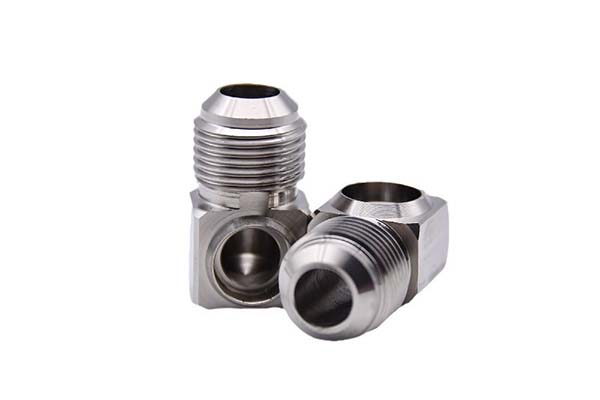
Introduction
One bad fastener can ground an entire fleet. That is not a scare tactic. It is a fact that keeps aerospace engineers up at night. Aerospace CNC machining lives under a level of scrutiny no other industry even comes close to matching. Every part must perform flawlessly at 40,000 feet. There is no room for "close enough."
Here is the reality. Aerospace manufacturing sits at the crossroads of extreme materials, brutal tolerances, and relentless regulations. Not every precision machine shop can handle this work. You need a partner whose qualification, culture, and capability all line up at every level.
This article shows you exactly what separates a true aerospace CNC machining partner from a general job shop. You will learn how to spot red flags early. More importantly, you will know how to protect your program from costly qualification failures.
1. What Certifications Define Aerospace CNC Machining?
Certificates on a wall mean nothing if the shop cannot back them up with real process control. Let us break down what actually matters.
AS9100D Is the Bare Minimum
AS9100D is the gold standard quality management system for aerospace. It builds on ISO 9001 but adds strict requirements for risk management, product safety, and counterfeit parts prevention. If a shop only holds ISO 9001, they are not ready for aerospace work. Period.
NADCAP Accreditation Matters Most
NADCAP (National Aerospace and Defense Contractors Accreditation Program) covers special processes. These include heat treat, welding, and non-destructive testing (NDT). A shop can claim they do aerospace work. But without NADCAP, their heat treat or NDT results carry zero weight with OEMs.
| Certification | What It Covers | Required For |
|---|---|---|
| AS9100D | Full QMS for aerospace | All aerospace suppliers |
| ISO 9001:2015 | General quality management | Baseline only |
| NADCAP | Special processes (heat treat, NDT, welding) | OEM-approved suppliers |
| Boeing BAC | Boeing-specific approval | Boeing programs |
| Airbus AIPS | Airbus-specific approval | Airbus programs |
| Lockheed LMPS | Lockheed Martin approval | Lockheed programs |
"Capable" vs. "Approved"
This distinction trips up buyers all the time. A shop can be aerospace capable — meaning they have the machines and skills. But aerospace approved means they have passed an OEM audit and sit on an approved vendor list (AVL). Always ask for the AVL number. Verify it directly with the OEM.
2. Which Materials Demand Special Machining?
Aerospace parts are not made from your average 6061 aluminum. The materials are brutal. They fight back against every cutting tool.
Titanium Ti-6Al-4V
This is the workhorse of aerospace structures. It is also a machinist's nightmare. Ti-6Al-4V has very low thermal conductivity. Heat builds up right at the cutting edge. It also reacts chemically with tool materials at high temps. The result? Rapid tool wear and poor surface finish if you use the wrong strategy.
Inconel 718 and Waspaloy
These nickel-based superalloys are used in turbine sections and hot-zone components. They work-harden fast. That means the metal gets harder the more you cut it. They also contain abrasive carbide precipitates that destroy inserts in hours. You need sharp tools, low speeds, and heavy flood coolant.
Aluminum-Lithium 2195 and 2099
These alloys save weight. That is why SpaceX and Boeing love them. But they are soft and gummy. They love to stick to the tool. Surface integrity becomes a real issue. You can get burrs, smearing, and dimensional drift if your process is not tight.
| Material | Key Challenge | Best Strategy |
|---|---|---|
| Ti-6Al-4V | Low thermal conductivity, heat buildup | Sharp carbide tools, high-pressure coolant, low RPM |
| Inconel 718 | Work-hardening, abrasive carbides | Slow speed, heavy feed, fresh inserts often |
| Waspaloy | Extreme hardness, tool wear | Ceramic inserts, minimum heat input |
| Al-Li 2195 | Gummy, poor surface finish | High RPM, sharp tools, anti-stick coating |
| Al-Li 2099 | Soft, prone to deformation | Rigid setup, light cuts, no dwell time |
Pro tip from the field: We once worked with a shop that tried to machine Inconel 718 at the same parameters they used for 304 stainless. They burned through 40 inserts in one shift. The part was still out of tolerance. Material-specific strategies are not optional in aerospace. They are mandatory.
3. How Does Full Traceability Actually Work?
In aerospace, you must know where every atom of your part came from. This is not paperwork for the sake of paperwork. It is a safety system.
Heat Lot Tracking Start to Finish
Every raw billet gets a heat lot number. That number follows the material through every process step. Forging, machining, heat treat, coating — every stage logs the heat lot. If a defect shows up in service, you can trace it back to the exact melt in under 24 hours.
First Article Inspection (FAI)
AS9102 requires a First Article Inspection for every new part number. This includes full dimensional checks against ballooned drawings. The FAI report becomes a legal document. It locks in the baseline for the entire production run.
Digital Thread and MES Integration
Top-tier shops now use Manufacturing Execution Systems (MES). These create a digital thread from raw material to shipped part. Every machine log, every inspection result, every operator signature lives in one connected system. This is what OEMs mean when they ask for a "digital genealogy."
| Traceability Element | What It Captures | Why It Matters |
|---|---|---|
| Heat lot number | Raw material origin | Recall capability |
| FAI report (AS9102) | First part validation | Baseline lock |
| Process parameters | Speed, feed, tool, coolant | Reproducibility proof |
| Inspection records | CMM data, NDT results | Compliance evidence |
| Operator ID | Who ran the machine | Accountability |
What Happens When Traceability Fails?
It is ugly. We saw a case where a small supplier lost traceability on a batch of titanium fittings. The OEM had to suspend the program for 6 weeks. The supplier faced a recall notice. Their customer lost $2.3 million in delayed deliveries. One gap in the paper trail caused all of it.
4. What Tolerances Apply to Flight-Critical Parts?
Aerospace tolerances are not suggestions. They are survival requirements.
Typical Tolerance Ranges
For structural fittings and flight-critical components, tolerances often sit at ±0.0005" to ±0.001". That is half a thousandth of an inch. For context, a human hair is about 0.003" thick. You are machining to fractions of a hair's width.
Surface Roughness and Residual Stress
It is not just about dimensions. Surface roughness must meet strict Ra values. Usually Ra 32 or better for mating surfaces. But even more critical is residual stress control. Tensile stress on a surface can start a crack. That crack can grow in flight. That is how accidents happen.
Avoiding the White Layer
On hard materials like titanium and Inconel, aggressive finishing passes can create a white layer (also called a recast layer). This is a hardened, brittle surface zone. It peels off under cyclic loading. Aerospace specs often require its removal through controlled light passes or electropolishing.
| Inspection Method | Best For | Accuracy |
|---|---|---|
| CMM (Coordinate Measuring Machine) | Dimensional checks, GD&T | ±0.0001" |
| Optical comparator | Profile and thread checks | ±0.0002" |
| White light interferometry | Surface roughness, flatness | Sub-micron |
| X-ray/CT scan | Internal features, hidden defects | Voxel-level |
5. Why Program Longevity Creates Supplier Risk
Aerospace programs do not run for a quarter. They run for 20 to 30 years. A single airframe program can outlast the company that won it.
Frozen Designs and Obsolescence
Once a design is frozen, it stays frozen for decades. But tooling wears out. Gages go obsolete. Raw material specs change. Your supplier must manage obsolescence proactively. They need to stock spare tooling and qualify alternate materials before the original source dries up.
Dual-Source and Capacity Reservation
Smart OEMs require dual-source for critical parts. This means you need two qualified suppliers for the same part. Your primary shop should have a capacity reservation agreement in place. This guarantees they hold slots for your program even when demand spikes.
Financial Stability Check
Here is a question most buyers forget to ask: Will this supplier still be here in 15 years? Aerospace programs need partners with deep financial reserves. A shop that lives on thin margins can go bankrupt mid-program. That leaves you scrambling for a requalification that takes 6 to 12 months.
| Risk Factor | Impact | Mitigation |
|---|---|---|
| Tooling obsolescence | No spare parts available | Supplier stocks critical tooling |
| Single-source dependency | Program halt if supplier fails | Dual-source strategy |
| Financial instability | Supplier bankruptcy mid-program | Annual financial audits |
| Key-person dependency | Knowledge loss if machinist leaves | Cross-training, documented processes |
6. How to Evaluate True Aerospace Readiness
Do not just take their word for it. Use this checklist to separate real aerospace shops from pretenders.
Check Audit Scores, Not Just Certificates
Anyone can buy a certificate. What matters is the audit score. Ask for their latest AS9100 surveillance audit results. A shop scoring below 85% has systemic issues. Top shops score 95% or higher consistently.
On-Site Assessment Checklist
When you visit, look for these things:
- Climate control in the machine room (±2°F for tight tolerance work)
- FOD prevention (Foreign Object Debris) — tools tethered, floors clean, no loose items
- Material segregation — aerospace stock stored separately from commercial stock
- Calibrated gages with valid stickers on every inspection station
| On-Site Check | Red Flag | Green Flag |
|---|---|---|
| Shop floor cleanliness | Chips everywhere, no FOD bins | Clean floors, tethered tools, FOD stations |
| Material storage | Mixed bins, no labels | Segregated racks, heat lot tags visible |
| Calibration lab | Expired stickers, no records | Current stickers, digital log system |
| Operator training | No records, "we learn on the job" | Training files, aerospace-specific courses logged |
Review Programmer and Machinist Training
Aerospace CNC programming is not the same as commercial programming. Ask to see training records. Top shops require their programmers to complete courses in GD&T per ASME Y14.5, aerospace material specifications, and special process requirements.
Ask for Relevant Case Studies
Do not accept "we have aerospace experience" as an answer. Ask for case studies from your exact tier level and platform type. A shop that machined brackets for a regional jet is not the same as one that machined turbine cases for a widebody engine. The process rigor is completely different.
Conclusion
Aerospace CNC machining is not a commodity. It is a disciplined, highly regulated craft that demands more than just good machines. Your supplier must hold the right certifications (AS9100D, NADCAP, OEM-specific approvals). They must master exotic materials like titanium, Inconel, and aluminum-lithium with proven strategies. They must deliver full traceability from heat lot to shipped part. And they must operate at tolerances of ±0.0005" with zero defects.
Most importantly, they must be built to last as long as your program. A 25-year airframe program needs a partner with the financial depth, the obsolescence management, and the quality culture to stay with you for the full run.
Use the checklist in this article. Audit their scores. Visit their floor. Ask for case studies that match your program. The right aerospace CNC machining partner is out there. But they will not find you. You have to find them. And now you know exactly what to look for.
FAQ
What is the minimum certification for an aerospace CNC supplier?
AS9100D is the absolute minimum. NADCAP is required for any shop doing special processes like heat treat or NDT. OEM-specific approvals (Boeing BAC, Airbus AIPS) are needed to ship to those customers.
Can a shop machine titanium without NADCAP?
They can run the machines. But their parts will not be accepted by any OEM without NADCAP-accredited heat treat and NDT. The machining alone is not enough.
How long does aerospace supplier qualification take?
Expect 6 to 18 months for a full qualification from first audit to AVL approval. It includes document review, on-site audit, sample parts, and FAI approval.
What is the most common reason aerospace CNC qualifications fail?
Traceability gaps. Shops that cannot prove full material genealogy from billet to finished part fail audit every time.
How do I verify a supplier's AS9100 certificate is real?
Ask for the certificate number and the accreditation body name. Then verify it directly on the IAQG OASIS database or the certifying body's website.
What tolerance is typical for aerospace structural parts?
±0.0005" to ±0.001" is standard for flight-critical structural fittings. Some engine components require ±0.0002" or tighter.
Contact Yigu Technology for Custom Manufacturing
Need a qualified aerospace CNC machining partner who delivers on certifications, materials, traceability, and tolerances? Yigu Technology has the capabilities, the certifications, and the experience to support your most demanding programs. From titanium turbine brackets to Inconel engine components, we machine to AS9100D and NADCAP standards with full digital traceability.
📞 Get a quote today and let us prove we are ready for your program.