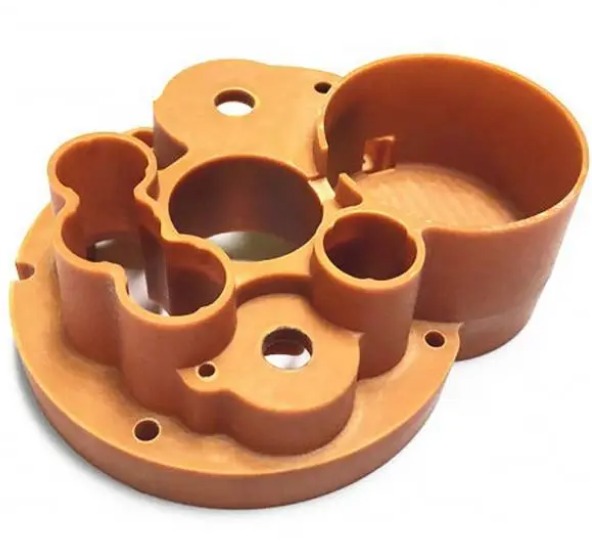
Engineers and manufacturers dealing with high-stress, high-friction applications know the struggle. Standard coatings scratch, wear down, or corrode too quickly. A hydraulic cylinder in heavy machinery might fail after 10,000 cycles. A mold used for plastic injection could wear out in months. An aerospace part may degrade under extreme temperatures. What you need is a surface treatment that can withstand intense friction, resist corrosion in harsh environments, and maintain dimensional stability—even under the most demanding conditions. This is where surface treatment hard anodizing (Type III) delivers. As the toughest anodizing process available, it creates a thick, dense oxide layer that combines exceptional wear resistance with robust corrosion protection. In this guide, we will explore how hard anodizing (Type III) works, its key properties, applications, and how to leverage it for long-lasting, high-performance components.
Introduction
Hard anodizing (Type III) is a specialized electrochemical process. It is designed to produce thick, wear-resistant oxide layers on aluminum and its alloys.
Definition: Hard anodizing (Type III) is an anodizing process that creates a dense, thick aluminum oxide layer—25–100 μm—on the metal's surface. It uses low-temperature sulfuric acid electrolytes and high voltages. Unlike standard sulfuric acid anodizing (Type II), it prioritizes hardness and wear resistance over aesthetics.
Basic principles: Similar to other anodizing processes, hard anodizing uses an electric current to convert aluminum (anode) into aluminum oxide (Al₂O₃) in a sulfuric acid electrolyte. However, it operates at lower temperatures (0–10°C) and higher voltages (30–100 V) . These conditions slow oxide dissolution and promote the formation of a dense, hard layer.
Industrial significance: Hard anodizing (Type III) is critical for components requiring extended service life in high-friction environments. It is used in:
- 60% of aerospace aluminum parts
- 40% of industrial tooling
- 30% of high-performance automotive components
It extends part life by 5–10 times compared to untreated aluminum.
Environmental considerations: Like standard sulfuric acid anodizing, it uses sulfuric acid but avoids hexavalent chromium. Modern facilities recycle electrolytes and treat wastewater to neutralize acids, complying with regulations like REACH. While energy-intensive due to cooling requirements, its ability to extend part life reduces overall environmental impact.
How Does Hard Anodizing Compare to Other Anodizing Types?
Different anodizing types serve different purposes. The table below shows how Type III stacks up against Type II and Type I:
| Feature | Hard Anodizing (Type III) | Standard Anodizing (Type II) | Chromic Acid Anodizing (Type I) |
|---|---|---|---|
| Thickness | 25–100 μm | 1–25 μm | 0.5–10 μm |
| Hardness (HV) | 300–500 (60–70 HRC) | 150–300 | 100–200 |
| Temperature | 0–10°C | 15–25°C | 25–35°C |
| Voltage | 30–100 V | 12–20 V | 20–40 V |
| Primary Use | Wear resistance | Aesthetics/corrosion | Bonding/pre-treatment |
A real-world example: a hydraulic equipment manufacturer switched from standard anodizing to Type III hard anodizing for cylinder rods. Rod life increased from 8,000 cycles to 50,000 cycles. The company reduced warranty claims by 75% and gained a competitive edge in heavy machinery markets.
What Does the Hard Anodizing Process Involve?
The hard anodizing (Type III) process requires precise control to achieve its signature hardness and thickness. Skipping or rushing any step compromises the final result.
Pre-Treatment Processes
Thorough cleaning is essential. Steps include:
- Degreasing: Alkaline cleaners remove oils and contaminants
- Etching: Mild etching avoids excessive material removal
- Desmutting: Nitric acid removes surface residues
Unlike Type II, aggressive etching is avoided to preserve dimensional accuracy.
Electrolyte Composition
A 15–20% sulfuric acid solution with additives—such as organic acids—controls oxide growth. The additives slow oxide dissolution, allowing thicker, denser layers to form.
Anodizing Tanks
Tanks are made of acid-resistant materials like PVC or polypropylene. They have insulation and cooling jackets to maintain low temperatures (0–10°C). Tanks must be sized to accommodate large parts like aerospace components or tooling.
Power Supplies
High-voltage DC rectifiers deliver 30–100 V and current densities of 2–5 A/dm². Voltage is gradually increased to avoid burning the surface. Total process time ranges from 30 minutes to 2 hours, depending on thickness.
Temperature Control
Temperature control is critical for success. Electrolyte is cooled to 0–10°C using refrigeration units.
- 0–5°C: Produces harder, denser layers but slows processing
- 5–10°C: Balances speed and hardness
Agitation Systems
Gentle stirring—air or mechanical—ensures uniform temperature and electrolyte distribution. This prevents cold spots that could cause uneven oxide formation.
Post-Treatment Processes
Parts are rinsed to remove acid. Sealing with hot water or nickel acetate is optional. Sealing enhances corrosion resistance but is less common than in Type II, as it can slightly reduce hardness.
Safety Protocols
Workers use acid-resistant PPE—gloves, aprons, face shields—and insulated tools to handle high voltages. Ventilation systems remove acid fumes. Emergency shutdowns prevent overheating.
What Properties Make Hard Anodized Surfaces Superior?
The properties of hard anodized surfaces (Type III) make the process unmatched for high-wear applications.
High Wear Resistance
The dense oxide layer withstands extreme friction. Wear rate is 10–20 times lower than untreated aluminum. It is comparable to tool steel in abrasion resistance. This makes it ideal for sliding components like bearings and pistons.
High Hardness
Hardness reaches 300–500 HV, equivalent to 60–70 HRC. Hard anodized surfaces resist indentation and scratching. This hardness is consistent throughout the oxide layer—unlike coatings that wear away to reveal softer substrates.
Corrosion Resistance
When sealed, hard anodized parts withstand 1000+ hours of salt spray testing (ASTM B117). The oxide layer acts as a barrier against moisture, salt, and chemicals. It outperforms many plating methods in harsh environments.
Dimensional Accuracy
Thickness is controlled to ±5%, with typical layers of 25–75 μm. This allows precise part restoration—for example, rebuilding a worn shaft—without compromising fit in assemblies.
Adhesion
The oxide layer is chemically bonded to the aluminum. Adhesion strengths exceed 50 MPa. This is far stronger than plating or paint, which can delaminate under stress.
Thickness
Thicker than other anodizing types—25–100 μm—the layer provides substantial wear material. Critical applications like aerospace landing gear often use 50–75 μm layers for maximum longevity.
Color
The finish is naturally dark gray or black due to its density. It can be dyed for identification purposes. Dyeing has minimal impact on performance, making it useful for part coding in complex assemblies.
Where Is Hard Anodizing (Type III) Used?
Hard anodizing is essential in industries where wear and corrosion resistance are critical.
Aerospace
Landing gear components, hydraulic cylinders, and engine parts rely on hard anodizing. It withstands extreme friction and temperature fluctuations. Service life extends from 500 to 5000+ flight cycles.
Case example: A major aerospace supplier adopted Type III hard anodizing for hydraulic actuator housings. Previously, parts required replacement every 2 years. With hard anodizing, service life extended to 10+ years, saving over $2 million annually in maintenance and replacement costs.
Automotive
High-performance engine components—pistons, cylinder liners—and racing parts use hard anodizing. It resists wear from friction and heat. Brake calipers and suspension components also benefit from added durability.
Tooling and Molds
Injection molds, stamping dies, and cutting tools use hard anodizing to resist wear from repeated use. Mold life increases by 2–3 times, reducing downtime for replacements.
Medical Devices
Surgical instruments and implantable components—like orthopedic plates—use hard anodizing for corrosion resistance during sterilization and wear resistance in the body.
Marine Industry
Propeller shafts, pumps, and valves use hard anodizing to resist saltwater corrosion and wear from sand or debris. It outperforms chrome plating in these harsh environments.
Industrial Machinery
Hydraulic rods, gears, and conveyor components benefit from hard anodizing's wear resistance. This reduces maintenance in factories, mines, and other demanding settings.
What Equipment and Materials Are Required?
Specialized equipment and materials are necessary to achieve consistent hard anodizing results.
Anodizing Tanks
Large, insulated tanks made of PVC or polypropylene have cooling jackets connected to industrial refrigeration units. They must withstand low temperatures and high voltages without cracking.
Electrolyte Solutions
15–20% sulfuric acid in deionized water, with additives like oxalic acid to control oxide structure. Impurities like chloride are kept below 20 ppm to prevent pitting.
Power Supplies
High-voltage DC rectifiers—0–100 V, 0–1000 A—with programmable ramps to gradually increase voltage. Digital controls ensure precise current density, critical for uniform thickness.
Temperature Control
Industrial chillers capable of maintaining 0–10°C in large electrolyte volumes. Thermostats with ±0.5°C accuracy prevent temperature spikes that could weaken the oxide layer.
Anodes and Cathodes
The aluminum part is the anode. Cathodes are lead or titanium—resistant to high voltages. Cathodes are placed symmetrically around the anode to ensure even current distribution.
Agitation Systems
Low-flow pumps or air spargers circulate electrolyte without creating turbulence. Turbulence could disrupt oxide formation. This is especially important for complex parts with internal channels.
Safety Equipment
- Insulated gloves and tools: For high-voltage work
- Acid-resistant PPE: For chemical protection
- Ventilation systems: To remove fumes
- Emergency shutoffs and voltage monitors: To prevent electrical hazards
How Do You Ensure Quality and Maintain Equipment?
Rigorous quality control and maintenance ensure hard anodizing meets performance standards.
Equipment Maintenance
- Tanks: Inspected weekly for leaks or insulation damage
- Chillers: Serviced monthly to maintain cooling efficiency
- Rectifiers: Calibrated quarterly to ensure accurate voltage output
Solution Maintenance
- Electrolyte concentration: Tested daily—sulfuric acid levels must stay within 15–20%
- Aluminum ion buildup: Monitored. Levels above 15 g/L require partial solution replacement to prevent layer softening
Surface Inspection
Visual checks identify defects like uneven color or pitting. Microscopic examination (100x) verifies oxide uniformity. Porosity is measured via dye penetration tests.
Thickness Measurement
Eddy current gauges (ASTM B244) or X-ray fluorescence (XRF) measure thickness. Tolerances are ±5%. Critical aerospace parts often require 50–75 μm. Tooling uses 25–50 μm.
Hardness Testing
Vickers hardness testers (ASTM E384) verify hardness at 300–500 HV. Testing is done at multiple points to ensure consistency across the part surface.
Adhesion Testing
The impact test (ASTM D2794) or thermal shock test ensures the oxide layer does not crack or peel under stress. This is critical for high-performance applications.
Quality Standards
Compliance with MIL-A-8625 (military specification for hard anodizing) and ISO 10074 ensures consistency. Aerospace clients often require additional certifications like Nadcap.
Yigu Technology’s Perspective
As a leading custom manufacturing supplier in China, Yigu Technology specializes in hard anodizing (Type III) for aerospace, automotive, and industrial clients.
Our process achieves:
- 25–75 μm layers
- 300–500 HV hardness
- Compliance with MIL-A-8625 standards
We use precision chillers with ±0.5°C accuracy and high-voltage rectifiers for uniform results. This works even on complex parts like hydraulic cylinders.
Our quality control includes:
- XRF thickness testing
- Hardness verification
- 1000-hour salt spray validation
By optimizing electrolyte composition, we balance wear resistance and corrosion protection. Hard anodizing (Type III) is the gold standard for high-wear components. We tailor processes to each client's needs—delivering durable, long-lasting coatings that reduce maintenance costs.
Conclusion
Hard anodizing (Type III) delivers the toughest, most durable surface treatment available for aluminum components. It solves the limitations of standard anodizing and conventional coatings by creating a dense, thick oxide layer—25–100 μm—with hardness reaching 500 HV. This translates to 10–20 times better wear resistance than untreated aluminum and 1000+ hours of salt spray protection when sealed. From aerospace landing gear that withstands thousands of flight cycles to injection molds that last 2–3 times longer, Type III anodizing extends component life by 5–10 times in demanding environments. With precise dimensional control, exceptional adhesion, and proven performance across industries, hard anodizing remains the go-to solution for engineers seeking reliable, long-lasting protection for high-wear metal components.
FAQs
How does hard anodizing (Type III) differ from hard chrome plating?
Hard anodizing is integral to the aluminum substrate—it becomes part of the metal, so there is no peeling risk. It offers better corrosion resistance than chrome. Hard chrome is a separate layer applied to steel, which can peel. Chrome also has higher friction and adds significant weight. For aluminum parts, anodizing is lighter and more cost-effective.
Can hard anodizing be applied to all aluminum alloys?
It works best on wrought alloys like 6061 and 7075. High-silicon cast alloys may produce uneven layers, requiring special pre-treatment. Our experts can advise on alloy suitability for your specific application.
What is the maximum thickness achievable with hard anodizing (Type III)?
Typically 100 μm. Thicker layers up to 150 μm are possible for specialized applications. However, thickness over 75 μm may reduce adhesion. We recommend 25–75 μm for most high-wear needs.
Does hard anodizing affect dimensional tolerances?
Yes, but precisely. The oxide layer grows outward from the surface and also penetrates inward. Total dimensional change is approximately 50% of the coating thickness. For a 50 μm coating, the part grows by about 25 μm. This is predictable and can be accounted for in machining.
Is hard anodizing suitable for parts with sharp edges or threads?
Yes, but sharp edges require attention. Current density concentrates at sharp corners, which can lead to thicker oxide and potential cracking. For threaded parts, masking or specifying coating buildup allowances in thread tolerances is recommended. Experienced suppliers adjust process parameters to minimize these effects.
Contact Yigu Technology for Custom Manufacturing
Looking to extend the life of your high-wear aluminum components? Yigu Technology specializes in custom hard anodizing (Type III) solutions tailored to your industry—whether aerospace, automotive, tooling, or industrial machinery. Our precision-controlled process delivers consistent hardness, thickness, and corrosion resistance that meet MIL-A-8625 standards. Contact us today to discuss your project requirements and receive a customized manufacturing proposal.