Discover how these fundamental material properties determine stiffness, deformation, and structural integrity in real-world applications.
Introduction
Engineers face a fundamental question when selecting materials. How will this component behave under load? Will it stretch too much? Will it buckle? Will it fail?
A bridge beam must support heavy loads without excessive deflection. A piston rod must maintain its shape under high pressure. A rubber seal must compress and return to its original form repeatedly.
The answers lie in two fundamental material properties: Young's Modulus and Poisson's Ratio. Together, they define how materials respond to stress. They determine stiffness, deformation, and failure modes.
In this guide, you will learn what these properties mean, how they are measured, and how they influence engineering decisions.
What Is Young's Modulus?
Young's Modulus—also called the elastic modulus—is a measure of a material's stiffness. It quantifies how much a material deforms under stress.
Mathematically, it is expressed as:
(E = \frac{\sigma}{\epsilon})
Where:
- (E) = Young's Modulus (in Pascals, Pa)
- (\sigma) = stress = force per unit area ((\frac{F}{A}))
- (\epsilon) = strain = relative change in length ((\frac{\Delta L}{L_0}))
A material with a high Young's Modulus requires large stress to produce a given strain. It is stiff and resists deformation. Diamond, with a modulus of about 1,220 GPa, is extremely rigid.
A material with a low Young's Modulus deforms easily. Rubber, with a modulus of 1 to 10 MPa, is highly flexible.
Why Does Young's Modulus Matter in Engineering?
Young's Modulus is a critical factor in structural and mechanical design.
Civil Engineering
In buildings and bridges, load-bearing elements must resist deformation. Steel has a Young's Modulus of about 195 GPa for 316 stainless steel. It provides the stiffness needed to support heavy loads without excessive deflection.
Mechanical Engineering
Engine parts operate under high stress. They must maintain their shape and functionality. Components like piston rods and shafts require materials with sufficient stiffness.
Aerospace
Weight reduction is critical. Materials with a high strength-to-weight ratio and appropriate modulus are selected. Carbon fiber composites offer high stiffness with low density. They improve fuel efficiency while maintaining structural integrity.
How Is Young's Modulus Measured?
Several methods exist for measuring Young's Modulus. The most common are tensile and compression tests.
Tensile Test
A standard-sized specimen is prepared. Initial length ((L_0)) and cross-sectional area ((A)) are measured. The specimen is mounted in a tensile testing machine.
The machine applies a gradually increasing force. Elongation ((\Delta L)) is measured using an extensometer. Stress and strain are calculated at each load level.
Plotting the stress-strain curve gives the modulus as the slope of the linear elastic portion:
(E = \frac{\sigma}{\epsilon})
Compression Test
Similar to the tensile test, but a compressive force is applied. The specimen—often a cylinder or cube—is placed between platens.
Height change ((\Delta h)) is measured as force increases. The modulus is determined from the linear portion of the compressive stress-strain curve.
Ultrasonic Method
This non-destructive method measures ultrasonic wave velocity through the material. The relationship between wave velocity ((v)), Young's Modulus ((E)), Poisson's ratio ((\nu)), and density ((\rho)) is:
(E = \rho v^2 \frac{(1 + \nu)(1 - 2\nu)}{1 - \nu})
This method is useful for large structures where destructive testing is not feasible.
What Is Poisson's Ratio?
Poisson's Ratio ((\nu)) describes how a material deforms laterally when stretched or compressed.
When a metal rod is pulled lengthwise, it elongates in the axial direction. It also contracts in the lateral direction. Poisson's Ratio quantifies this relationship.
Mathematically:
(\nu = -\frac{\epsilon_{lateral}}{\epsilon_{axial}})
Where:
- (\epsilon_{lateral}) = lateral strain (change perpendicular to force)
- (\epsilon_{axial}) = axial strain (change parallel to force)
The negative sign ensures a positive ratio, as lateral and axial strains have opposite signs under tension.
Poisson's Ratio is dimensionless. It typically ranges from 0 to 0.5 for common materials.
Why Does Poisson's Ratio Matter?
Poisson's Ratio provides critical insights into material behavior.
Volume Change
When (\nu = 0), there is no lateral contraction. Volume increases only due to axial elongation.
When (\nu = 0.5), the material is incompressible in the elastic range. Volume remains constant during deformation. Rubber-like materials have ratios close to 0.5.
Stability and Failure
Poisson's Ratio affects buckling in thin-walled structures. A low ratio means less lateral contraction under compression. This can lead to easier buckling, as the material cannot redistribute stress laterally.
In joints and connections, a higher Poisson's Ratio helps distribute stress more evenly. This reduces localized stress concentrations and improves durability.
How Is Poisson's Ratio Measured?
Several methods are used to measure Poisson's Ratio.
Tensile Test
A specimen is subjected to tensile force. Axial elongation is measured along the loading direction. Lateral contraction is measured from changes in width or diameter.
Poisson's Ratio is calculated as the negative ratio of lateral to axial strain.
This method is straightforward and widely used for metals and plastics. However, it requires careful specimen preparation and uniform stress distribution.
Compression Test
Similar to the tensile test, but under compression. Axial shortening and lateral expansion are measured.
This method is useful for materials that fail more readily under compression, such as ceramics and concrete.
Digital Image Correlation (DIC)
DIC is an optical, non-contact measurement technique. A random pattern is applied to the specimen surface. Cameras capture images during deformation.
Software analyzes displacement and deformation of the pattern. Full-field strain distribution is obtained, including both axial and lateral strains.
DIC is particularly valuable for complex geometries and materials with non-uniform properties. It requires specialized equipment but provides detailed strain information.
How Do These Properties Compare?
Poisson's Ratio and Young's Modulus describe different aspects of material behavior.
| Property | Nature | What It Describes | Units |
|---|---|---|---|
| Young's Modulus | Stiffness | Axial deformation under stress | Pascals (Pa) |
| Poisson's Ratio | Deformation pattern | Lateral-to-axial strain relationship | Dimensionless |
Young's Modulus determines how much a material stretches or compresses along the force direction. Poisson's Ratio determines how much it contracts or expands perpendicular to the force.
How Do They Work Together?
These properties influence material behavior in combination.
Consider two materials under the same tensile load:
| Material | Young's Modulus | Poisson's Ratio | Axial Deformation | Lateral Deformation |
|---|---|---|---|---|
| A | High | Low | Small | Small |
| B | Low | High | Large | Large |
Material A is stiff and contracts little laterally. Material B is compliant and shows significant lateral contraction.
Practical Example: Thin-Walled Pressure Vessel
When a cylindrical vessel is pressurized, it experiences hoop stress and axial stress. Young's Modulus determines how much the vessel expands radially. Poisson's Ratio determines how the axial stress affects radial deformation.
A low Poisson's Ratio can make the vessel more prone to buckling. The material cannot distribute stress effectively in the lateral direction.
Practical Example: Bolted Joint
In a bolted joint, Young's Modulus determines how much components deform under load. Poisson's Ratio affects how materials interact laterally.
If the bolt and mating part have significantly different Poisson's Ratios, stress distribution becomes non-uniform. This can lead to premature failure from stress concentrations.
A Real-World Case Study
An automotive manufacturer experienced repeated failures in engine mounting brackets. The brackets cracked after 50,000 miles—well below the design life.
Analysis showed the bracket material had adequate strength but insufficient stiffness. Under engine vibration and thermal cycling, excessive deformation caused fatigue cracks.
The solution was to select a material with 30% higher Young's Modulus while maintaining similar weight. The new brackets showed 80% less deflection under load. Fatigue life increased to over 200,000 miles.
This example shows how understanding Young's Modulus directly impacts product reliability.
What Are Typical Values for Common Materials?
The table below shows typical values for common engineering materials:
| Material | Young's Modulus (GPa) | Poisson's Ratio |
|---|---|---|
| Diamond | 1,220 | 0.07 |
| Steel (316 stainless) | 195 | 0.30 |
| Aluminum (6061) | 69 | 0.33 |
| Titanium (Ti-6Al-4V) | 114 | 0.34 |
| Concrete | 20-40 | 0.20 |
| Glass | 70 | 0.22 |
| Rubber | 0.001-0.01 | 0.49-0.50 |
| Carbon fiber composite | 70-150 (directional) | 0.20-0.30 (directional) |
Note that composite materials have directional properties. Their modulus and Poisson's Ratio vary with fiber orientation.
Conclusion
Young's Modulus and Poisson's Ratio are not abstract concepts. They are essential tools for engineering design. Young's Modulus tells you how stiff a material is. Poisson's Ratio tells you how it deforms laterally.
Together, they determine how a structure responds to load. They influence stability, failure modes, and overall performance. Understanding these properties allows engineers to select materials that meet specific requirements—balancing stiffness, flexibility, and durability.
By considering both properties in combination, engineers can design structures that withstand complex loading conditions, optimize material usage, and enhance safety.
FAQs
What is the difference between Young's Modulus and stiffness?
Young's Modulus is a material property. It is independent of geometry. Stiffness is a component property. It depends on both material modulus and geometry. A thick rod of low-modulus material can be stiffer than a thin rod of high-modulus material.
Can Poisson's Ratio exceed 0.5?
For isotropic materials in the elastic range, Poisson's Ratio cannot exceed 0.5. Values above 0.5 would imply volume decrease under tension, which violates thermodynamic principles. Some anisotropic materials and certain polymers in specific conditions may show apparent values above 0.5.
How does temperature affect Young's Modulus?
Young's Modulus generally decreases as temperature increases. At elevated temperatures, atomic bonds weaken, making materials less stiff. This is critical for high-temperature applications like turbine blades and engine components.
Why is Poisson's Ratio important in finite element analysis?
FEA models require both Young's Modulus and Poisson's Ratio as inputs. Poisson's Ratio affects stress distribution, particularly in multi-axial stress states. Using incorrect values leads to inaccurate predictions of deformation and failure.
How do I choose materials based on these properties?
Select Young's Modulus based on required stiffness. Higher modulus for load-bearing components that must not deflect. Lower modulus for components needing flexibility or vibration isolation. Consider Poisson's Ratio when lateral deformation affects fit, sealing, or interaction with other components.
Contact Yigu Technology for Custom Manufacturing
At Yigu Technology, we apply material science principles to every project. Our engineering team selects materials based on Young's Modulus, Poisson's Ratio, and other critical properties to meet your performance requirements.
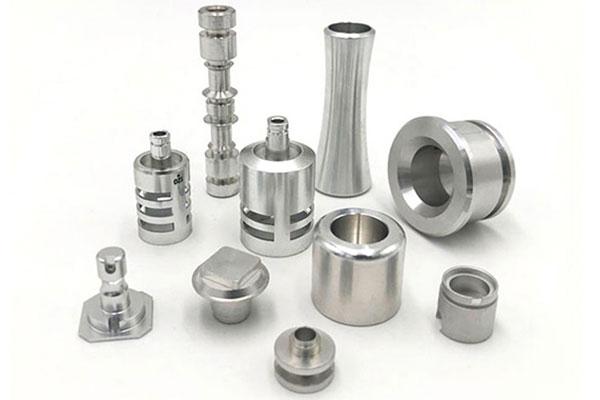
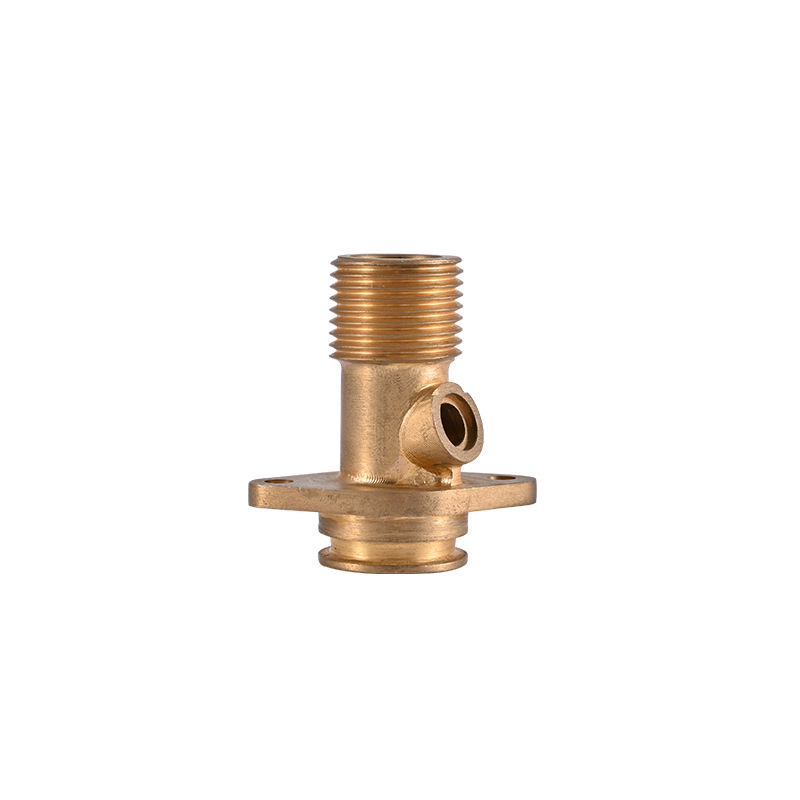
We machine components from steel, aluminum, titanium, and engineering plastics. Our quality processes ensure materials meet specified mechanical properties. We serve automotive, aerospace, medical, and industrial clients.
Ready to select the right material for your application? Contact Yigu Technology today to discuss your engineering requirements.