Introduction
Titanium is often called a “miracle metal.” With a density of 4.51 g/cm³—about 60% that of steel—yet offering comparable strength, it provides a unique advantage where weight reduction is critical. Its corrosion resistance is remarkable, thanks to a thin, self-healing oxide layer that withstands seawater, acids, and harsh chemicals. Its high melting point (around 1,668°C) enables it to maintain structural integrity in high-temperature settings. But these same properties make titanium notoriously difficult to machine. CNC machining has risen to this challenge, mastering the art of precision with titanium across aerospace, medical, and high-performance engineering. This guide explores the unique properties of titanium, the machining techniques that tame it, and the applications where this synergy delivers unmatched performance.
What Makes Titanium Both Valuable and Challenging?
Mechanical and Physical Characteristics
High strength-to-weight ratio:
Titanium offers strength comparable to steel at roughly 60% of the weight. In aerospace, every kilogram of weight reduction improves fuel efficiency and payload capacity. Titanium components in aircraft wings withstand high stresses while keeping overall weight within limits.
Corrosion resistance:
Titanium resists seawater, marine environments, and bodily fluids. This makes it ideal for ship components, offshore equipment, and medical implants. The passive oxide layer self-repairs if scratched, providing long-term protection.
Low thermal conductivity:
Unlike aluminum, which dissipates heat quickly, titanium retains heat at the cutting interface. Temperatures rise rapidly, causing tool wear, thermal distortion, and surface degradation.
High melting point (1,668°C):
Machining titanium requires tools that withstand high temperatures. Carbide and diamond-coated tools are essential. Cooling strategies become critical—not optional.
Titanium Alloy Grades and Machinability
| Grade | Key Properties | Typical Applications | Machining Challenges |
|---|---|---|---|
| Grade 1 (CP) | Soft, ductile, excellent corrosion resistance | Heat exchangers, chemical processing | Requires sharp tools to avoid surface deformation |
| Grade 5 (Ti-6Al-4V) | High strength, good fatigue resistance | Aerospace structures, medical implants | High hardness increases tool pressure and heat |
| Grade 23 (ELI) | Biocompatible, ductile | Surgical implants | Sensitive to tool chatter due to low modulus |
What CNC Machining Advantages Matter for Titanium?
Precision Engineering Beyond Manual Capabilities
CNC machining achieves tolerances as low as 1 micron (0.001 mm) —far beyond manual machining capabilities. Manual operations are subject to fatigue, skill variations, and inconsistent hand movements. CNC machines use advanced servo systems with real-time feedback from sensors. If deviations occur from the programmed path, the system makes instant adjustments.
Aerospace example: A turbine blade in an aircraft engine requires precise shaping for optimal aerodynamic performance. CNC machining holds tolerances within ±0.05 mm or tighter, ensuring engine efficiency, fuel economy, and reliability.
Material Removal Efficiency with Strategic Tooling
Tool materials:
Carbide and diamond-coated tools are essential for titanium. Polycrystalline diamond (PCD) tools have shown remarkable performance—reducing wear by 30% compared to conventional carbide tools. The diamond coating provides an extremely hard, smooth surface, reducing friction and improving surface finish.
Coolant strategies:
Titanium’s low thermal conductivity demands aggressive cooling. High-pressure coolant systems operating at 50–100 bar effectively dissipate heat.
Benefits:
- Extends tool life by 20–25%
- Maintains surface roughness below Ra 0.8 μm
- Reduces thermal distortion
Case example: A manufacturer machining titanium automotive components implemented high-pressure coolant, reducing tool replacement costs and improving part quality.
Complex Geometry Mastery
5-axis CNC machines move the workpiece and cutting tool simultaneously along five axes—three linear (X, Y, Z) and two rotational. This allows machining of parts with multiple intersecting surfaces that would be impossible on 3-axis machines.
Medical example: Orthopedic implants with trabecular structures mimic natural bone. These complex, porous geometries require 5-axis machining. Automated toolpath generation via CAM software analyzes the 3D model and generates optimal toolpaths, minimizing human error and ensuring consistent quality across batches.
What Machining Parameters Work for Titanium?
Cutting Speeds and Feeds
| Operation | Cutting Speed (m/min) | Feed Rate | Depth of Cut (mm) |
|---|---|---|---|
| Milling (carbide) | 40–80 | 0.05–0.12 mm/tooth | 0.5–2.0 |
| Turning (carbide) | 50–70 | 0.08–0.15 mm/rev | 0.5–2.0 |
| Drilling (carbide) | 25–40 | 0.08–0.12 mm/rev | 1–3 (peck) |
Key principle: Lower cutting speeds than aluminum or steel. Higher speeds generate excessive heat, accelerating tool wear.
Tool Selection
| Tool Type | Best For | Tool Life |
|---|---|---|
| Carbide (uncoated) | General machining | Baseline |
| TiAlN/AlTiN-coated carbide | Heat resistance; production runs | +30–50% |
| PCD (polycrystalline diamond) | Finishing; high-volume precision | +100–200% |
| CBN | Hardened titanium | Very high |
Coolant Delivery
- Pressure: 50–100 bar
- Type: Water-soluble emulsion (5–10%)
- Delivery: Through-tool coolant for drilling and deep cuts
- Purpose: Heat dissipation, chip evacuation, tool life extension
What Are the Key Industrial Applications?
Aerospace: Lightweight, High-Reliability Components
Turbine blisks (bladed disks):
CNC-machined from Grade 5 titanium billets. By integrating blades and disks into one component, the number of parts reduces by 40% . Weight reduction of 15% compared to traditional designs directly impacts fuel efficiency.
Airframe fittings:
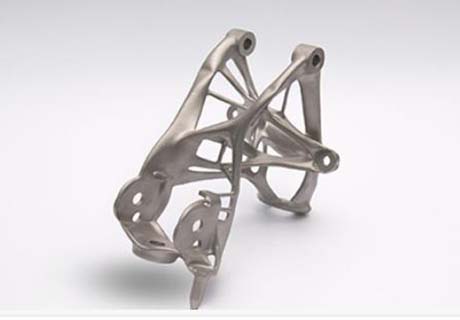
Complex brackets and fittings with thin walls (1–2 mm). CNC machining holds wall tolerance to 0.05 mm, meeting strict aerospace standards. Consistent dimensions ensure uniform strength distribution and structural reliability.
Medical Devices: Biocompatibility and Customization
Orthopedic implants:
Grade 23 titanium (ELI) offers biocompatibility and ductility. 5-axis CNC machining creates custom implants from patient CT scans. Trabecular structures promote bone integration. Surface finish Ra <0.4 μm ensures biocompatibility and reduces wear.
Surgical instruments:
Titanium instruments are lightweight, corrosion-resistant, and sterilizable. CNC machining achieves the precision required for delicate surgical procedures.
High-Performance Engineering: Motorsports and Energy
Race car suspension parts:
Grade 5 titanium linkages are 40% lighter than steel equivalents. Machined with concentricity of 0.02 mm to minimize vibration. Reduced vibration improves tire contact, traction, and cornering ability.
Oil and gas components:
Grade 2 titanium valves for subsea equipment resist corrosion at extreme pressures (up to 5,000 psi). Flatness tolerance of 0.005 mm prevents leaks. A small leak in subsea equipment can cause environmental damage and costly repairs. CNC precision ensures long-term reliability.
A Real-World Titanium Machining Success
A medical device manufacturer producing titanium spinal implants faced:
- Tool wear: 30 parts per carbide edge
- Surface finish: Ra 1.2–1.8 μm (above 0.8 μm requirement)
- Chatter: On thin-walled features
After process changes:
- Switched to PCD-coated carbide tools
- Reduced cutting speed from 60 m/min to 45 m/min
- Implemented high-pressure coolant (80 bar)
- Used 5-axis machining with optimized toolpaths
- Added in-process probing for critical dimensions
Results:
- Tool life increased to 90 parts per edge
- Surface finish improved to Ra 0.4 μm
- Chatter eliminated
- Scrap rate dropped from 12% to 3%
- Customer approved for production
What Are the Key Quality Control Measures?
Inspection Methods
| Feature | Tool | Accuracy |
|---|---|---|
| Dimensions | CMM | ±0.001 mm |
| Surface finish | Profilometer | 0.001 μm Ra |
| Concentricity | CMM, roundness tester | ±0.002 mm |
| Surface defects | Visual, optical | 10–50× magnification |
Material Verification
- Chemical composition: Verify grade (Grade 5, Grade 23, etc.)
- Hardness testing: Confirm consistency
- Ultrasonic testing: Detect subsurface defects
Process Monitoring
- In-process probing: Measure critical dimensions during machining
- Thermal monitoring: Prevent heat-related distortion
- Tool wear tracking: Replace before quality degrades
Conclusion
CNC machining has transformed titanium processing from a difficult operation into a precise, repeatable manufacturing art. Titanium’s unique properties—high strength-to-weight ratio, corrosion resistance, and biocompatibility—make it indispensable in aerospace, medical, and high-performance engineering. But these same properties demand specialized approaches: low cutting speeds, high-pressure coolant, rigid setups, and advanced tooling like PCD and 5-axis machines. When these practices are followed, CNC machining delivers titanium components with micron-level precision, complex geometries, and surface finishes that meet the most demanding standards. The synergy between titanium and CNC machining enables products that are lighter, stronger, and more reliable—from jet engine turbines to artificial joints to race car suspension.
FAQs
What is the best coolant for CNC machining of titanium?
High-pressure coolant systems (50–100 bar) with water-based emulsions are most effective. High-pressure delivery directly to the cutting zone dissipates heat, extends tool life by 20–25%, and maintains surface roughness below Ra 0.8 μm. Flood coolant alone is insufficient—the pressure and delivery method matter significantly.
How does the choice of titanium alloy grade affect CNC machining?
Different grades present distinct challenges. Grade 1 (commercially pure) is soft and ductile, requiring sharp tools to avoid surface deformation. Grade 5 (Ti-6Al-4V) has high strength, increasing tool pressure and heat—requiring careful parameter selection. Grade 23 (ELI) is biocompatible but has a low modulus of elasticity, making it sensitive to tool chatter. Match tooling and parameters to the specific grade.
Can 3-axis CNC machines be used for machining titanium?
3-axis machines can handle simpler titanium geometries—flat surfaces, basic contours, and parts accessible from one direction. However, for complex parts with multiple intersecting surfaces, undercuts, or curved features, 5-axis machines are preferred. 5-axis allows machining in one setup, eliminating alignment errors and enabling geometries impossible on 3-axis machines.
What tools are recommended for machining titanium?
Carbide tools with TiAlN or AlTiN coatings are standard for production runs. For finishing and high-volume precision, PCD (polycrystalline diamond) tools reduce wear by 30% compared to carbide and achieve superior surface finishes. For hardened titanium or superalloys, CBN (cubic boron nitride) tools may be required. Avoid HSS tools for production—tool life is unacceptably short.
How do you prevent work hardening when machining titanium?
Titanium work hardens rapidly when tools rub instead of cut. Prevention: maintain adequate feed rates (avoid light cuts that cause rubbing), use climb milling, keep tools sharp (replace at first sign of wear), and apply high-pressure coolant. Do not let the tool dwell in contact with the material. A dull tool generates more heat and accelerates work hardening.
Contact Yigu Technology for Custom Manufacturing
At Yigu Technology, we specialize in CNC machining titanium across all grades—Grade 5 (Ti-6Al-4V), Grade 23 (ELI), and commercially pure. Our facility includes 5-axis machining centers, high-pressure coolant systems, and CMM inspection equipment. We select the right tooling—PCD-coated carbide for finishing, high-pressure delivery for heat management—to achieve the tight tolerances and surface finishes titanium demands. Whether you need aerospace components, medical implants, or high-performance engineering parts, we deliver titanium precision that meets your specifications. Contact us to discuss your titanium machining project.