Introduction
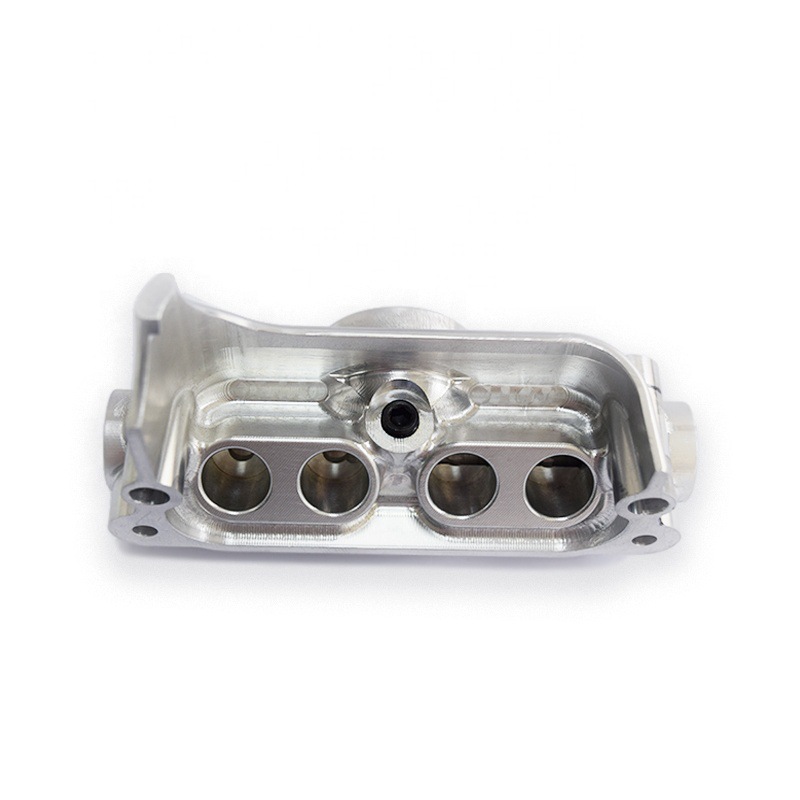
Precision milling machine parts are the unsung heroes of modern manufacturing. They are in jet engines where a 1% improvement in efficiency saves millions in fuel. They are in medical implants where inaccurate manufacturing causes 10% of early failures. They are in automotive engines where tight tolerances improve fuel efficiency by 15%.
Yet achieving this precision is not simple. It requires mastering materials, optimizing processes, selecting the right tools, and embedding quality at every step. This guide reveals the secrets to unlocking precision milling—moving beyond equipment ownership to true process mastery.
Why Does Material Mastery Matter?
The Impact of Material Properties on Precision
Every material behaves differently under the cutting tool. Understanding these differences is the first secret to precision.
| Material | Density (g/cm³) | Tensile Strength (MPa) | Thermal Conductivity (W/m·K) | Machining Challenge |
|---|---|---|---|---|
| Ti-6Al-4V (Titanium) | 4.43 | 895–930 | 6.6 | Heat-induced distortion, rapid tool wear |
| 6061-T6 (Aluminum) | 2.7 | 310 | 167 | Tool adhesion, softness |
| Stainless steel (304) | 8.0 | 515–795 | 16.2 | Work hardening |
| Inconel 718 | 8.19 | 1,100–1,300 | 11.2 | High cutting forces, poor thermal diffusivity |
Titanium (Ti-6Al-4V) offers exceptional strength-to-weight ratio but has low thermal conductivity (6.6 W/m·K). Heat generated during milling stays at the cutting zone, causing thermal expansion and distortion. A Boeing study found that optimized feed rates reduced tool life by 20% but improved dimensional accuracy by 15%—a trade-off worth making for critical components.
Aluminum (6061-T6) enables high-speed machining due to its high thermal conductivity (167 W/m·K). However, its softness can cause tool adhesion and surface imperfections if tool alignment is not precise.
Best Practices for Material Selection
| Factor | Consideration |
|---|---|
| Thermal stability | Materials with low coefficient of thermal expansion (CTE) maintain dimensional accuracy under temperature changes. Invar (CTE 1.2×10⁻⁶/°C) reduces measurement errors by up to 80% in metrology tools (NIST study). |
| Machinability index | AISI 1212 steel (100) is the benchmark. Aluminum scores ~170 (easy to machine). Titanium scores ~30 (difficult, requiring frequent tool changes). |
| Application requirements | Match material properties to end-use: corrosion resistance (stainless), weight reduction (titanium, aluminum), heat resistance (Inconel). |
How Do You Optimize Cutting Parameters?
The Triad: Speed, Feed, and Depth
Cutting parameters are the DNA of precision. Small changes yield significant differences in quality.
Cutting Speed (Vc) – The linear speed of the cutting edge relative to the workpiece.
| Material | Optimal Vc (m/min) | Risk if Too High | Risk if Too Low |
|---|---|---|---|
| Stainless steel | 50–80 | Heat, tool wear | Built-up edge (BUE) |
| Aluminum | 200–400 | Tool overheating (less common) | BUE, poor finish |
| Titanium | 30–60 | Rapid tool wear, thermal distortion | Work hardening |
Feed Rate (f) – Distance the tool advances per tooth per revolution.
| Feed Rate | Surface Finish | Cycle Time | Risk |
|---|---|---|---|
| Fine (0.05 mm/tooth) | Ra ≤0.8 μm (optical quality) | Long | None (precision-focused) |
| Coarse (0.5 mm/tooth) | Rougher | Short | Chatter, vibration |
Depth of Cut (ap) – Thickness of material removed per pass.
| Depth | Application | Cutting Forces | Residual Stress |
|---|---|---|---|
| Shallow (0.1–0.5 mm) | Finishing | Low | Low |
| Deep (5–10 mm) | Roughing | High | High |
An MIT study found that reducing depth of cut by 30% in titanium milling decreased residual stress by 25%—improving fatigue life for aerospace components.
Tool Geometry: The Unsung Hero
| Geometry | Effect | Best For |
|---|---|---|
| Positive rake angle (+5° to +15°) | Reduces cutting forces, improves chip flow | Soft materials (aluminum) |
| Negative rake angle (-5° to -10°) | Increases tool strength | Hard alloys (titanium, Inconel) |
| Larger nose radius (1–2 mm) | Improves surface finish, increases radial force | General finishing |
| Smaller nose radius (0.4 mm) | Allows precise corner machining | Aerospace components with tight corners |
Data-Driven Optimization with CNC Systems
Modern CNC machines adjust parameters dynamically to maintain precision.
Real-time monitoring – Sensors track spindle speed, feed rate, cutting forces, temperature, and vibration. A vibration above 0.5 g during high-strength steel milling increases surface roughness by 50% and reduces tool life by 30% (machine tool manufacturer study). Real-time detection allows immediate correction.
Dynamic parameter adjustment – When vibration sensors detect chatter, systems like Fanuc’s 31i-MODEL A5 automatically reduce feed rate by 10% and increase spindle speed by 5%. In aerospace manufacturing, this reduced rejected parts by 40%.
Predictive maintenance – Analyzing sensor data over time predicts component failure. Tool wear sensors alert operators before tools break. This reduced unplanned downtime by 60% in one study, preventing production disruptions.
What Role Does Machine Rigidity Play?
The Foundation of Precision
Machine rigidity directly affects achievable tolerances. A rigid machine minimizes deflection under cutting forces.
| Component | Contribution to Rigidity |
|---|---|
| Machine base | Cast iron or polymer concrete dampens vibration |
| Linear guides | Preloaded bearings eliminate play |
| Spindle | High-quality bearings, thermal stabilization |
| Tool holder | Short tool overhang reduces deflection |
Rule of thumb: Tool deflection increases with the cube of overhang length. Doubling tool overhang increases deflection by 8×. Keep tools as short as possible.
Thermal Management
Heat causes expansion. Expansion causes inaccuracy.
| Strategy | Effect |
|---|---|
| Machine temperature control | Coolant circulation through machine base maintains stable temperature |
| Workpiece stabilization | Allow parts to reach ambient temperature before measurement |
| Cryogenic cooling | Liquid nitrogen (-196°C) controls heat in titanium machining |
| Coolant selection | High-pressure through-tool coolant removes heat at the cutting zone |
How Do You Ensure Quality Control?
In-Process Inspection
Catch errors early. In-process inspection prevents defective parts from continuing through production.
| Method | Application | Capability |
|---|---|---|
| Touch probes | Verify part location, tool length | ±0.002 mm |
| Laser probes | Surface scanning, feature verification | ±0.001 mm |
| Tool wear sensors | Monitor cutting edge condition | Prevents catastrophic failure |
Post-Processing Inspection
| Tool | Capability | Best For |
|---|---|---|
| CMM (Coordinate Measuring Machine) | ±0.0005 mm | Three-dimensional dimensional verification |
| Optical comparator | Magnified visual | Profile comparison, thread verification |
| Surface roughness tester | Nanometer resolution | Finish quality verification |
| Laser interferometer | Sub-micron | Machine calibration, axis accuracy |
Statistical Process Control (SPC)
SPC monitors process variation over time. Control charts identify trends before parts go out of tolerance.
| Metric | Purpose |
|---|---|
| Cp, Cpk | Process capability relative to tolerances |
| Control limits | Upper and lower boundaries for acceptable variation |
| Trend analysis | Detects gradual shifts (tool wear, temperature changes) |
What Are Common Mistakes and How Do You Avoid Them?
| Mistake | Consequence | Prevention |
|---|---|---|
| Ignoring thermal effects | Dimensional drift during production | Stabilize machine and parts at ambient temperature; use coolant |
| Using wrong tool geometry | Poor surface finish, tool breakage | Match rake angle, nose radius to material |
| Overlooking machine calibration | Cumulative positioning errors | Regular laser interferometer calibration |
| Inadequate chip evacuation | Chip re-cutting, surface damage | High-pressure coolant, proper tool paths |
| Skipping in-process inspection | Defective parts continue through production | Touch probes, tool wear sensors |
Conclusion
Unlocking precision milling machine parts requires a holistic approach. Material mastery—understanding thermal properties, machinability, and application requirements—provides the foundation. Process parameter optimization—balancing speed, feed, and depth—shapes the outcome. Tool geometry choices—rake angle, nose radius—determine cutting forces and surface finish.
Modern CNC systems with real-time monitoring and dynamic adjustment maintain precision through changing conditions. Rigid machines and thermal management prevent distortion. Quality control—in-process inspection, CMM verification, SPC—ensures consistency.
The true secret is not owning the best equipment. It is understanding how to wield it—adjusting parameters for each material, calibrating for environmental factors, and embedding inspection at every step. Precision is a mindset where every micron matters and continuous improvement is the only constant.
FAQ
How do I choose the right cutting tool for my material?
Prioritize tool material (carbide for steel, diamond for non-ferrous) and geometry based on material hardness and machinability. Use tool manufacturers’ guidelines or machinability indexes. Match coatings (TiN for aluminum, TiCN for stainless steel) to reduce wear and improve surface finish.
What is the best way to minimize thermal distortion in precision milling?
Use cryogenic cooling (liquid nitrogen at -196°C) for heat-sensitive materials like titanium. Schedule thermal stabilization periods for workpieces and machines—allow them to reach ambient temperature before starting operations. Maintain consistent coolant flow and consider high-pressure through-tool cooling.
Can precision milling achieve tolerances below 0.001 mm?
Yes. With ultra-precision machines and strict environmental control, techniques like diamond turning and micro-milling achieve tolerances as low as ±0.0005 mm . In-process metrology (laser interferometry) and temperature-controlled environments are essential.
What is the most common cause of surface finish problems in milling?
Chatter (vibration) is the most common cause. Causes include excessive feed rate, improper tool geometry, insufficient machine rigidity, or incorrect spindle speed. Solutions: reduce feed rate, adjust spindle speed, use shorter tools, and ensure rigid workholding.
How often should milling machines be calibrated?
Critical axes should be calibrated annually using laser interferometers. Machines in high-precision environments or those producing tight-tolerance parts may require semi-annual calibration. Calibration should also occur after any maintenance affecting positioning accuracy.
Contact Yigu Technology for Custom Manufacturing
At Yigu Technology, we specialize in precision milling for demanding applications. Our expertise spans materials from aluminum to titanium to Inconel. We use advanced CNC systems with real-time monitoring and dynamic parameter adjustment to maintain tolerances as tight as ±0.001 mm.
Our quality control includes CMM verification, in-process inspection, and SPC monitoring. From aerospace components to medical implants, we deliver precision-milled parts that meet the strictest requirements.
Contact us today to discuss your precision milling project. Let our mastery of materials, processes, and quality help you achieve the precision your application demands.